


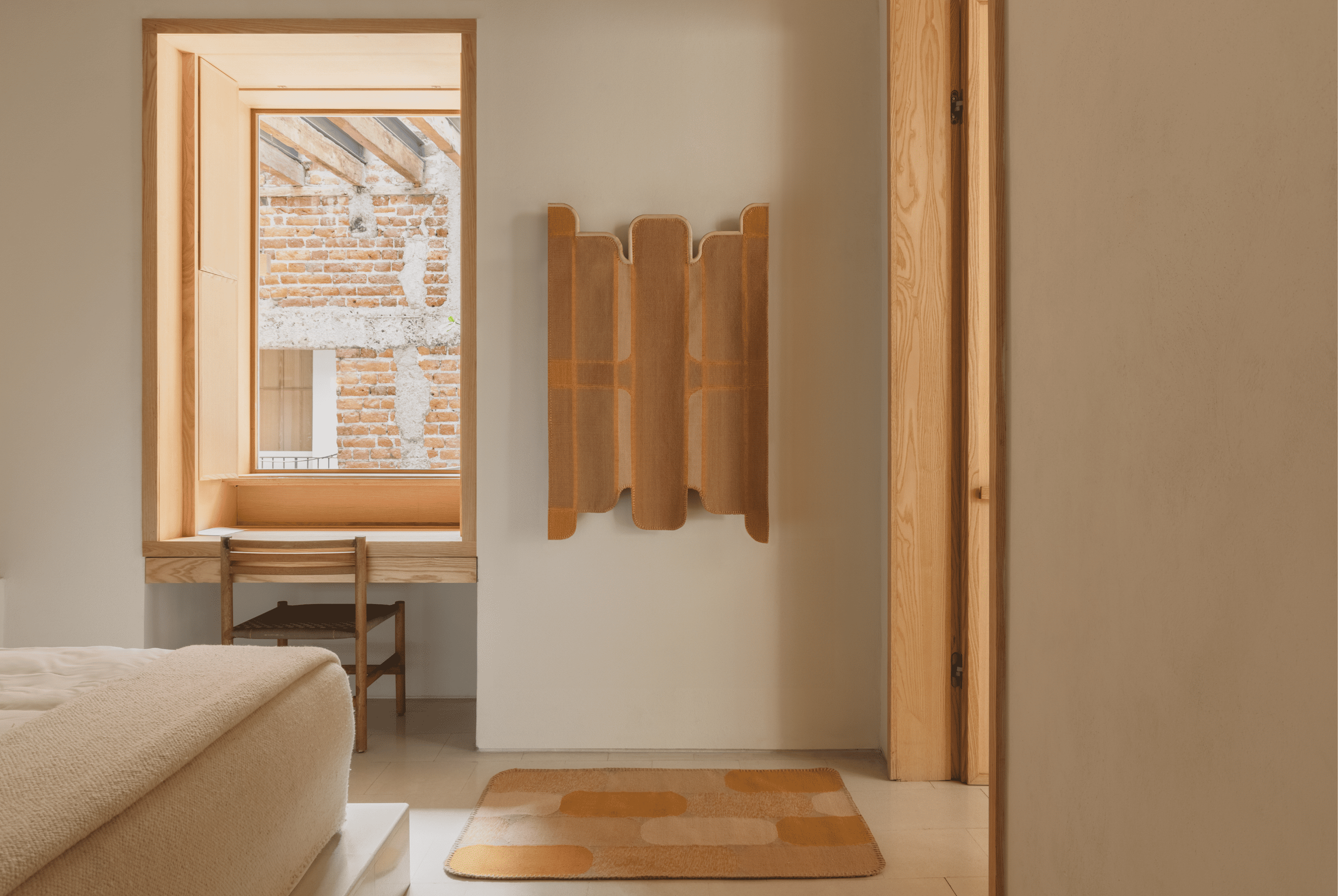
Rugs and throws bring warmth, acoustic comfort and a clear visual centre while remaining
independent of the architecture around them.
Home textiles are often introduced after the main decisions about a room have been made,yet their effect is immediate. A rug changes how a floor feels underfoot, reduces thehardness of sound and gives furniture a shared territory. A throw adds colour and texturewithout requiring a permanent intervention. Both can make an otherwise precise interiorfeel more comfortable and lived in.Their independence is part of their value. Unlike a wall, fitted surface or built-in element, atextile can be moved, replaced or used differently over time. It can support the compositionof a room without becoming part of its structure. These five projects range from wool rugsand a woven blanket to objects made from reclaimed fire hoses, showing how softness,pattern and textile construction can take many forms.
1. A Twice Woven Rug by URBAN FABRIC RUGS, designed by MOS Architects
Canada / United States, 2024
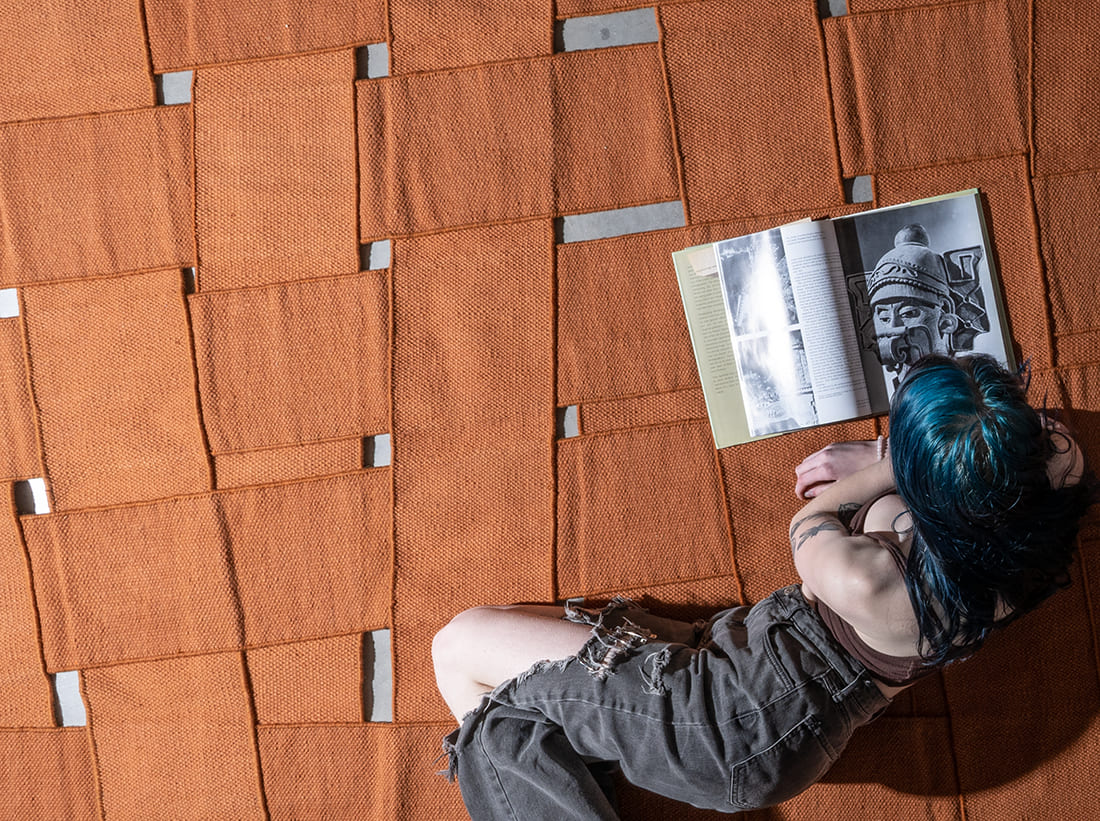
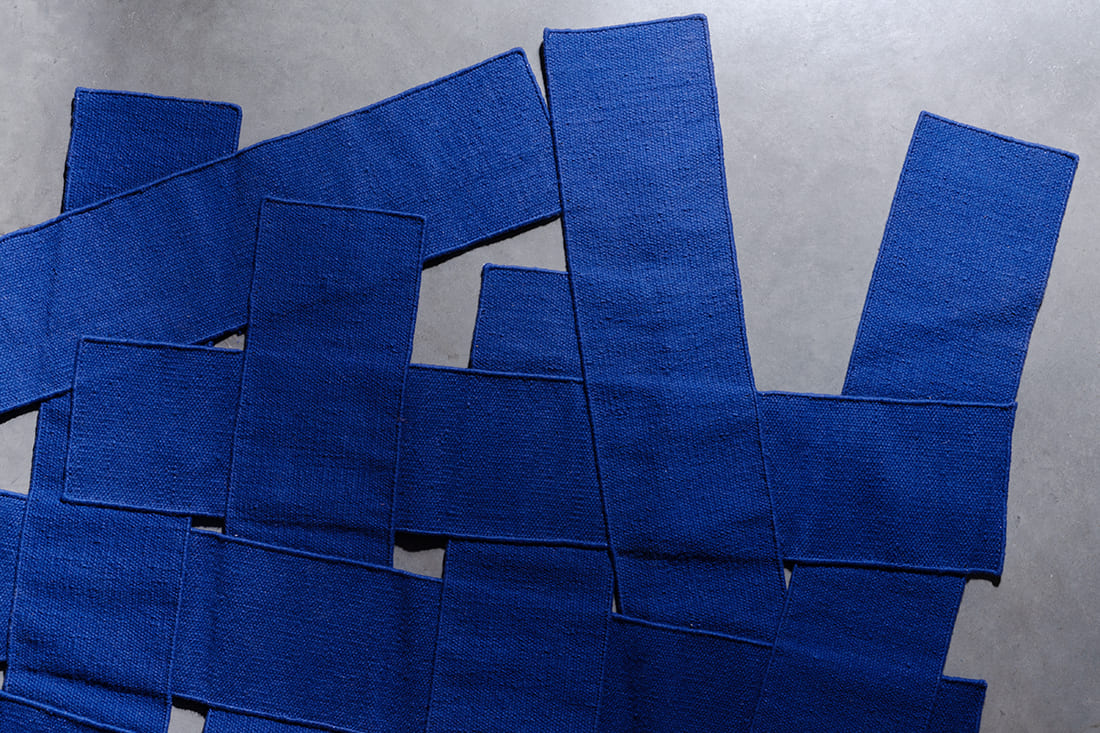
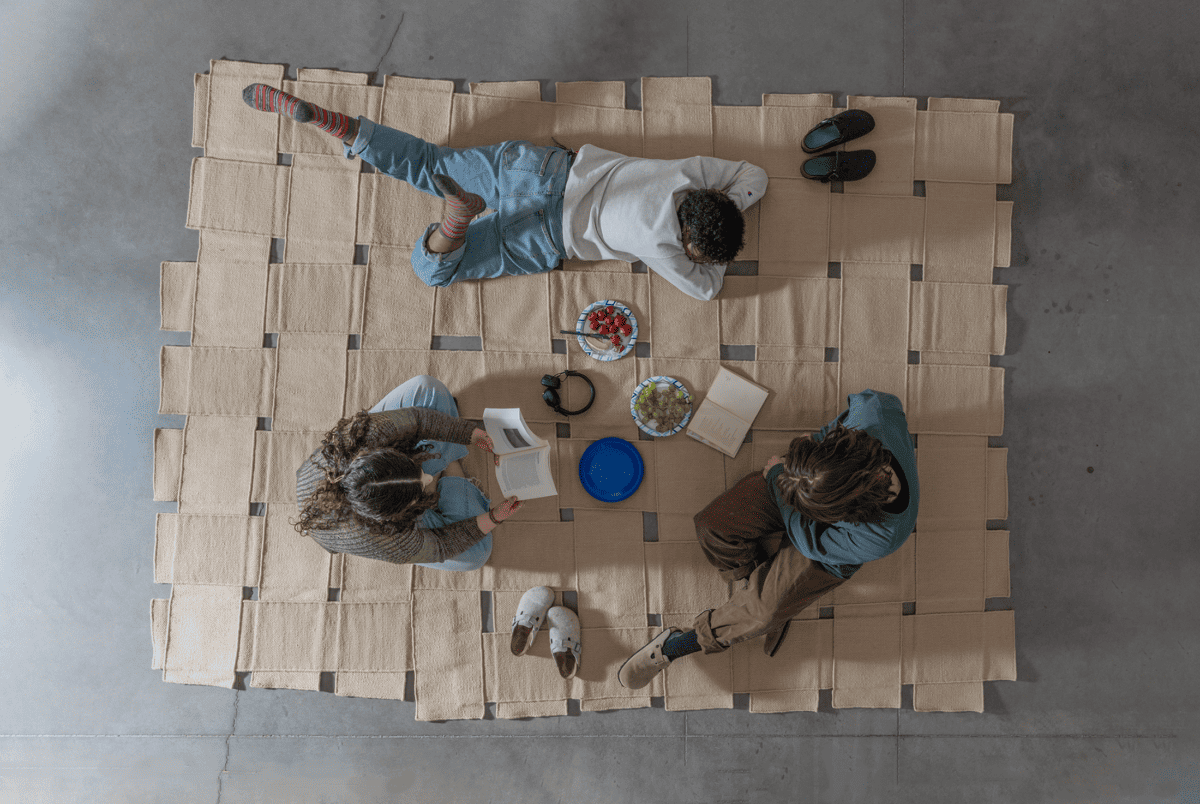
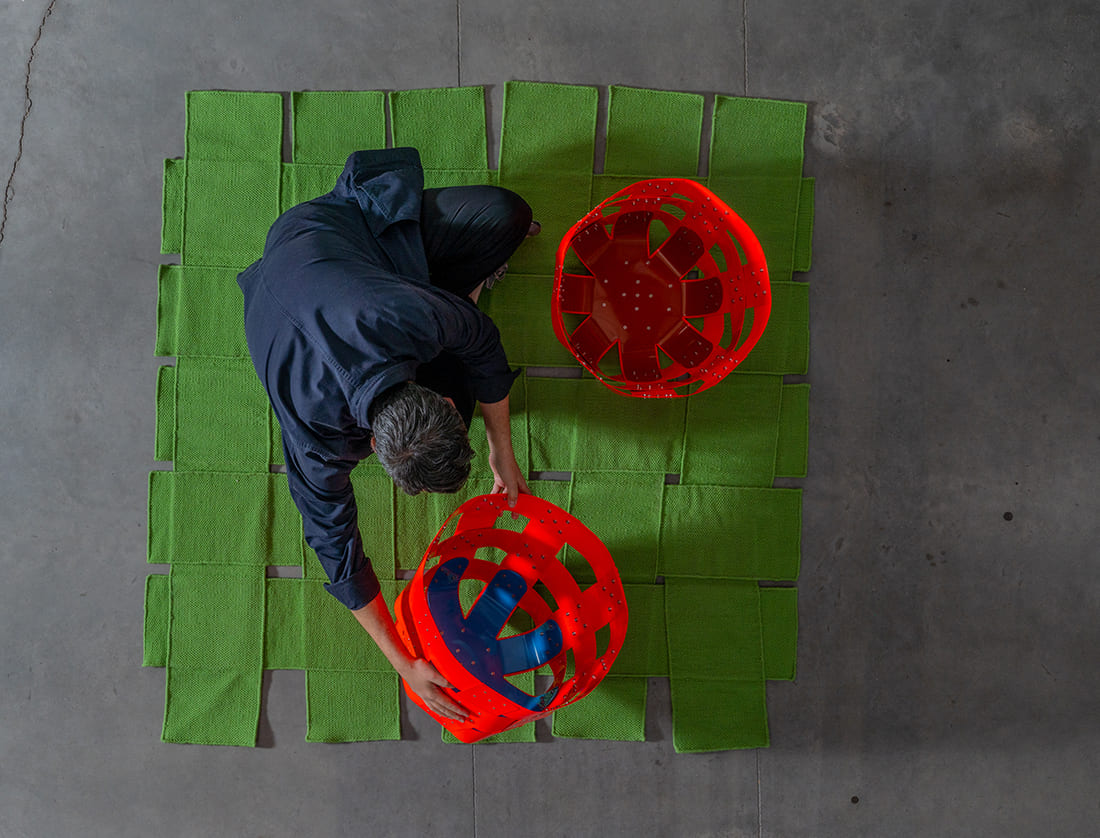
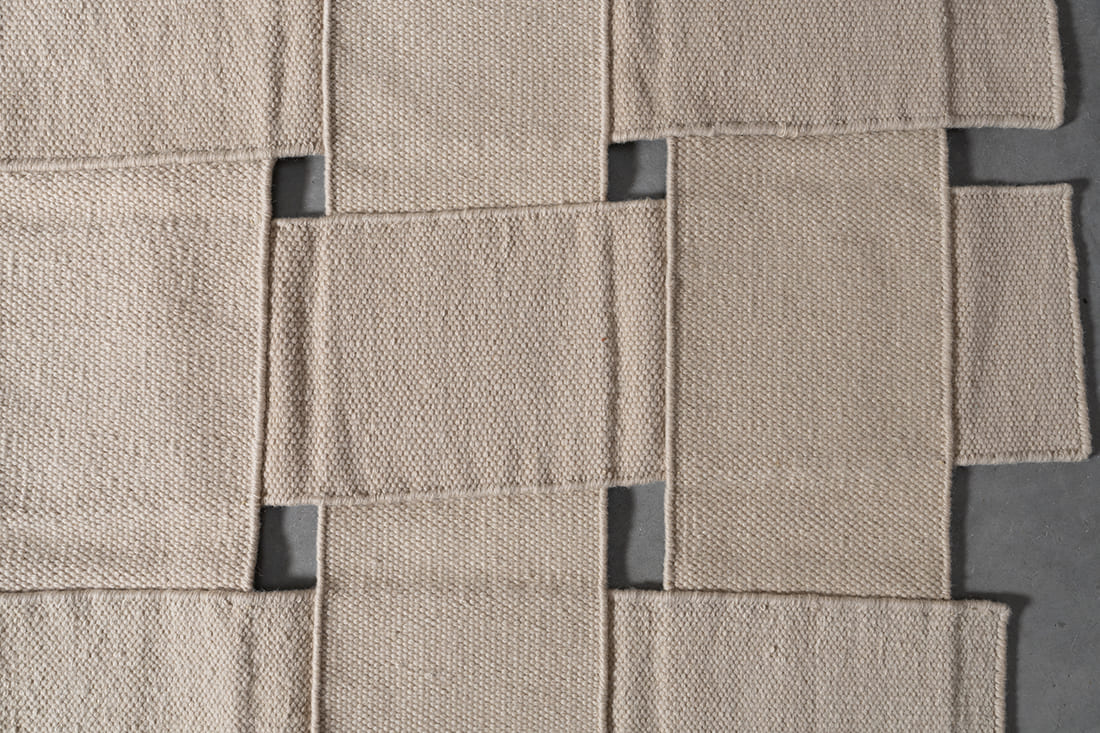
A Twice Woven Rug begins with flatwoven wool divided into 25-centimetre strips. These modules are then interlaced for a second time, treating each completed strip like an enlarged warp or weft thread. The resulting surfaces are deliberately irregular: edges overlap, alignments shift and the construction remains visible. MOS Architects developed the compositions through paper models that were woven, cut and pinned by hand before being translated into wool. The process gives the rugs enough structure to act as independent graphic objects, while their loose edges and minor variations preserve the directness of handmade production
2. Contemplari by Bi Yuu, designed by Estudio Marisol Centeno
Mexico, 2024
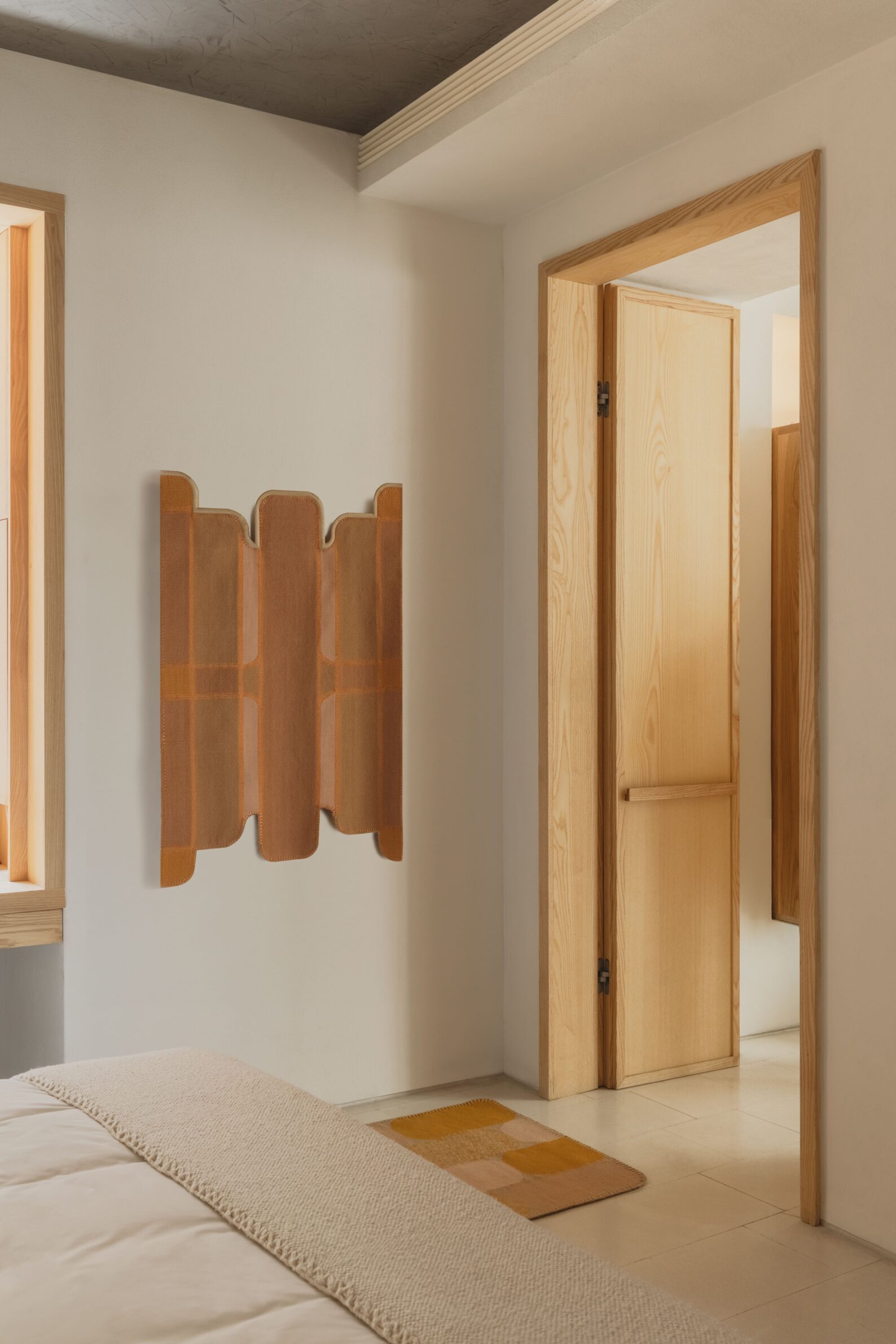
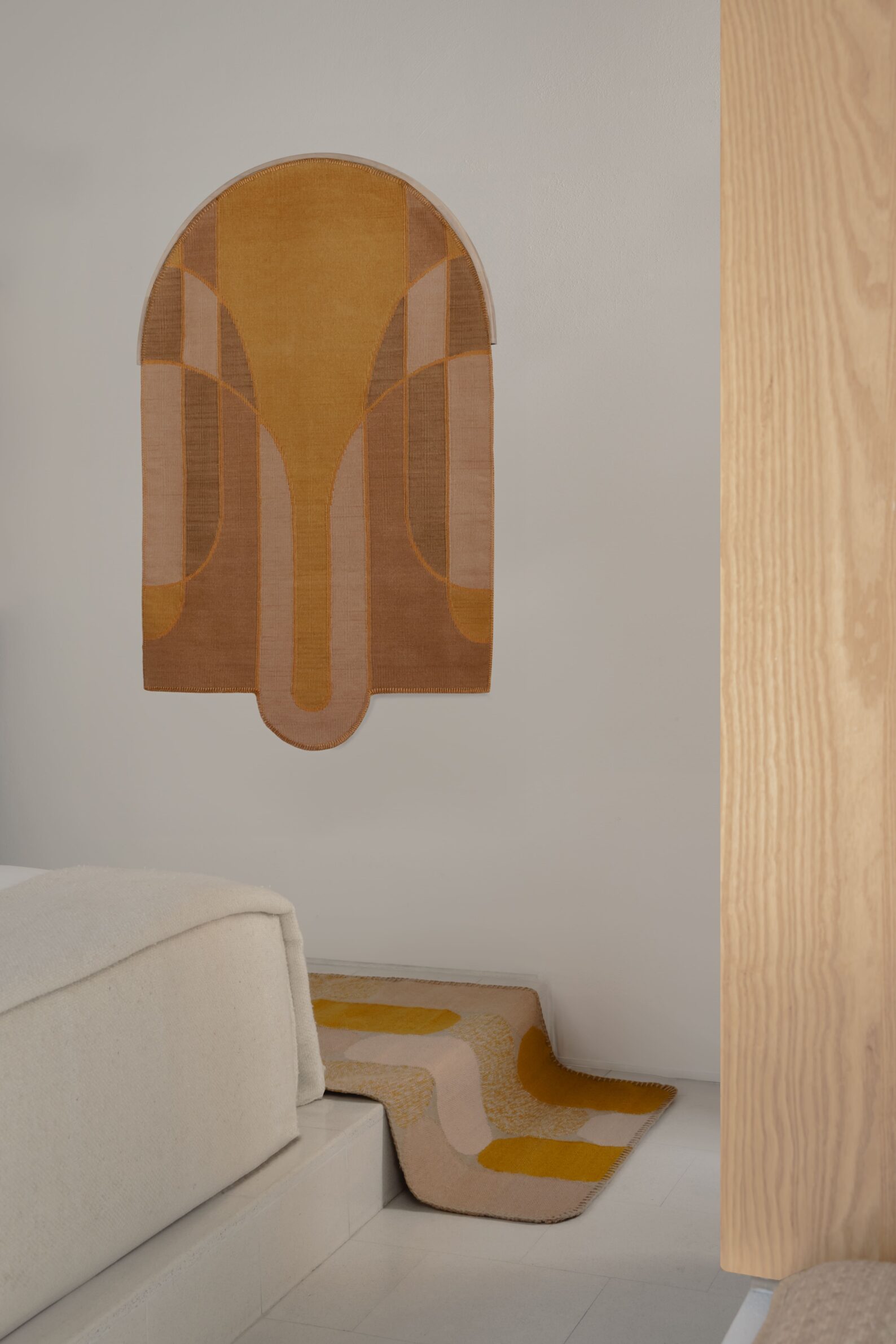
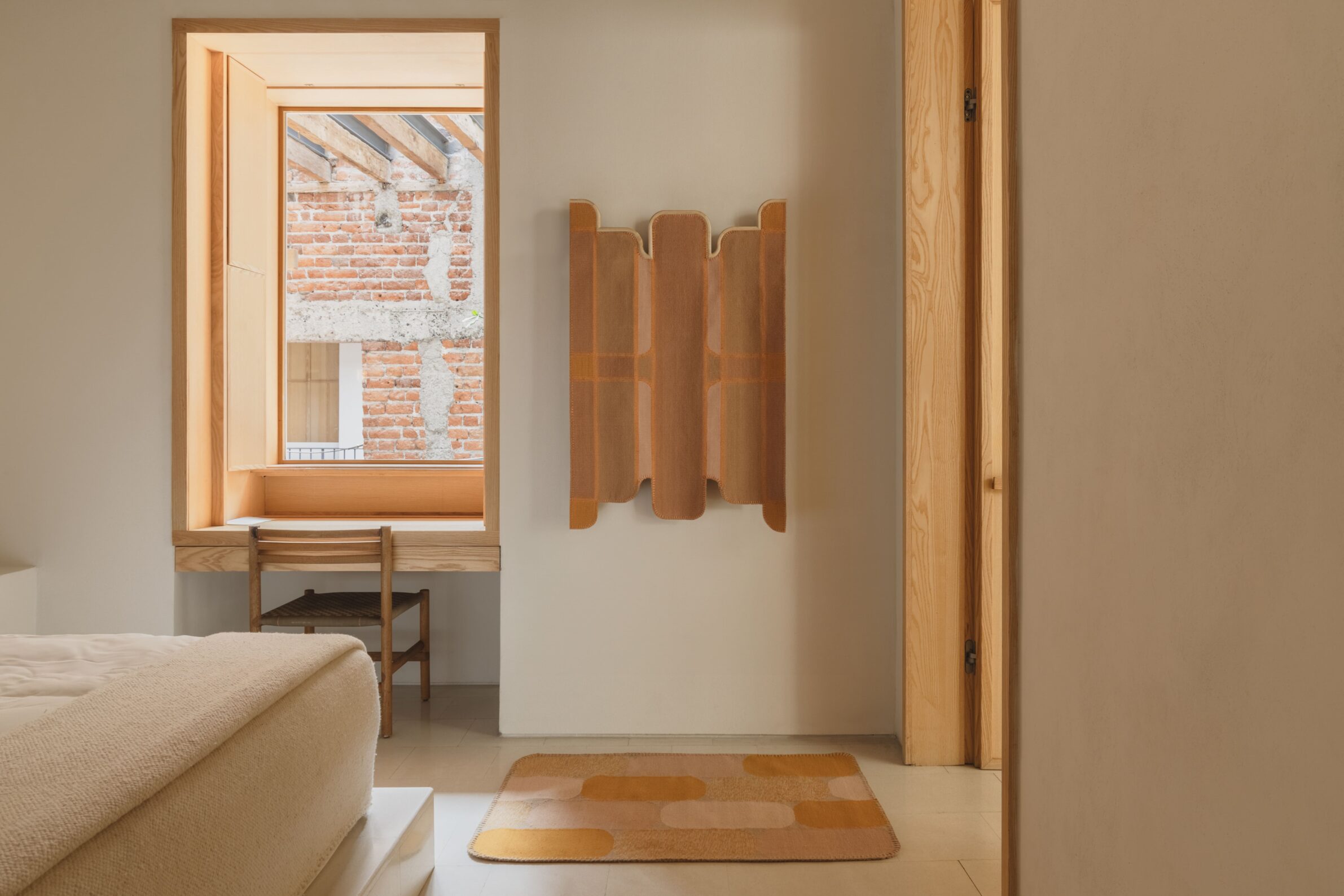
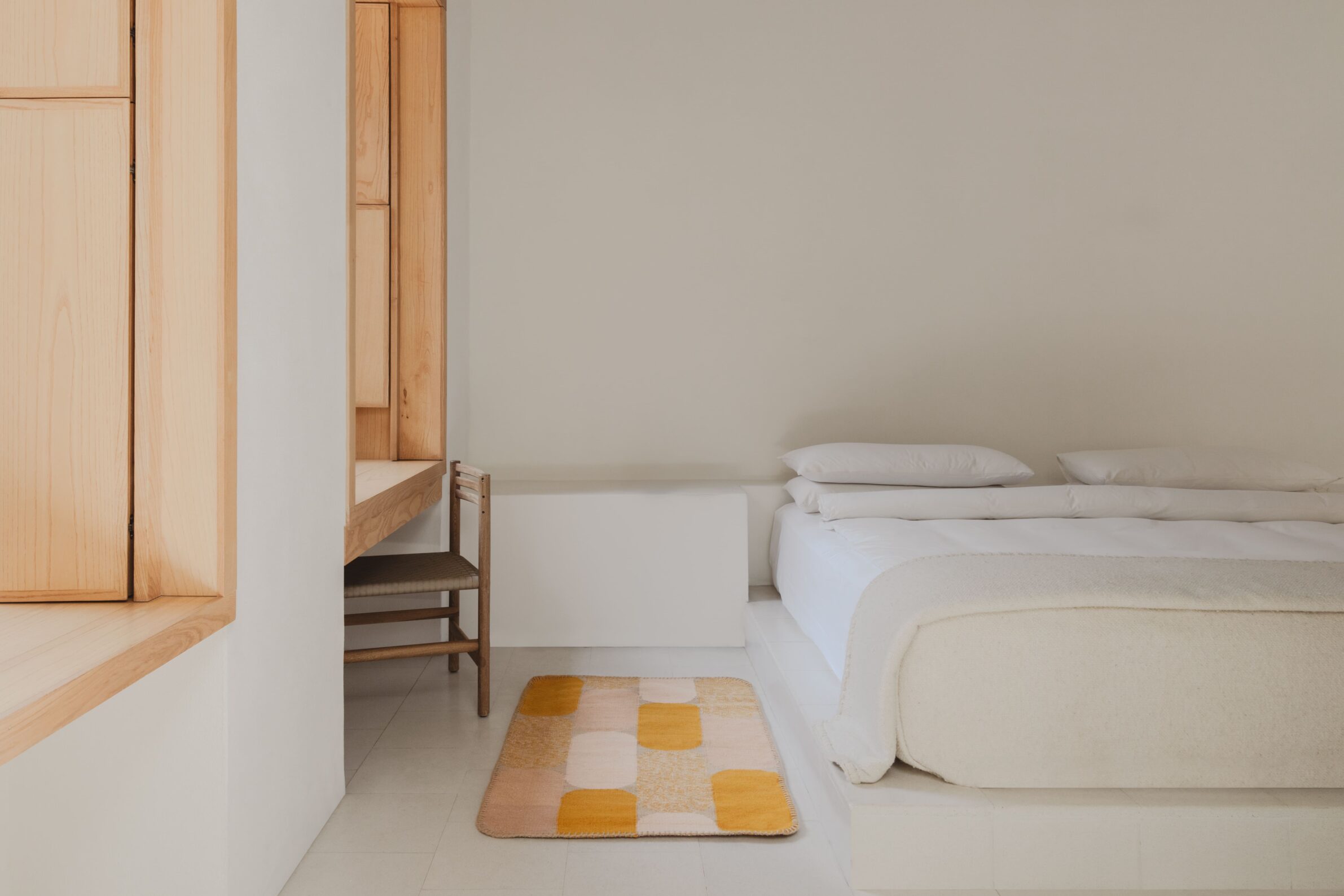
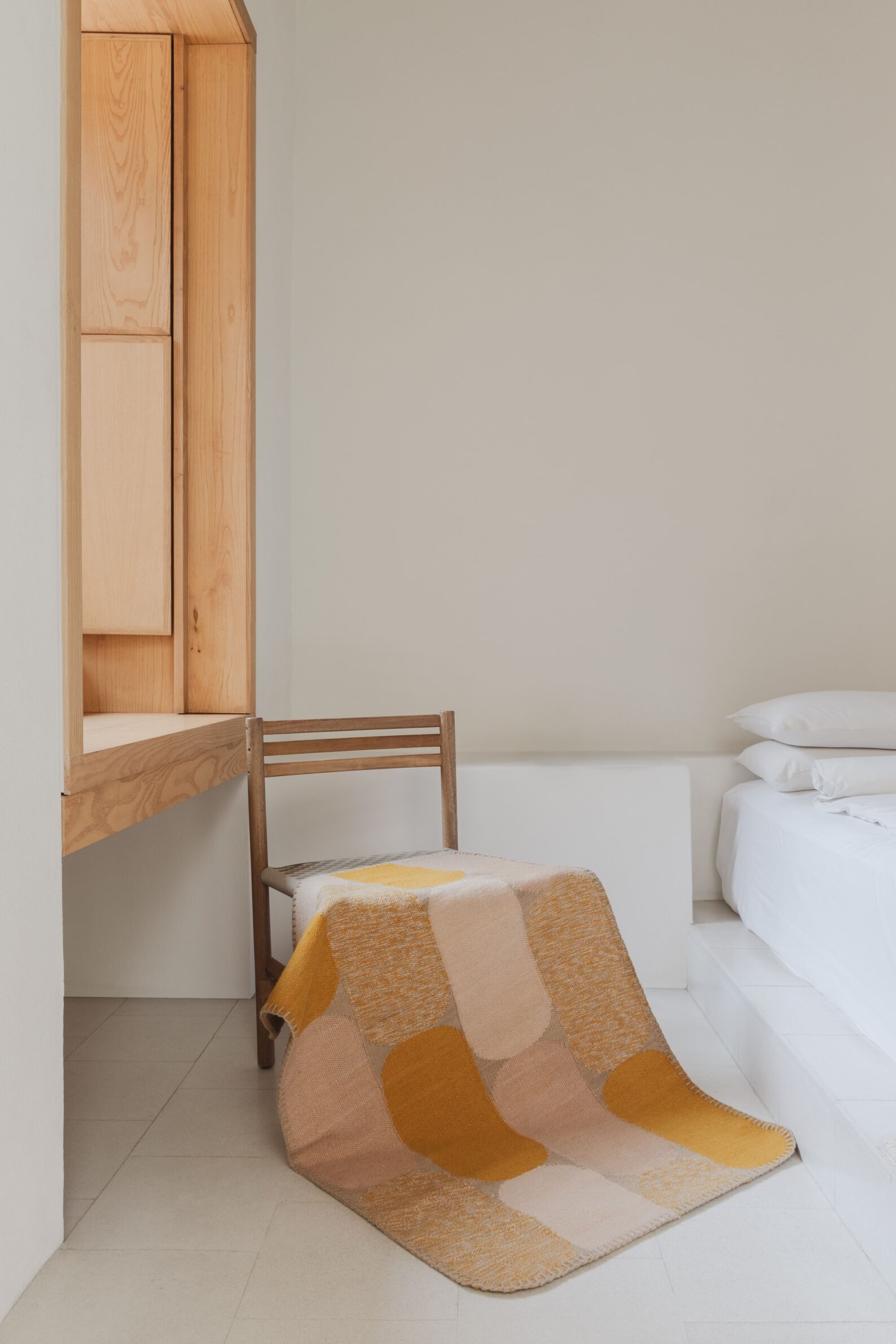
Contemplari belongs to a textile practice that treats the rug as more than a neutral surface beneath furniture. Bi Yuu and Estudio Marisol Centeno work with colour, handmade processes and collaborative production to create pieces with their own visual rhythm. Rather than completing an existing interior quietly, Contemplari introduces a composition that invites slower observation and can hold attention independently of the objects placed around it. The project was recognised in the textile design category of the 2024 Dezeen Awards, reflecting the studio’s broader interest in connecting contemporary design with material knowledge and collective craft. Public sources do not specify its exact fibres, dimensions or weaving technique.
3. Grounded Rugs by InHouse Group, designed by Plesner Patterns
Norway, 2025
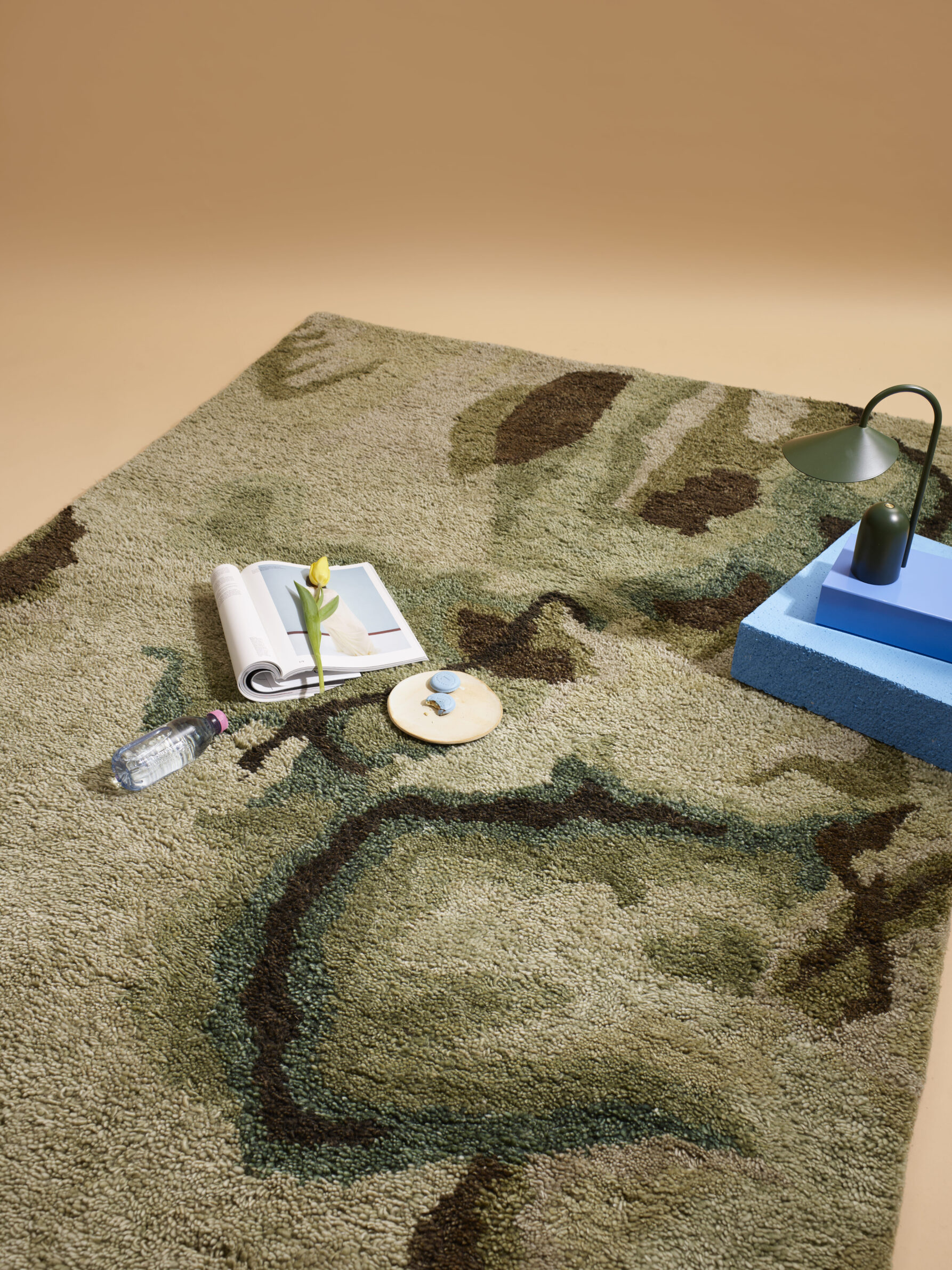
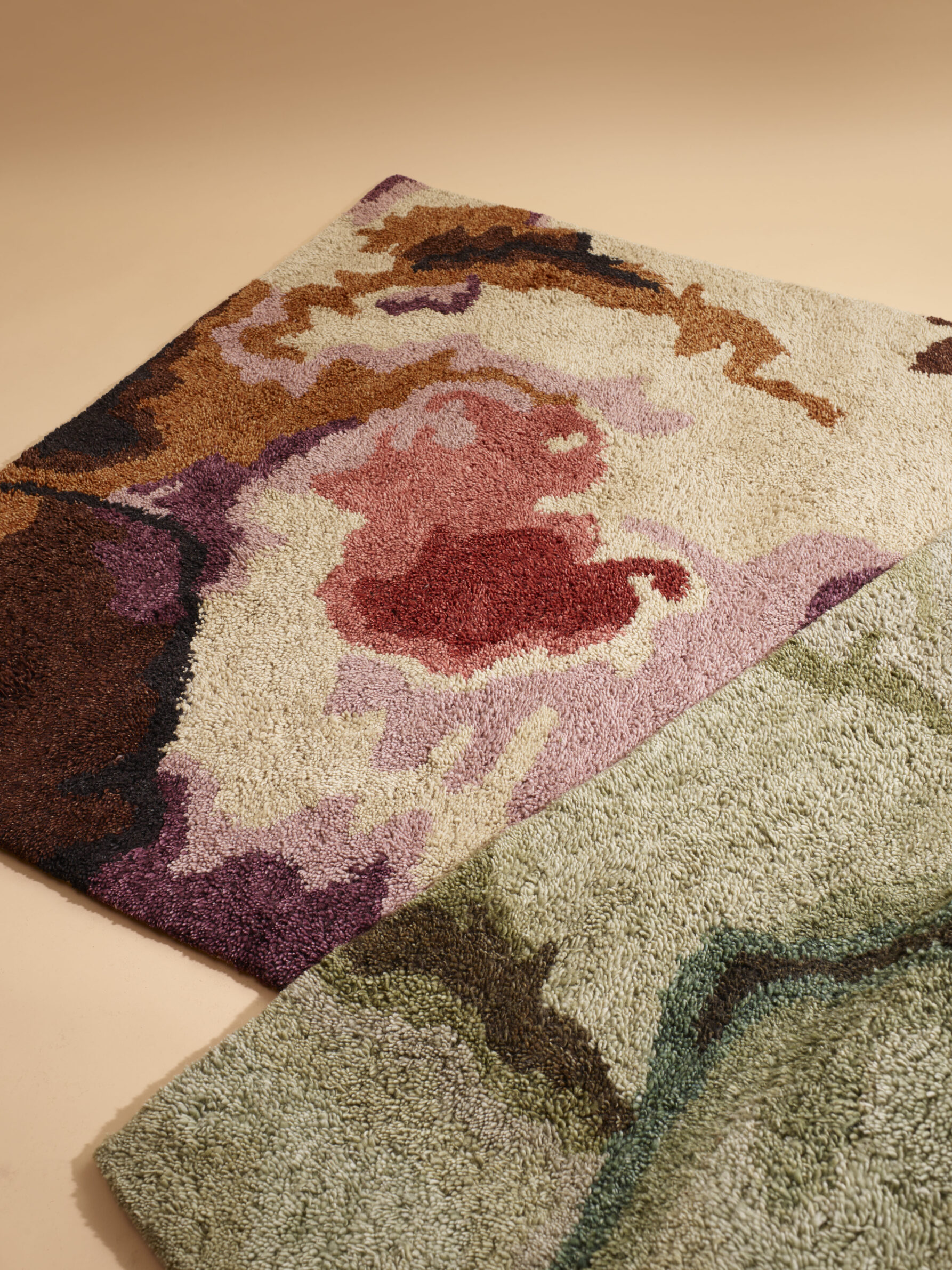
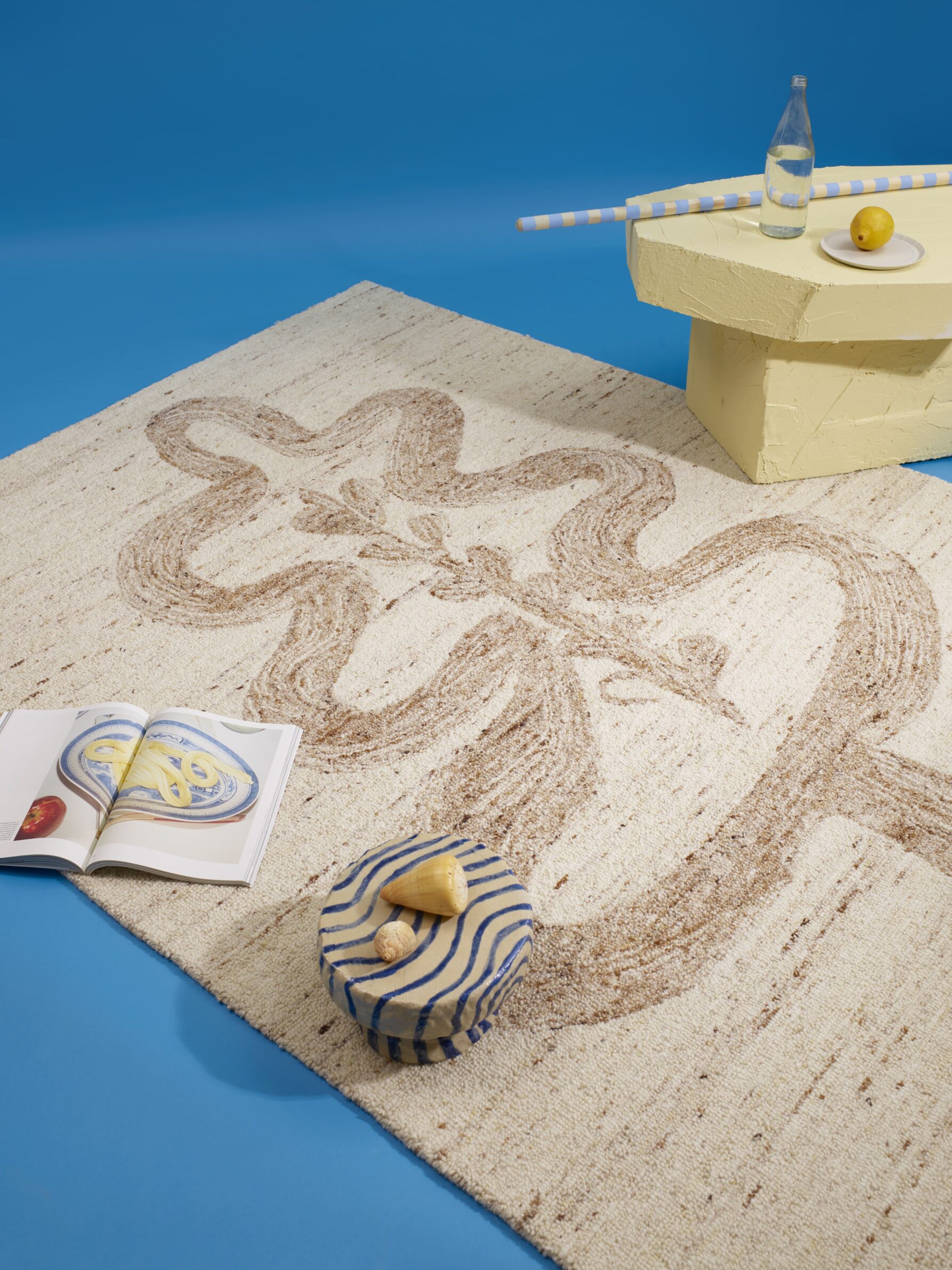
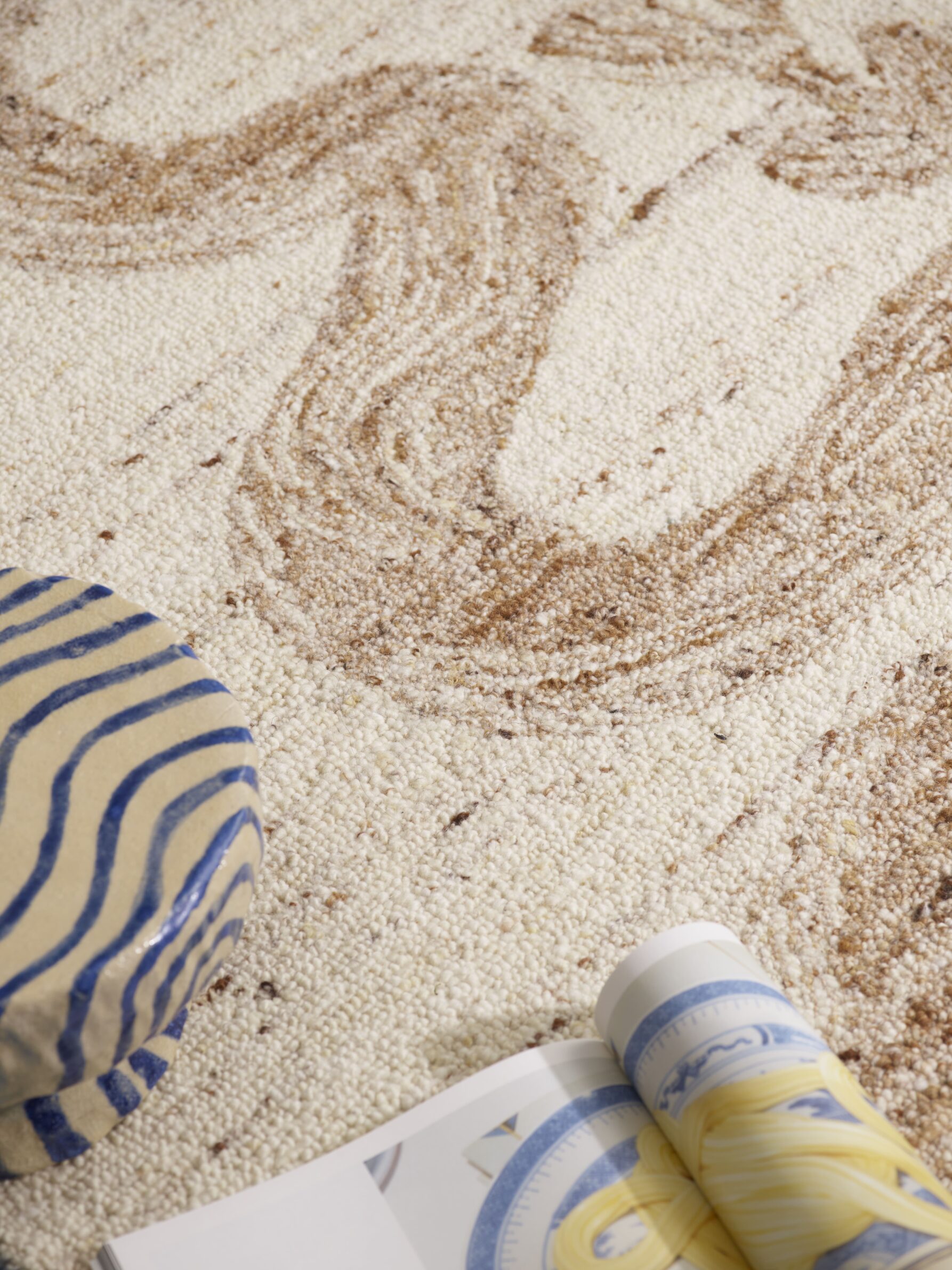
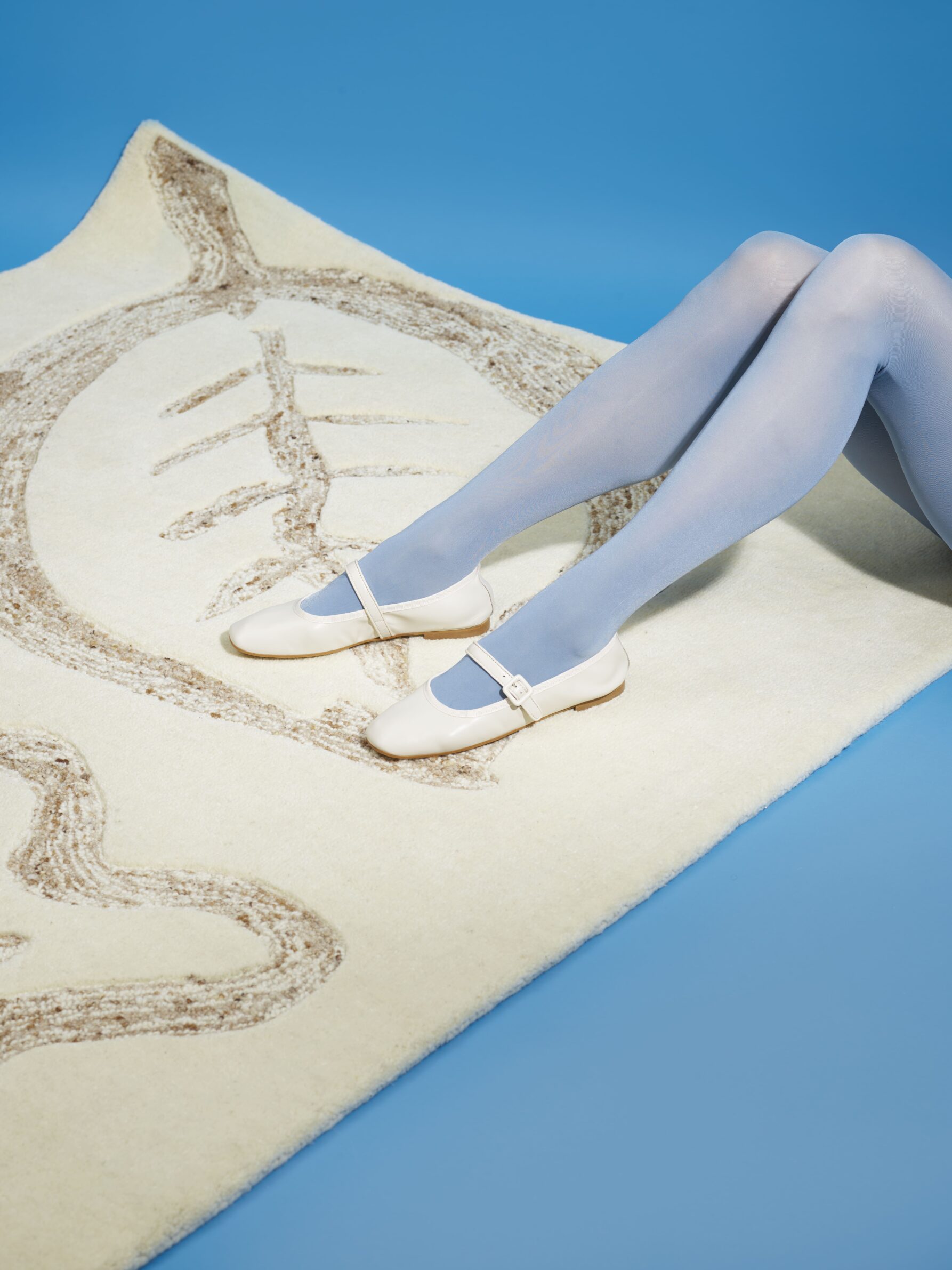
Grounded translates memories of forests, leaves and untamed meadows into a collection of hand-tufted wool rugs. Designer Kiki Plesner-Löfroth developed three principal patterns: Wild Meadow, Forest Ground and Leaf, the latter produced in playful and more restrained variations. Their organic outlines and changes in pile create a surface that is as important to touch as it is to view. Made from 100 per cent wool and hand-tufted in India, the rugs soften a room physically while giving the floor an active visual role. Nature appears not as a literal landscape image, but through irregular shapes, layered tones and variations in texture.
4. Heritage Throw by Plesner Patterns, designed by Kiki Plesner-Löfroth
Norway, 2021
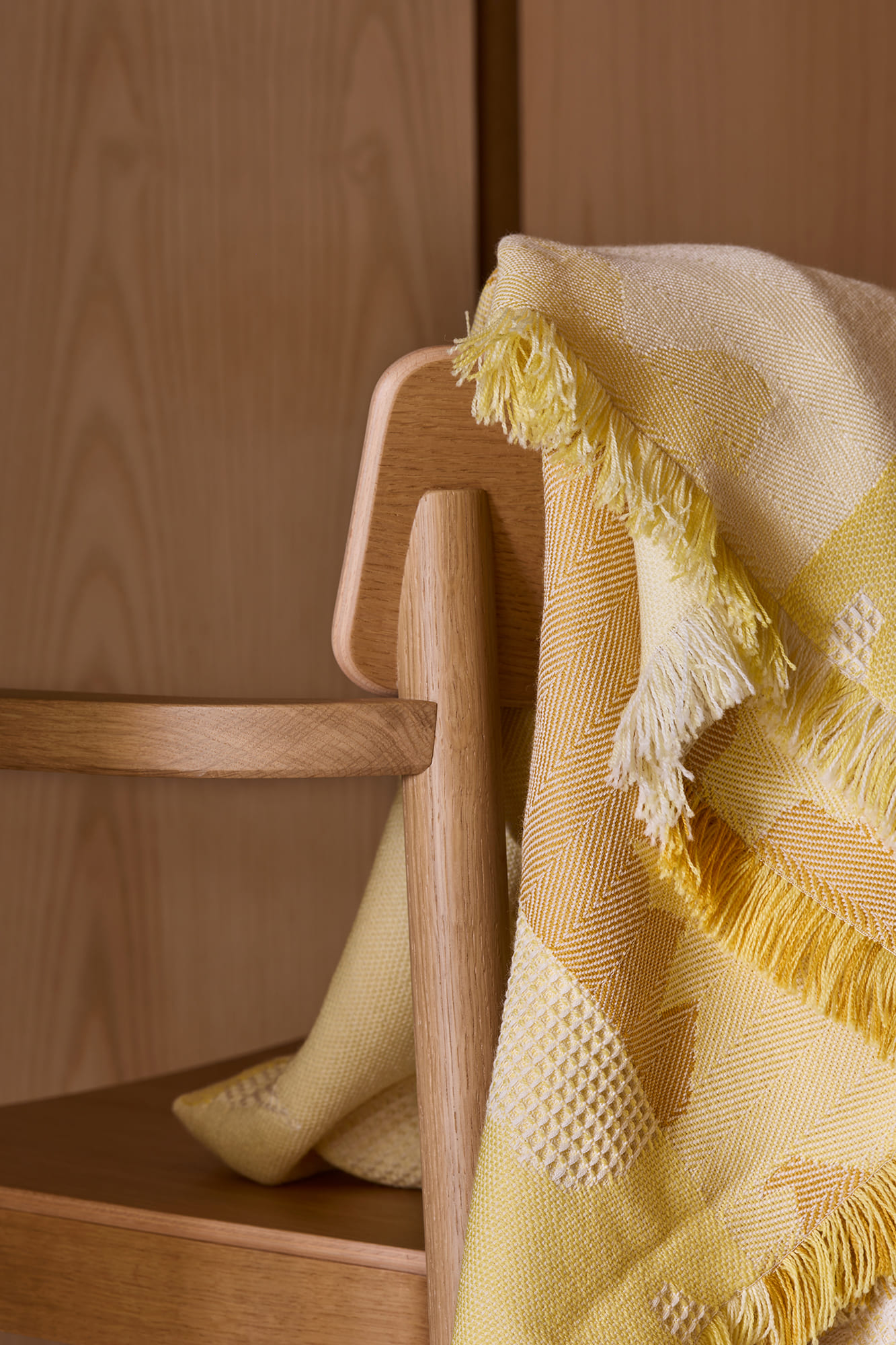
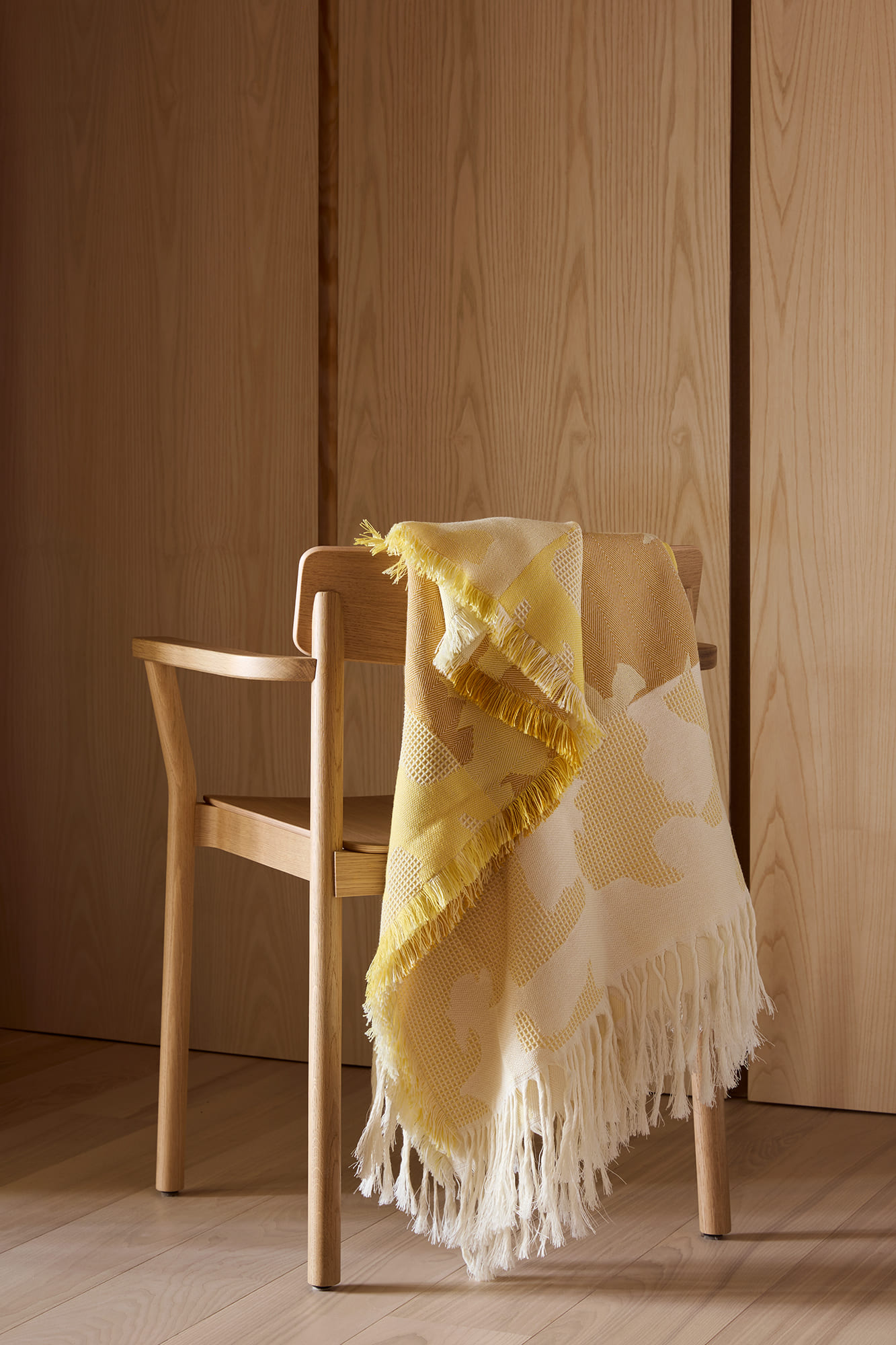
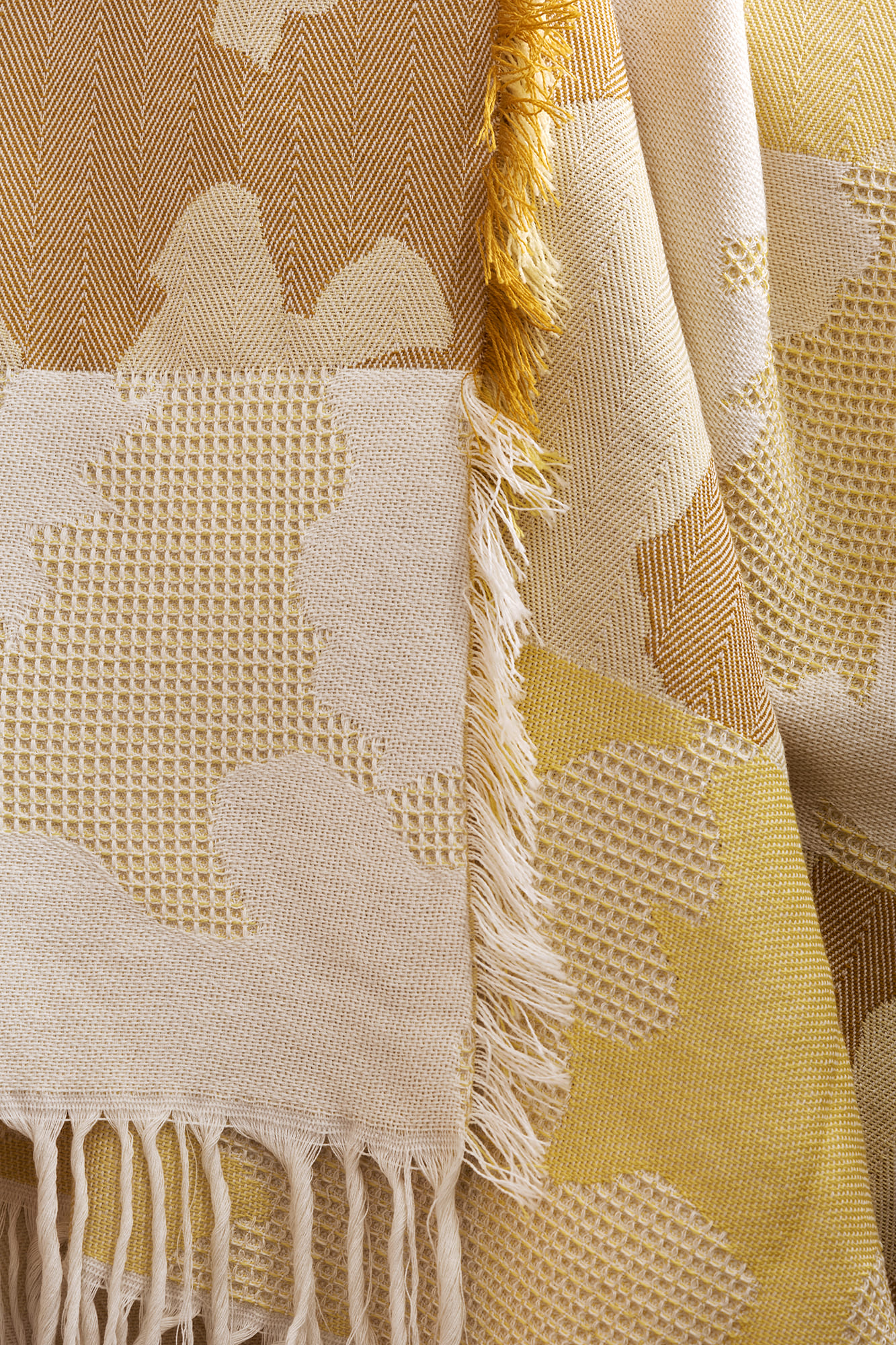
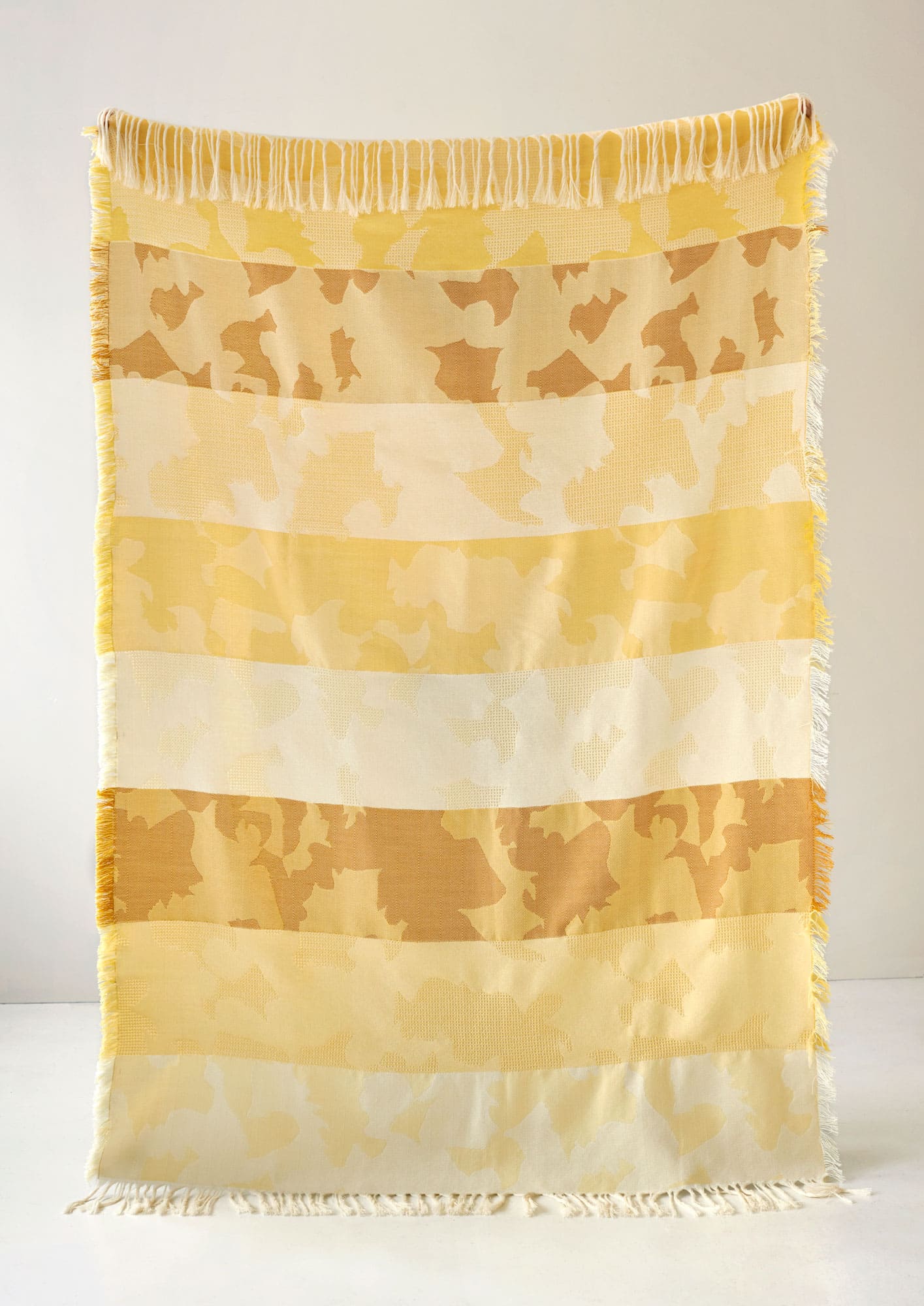
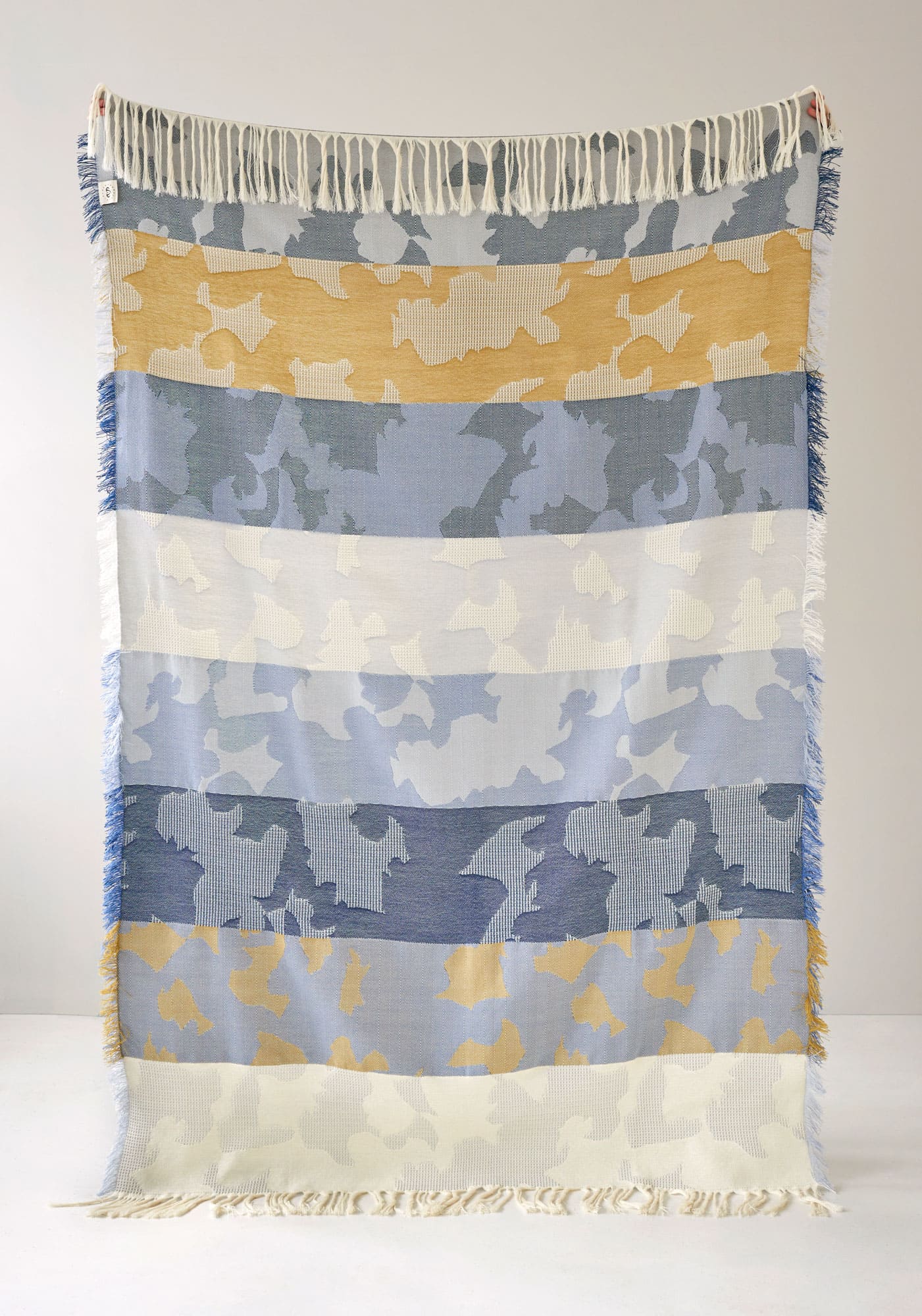
The Heritage Throw brings the density of traditional Norwegian ornament into a light wool blanket available in several colourways. Its pattern was inspired by carved decoration on an old pine clock in the designer’s grandmother’s cabin. Rather than simplifying that reference, Kiki Plesner-Löfroth retained its abundance through changes in colour, line and woven texture. Older techniques, including waffle weave and herringbone, appear selectively within the organic composition. Produced at Grinakervev in Norway, the throw can be used directly for warmth while also bringing a strong textile surface onto a bed, sofa or chair.
5. GUMMI Collection by FÜÜR
Switzerland / Spain, 2025
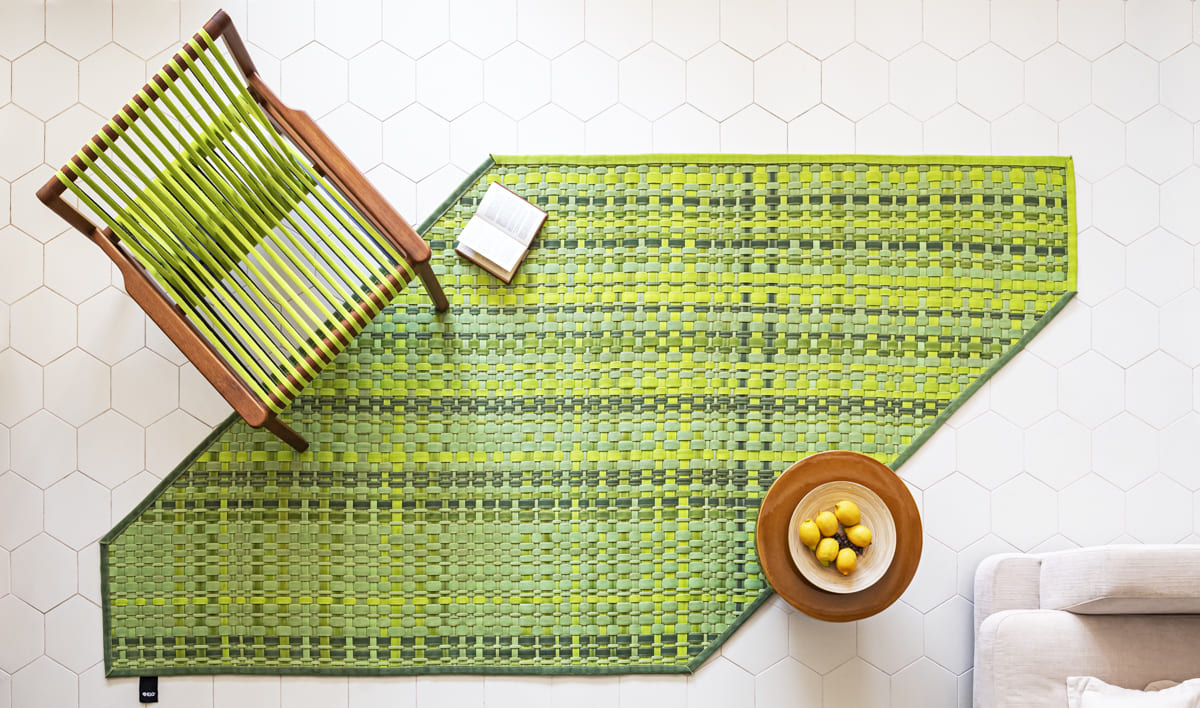
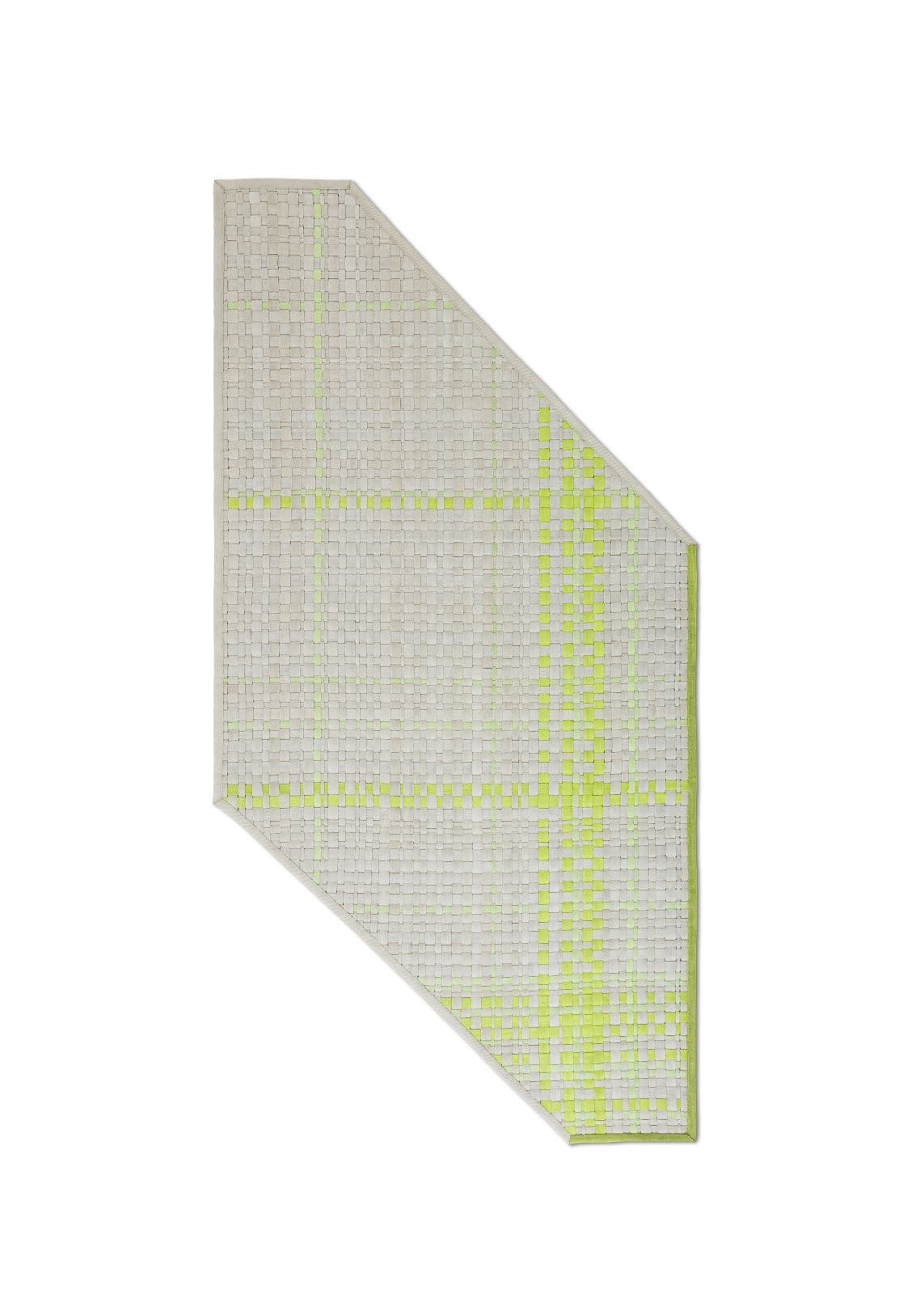
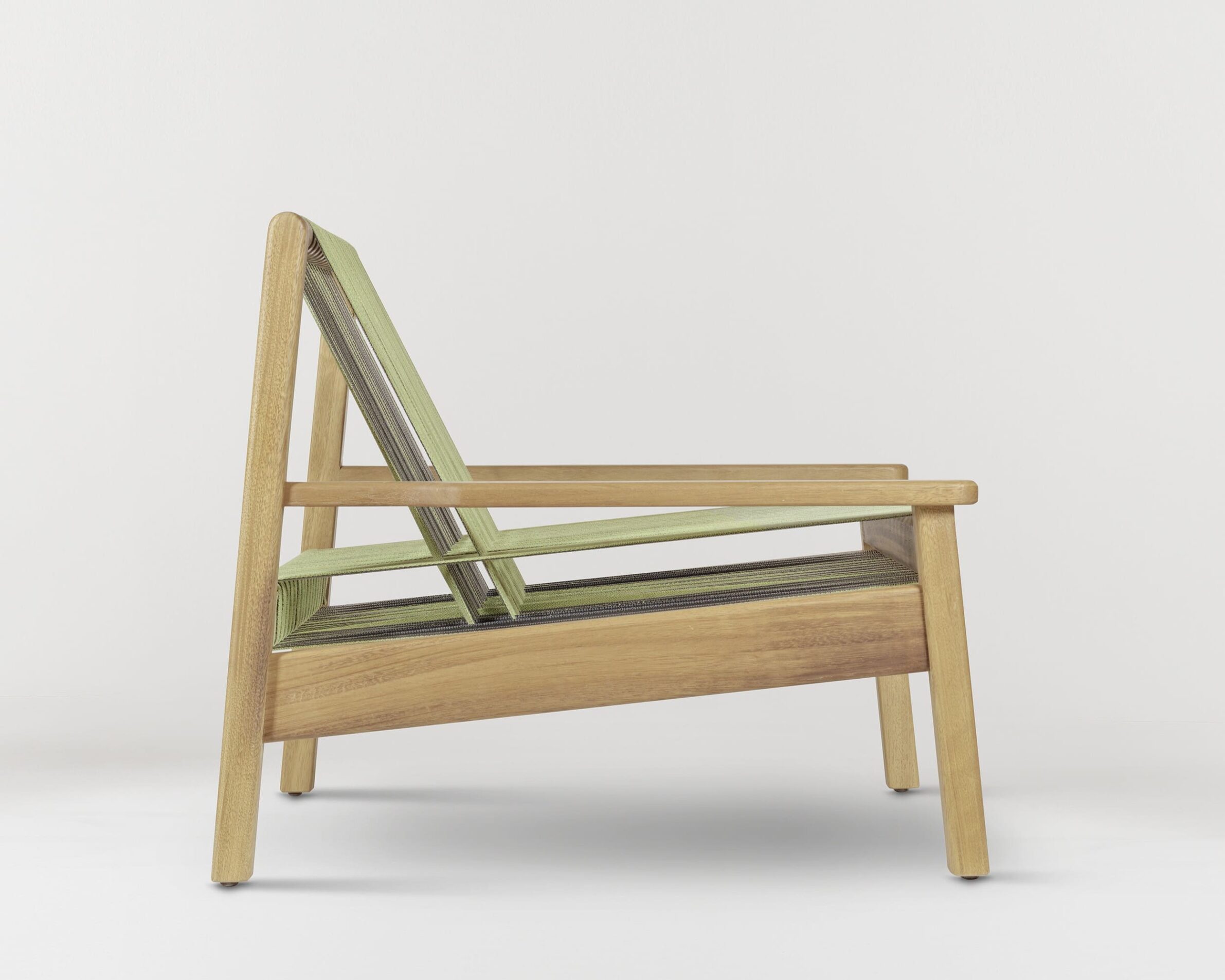
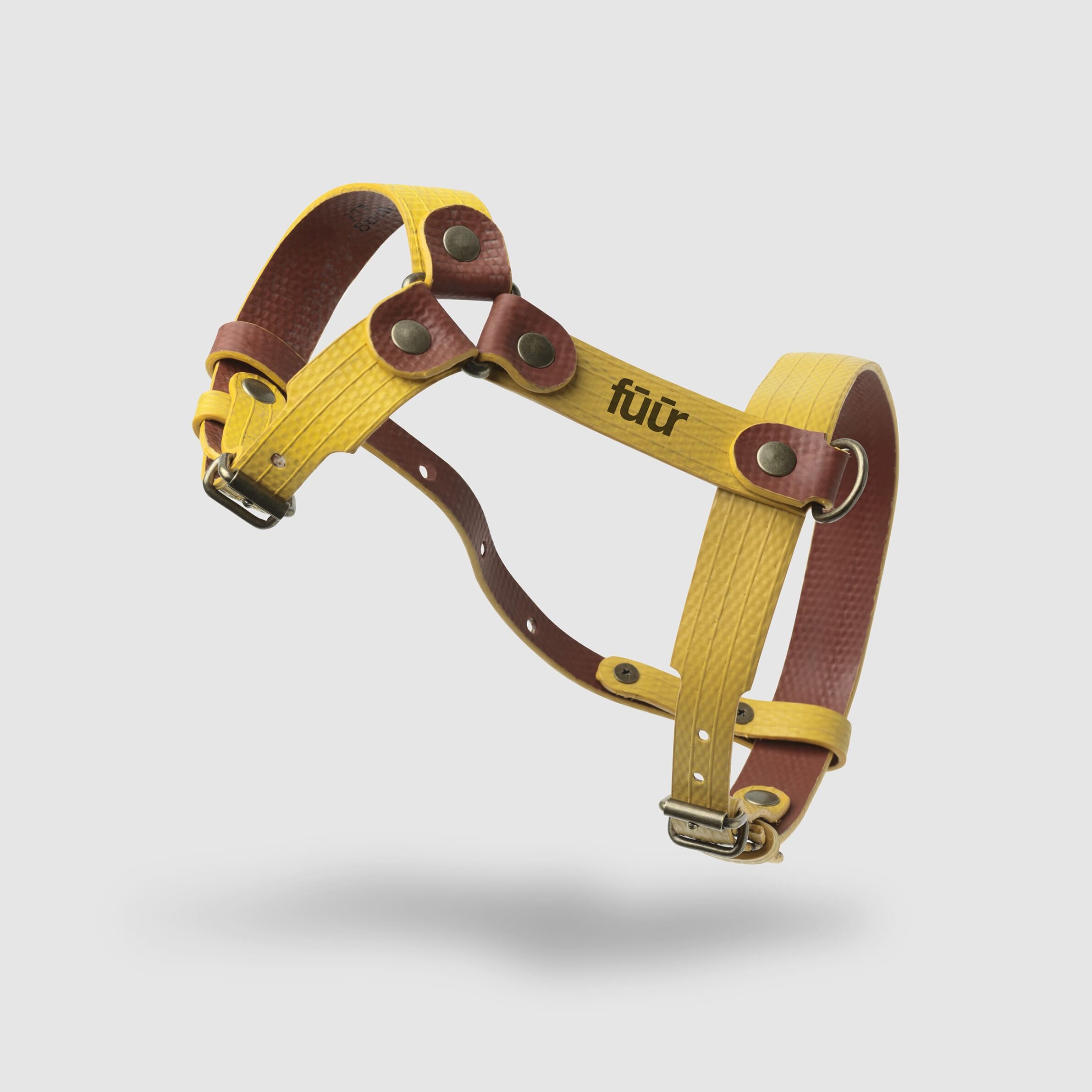

FÜÜR expands the idea of domestic textiles through decommissioned fire hoses recovered before disposal or incineration. The fire hoses consist of woven polyester mesh bonded to an EPDM rubber lining. Because these materials cannot currently be easily separated for conventional recycling, the decommissioned hoses are cut into strips and handwoven into durable indoor-outdoor rugs in Spain. Its previous use remains visible through colour differences, markings and wear, giving every surface small variations that cannot be manufactured from new material. The same reclaimed hoses are also used for garden chairs and pet accessories, turning a single waste stream into a broader family of functional objects. The result is less soft than wool, but it retains the flexibility, repetition and woven construction associated with textiles.
A rug does not need to fill a room to change it. It can establish a place for sitting, connect objects that would otherwise feel dispersed or introduce texture where the architecture is deliberately restrained. Its usefulness is inseparable from its visual role.
These projects also show that textiles need not disappear into the background. Weaving can become a visible construction method, ornament can be treated as contemporary rather than nostalgic, and reclaimed industrial material can acquire an entirely different domestic use. Their contribution lies in this balance: they remain practical objects while giving the room a clearer centre, a softer atmosphere and another material layer.
___
Selections is an editorial series in the BIG SEE Magazine presenting carefully curated selections of architecture, interior and product design projects. Each article explores a specific theme, question or typology – sometimes through a collection of projects, sometimes through a single work that deserves closer attention. Rather than aiming for completeness, Selections highlights projects that help us better understand the ideas, values and directions shaping the built environment today.
Powered by

Be There.

Edited by:
Tanja Završki
Photography ©:
URBAN FABRIC RUGS / MOS Architects
Bi Yuu / Estudio Marisol Centeno
InHouse Group / Plesner Patterns
Plesner Patterns / Kiki Plesner-Löfroth:
Inger Marie Grini
FÜÜR