


A recycled surface becomes architecturally convincing when its circular story survives the places where it is cut, joined, stained and repaired.
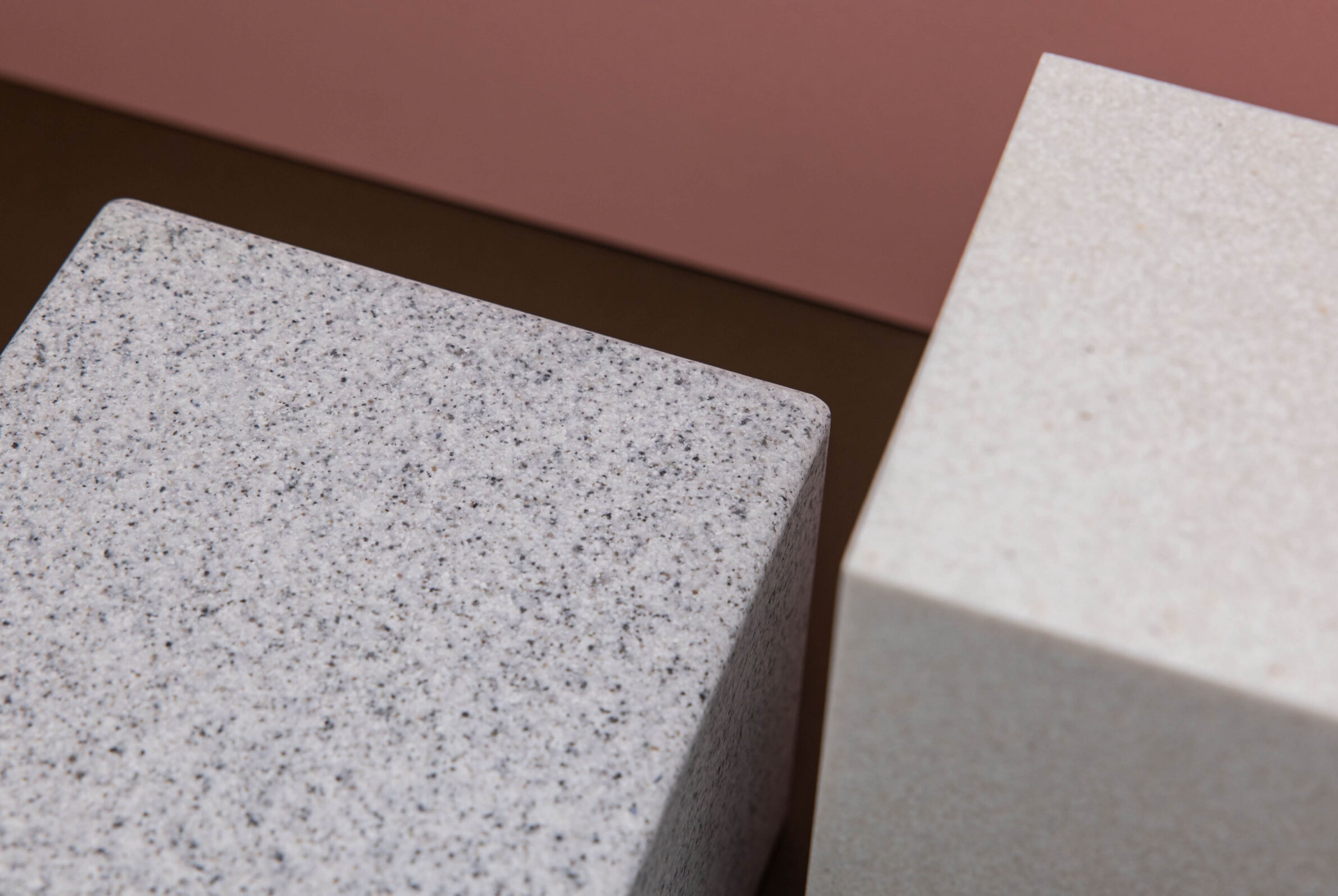
Smile Minerals Recycled Solid Surface, developed by UK manufacturer Smile Materials, approaches recycled content as a material for ordinary interior fabrication rather than as a decorative statement alone. Made in South Wales, the sheet combines recovered solid-surface waste with recycled PET and is intended for worktops, reception desks, furniture, wall cladding and other interior applications where edges, seams and repeated use matter.
© Smile Materials
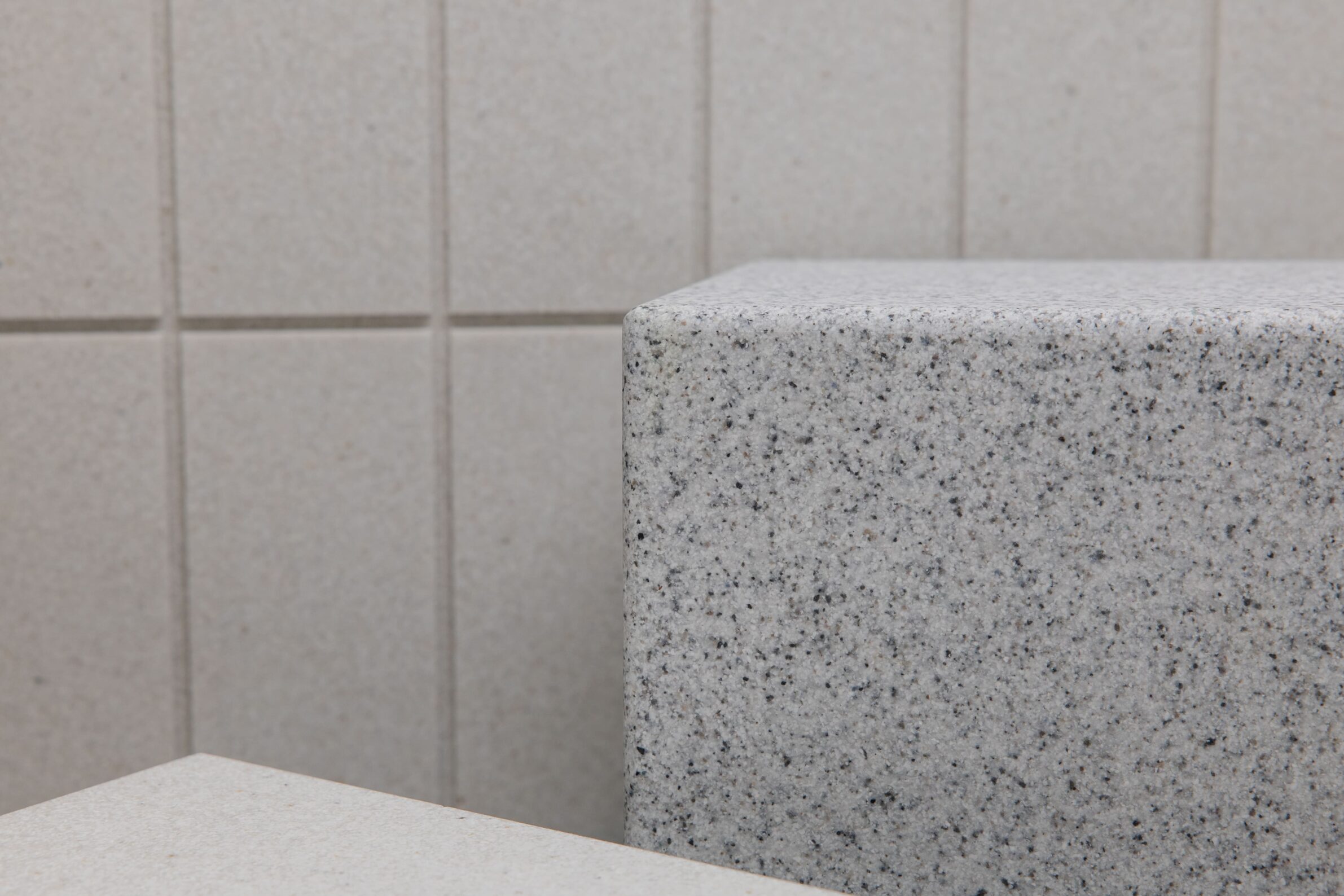
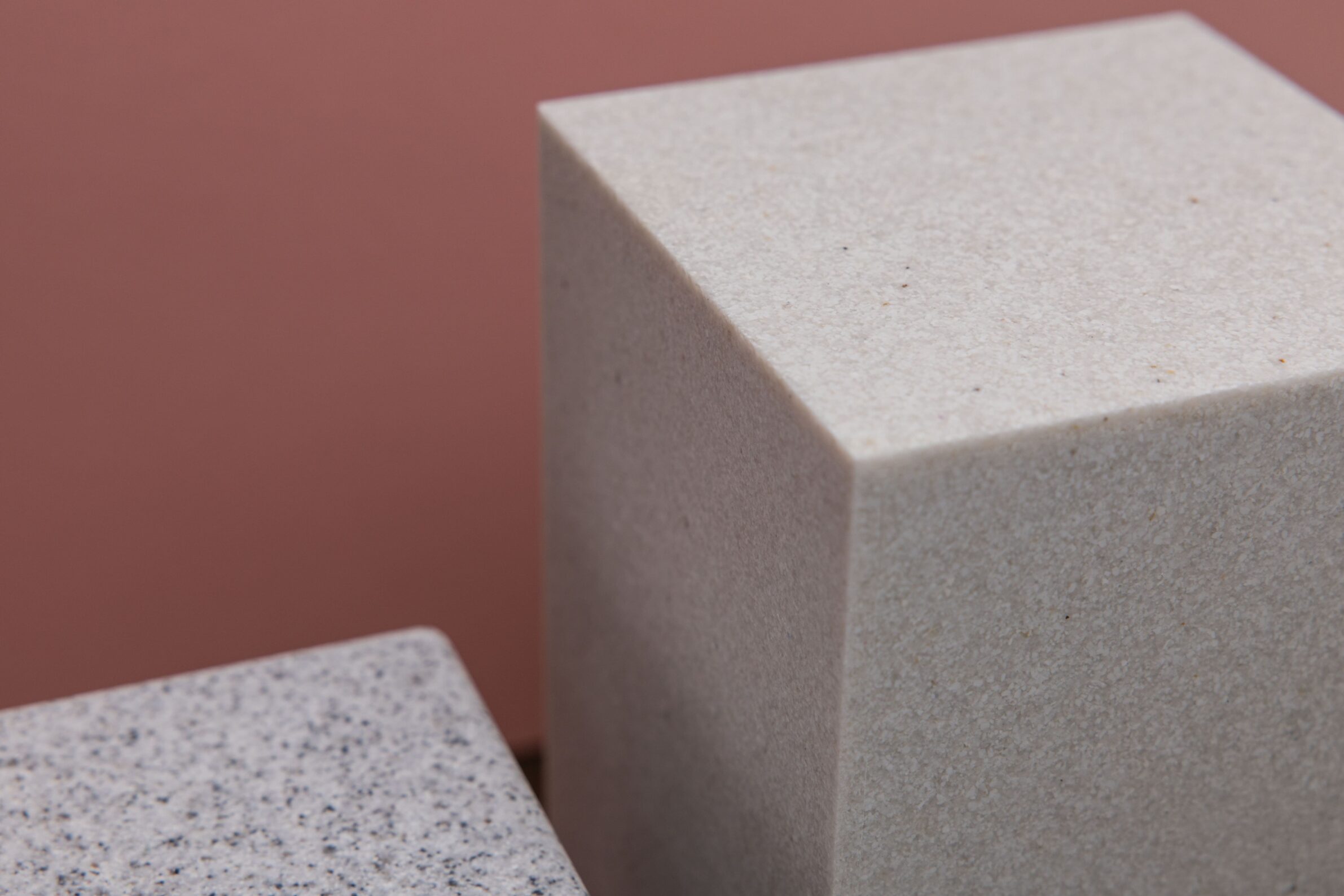
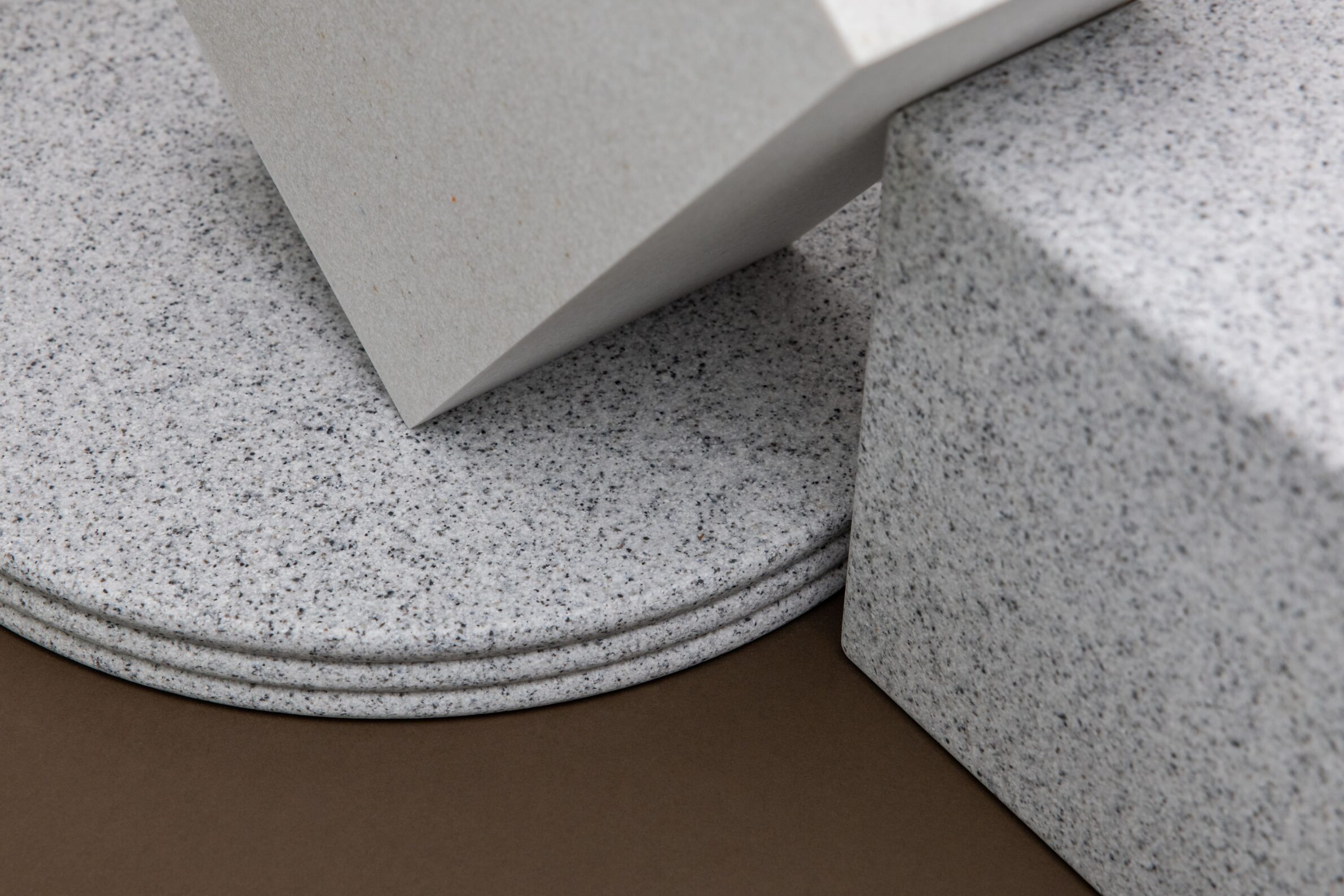
Its composition is now documented through a third-party verified Environmental Product Declaration. The EPD records 99.6 percent recycled content by mass, with the remaining 0.4 percent consisting of pigments. The recovered solid-surface material is diverted from landfill, while recycled PET forms the second principal material stream. The sheets are manufactured under heat and pressure, with fragments of the reclaimed material remaining visible through the finished surface.
© Smile Materials
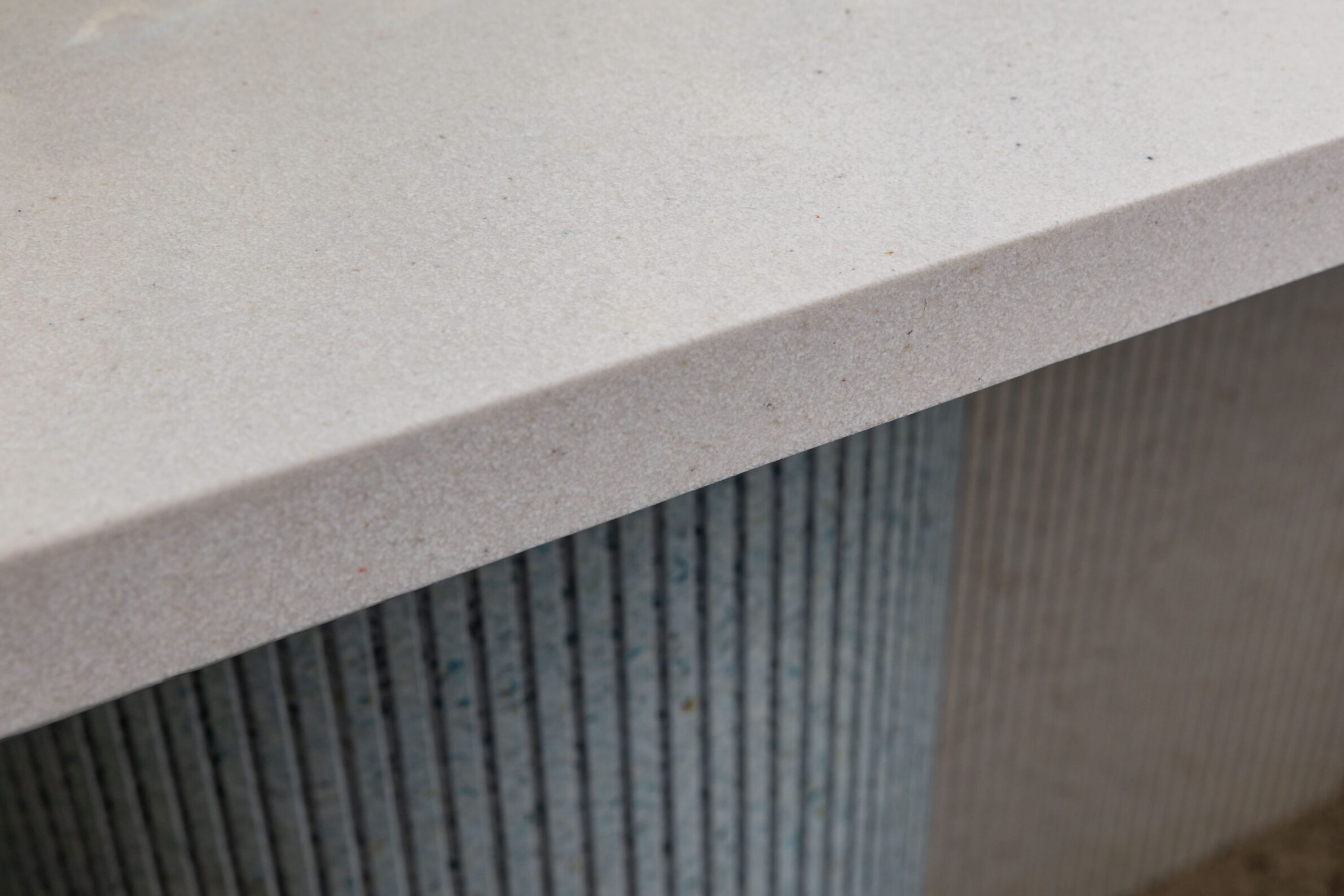
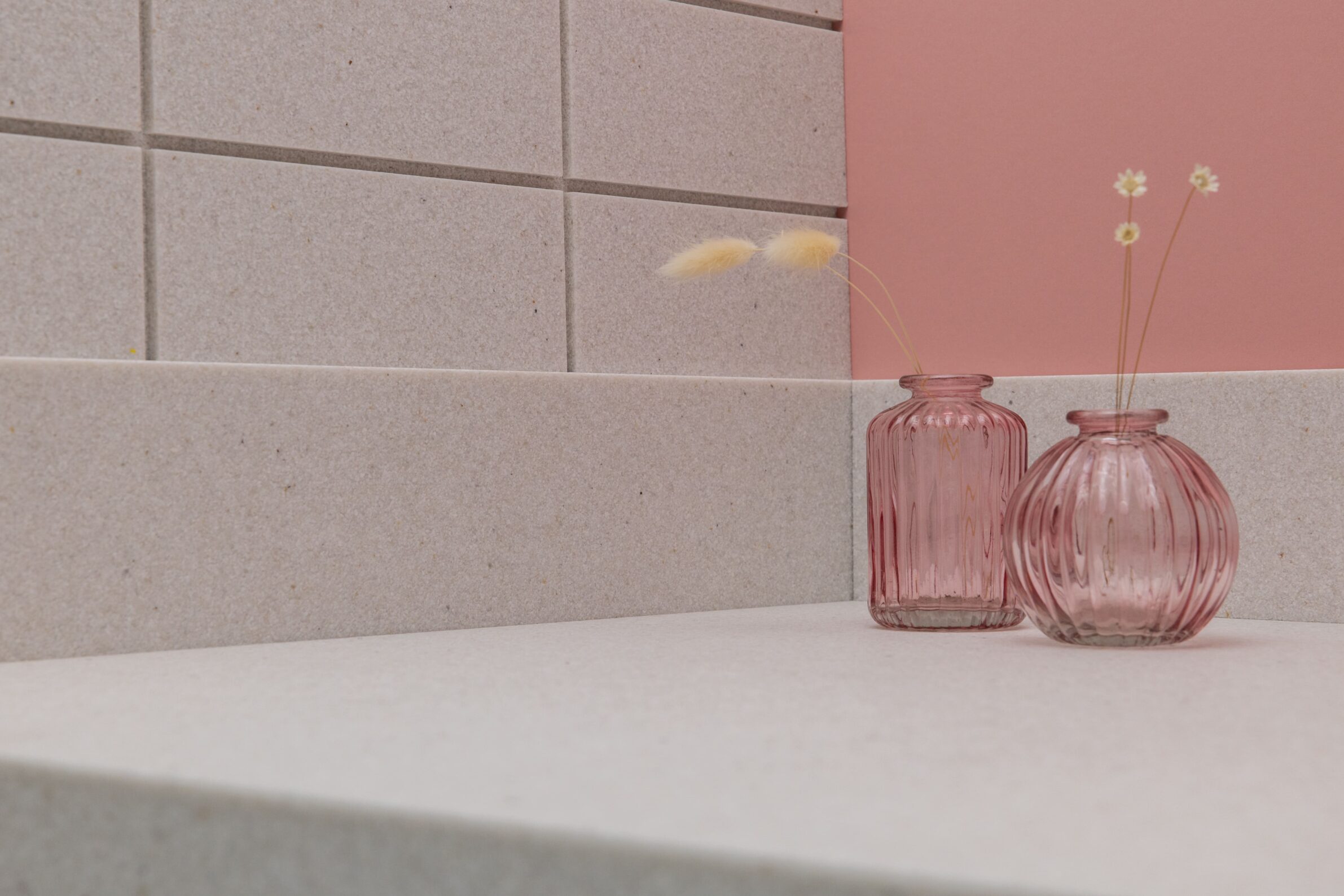
That through-body composition is particularly relevant to fabrication and maintenance. Because the colour and material continue through the sheet rather than sitting only at the surface, scratches and local damage can be sanded back and the finish restored. The material can be cut, CNC-routed and hand-finished using familiar solid-surface techniques. Carefully fabricated joints can achieve an inconspicuous finish, while seams can be reinforced from below with a matching strip where additional support is required.
© Smile Materials
For architects, this moves the discussion beyond recycled content. A counter or reception desk has to tolerate cleaning, staining, joints, cut-outs and later repairs long after the material sample has been approved. Smile Materials has tested Chalk and Shale, the two current Core colourways, against a broad range of household and commercial substances. Most tested substances produced no visible change after cleaning, including coffee, tea, red wine, bleach and several common cleaning chemicals. The results also identify limits: concentrated turmeric left a visible yellow mark, while strong solvents including acetone and toluene produced changes in surface gloss.
© Smile Materials
The product is currently available off the shelf with no minimum order quantity. Standard 12 mm sheets are supplied in 3000 × 1200 mm and 3000 × 760 mm formats, with other thicknesses available on request. Smile Materials also offers cutting and a buy-back programme. This makes the material easier to approach as a specification rather than solely as an experimental recycled product.
© Smile Materials
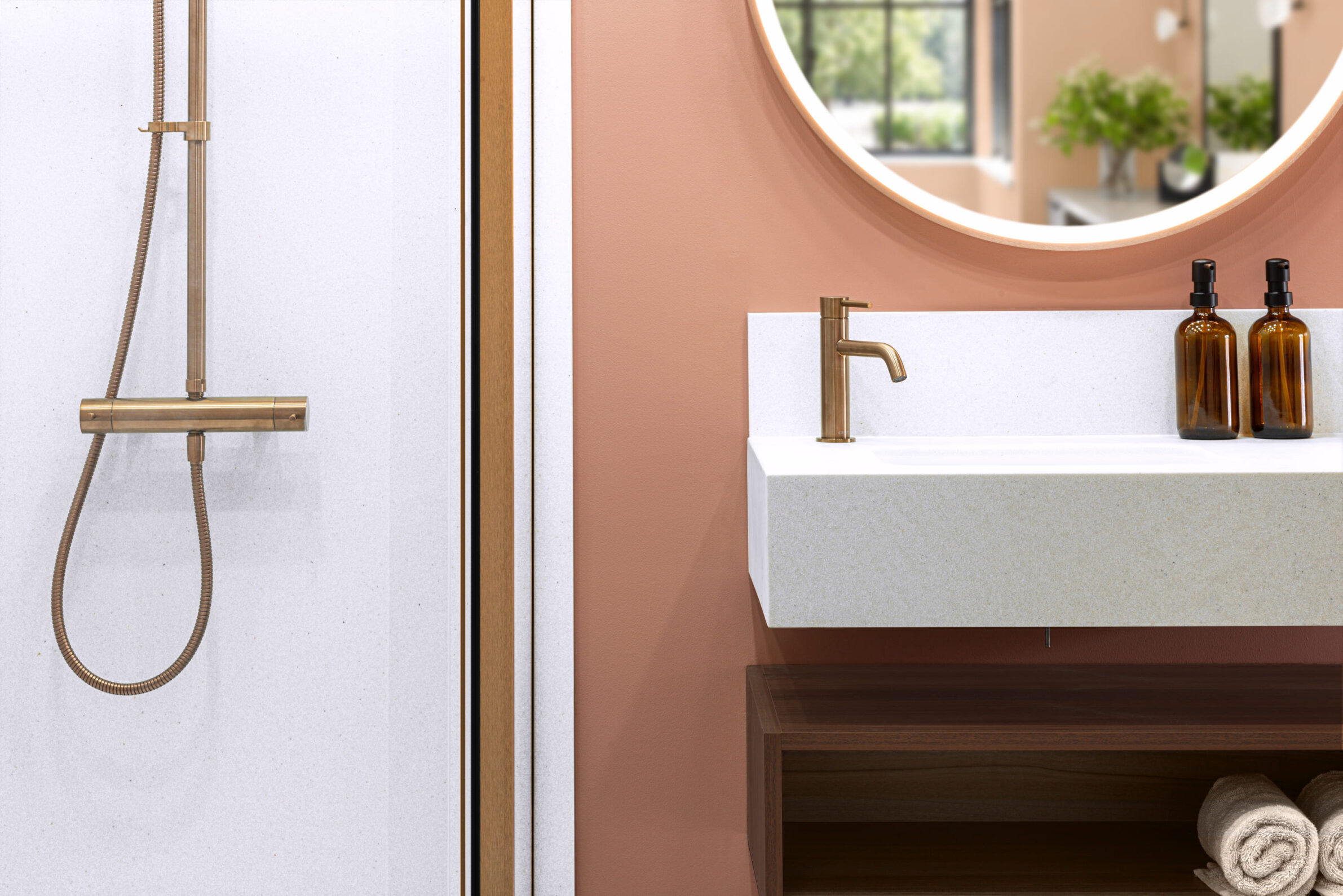
Its environmental documentation adds another layer. The verified EPD reports the product’s life-cycle impacts and records an A1-A3 GWP-total of 5.12 kg CO₂e per square metre for the declared 12 mm sheet. Smile Materials compares its carbon performance with typical conventional solid surfaces and describes the difference as approximately 90 percent lower. The EPD verifies the impact of Smile Recycled Solid Surface itself; the comparative percentage remains dependent on the conventional product used as the reference.
© Smile Materials
End of life is similarly worth reading in detail. The EPD models five percent of panels being returned to Smile Materials for in-house recycling, while the manufacturer states that it can accept all clean recycled solid-surface material returned to its Swansea facility. Production offcuts are also returned to the manufacturing process.
This distinction matters. Circularity is not established by recycled content alone. It depends on whether the material can be fabricated without losing its usefulness, maintained through years of contact, repaired when damaged and recovered when an interior is eventually changed. In Smile Minerals, the joint, the stain and the repair are therefore not secondary technical details. They are part of the material proposition itself.
Smile Materials is a UK-based manufacturer of decorative surface materials for architecture and commercial interiors, based in Swansea, South Wales. The company transforms recovered plastics, textiles and solid-surface waste into durable panels and surfaces, with a focus on circular production, material recovery and design for continued use.
Website:
smile-materials.com
Instagram:
@smilematerials
LinkedIn:
Smile Materials
Email:
hello@smile-materials.com
Innovation
Smile Minerals Recycled Solid Surface
Manufacturer:
Smile Materials Ltd
Edited by:
Tanja Završki
Be There.



Powered by

Innovation
Smile Minerals Recycled Solid Surface
Manufacturer:
Smile Materials Ltd
Smile Materials is a UK-based manufacturer of decorative surface materials for architecture and commercial interiors, based in Swansea, South Wales. The company transforms recovered plastics, textiles and solid-surface waste into durable panels and surfaces, with a focus on circular production, material recovery and design for continued use.
Website:
smile-materials.com
Instagram:
@smilematerials
LinkedIn:
Smile Materials
Email:
hello@smile-materials.com
Edited by:
Tanja Završki
Be There.
Powered by