


Few furniture typologies have been interpreted as persistently as the stool, chair, sofa and table. Their functions are established, their proportions familiar, and their design histories already contain countless variations. Yet this familiarity also makes even a relatively small shift immediately visible.
The projects in this selection do not attempt to reinvent furniture from zero. Instead, they work within recognisable archetypes and reconsider one of their established conditions. A stool is reduced to three components, while another introduces controlled movement into sitting. A rocking chair separates structure from upholstered volume. Tables are shaped through carved voids, natural stone or photographic transparency. An armchair extends its use beyond the human sitter, while a workplace collection uses softness to change the character of contract furniture. Together, they show how familiar furniture types continue to provide ground for experimentation through material, construction, movement and use.
1. Alcoba by Selma Lazrak
Germany, 2023
Photography: © Selma Lazrak
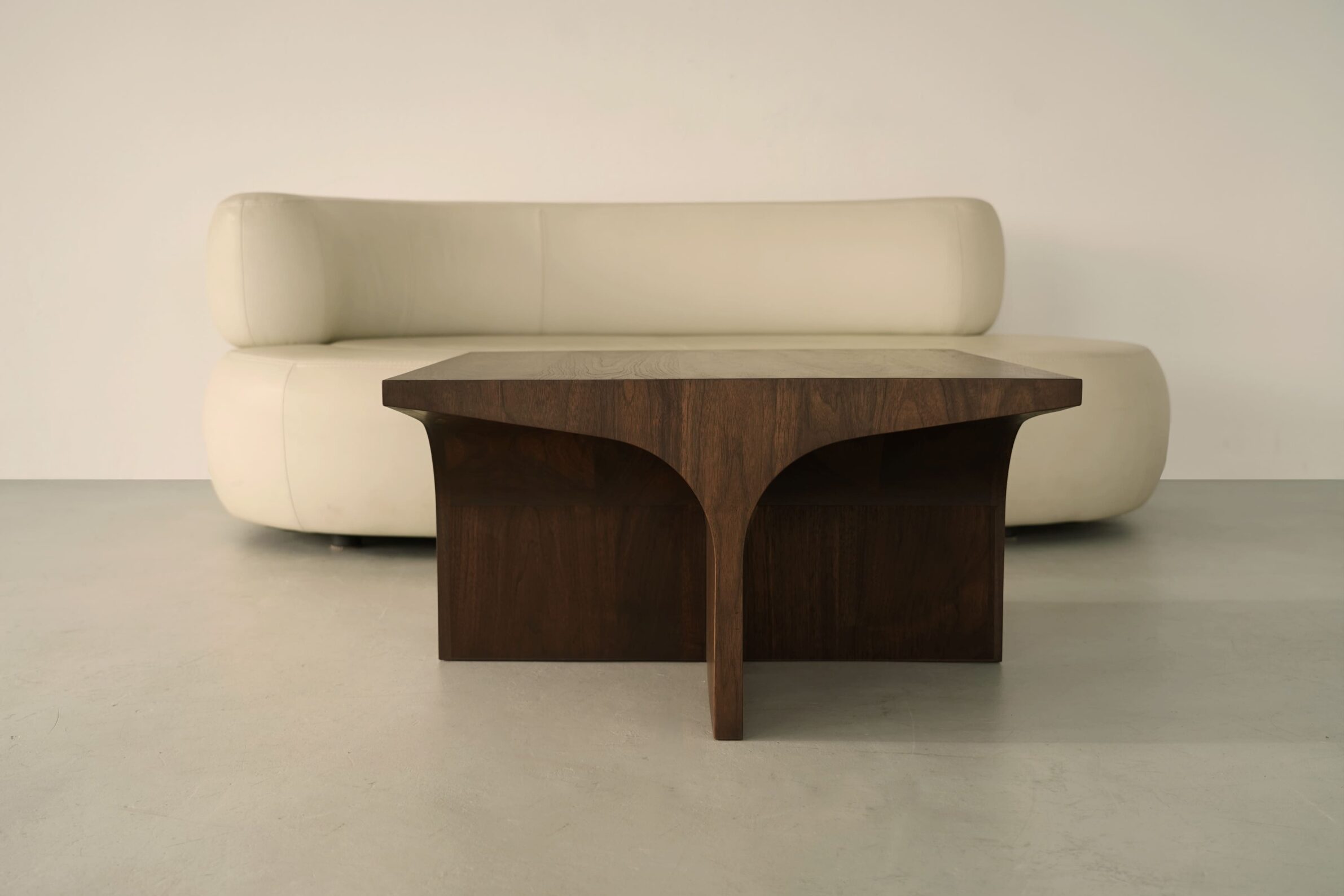
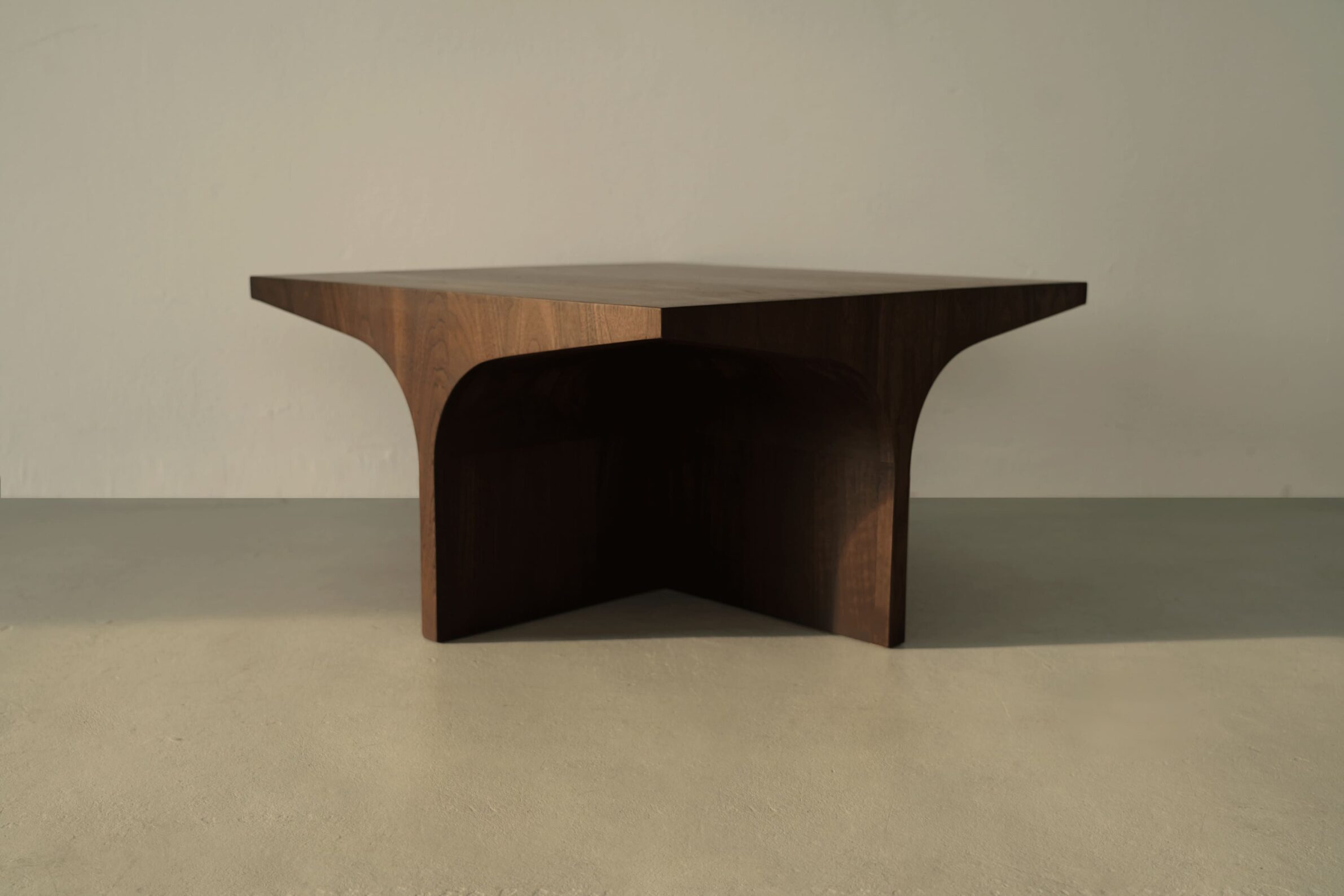
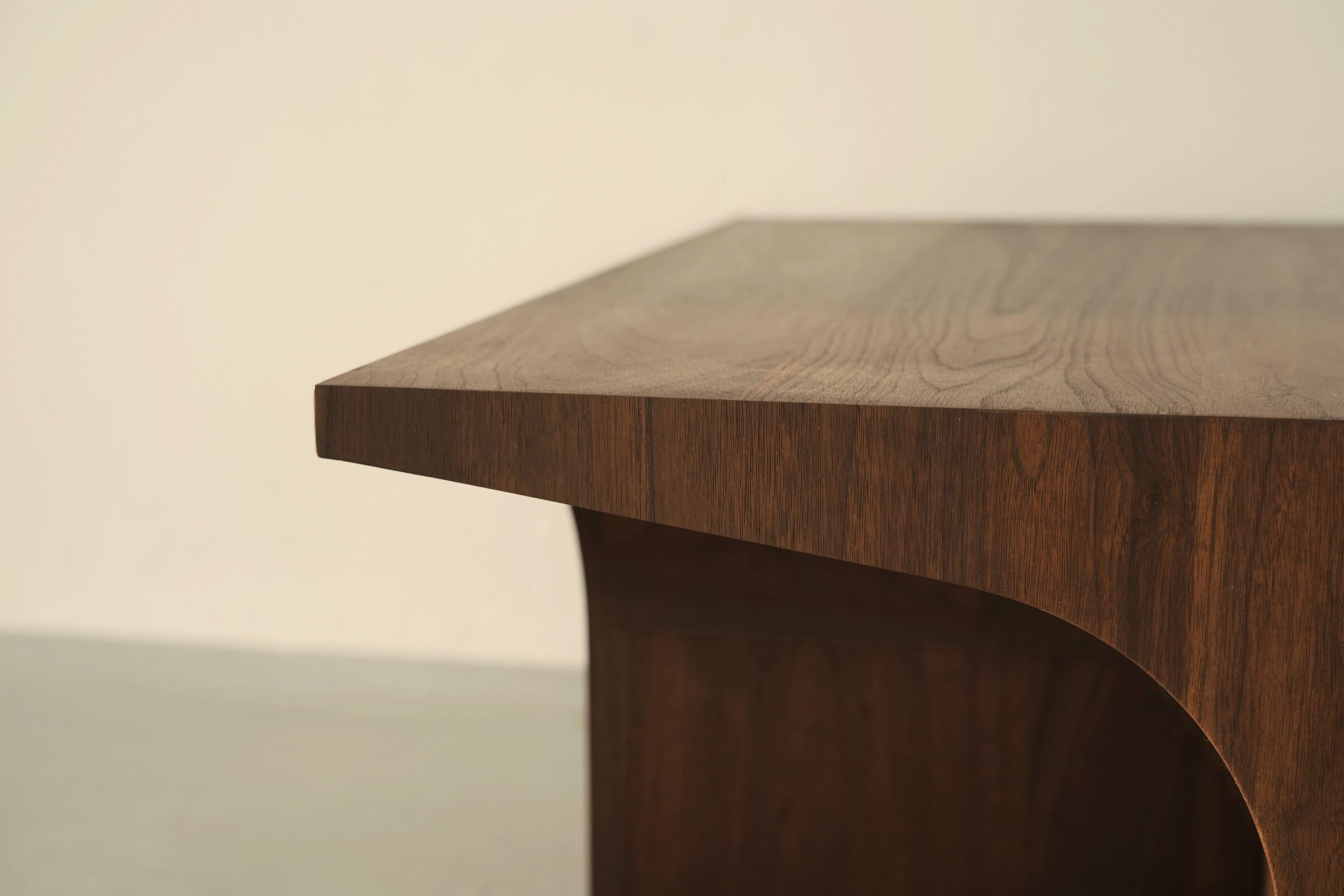
Alcoba approaches the coffee table almost as a small piece of architecture. Its form is organised through symmetry, with curved and angular surfaces defining a sequence of solids and openings rather than a conventional top-and-base composition. These voids bring light and shadow into the reading of the object and make its appearance dependent on viewpoint. Selma Lazrak relates the design to alcoves found in Moroccan and Moorish architecture, translating this spatial reference into furniture rather than reproducing it decoratively. Made in American walnut, the table demonstrates how an established typology can acquire a different presence through the manipulation of mass, absence and proportion.
2. ISOLA IV by Paloma Editions, designed by Isabella Wilde
Australia, 2025
Photography: © Paloma Editions
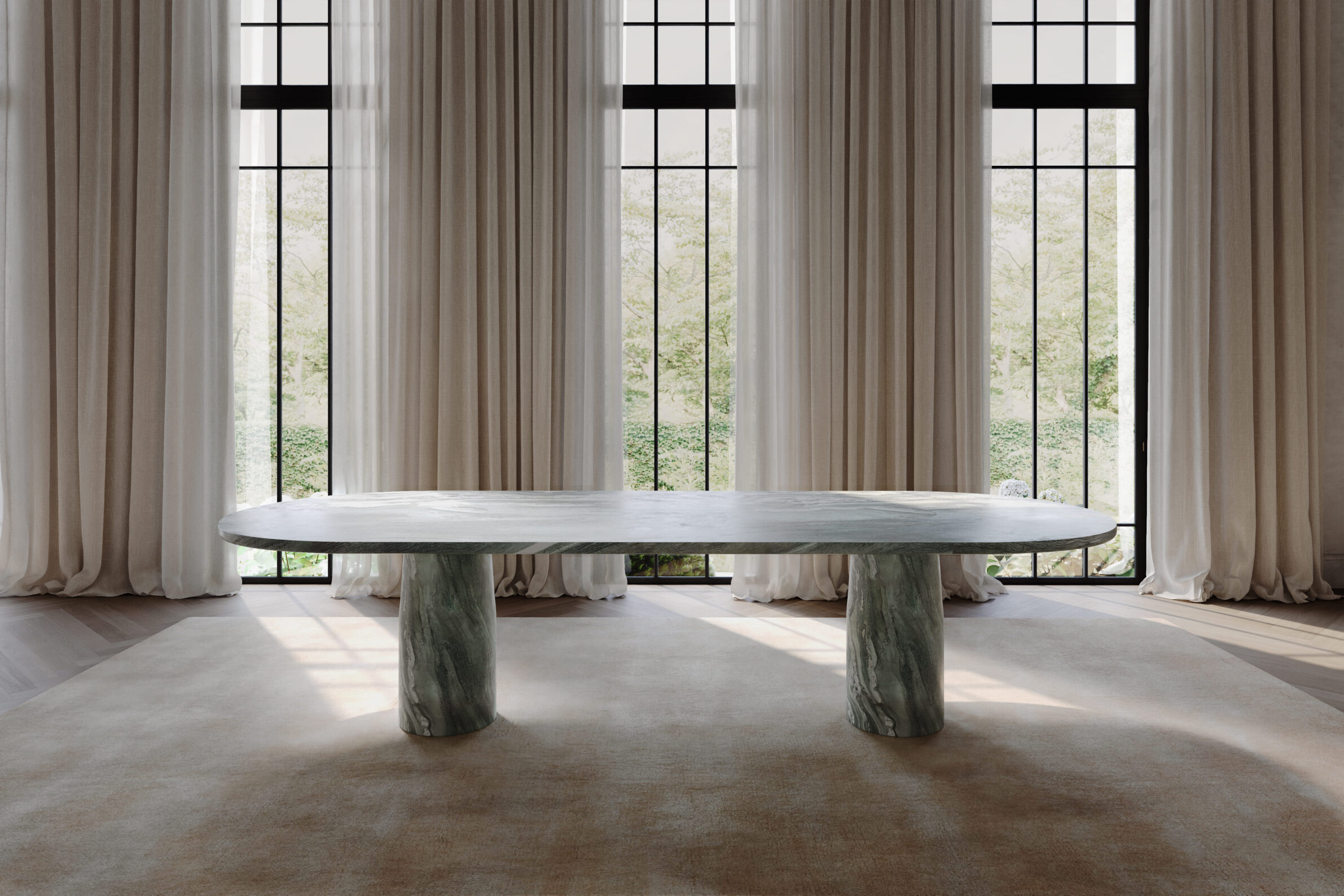
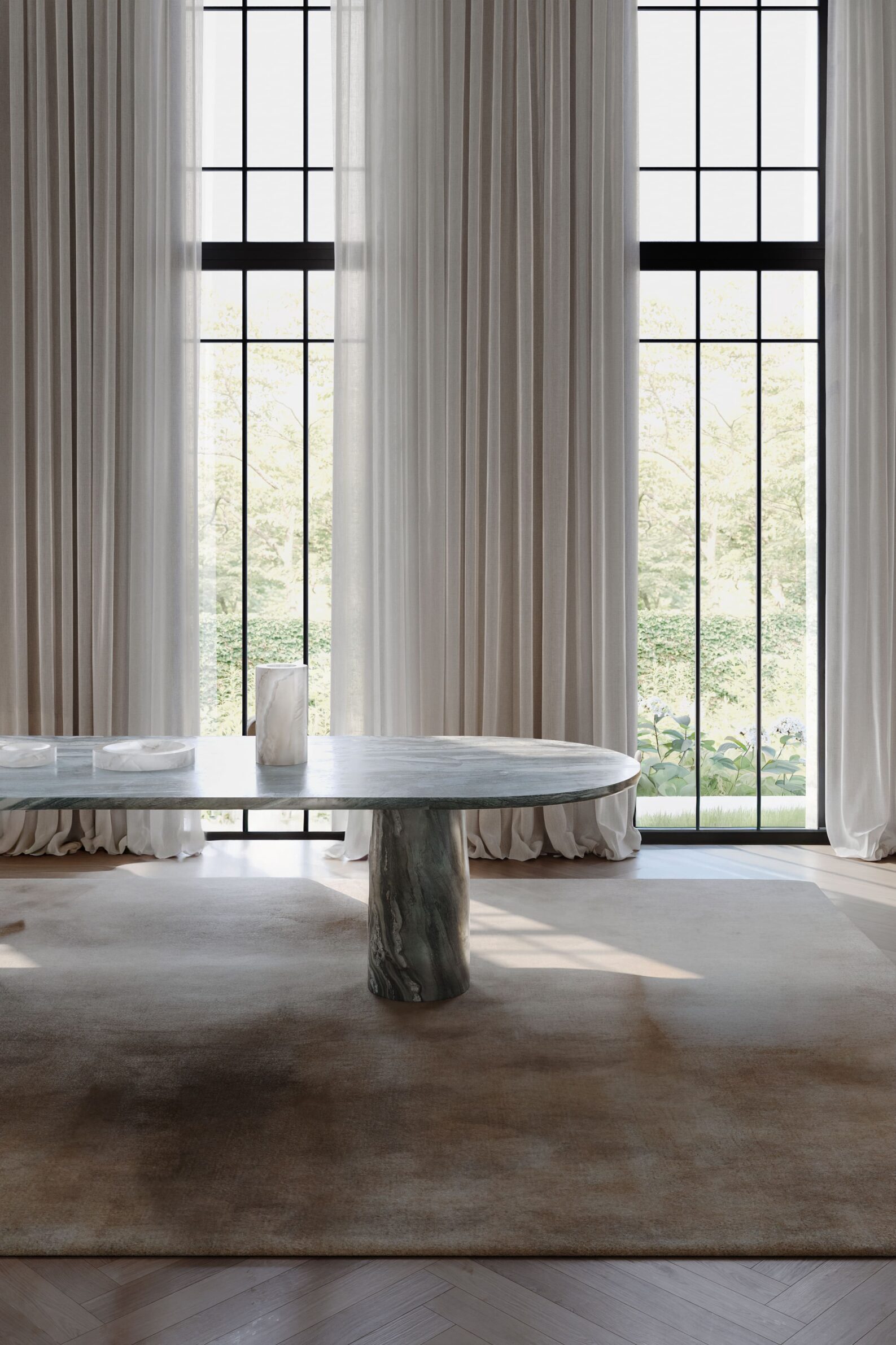
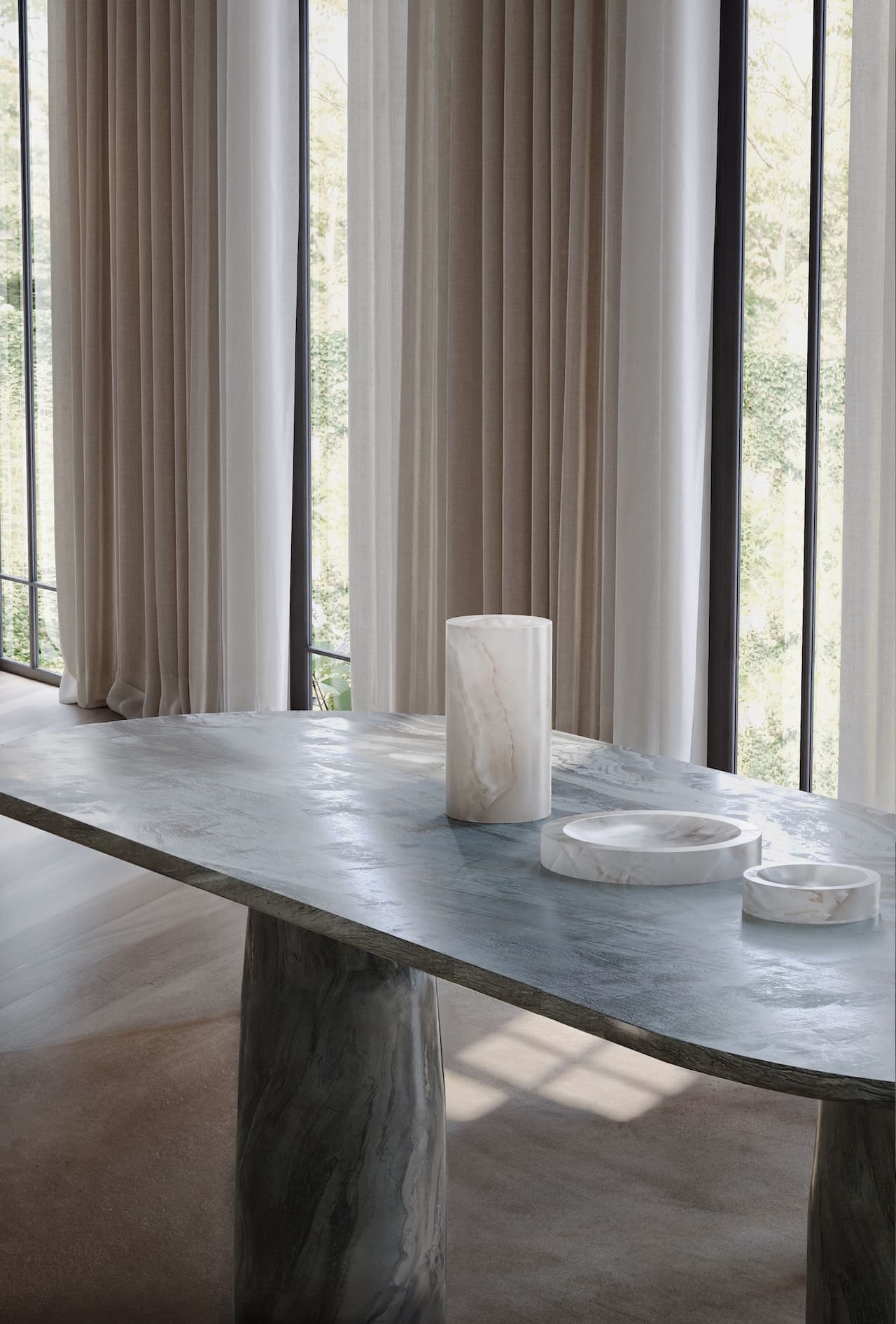
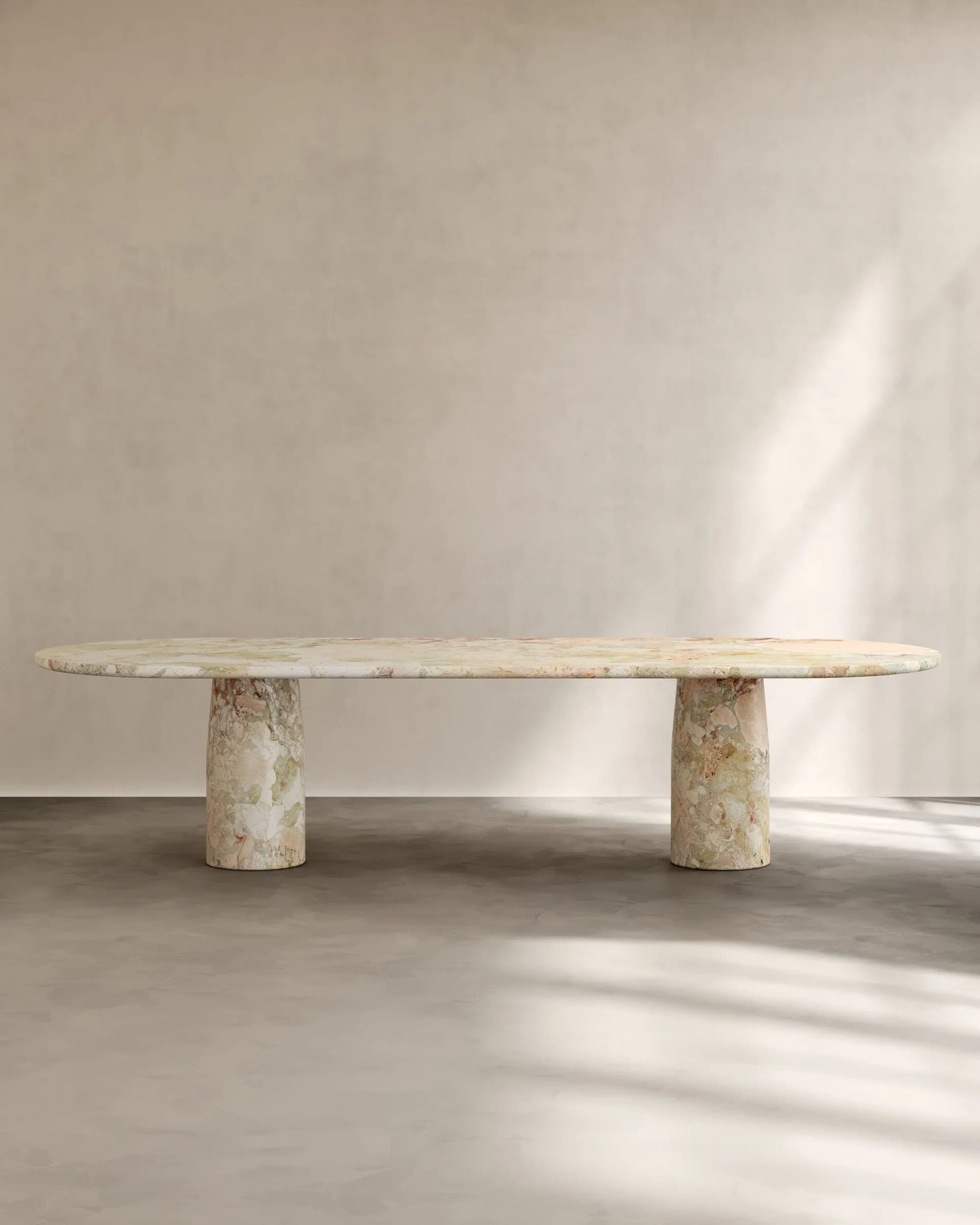
Isola IV works with the dining table through weight, proportion and the expressive capacity of stone. A long oval top rests on two tapered supports, while the half-bullnose edge reduces the visual severity of a substantial volume. Rather than concealing the material character of marble or travertine, the design allows veining, variation and surface to become part of the composition. Within Paloma Editions’ broader emphasis on provenance and Italian production, the table treats material selection as part of design rather than a finish applied afterwards. Its reinterpretation of the dining table is therefore relatively restrained: familiar in organisation, but made distinctive through scale, profile and the relationship between stone mass and carefully controlled geometry.
3. Dusk Collection by Spectro
Brazil, 2025
Photography: © Alexandre Raupp
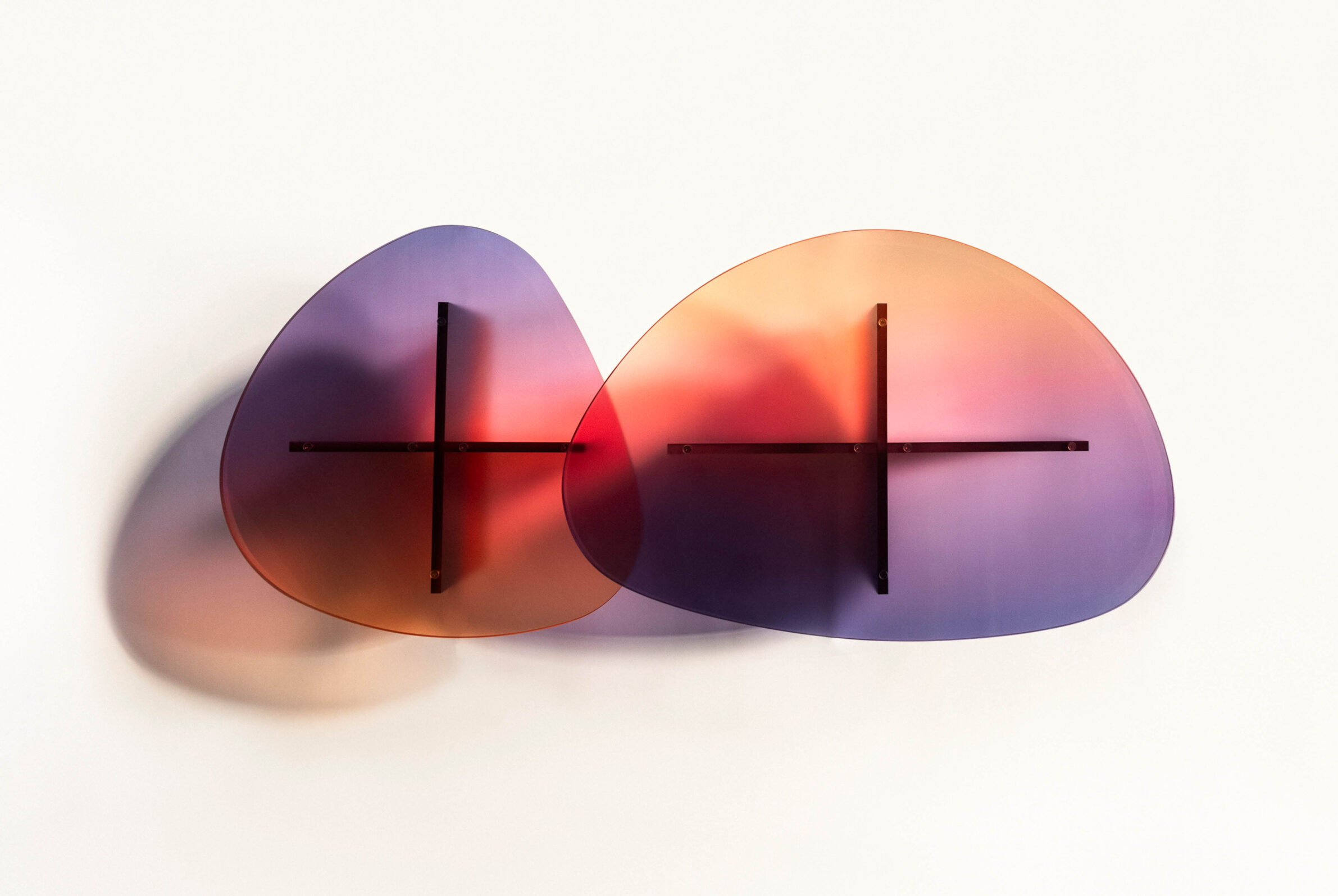
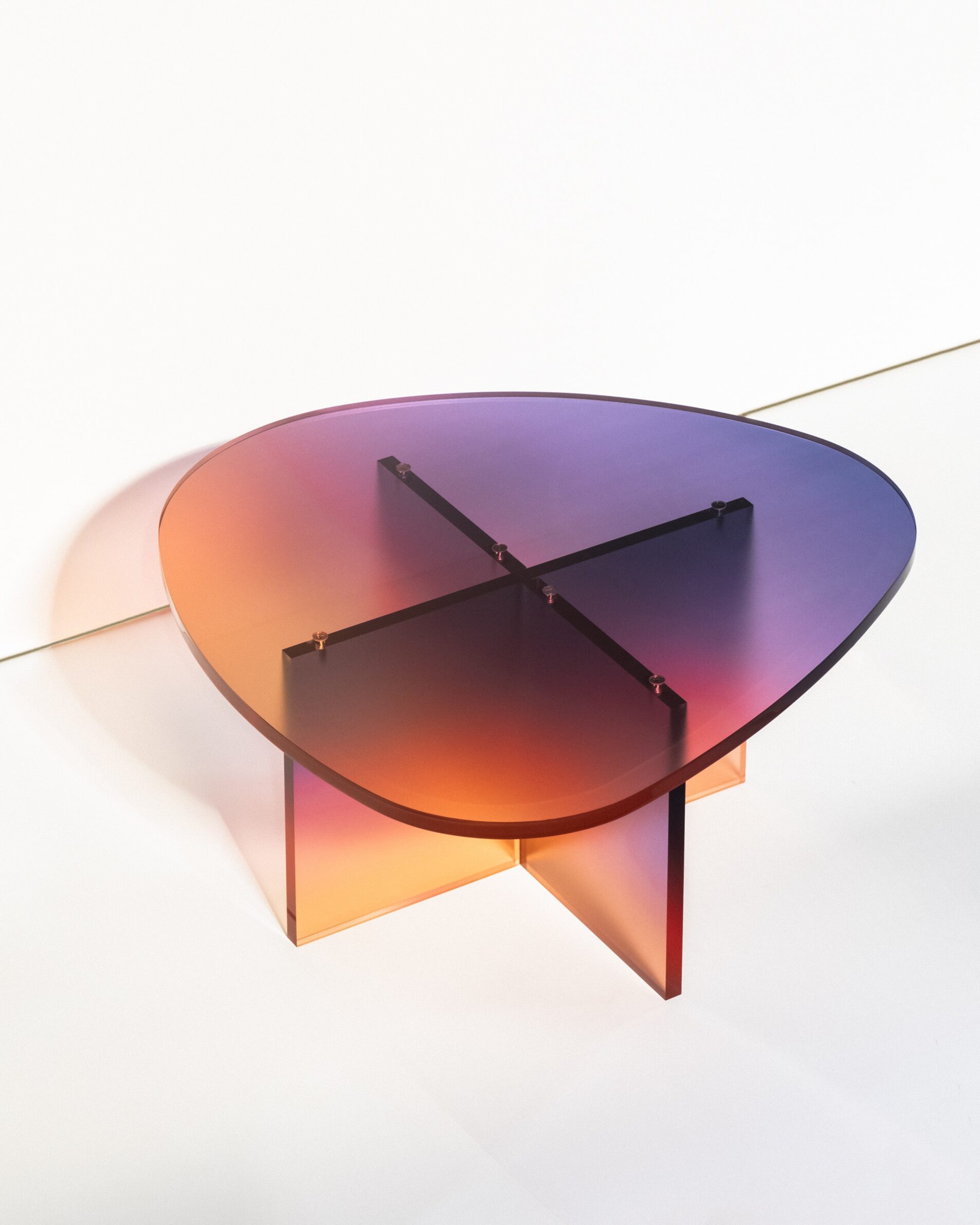
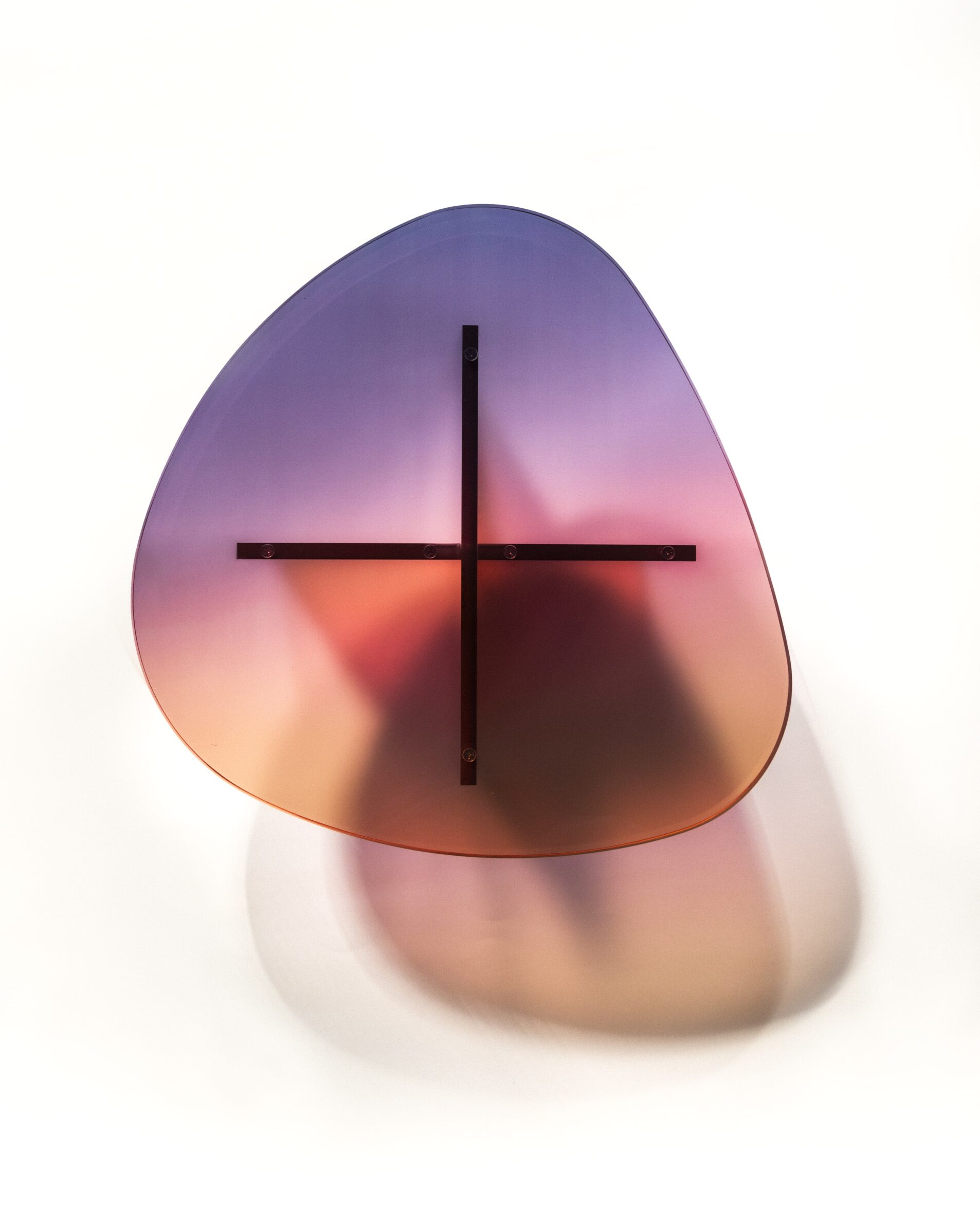
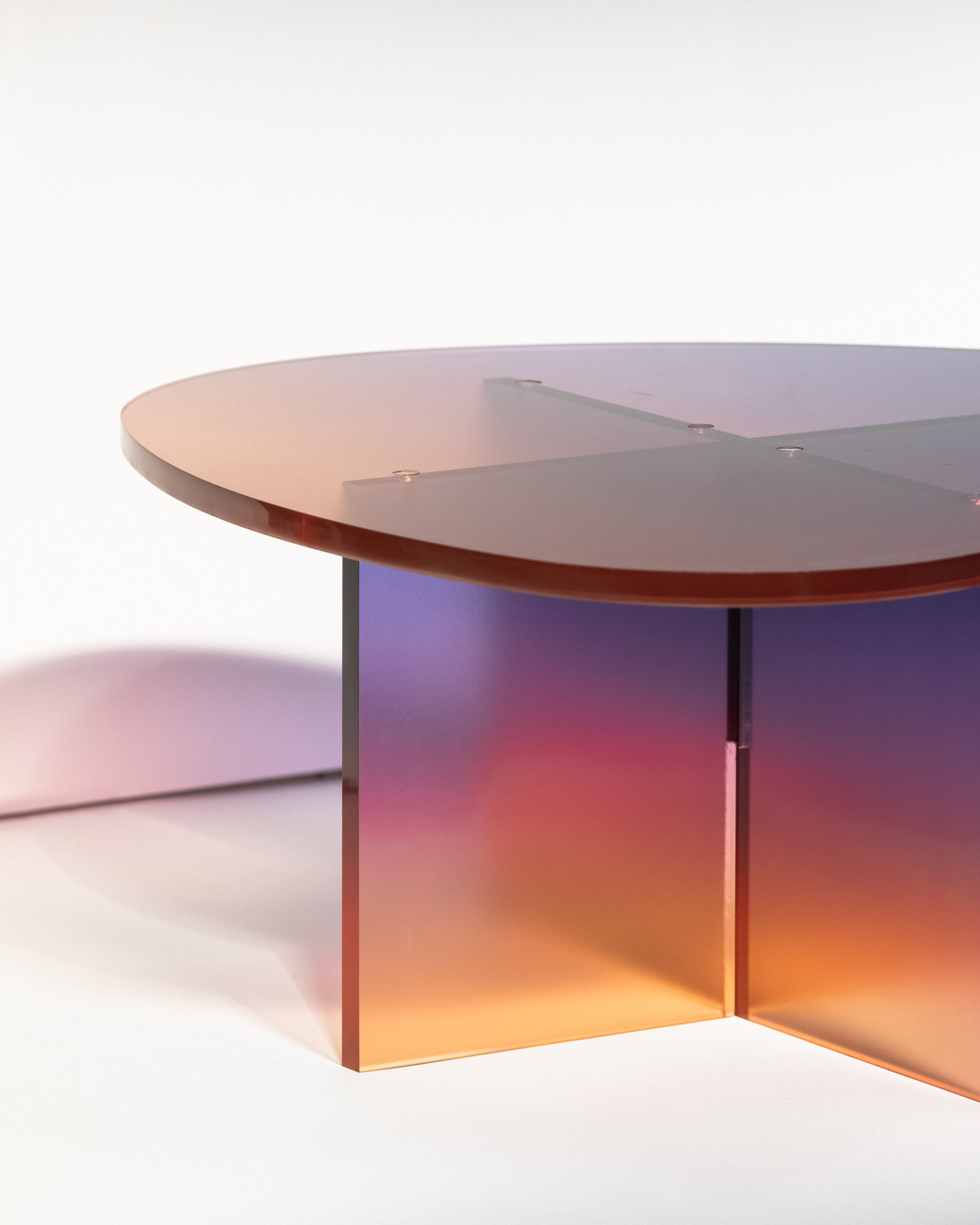
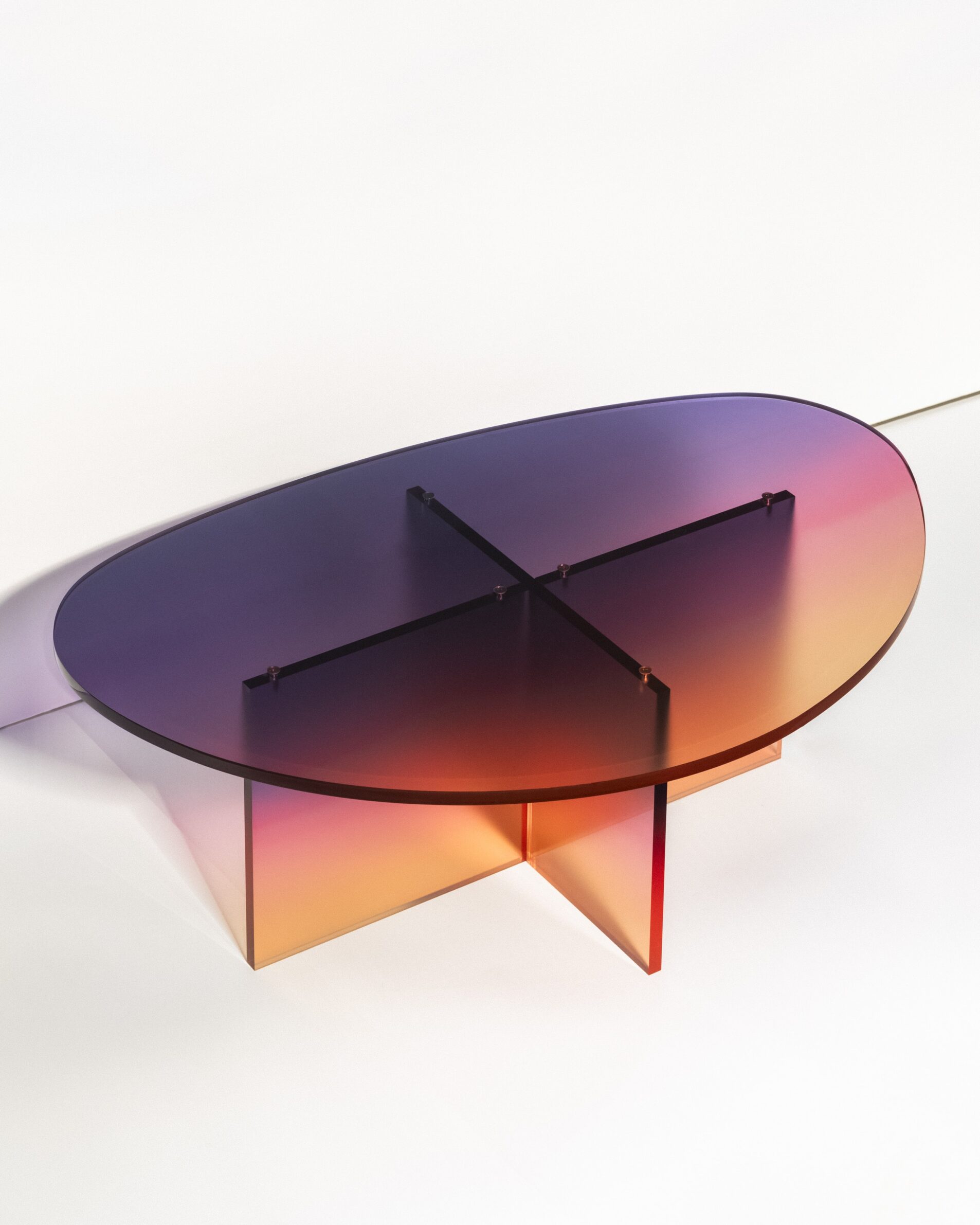
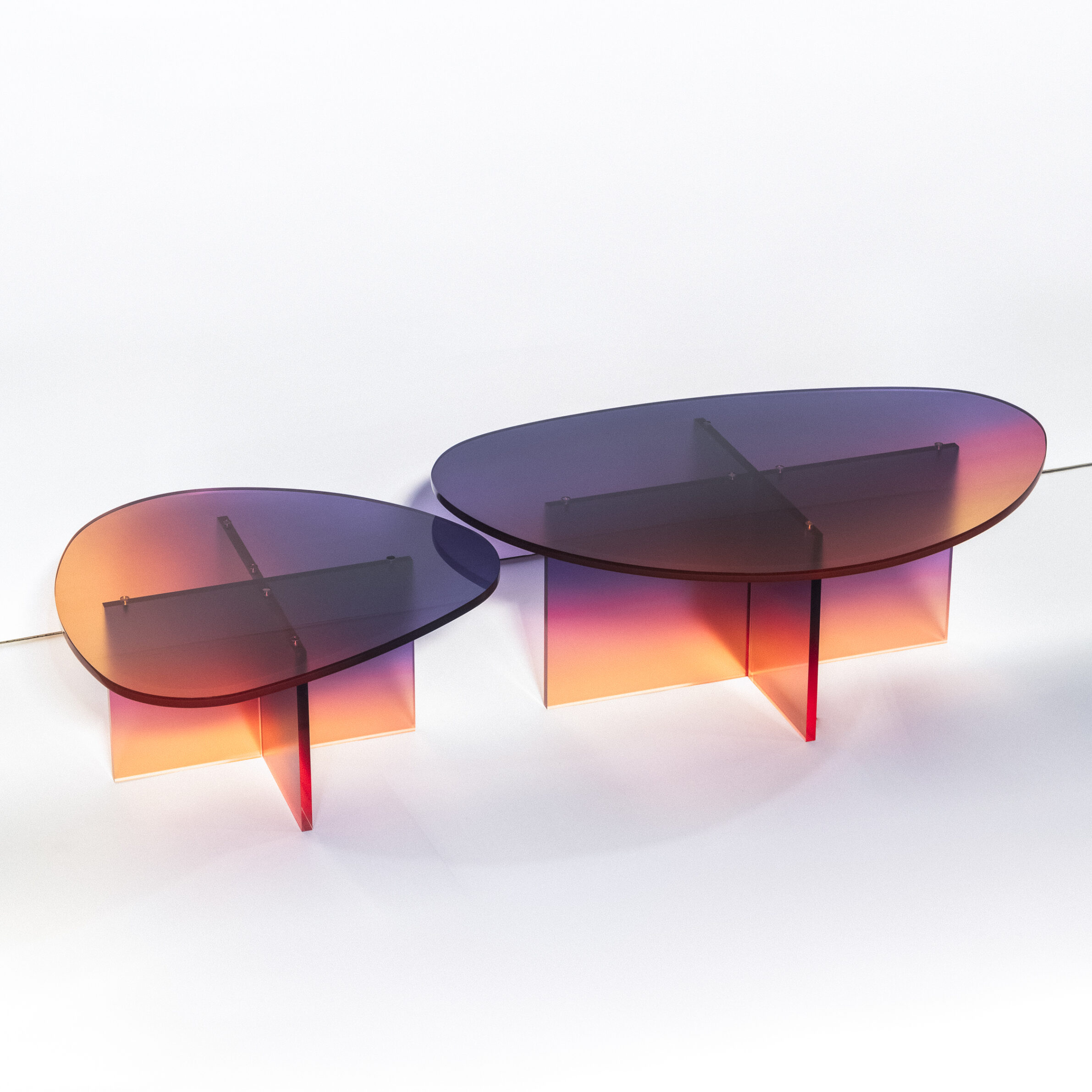
Dusk shifts attention from furniture as solid object to furniture as an image-bearing surface. Developed by Spectro from Alexandre Raupp’s photographs of twilight skies, the collection applies photographic gradients to translucent acrylic side tables, coffee tables and a stool. The forms themselves remain geometrically simple, allowing transparency, colour and changing light conditions to determine much of their visual character. Because the printed surfaces remain permeable to light and partially to their surroundings, the objects never appear entirely fixed. Here, the familiar table or stool becomes a framework through which photography enters the interior, positioning the collection between functional furniture, image and changing atmospheric effect.
4. TERNA Stool by Studio Enemy, designed by Joe Slatter
United Kingdom, 2025
Photography: © Guy Lockwood
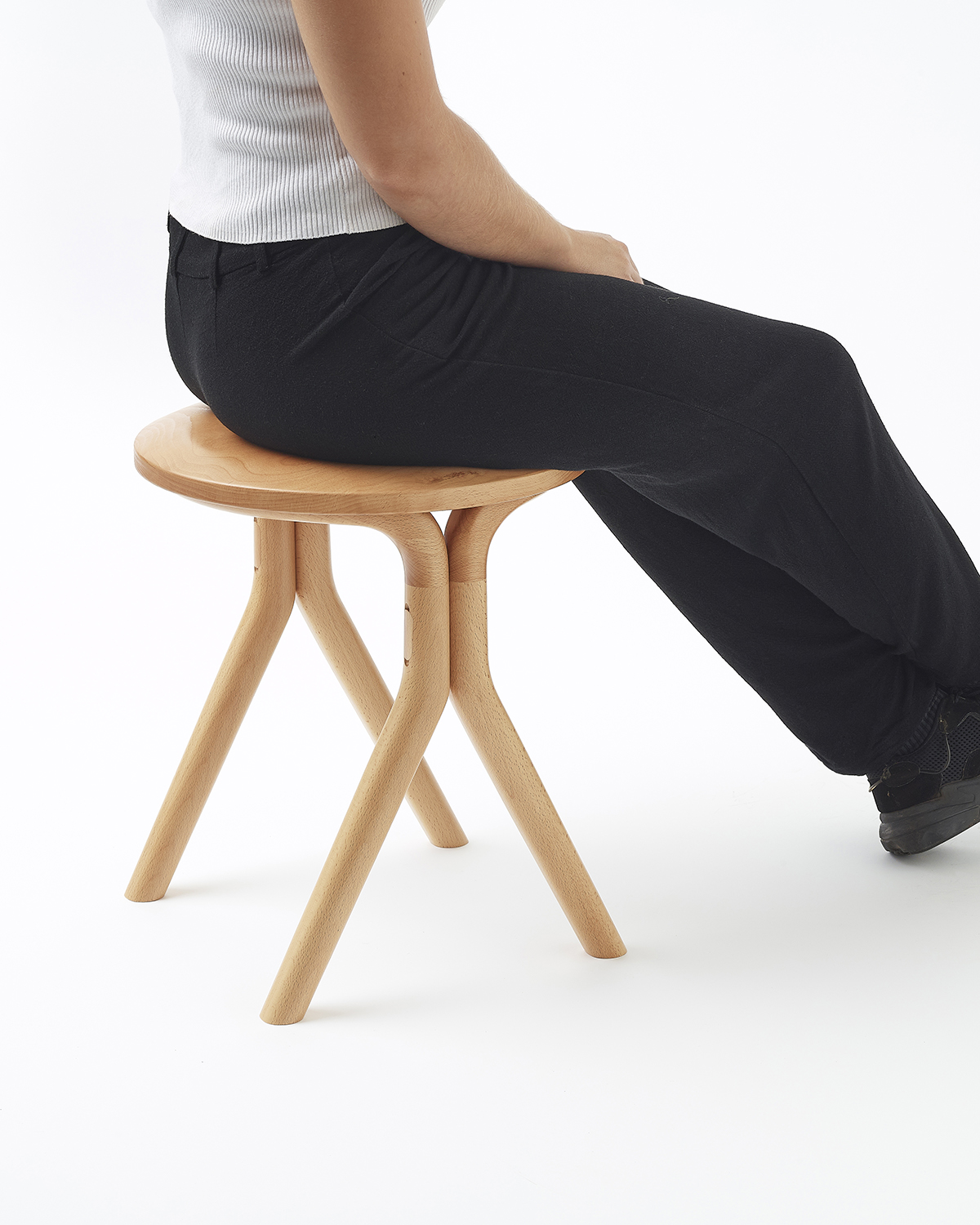
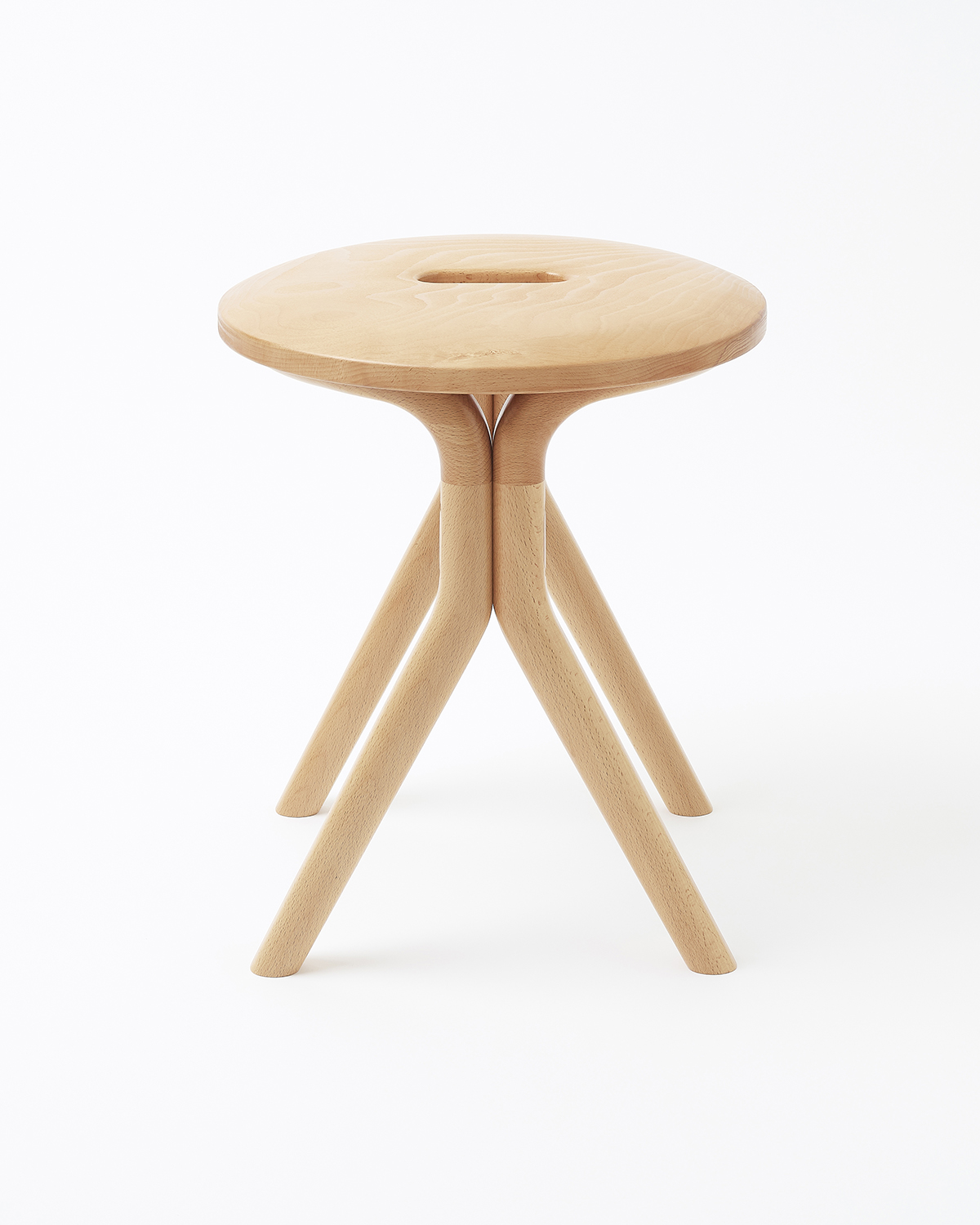
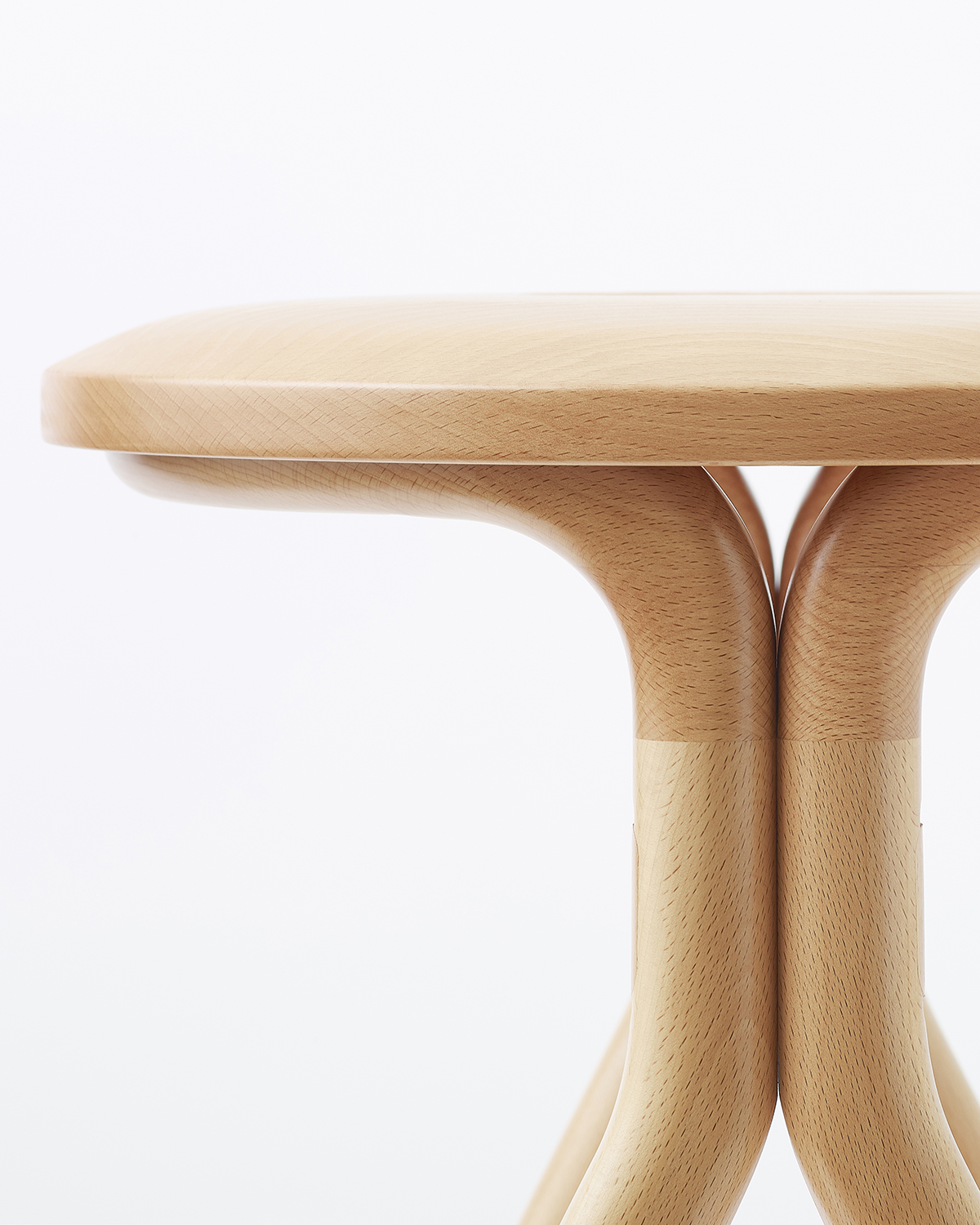
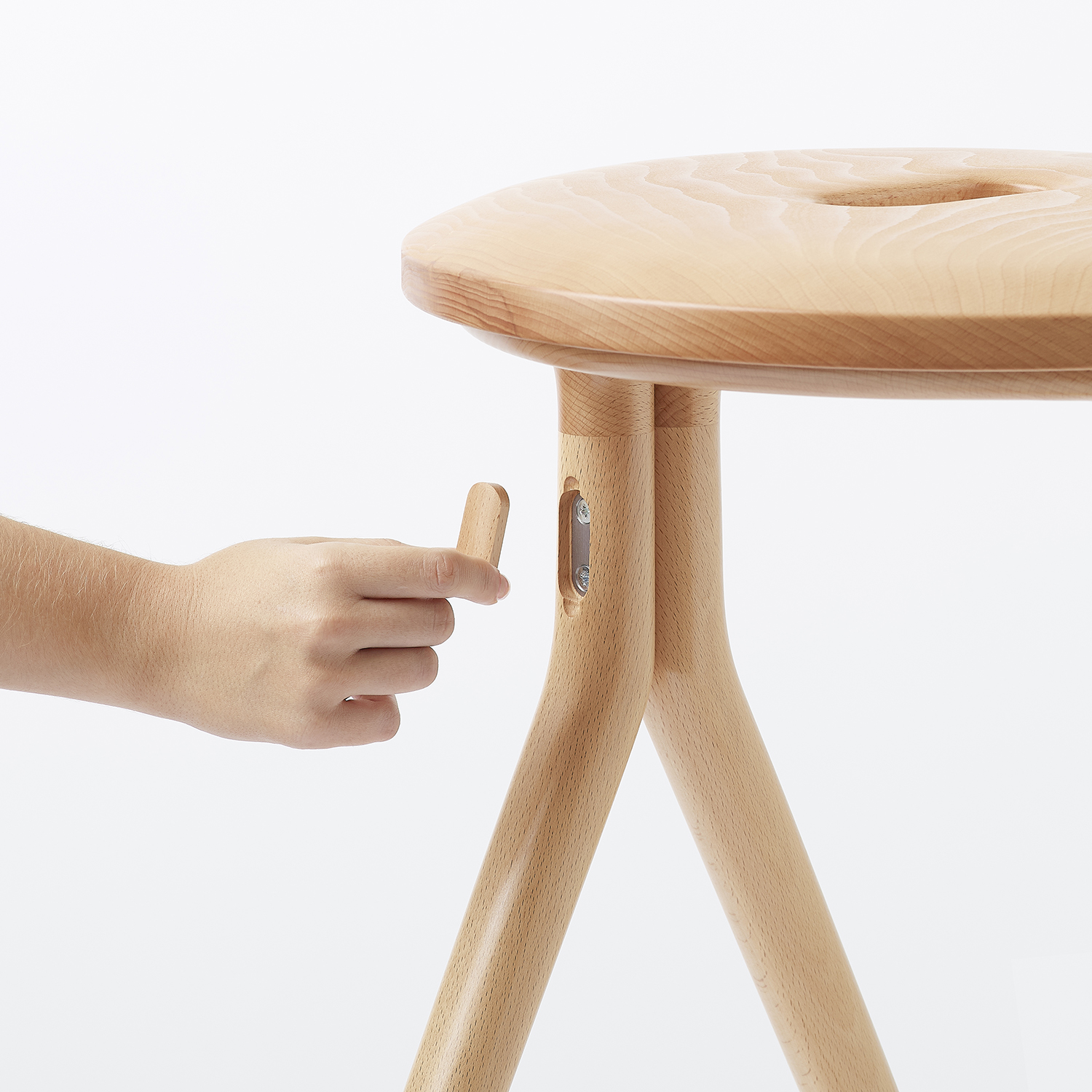
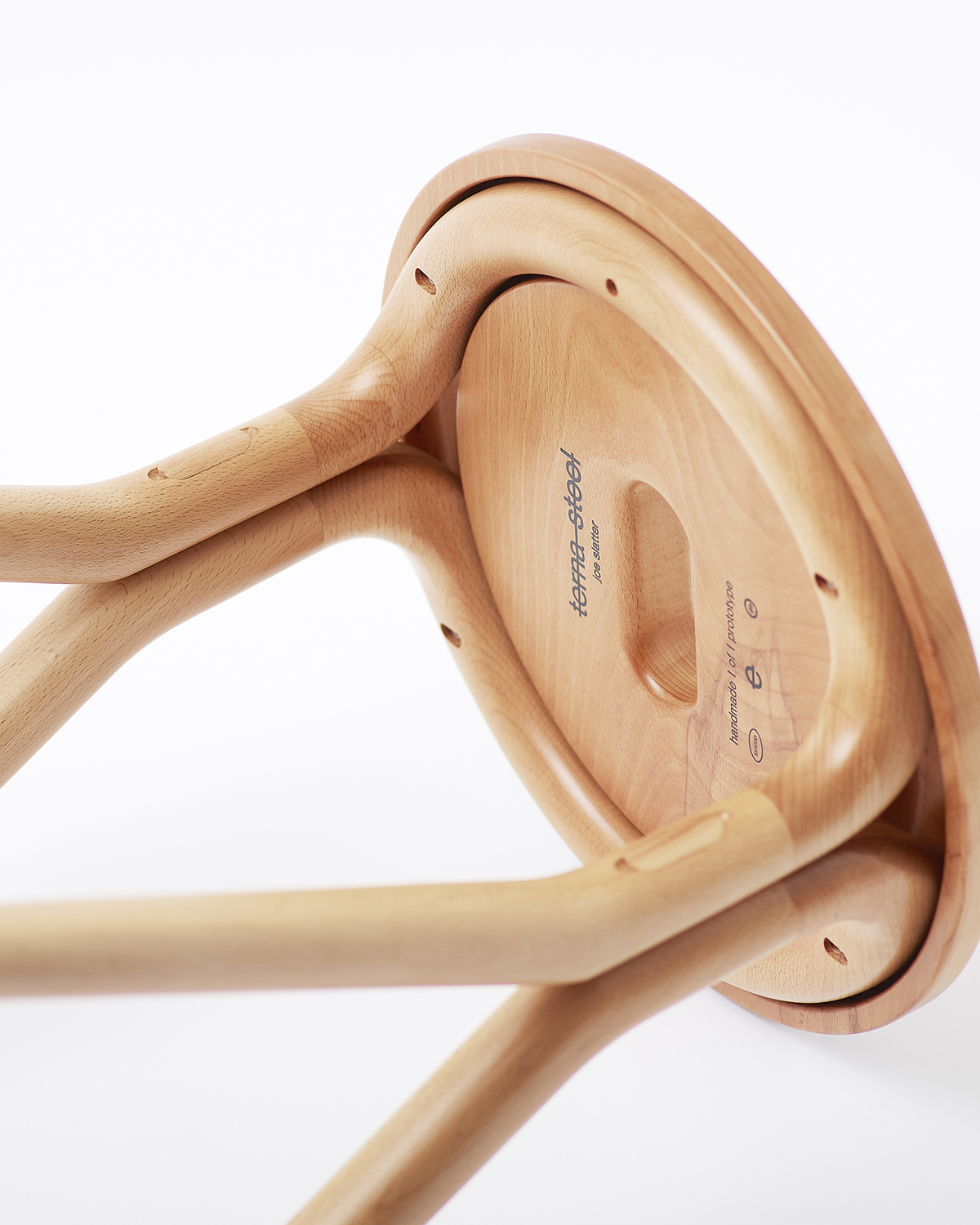
Terna examines how little is required to construct a recognisable stool. Joe Slatter reduces the object to a circular seat and two matching solid-beech legs, using minimal fixings and magnets so that the three components can be assembled and separated with relative ease. The reduction is not only formal. A cut-through handle acknowledges frequent movement, while the circular seat removes a prescribed orientation. Developed for A Seat at the Table, a travelling exhibition centred on conversation and public exchange, the stool also draws on the temporary occupation associated with café furniture. Terna therefore revisits the archetype through economy: fewer components, legible construction and an explicit relationship between portability and use.
5. PUFFBO by Evis Furniture, designed by FindIf
Japan, 2023
Photography: © Evis Furniture, © FindIf
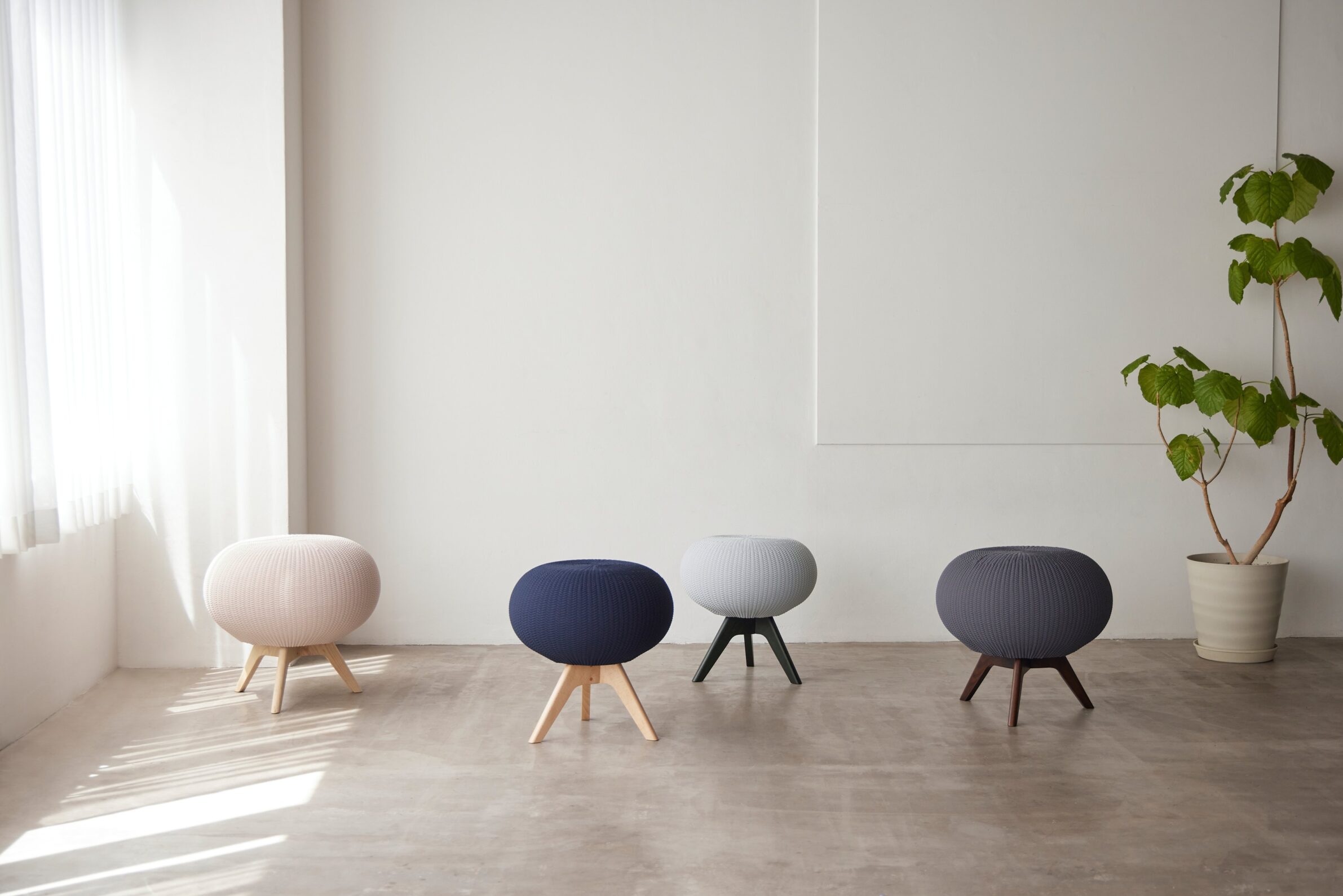
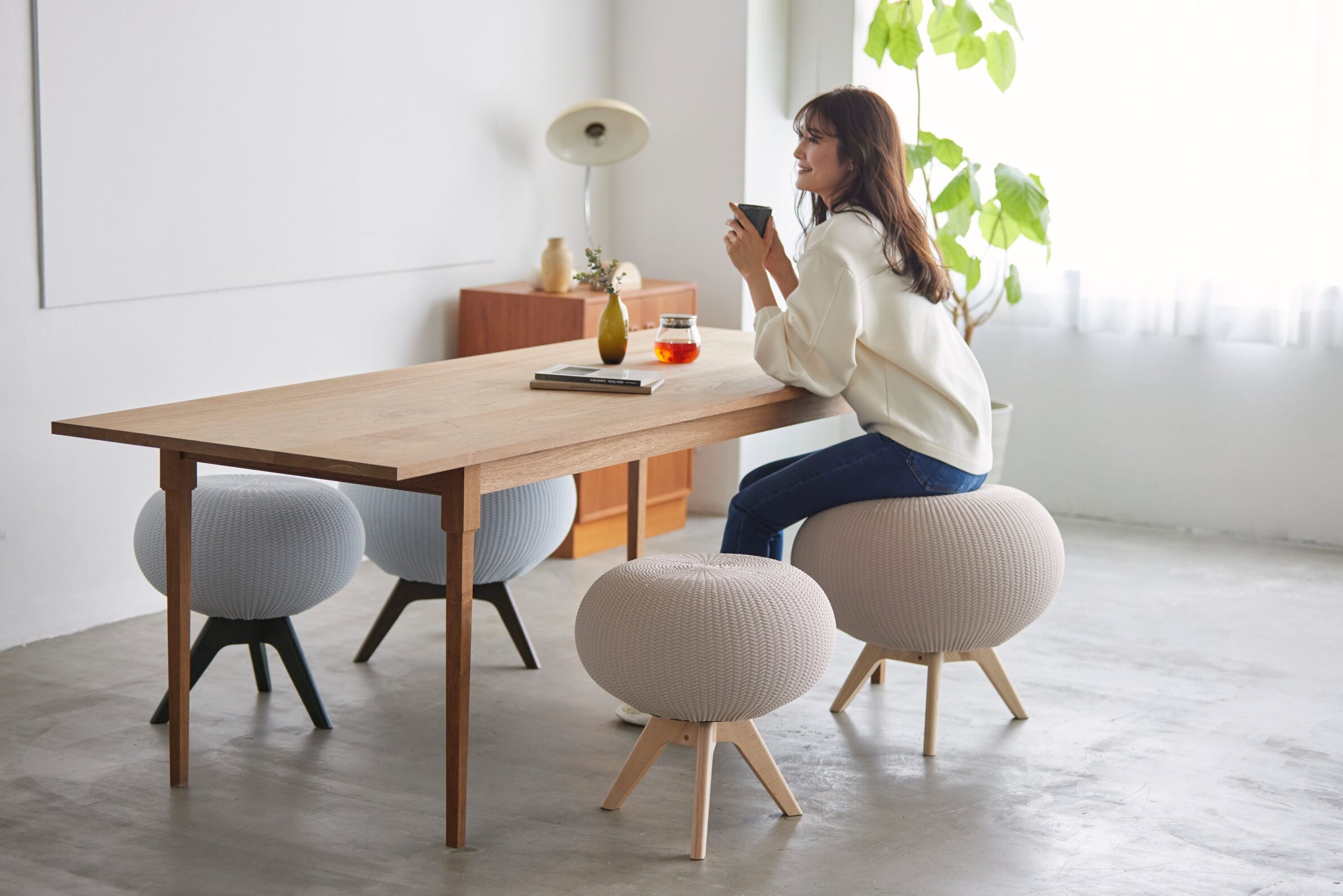
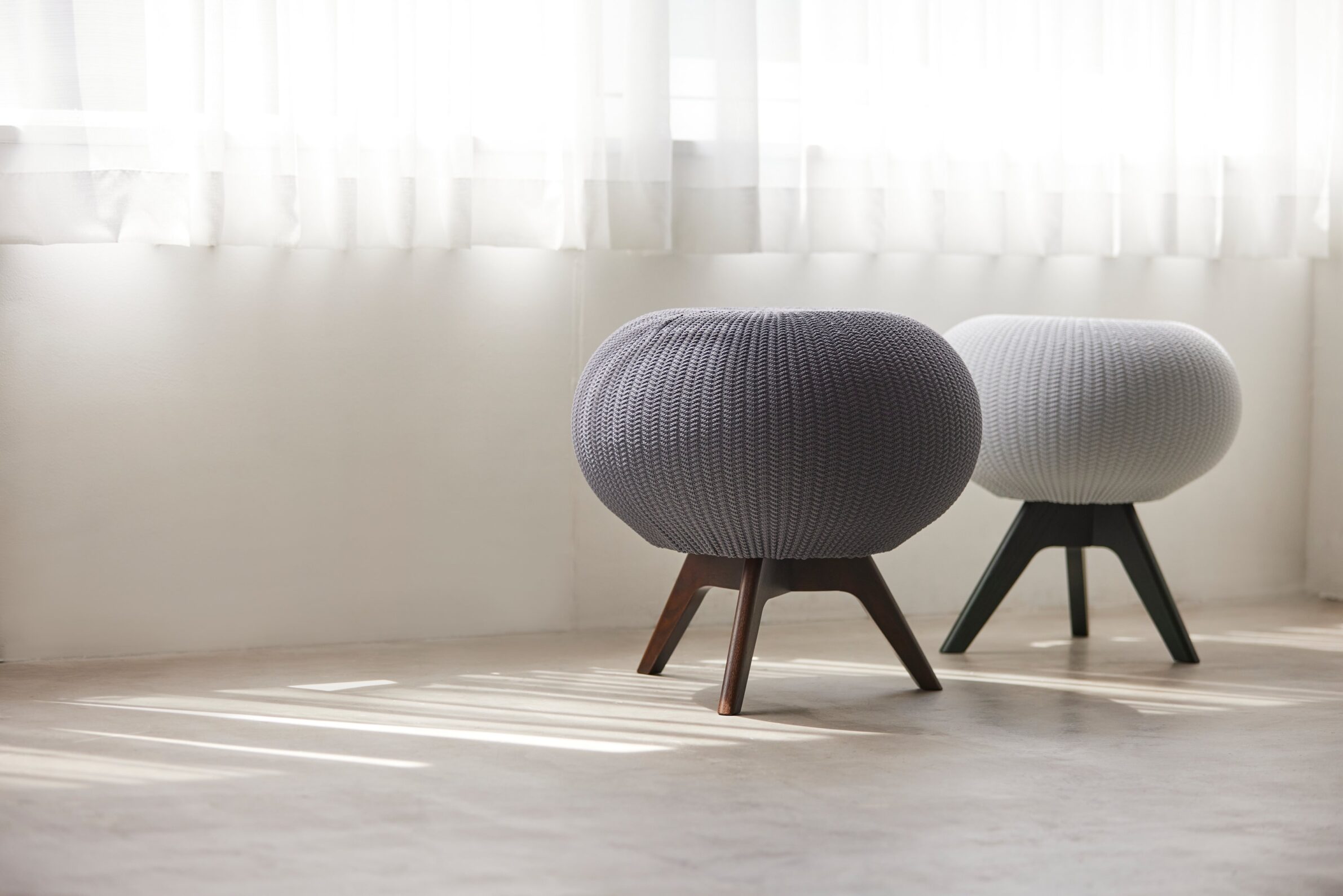
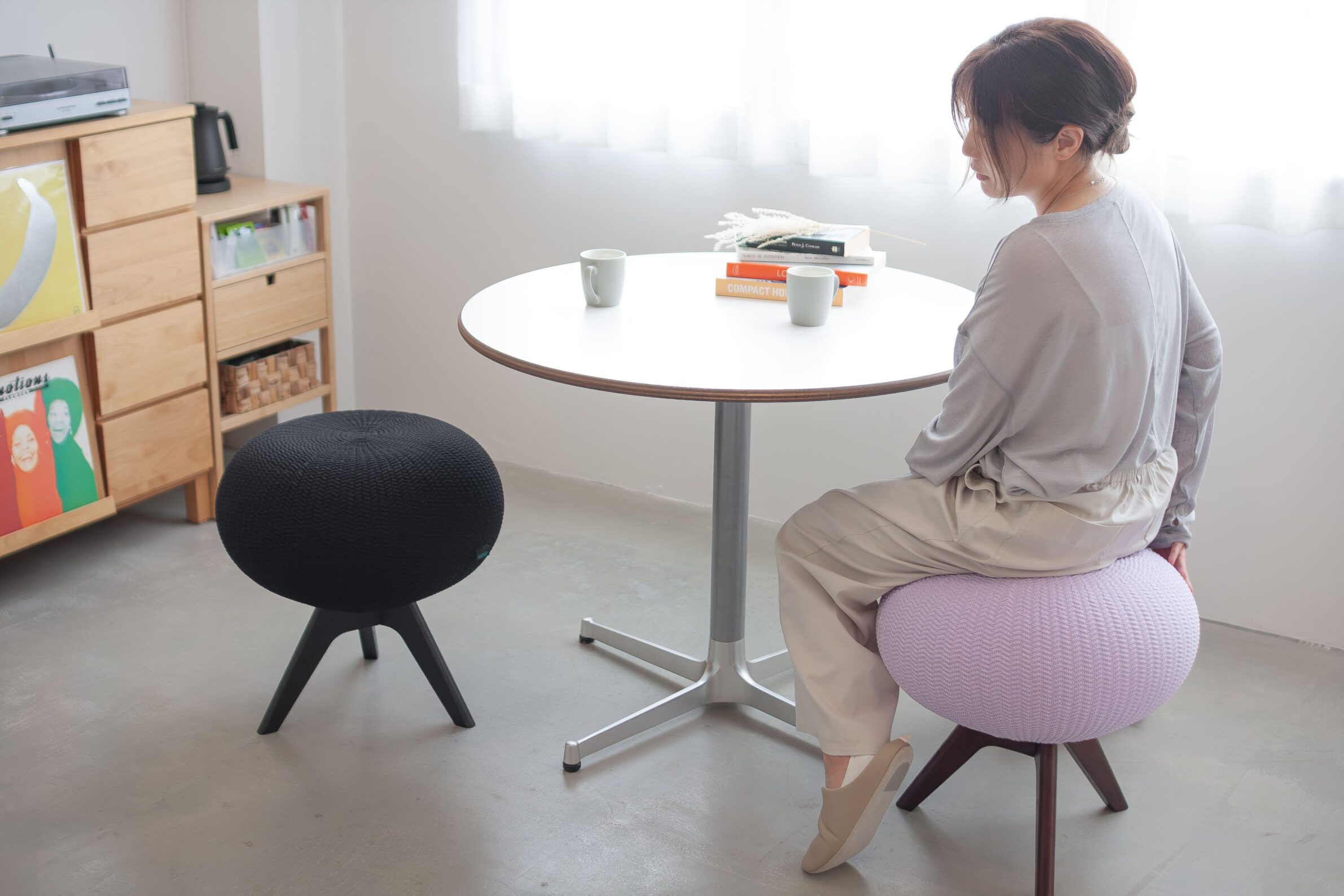
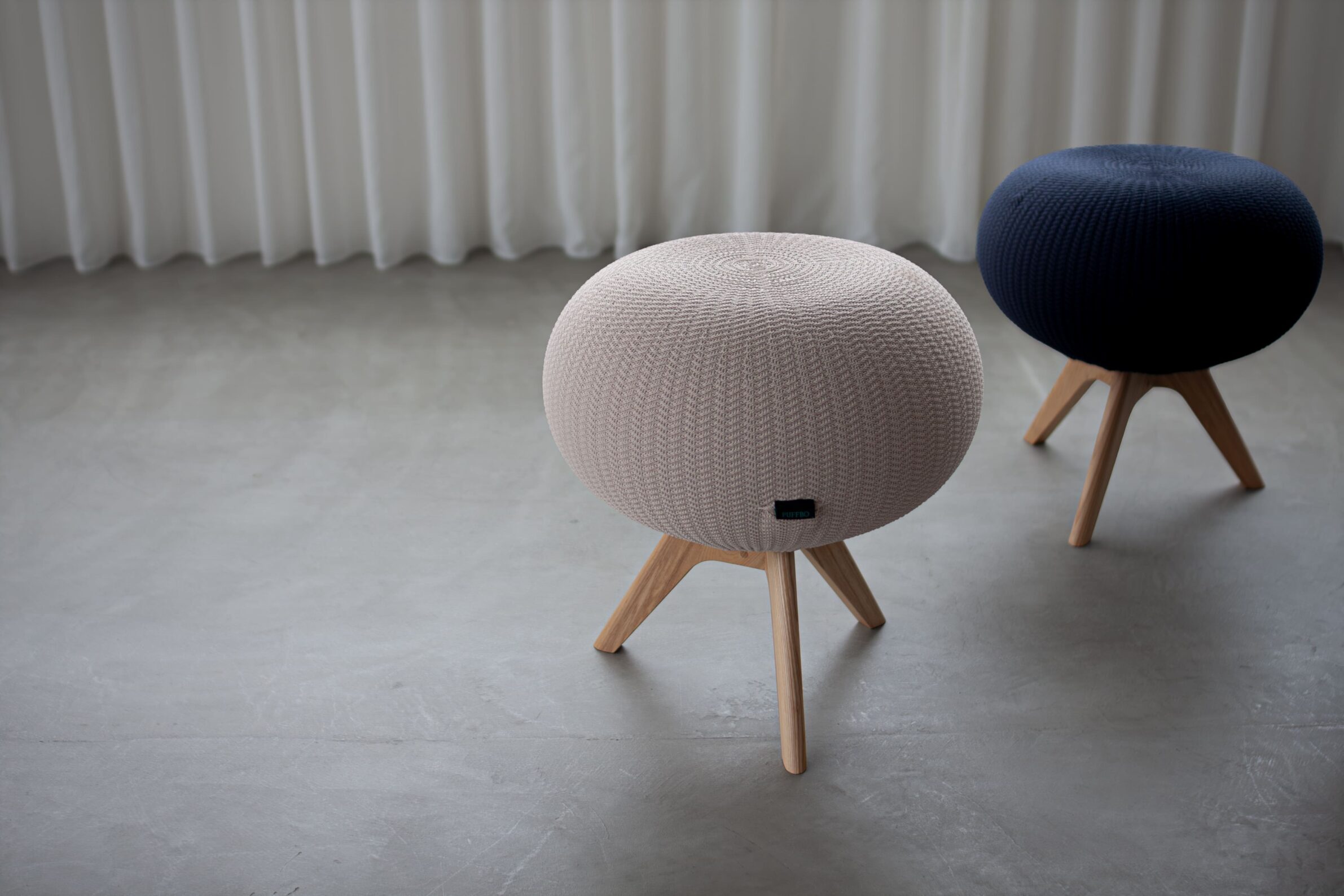
PUFFBO reconsiders the stool by introducing movement into a type usually associated with a fixed sitting position. Its starting point is the balance ball, whose instability encourages continuous changes in posture but whose scale, mobility and visual character can make it awkward in domestic interiors. PUFFBO transfers this principle into a conventional furniture format. An air-filled cushion allows the seat to move forwards, backwards and laterally, while a four-legged base provides a stable reference beneath it. The seamless 3D-knitted cover and solid ash legs deliberately make the mechanism visually secondary. The result is a familiar-looking stool whose main departure from the archetype is experienced through the body rather than immediately through its form. PUFFBO_ProjectSubmission
6. ROCKIN by Vinicius Siega
Brazil, 2024
Photography: © Nino Andres Biasizzo, © Guilherme Jordani
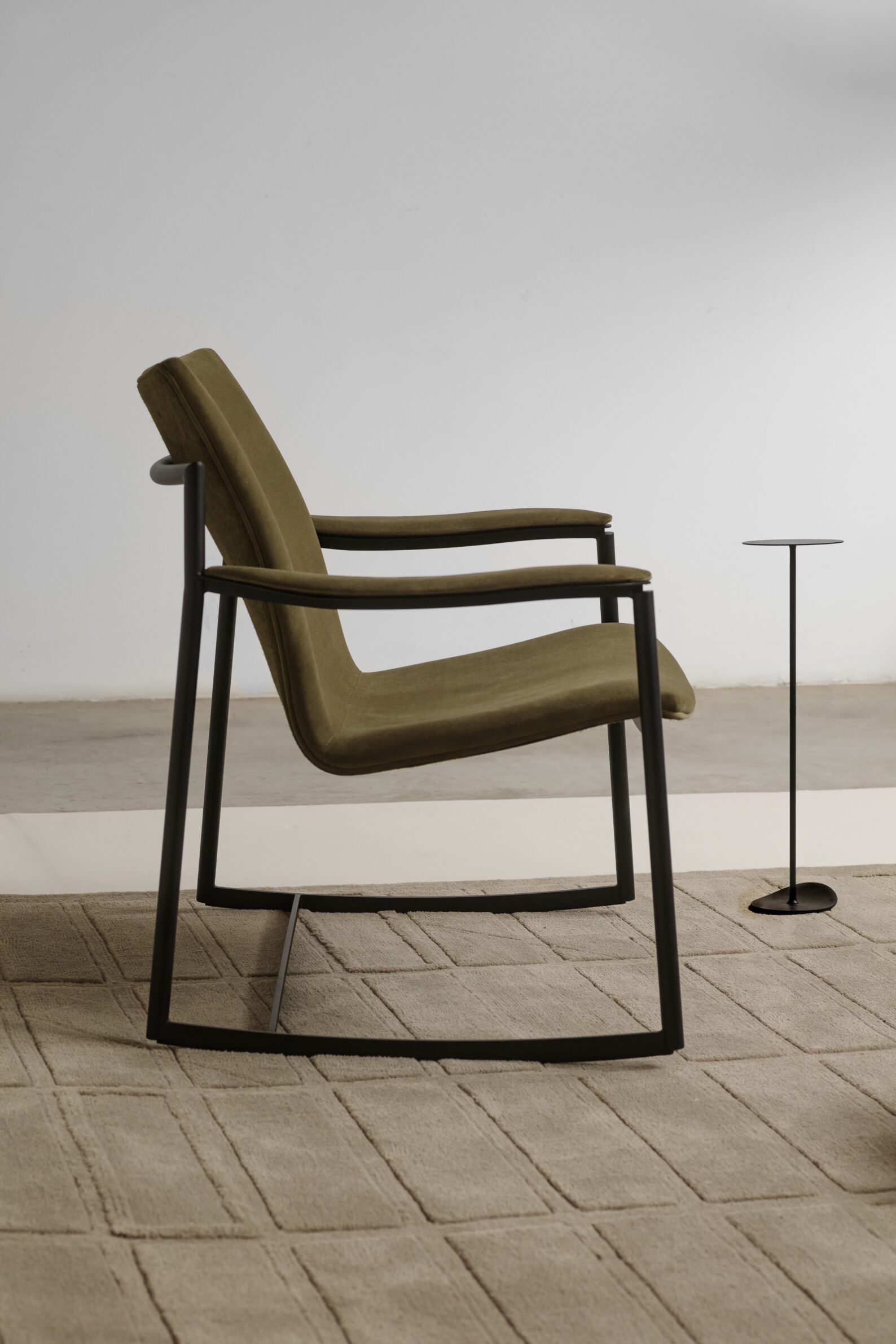
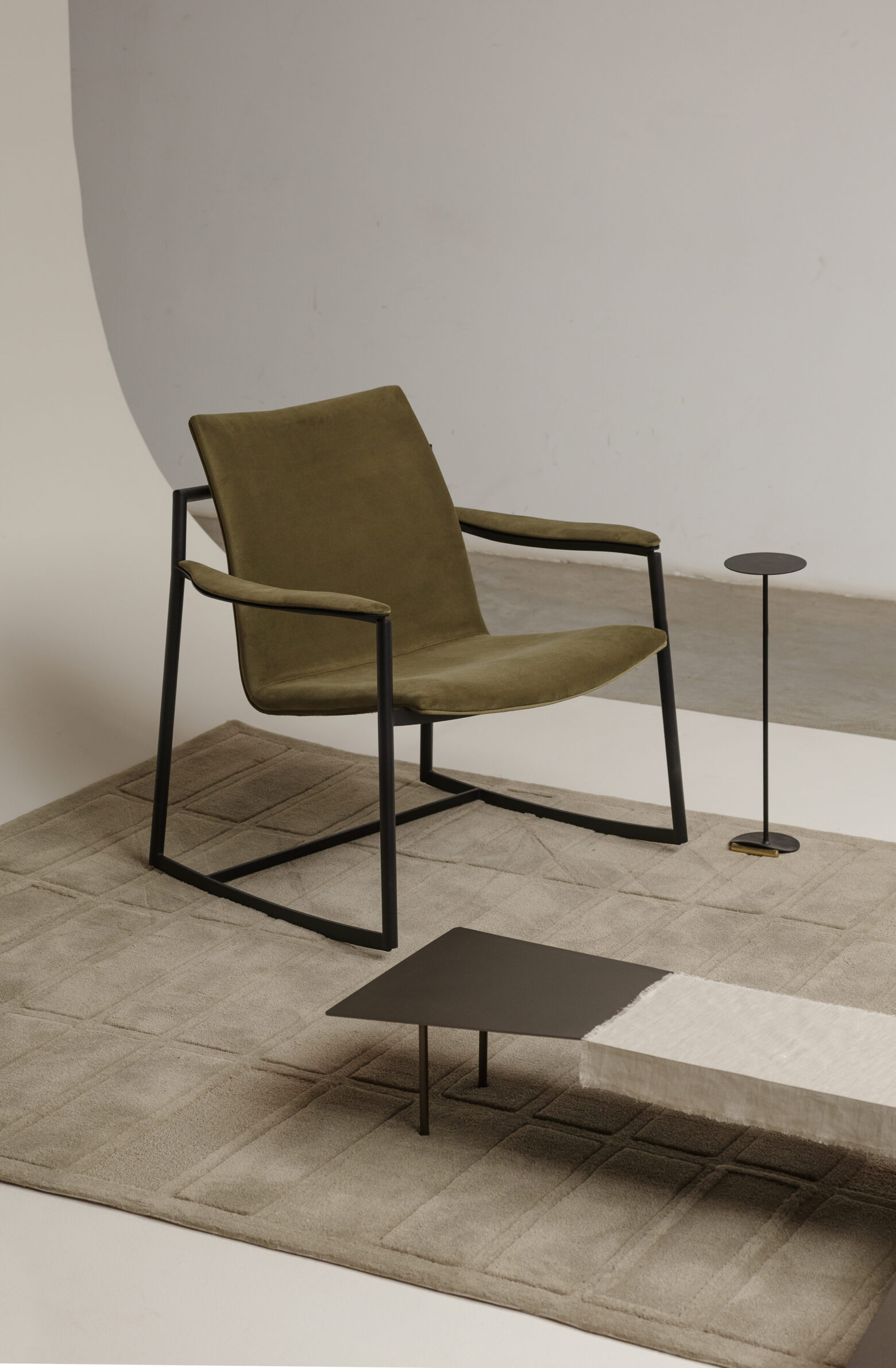
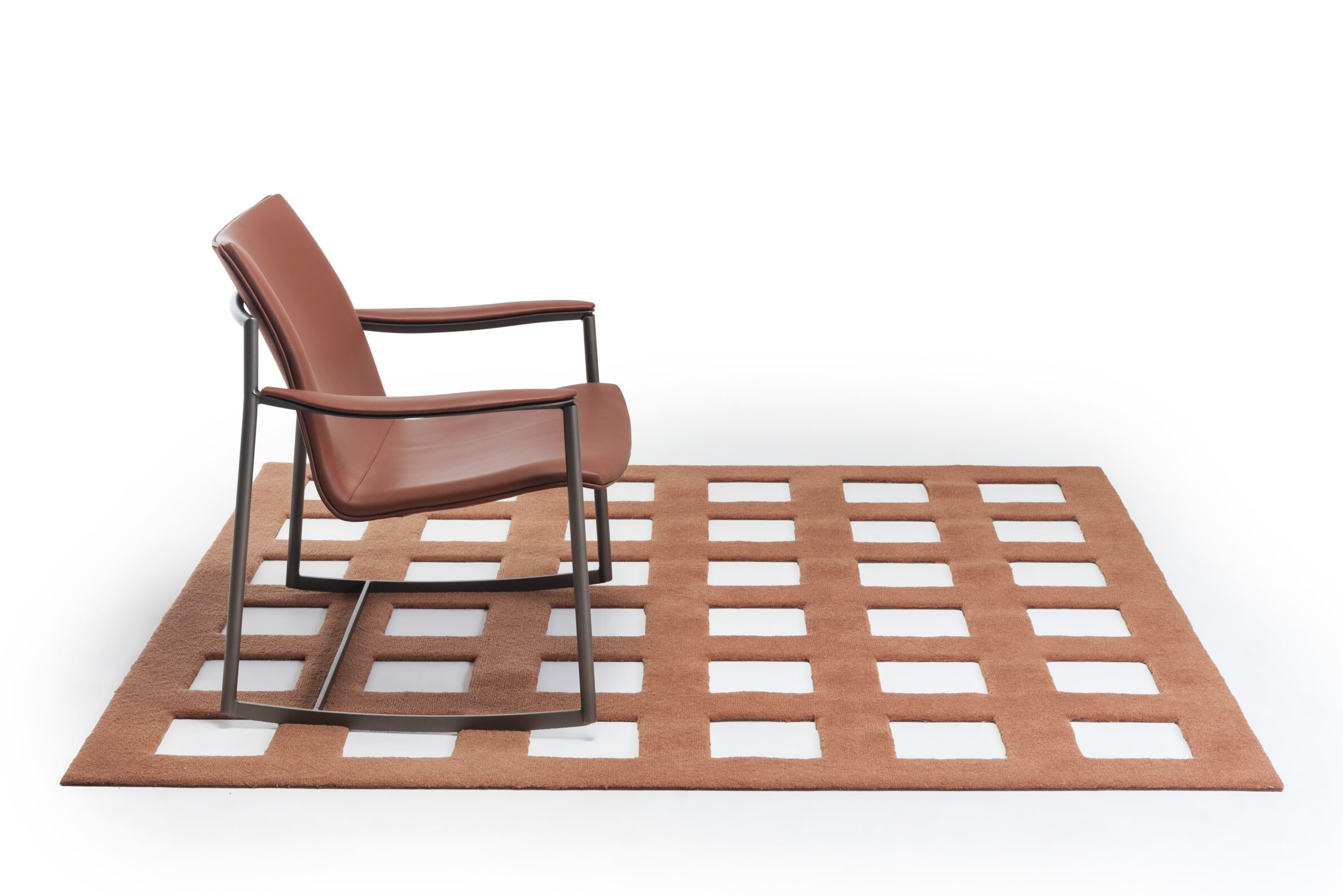
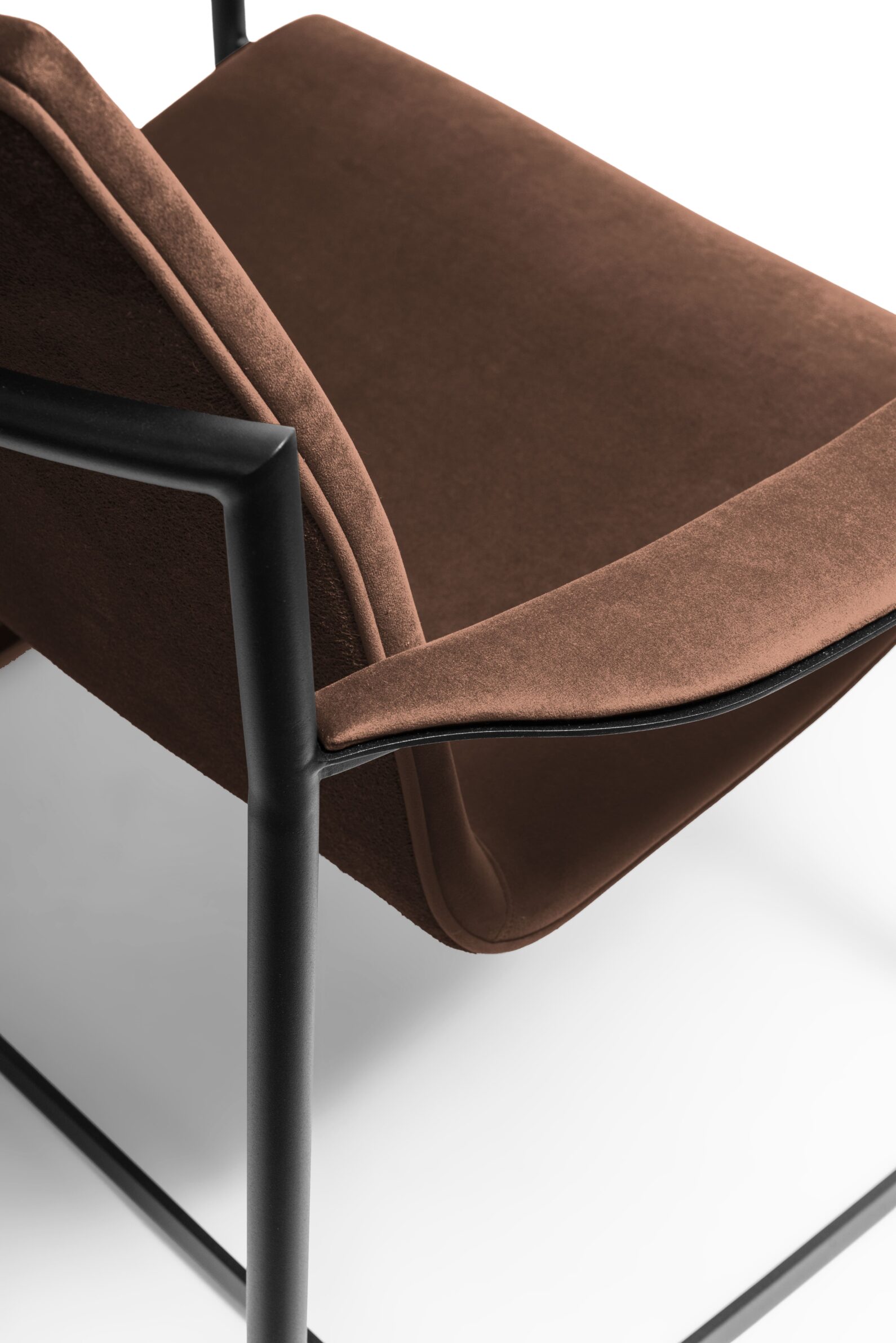
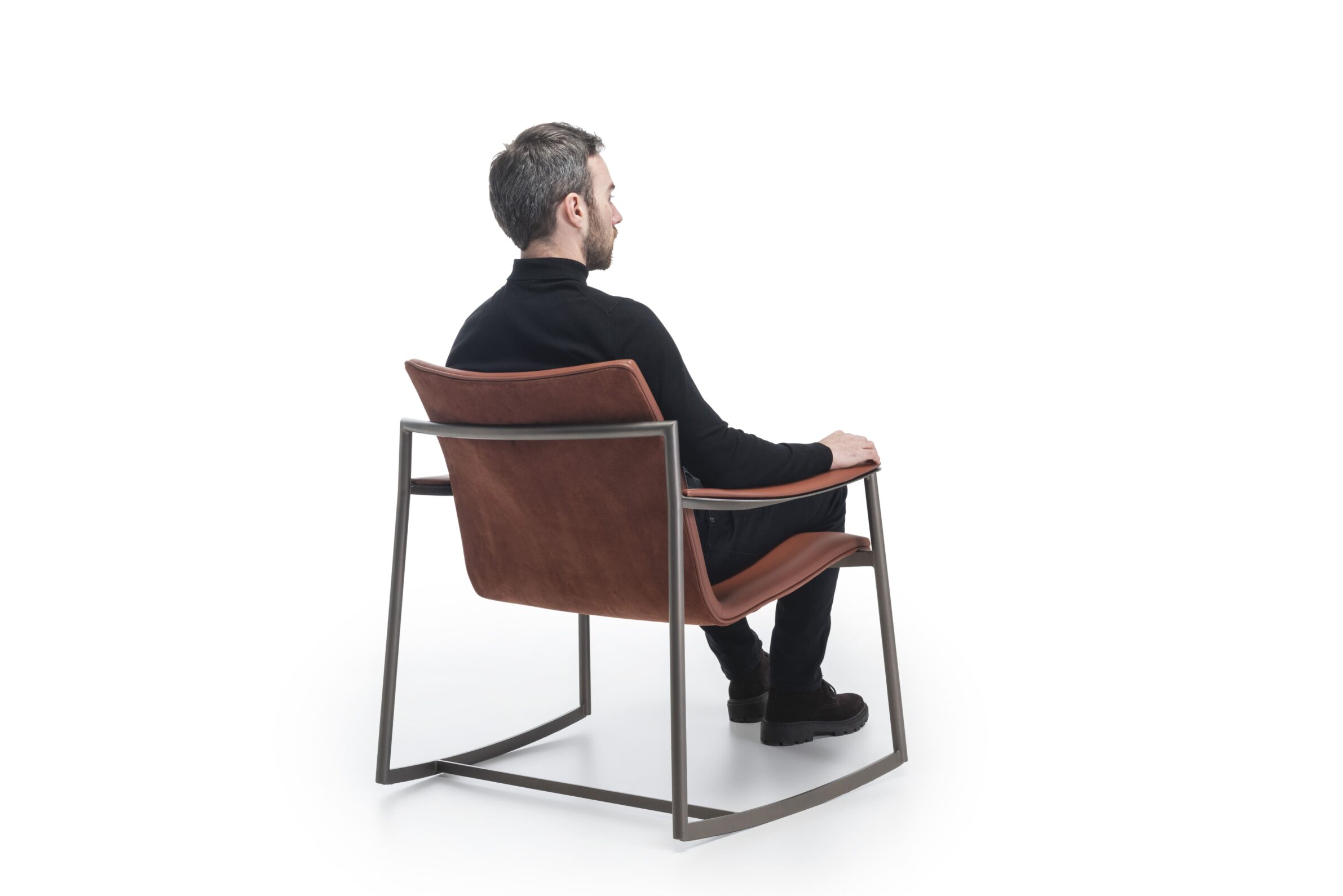
ROCKIN returns to one of the most recognisable chair archetypes and separates its structural and upholstered components more clearly than a traditional rocking chair would. A continuous carbon-steel contour establishes the rocking profile, while the upholstered seat and armrests are positioned above it as a distinct volume. This separation gives the chair a visually lighter character and makes the relationship between support and movement immediately readable. Flexible plywood forms the seat beneath its upholstery, while different leather, suede and fabric treatments modify the surface without changing the underlying construction. Rather than abandoning the familiar rocking motion, the design updates the archetype by reorganising how its frame, volume and movement are visually expressed.
7. Roo Lounge Armchair by Formiing Studio
USA, 2024
Photography: © Formiing Studio
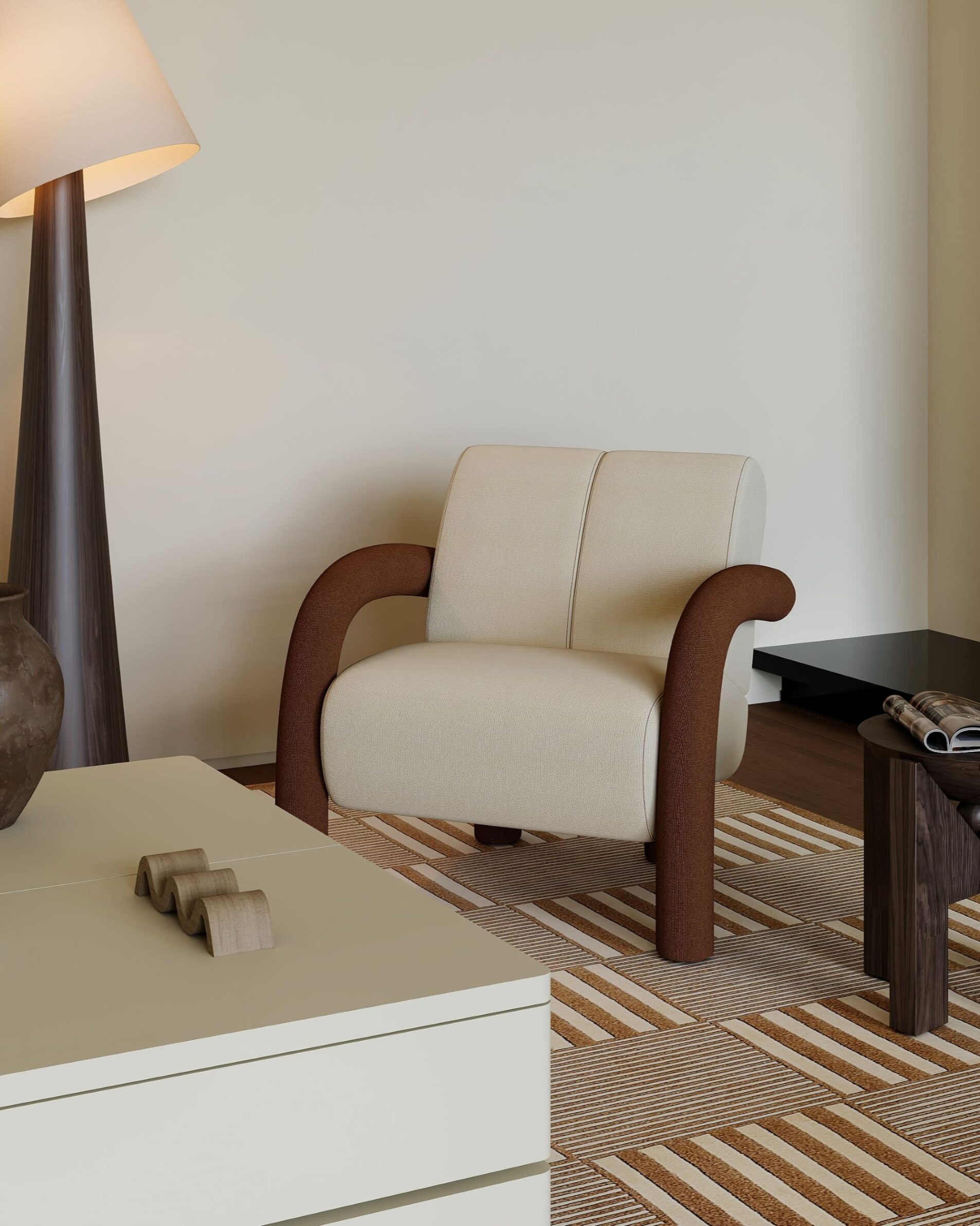
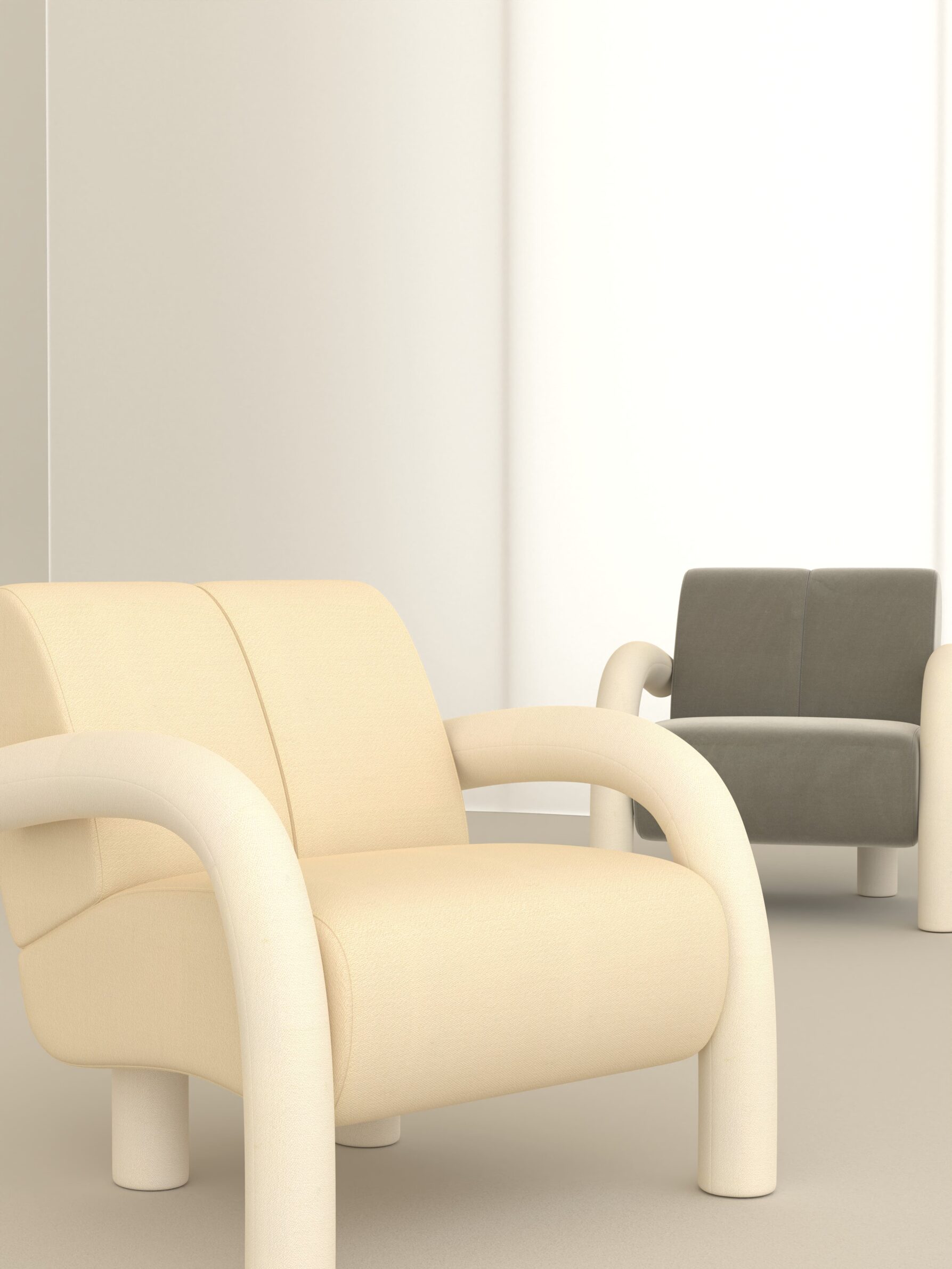
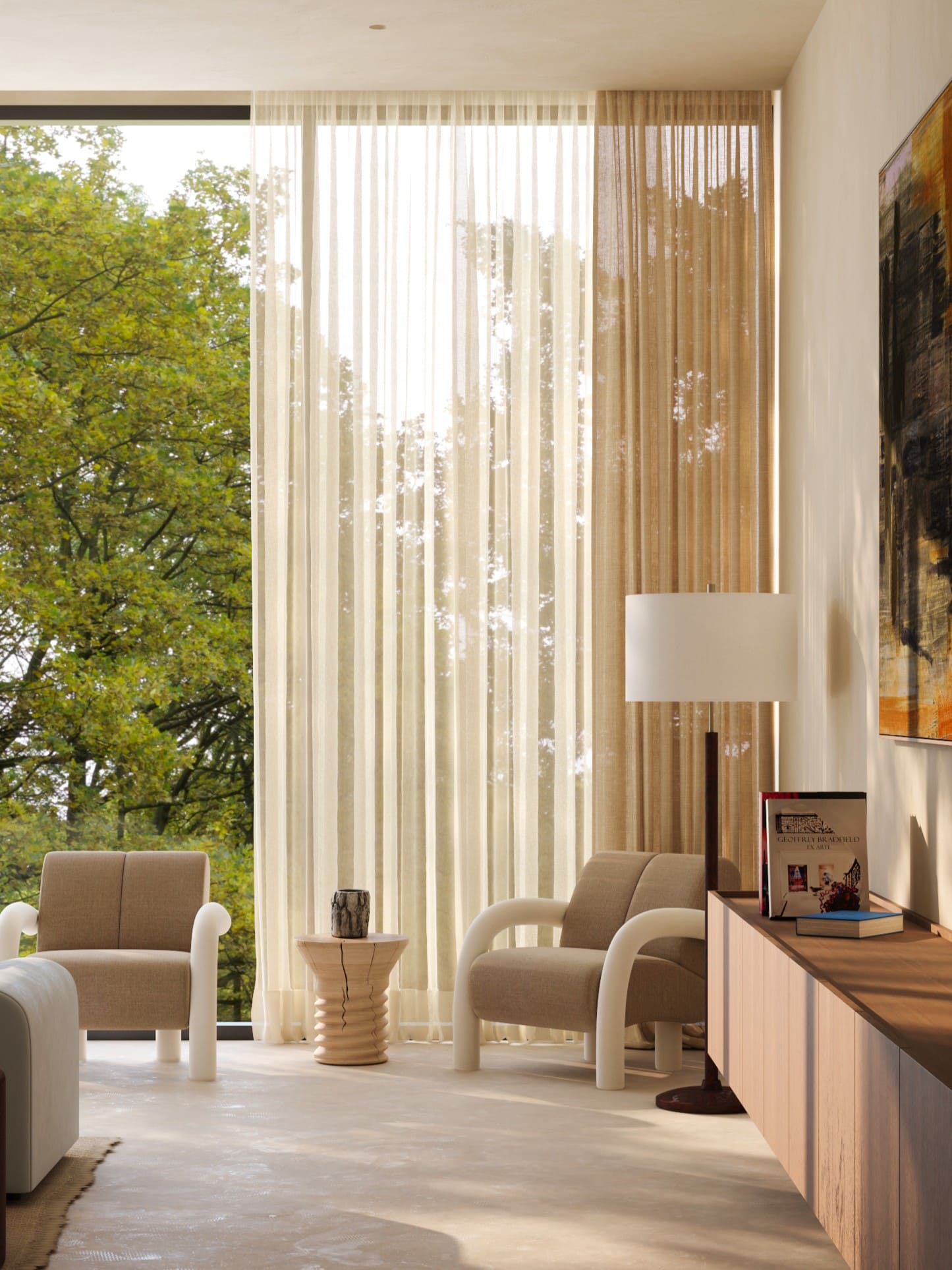
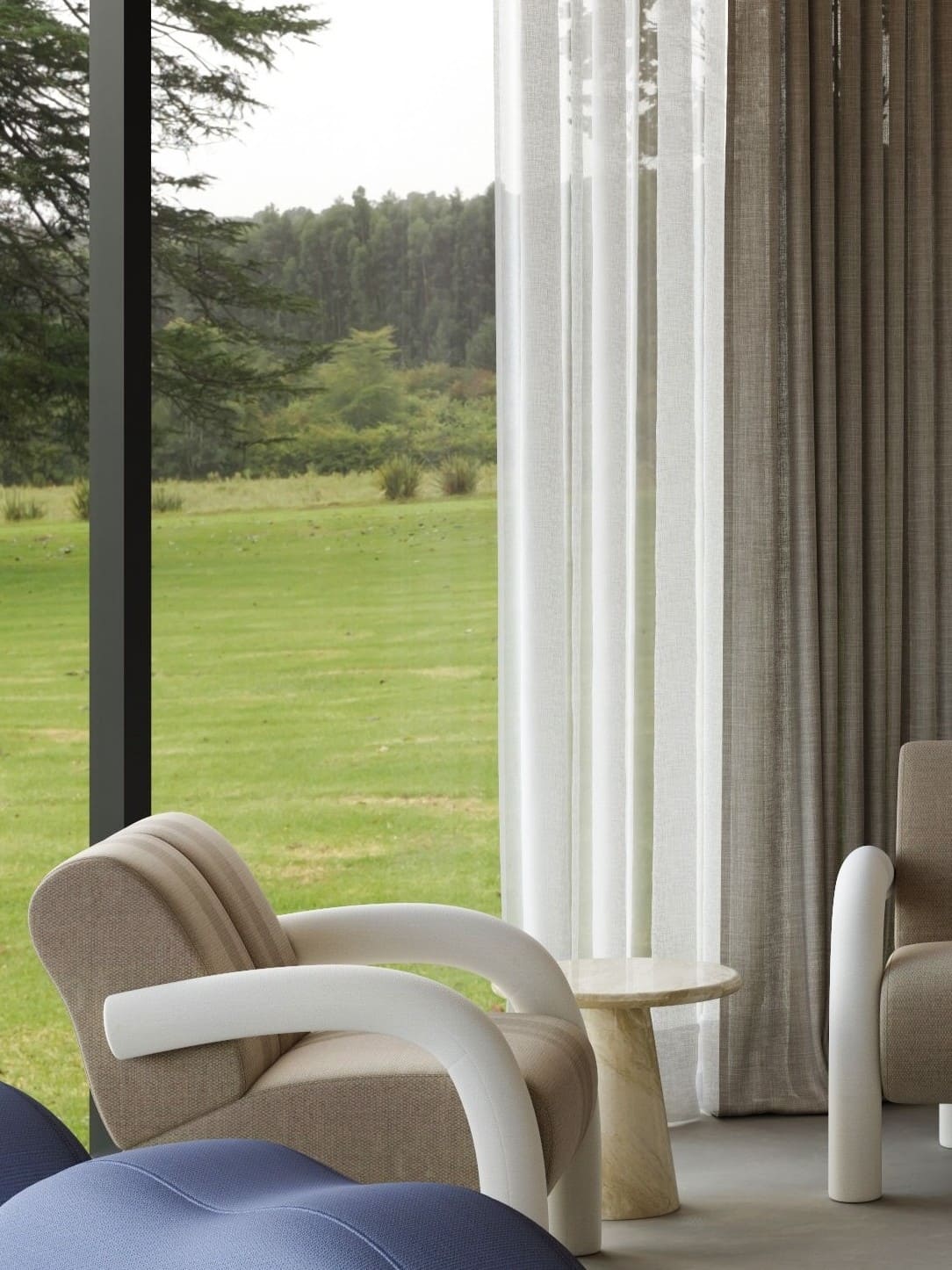
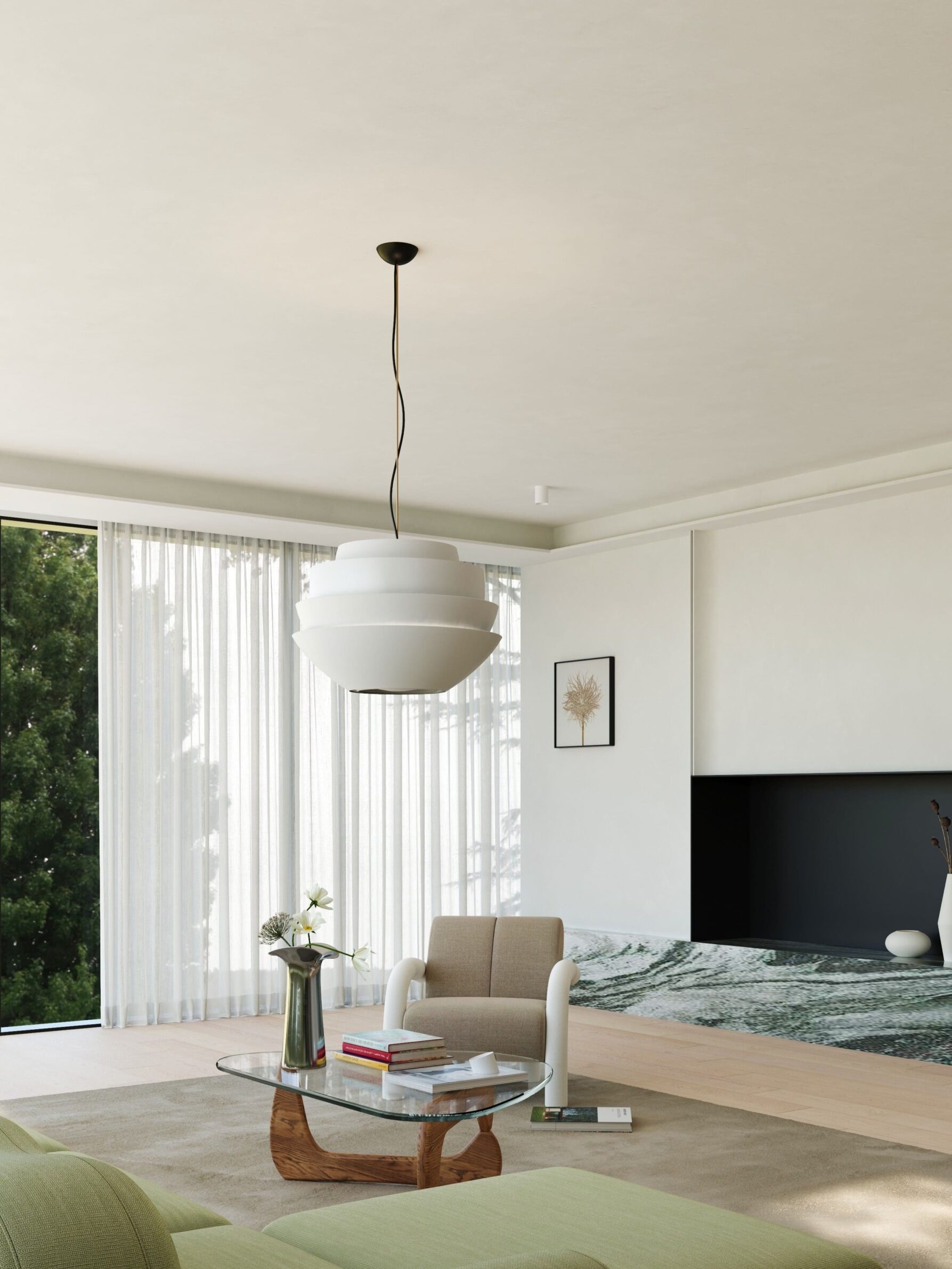
Roo expands the idea of who a lounge chair is designed for. Its upholstered body follows conventional ergonomic logic, but the unusually substantial armrests introduce a second pattern of use: surfaces and openings through which pets can climb, pass, or settle. Instead of treating this as an accessory added to an otherwise complete chair, the interaction is incorporated into the chair’s basic geometry. The armrest therefore becomes both support for the sitter and spatial structure for another occupant. In a category where innovation is often concentrated on silhouette, upholstery or comfort, Roo instead changes the programme of the object, reflecting a domestic environment in which furniture may be shared across species.
8. BALOO by HIS, designed by Rostyslav Sorokovyi
Ukraine, 2025
Photography: © HIS, © Rostyslav Sorokovyi
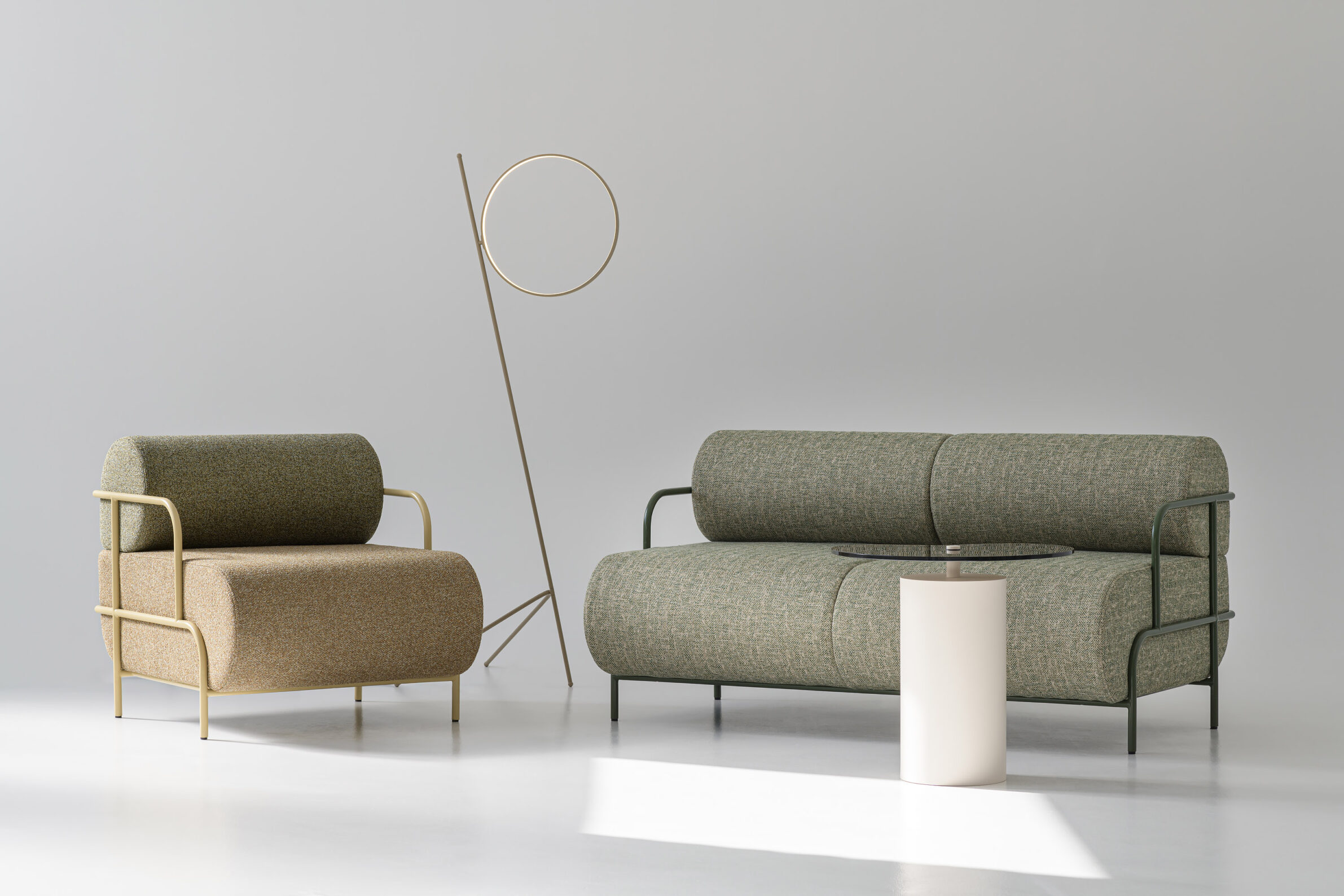
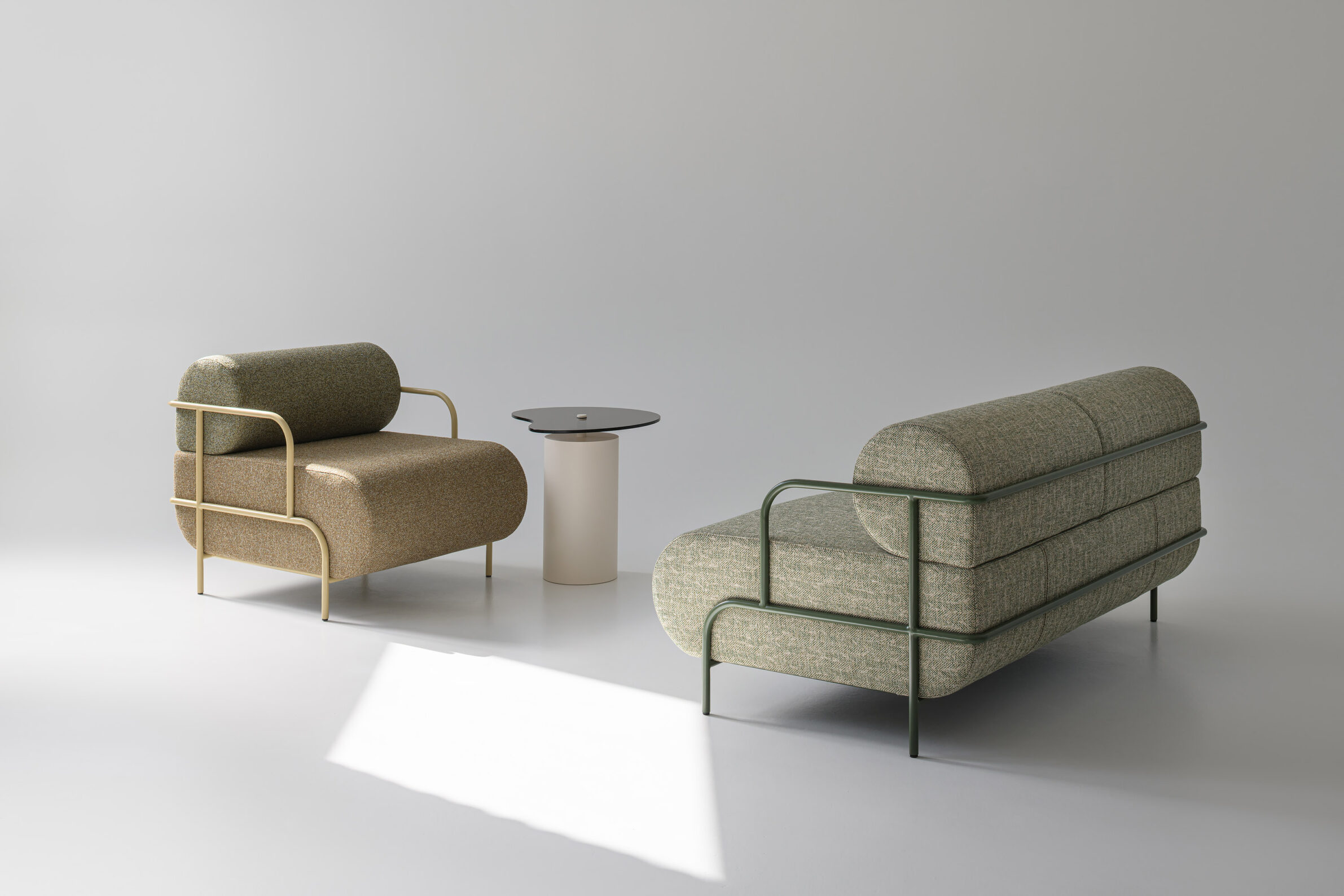
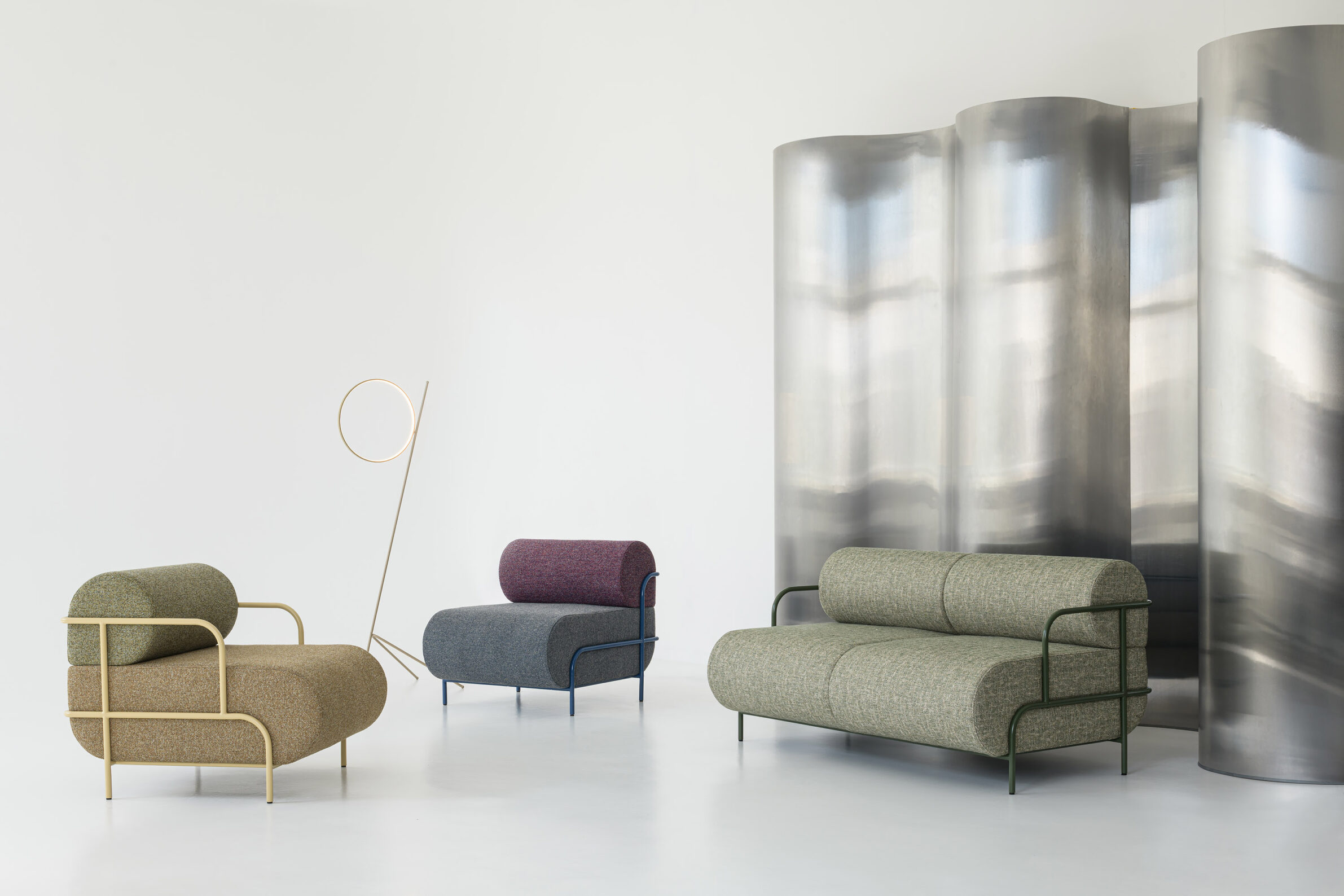
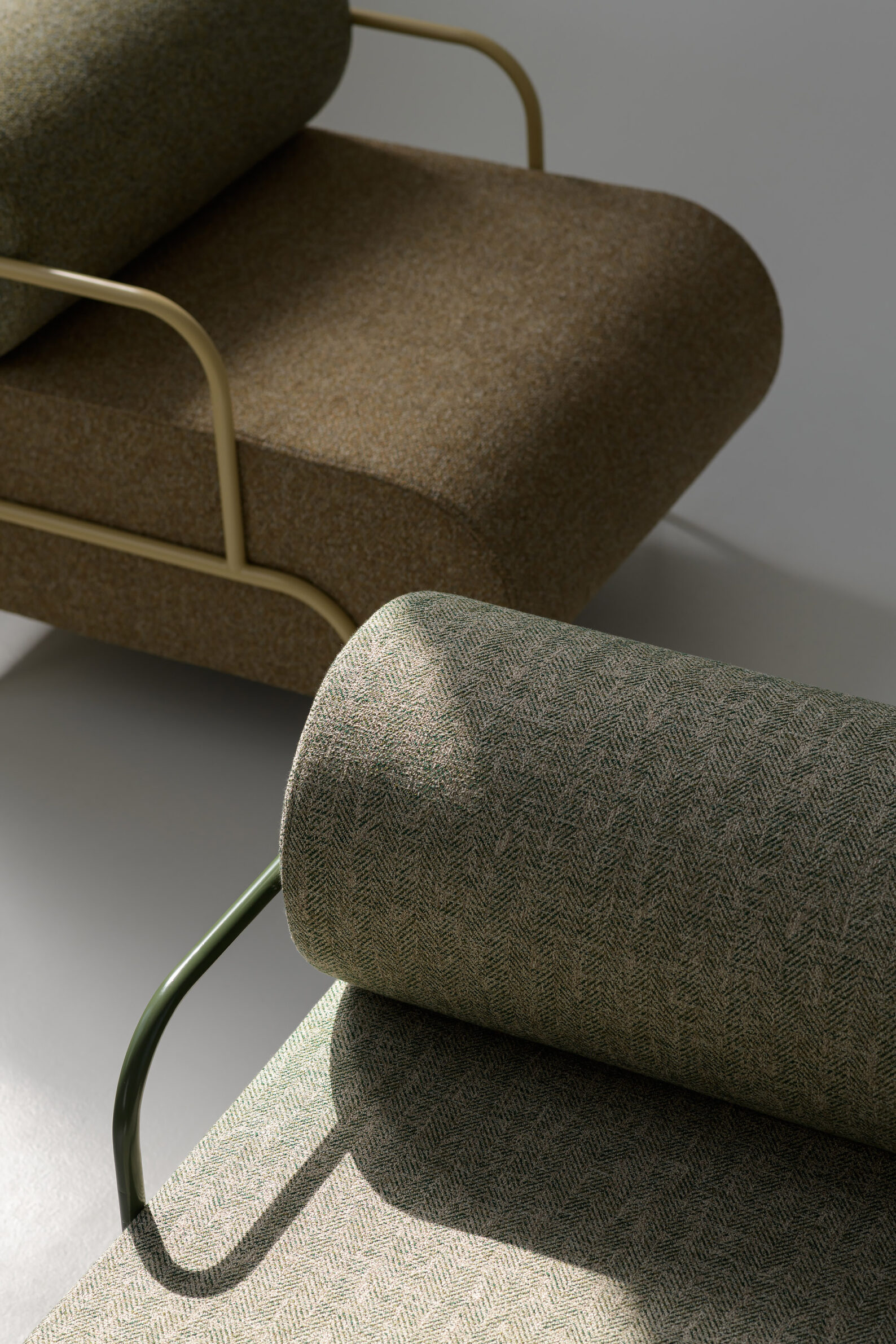
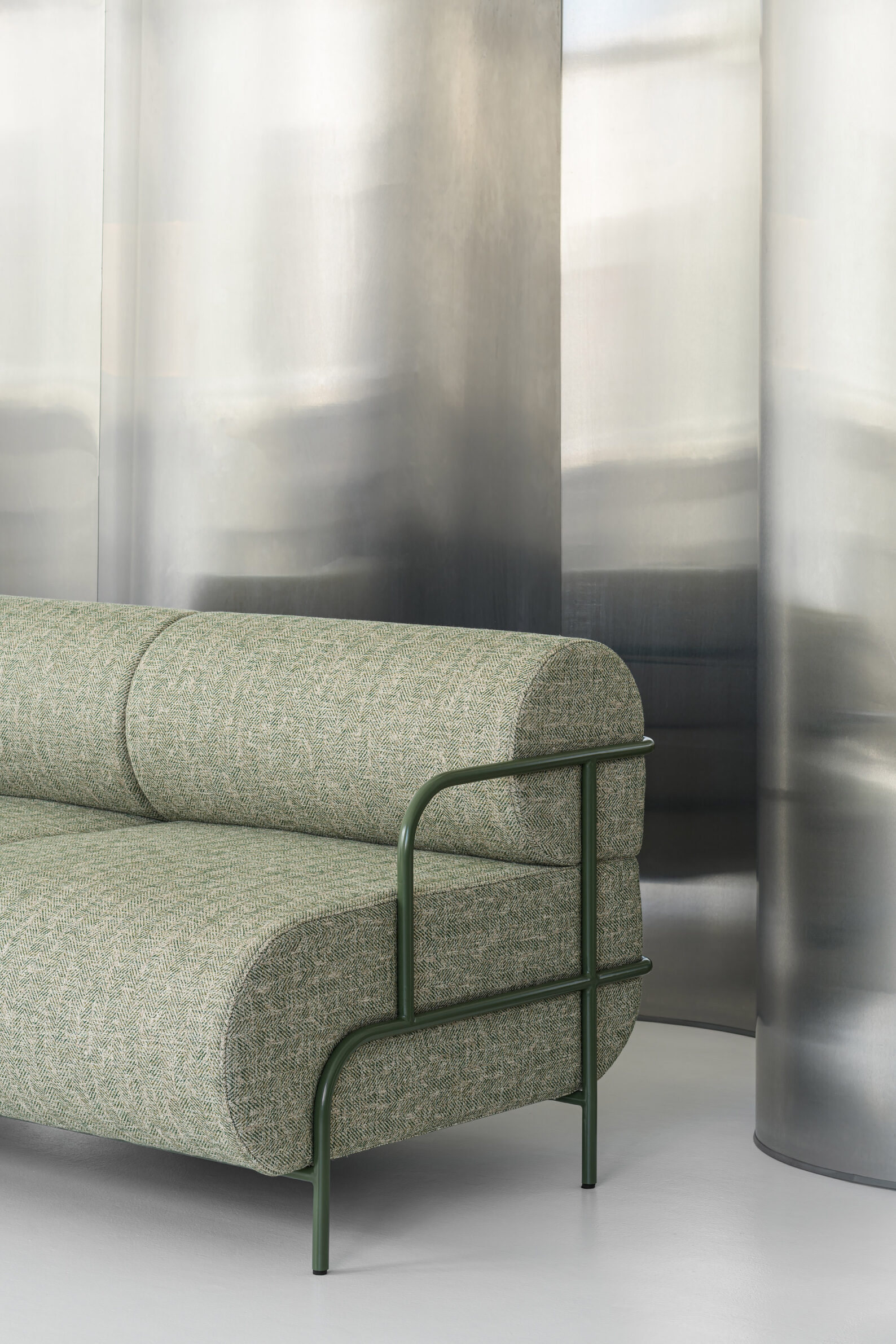
BALOO applies the language of soft domestic seating to contemporary work environments. The collection comprises a lounge chair, compact sofa and ottoman, all organised around the contrast between rounded upholstered volumes and a comparatively slender metal structure. This distinction prevents the pieces from reading as continuous upholstered masses and gives the collection a lighter visual framework. More importantly, the softness is not treated simply as styling: it changes the conventional character of workplace furniture, moving it away from an overtly technical or corporate expression. Across the three typologies, the same relationship between generous volume and reduced frame creates continuity while allowing each piece to retain its own scale and function.
Edited by: Klemen Čepirlo; Cover image: © Alexandre Raupp
______
Selections is an editorial series that presents carefully curated architecture, interior, and product design projects. Each article explores a specific theme, question or typology. Sometimes through a collection of projects, sometimes through a single work that deserves closer attention. Rather than aiming for completeness, Selections highlights projects that help us better understand the ideas, values and directions shaping the built environment today.
What do you believe is still worth creating?
You are part of the creative community shaping what comes next. Share your perspective on the ideas, challenges and possibilities that deserve attention now. Selected contributions will be shared through our channels, and every contributor will receive a complimentary Festival Pass.
Selected Works
Edited by:
Klemen Čepirlo
Cover image:
© Alexandre Raupp
Be There.

Powered by