


Josip Baričević and Duje Čerina, Croatia, 2026

Nominator: Neno Kezić
Nominator's statement
Duje and Josip are final-year graduate students of Architecture at the Faculty of Civil Engineering, Architecture and Geodesy in Split, distinguished by an exceptional level of dedication, intellectual maturity, and design excellence.
Their work demonstrates a rare combination of conceptual clarity and analytical rigor. They consistently develop projects through a precise, cause-and-effect-based methodology, resulting in architectural proposals that are both intellectually grounded and convincingly articulated. Their ability to translate complex ideas into coherent spatial solutions sets them apart among their peers.
What particularly distinguishes their approach is a profound sensitivity to context—social, urban, and temporal. Their projects engage critically with the spirit of place and contemporary conditions, producing layered and deeply integrated architectural responses that transcend conventional design approaches.
Their interpretation of program is notably inventive, generating unexpected relationships and dynamic spatial configurations that enrich both function and form. The outcome is a body of work characterized by originality, precision, and a strong, contemporary architectural voice.
Duje and Josip represent an outstanding emerging talent with clear potential to make a significant and lasting contribution to the field of architecture.
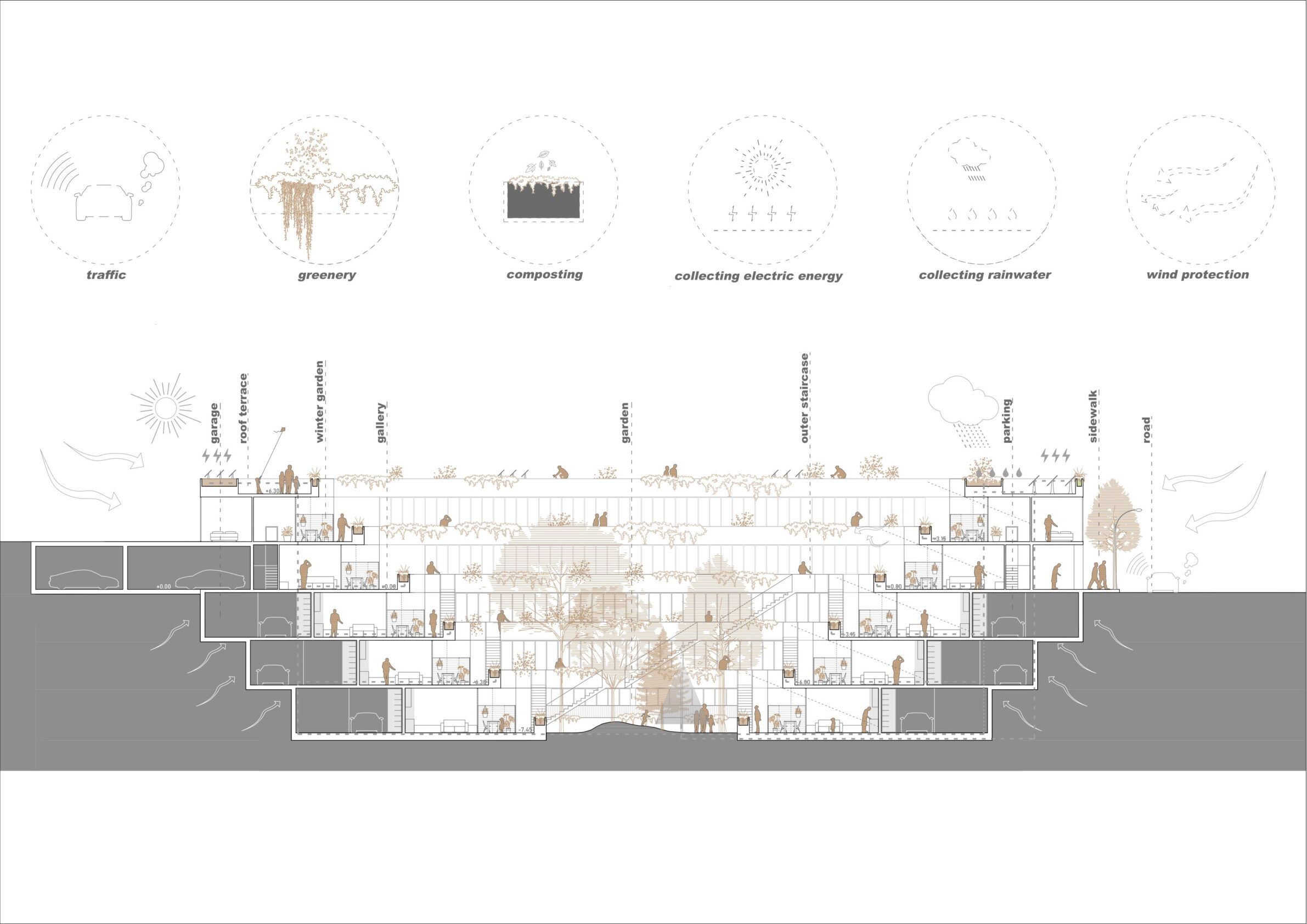
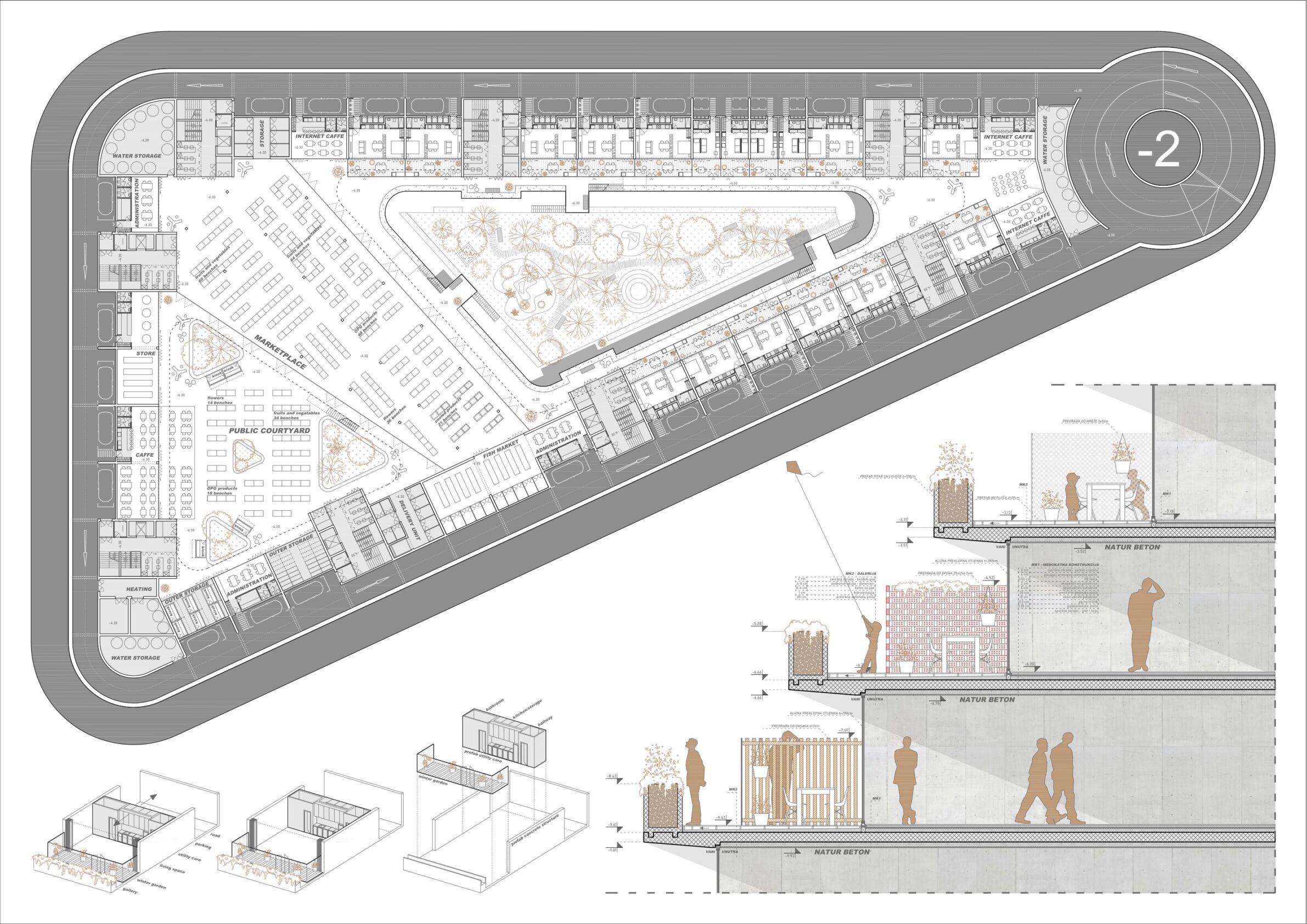
KOPILICA HYBRID 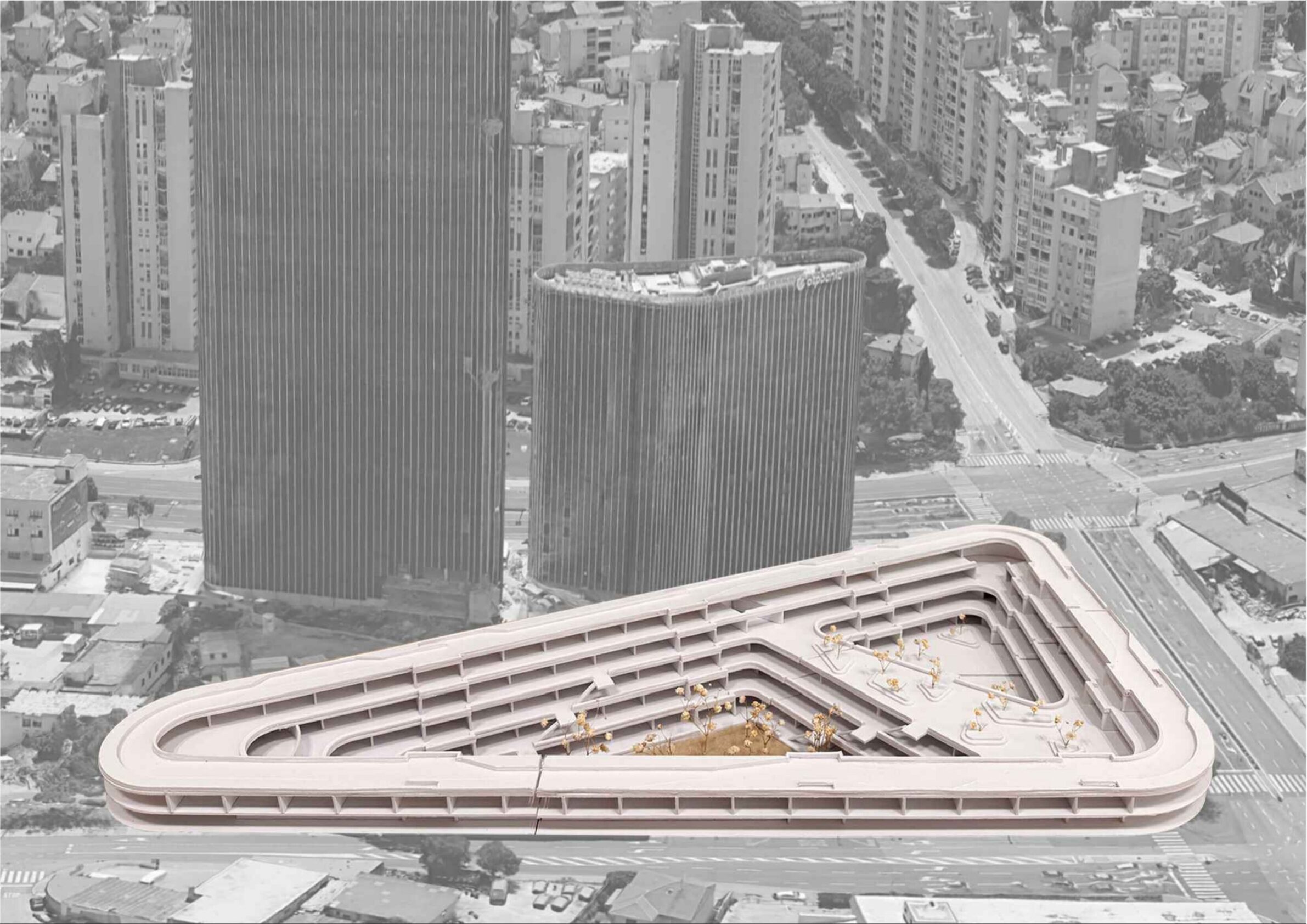 Semester's assignment plot borders soon-to-be a new city entrance and the highest building in Croatia; the Westgate towers. Our hybrid contains of social housing and public program. It's name in Croatian is „Uvik Kontra“ which means always opposite. Our approach reflects that saying by creating our own micro-urbanism in the given offensive context. It's a statement against the destruction of city's skyline. How to make a green oasis in this context? By creating a buffer zone of green roofs, denivelated terraces, walkways and squares a self-sustainable ecosystem is created. By conquering the whole site, a building becomes infrastructure. The road, hallway, market, stores, flats, terraces and park all become equivalent parts of the whole. The gradation of spaces of different character start with the road – the utility spine. It transitions into the transformable utility core of the flats and the free living spaces. The semi-private winter garden communicates with the public walkways and shared spaces.
ST-50-K
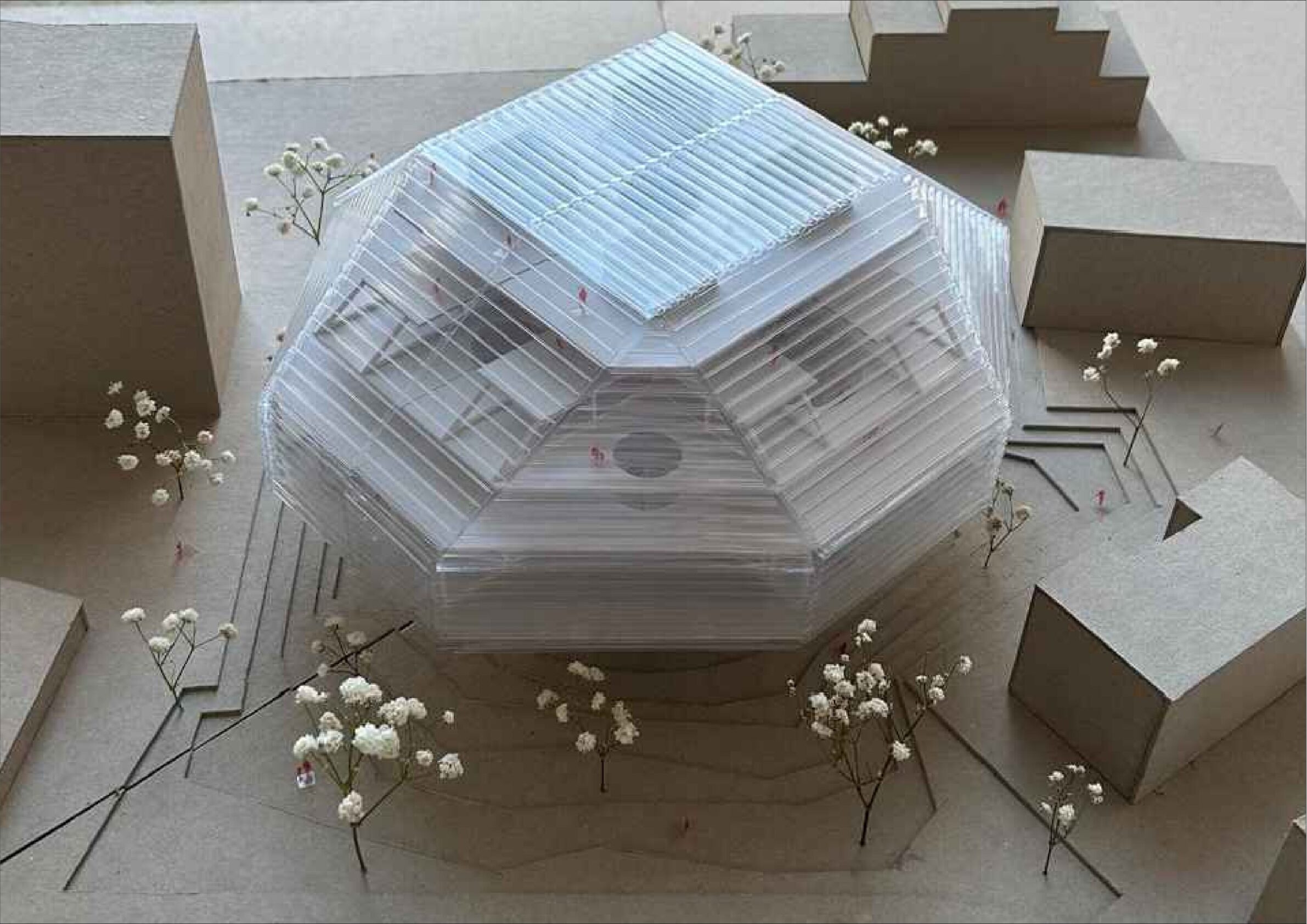
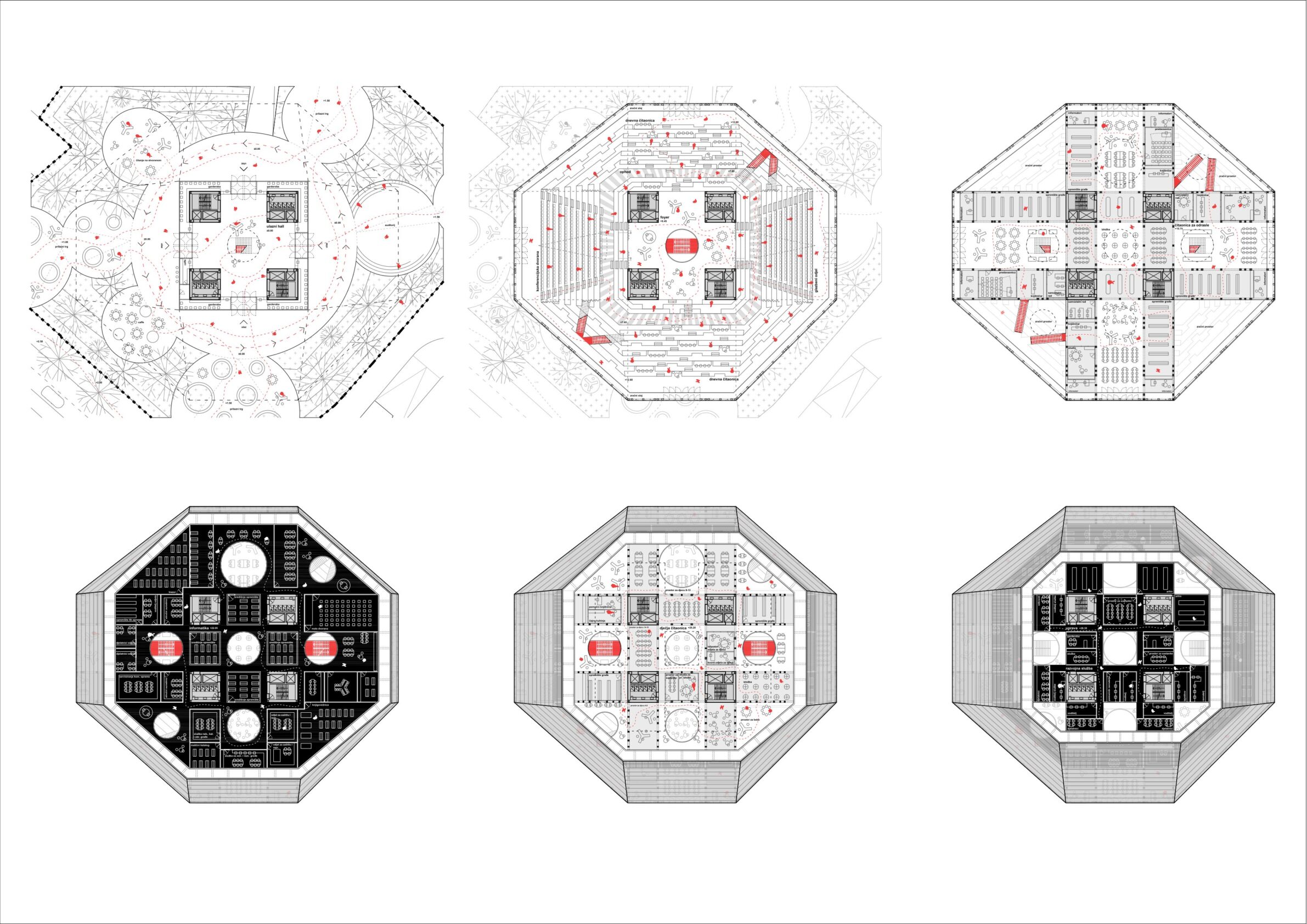
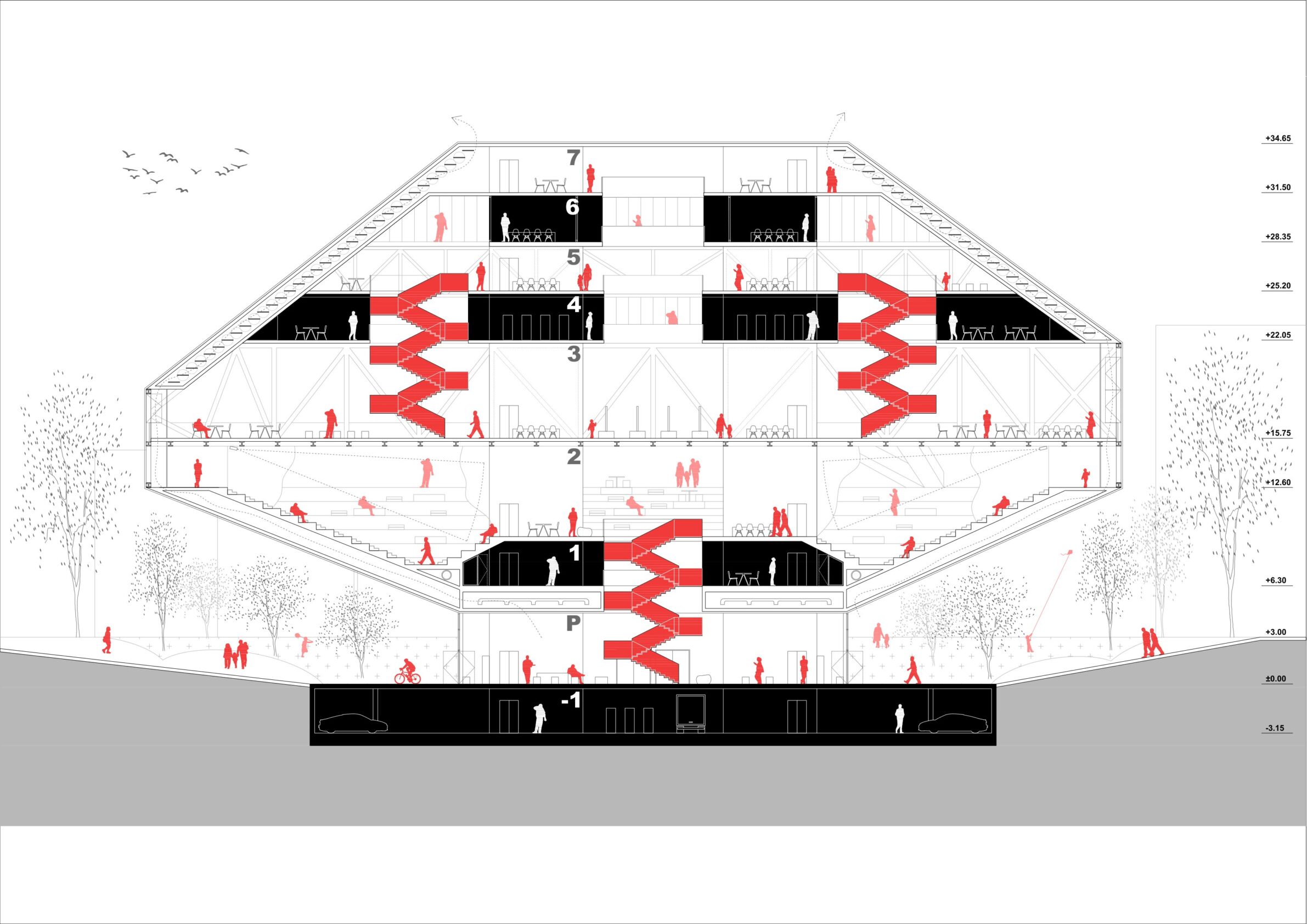
Next semester's assignment is located on the highest plot in the city of Split. The program required a public library which creates a cultural acropolis. Our approach follows that setting by inserting a crystal in the messy context. The monolith-like volume absorbs Mediterranean life, a new entity landed in the park. The ground floor is shaped like a crater which channels movement towards the minimal entrance footprint. The inner programmatic distribution is imagined like teleporting through experiences. The elevator, a primary communication tool, is housed in monolith utility cores connecting the ground floor with the observation point. 24/7 shared reading space acts like a educational and social topography connecting different users. Elderly reading space differs utility housed in the story high steel construction and free social in-between space. Digitalization space is fully inclosed with hollowed out connections between floors. This vertical wealth of experiences culminates with the observation floor overlooking the city.
KINDERGARTEN SLOBOŠTINA
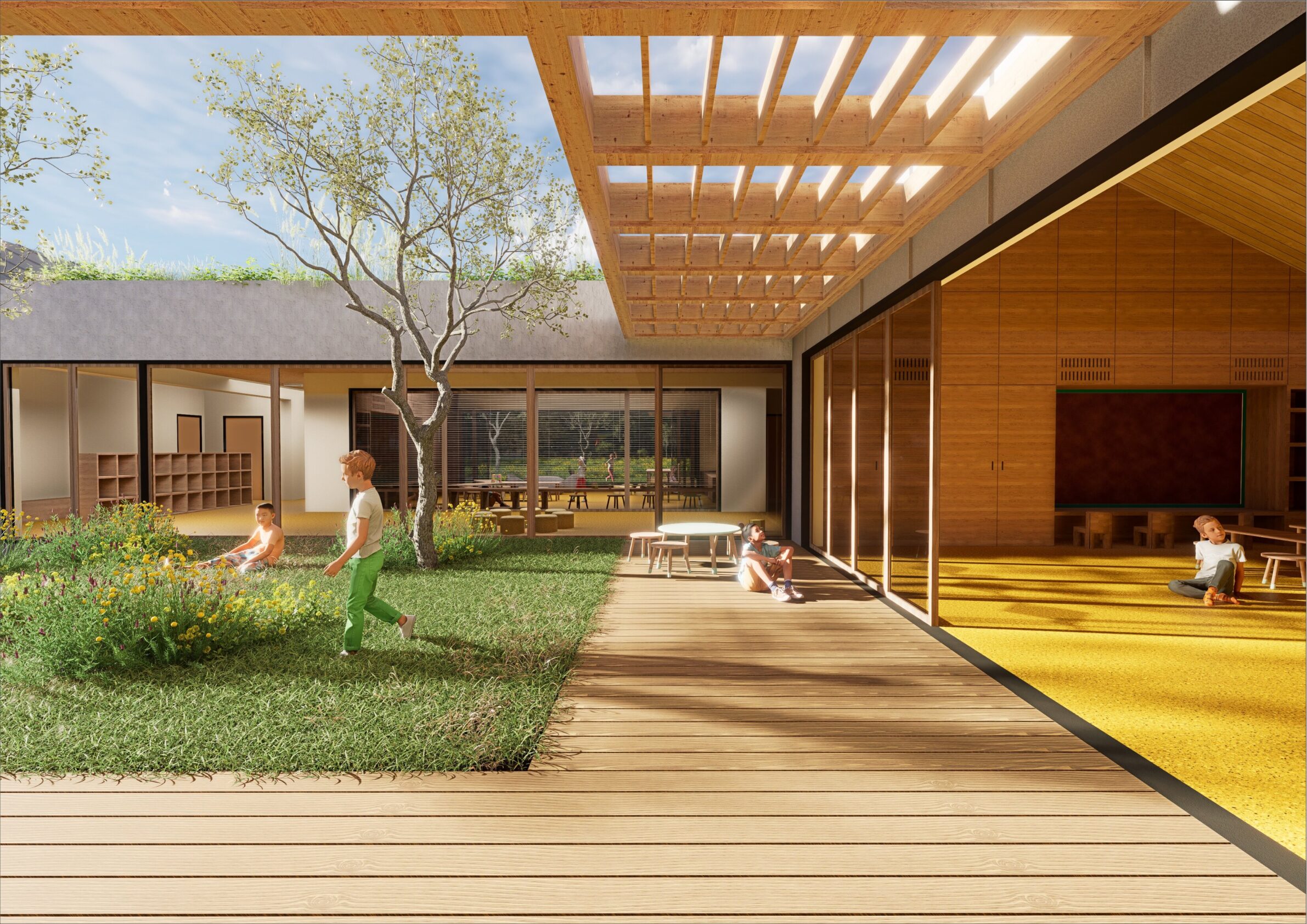
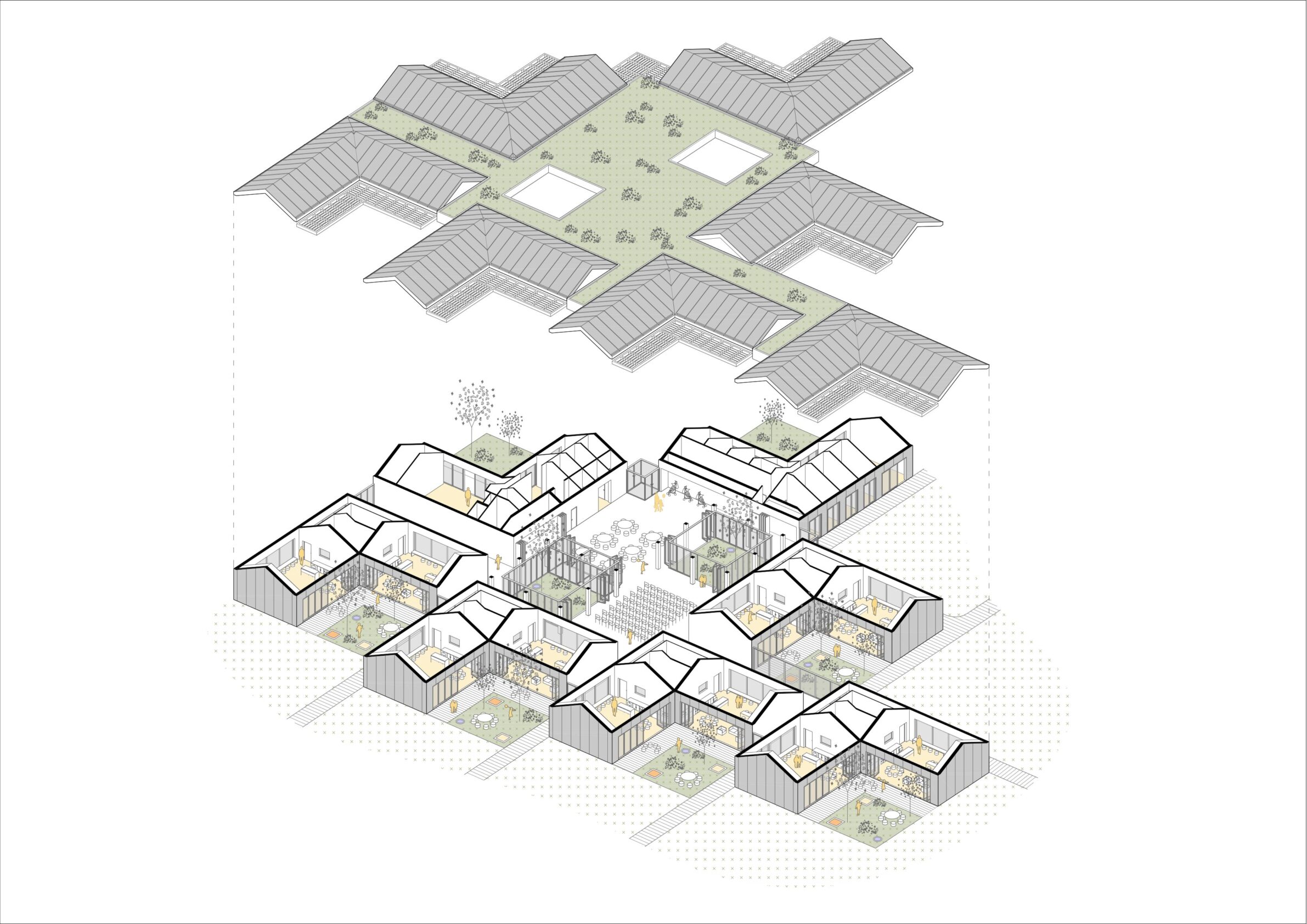
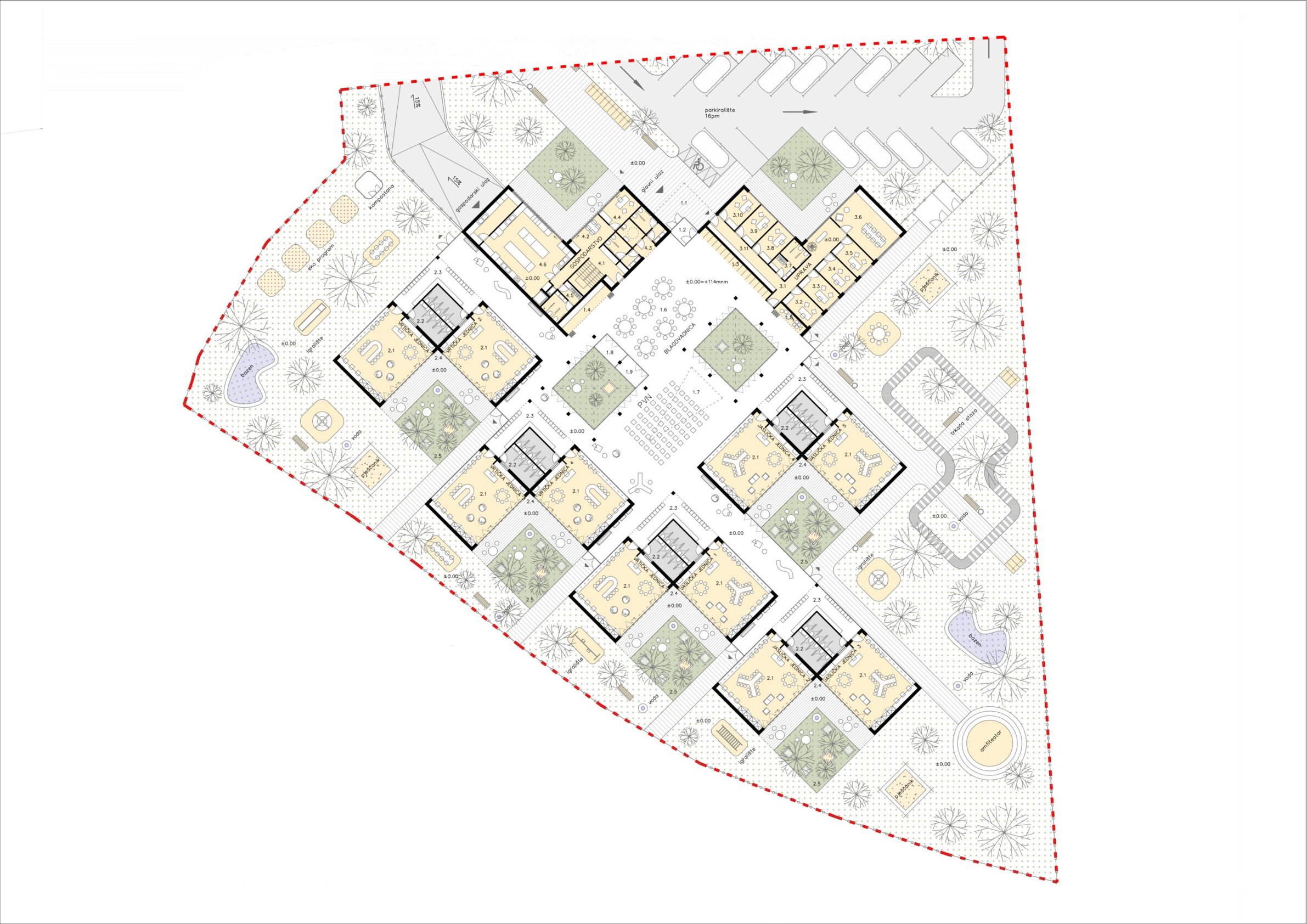
Our competition entry for the central kindergarten in Sloboština, Zagreb explores the idea of the urban-forming aspect of the building. The plot sits in the middle of unbuilt landscape waiting to be colonized. The kindergarten becomes center of the new neighbourhood. We proposed a new grid spreading in all directions, housing different space atmospheres. With the principle of addition one self-sustainable unit is a part of the whole. It enables a playful children's communications between rooms and shared spaces. Erasing the boundaries between inside and outside creates spaces for children's development and socializing. The gradation of spaces start with the fluid public communications, through the semi-public utility spaces, and into the shared rooms. All rooms have a covered and an open terrace connecting them to the shared playground around the plot. By creating spaces of different size, character and enclosure, children are exploring their way into the future.

Josip Baričević and Duje Čerina
We are Josip & Duje, and we were born in 2002. and 2003. in Split, Croatia. We are currently finishing our last year of master's degree at the Faculty of civil engineering, architecture and geodesy at the University of Split. Our journey started by introduction at primary school, intensified in high school, and culminated at the faculty.
Our work until now reflects the place we grew up in – the Mediterranean coastline. Our school is heavily influenced by the rich context as a staring point of thinking architecture. But we acknowledge that we don't posses a singular view of how architecture should be. Every project is approached differently with
conceptual, programmatic and contextual qualities. Our approach views architecture as a research platform and a way of starting a social and cultural change. That was noticed at the faculty with our projects featuring at the Piranesi student award and winning multiple awards for the best faculty projects. An important part of our development were public architectural competitions which we began submitting at our third year, and regularly do until today.
Powered by