


A luminous circle is one of the simplest images we recognise. Its associations arrive almost automatically: the moon at night, the sun through haze, a distant planet or a point of light seen from far away. Unlike an angular object, a sphere has no dominant front and no sharp edge. It appears complete from every direction, which helps explain why round light sources can feel calm even when they occupy the visual centre of a room.
The five designs gathered here begin with this familiar geometry but use it in markedly different ways. A strict brass line passes through irregular glass spheres; an opal globe is held within a graphic steel frame; a textured material gives weight to a perfect ball; an open ring turns light into an architectural boundary; porcelain forms are assembled like beads. The circle is not merely a recurring symbol. It determines how the light spreads, how the object is read and how strongly it enters the surrounding space.
1. Moon Like Lamps by JA LAMPA, designed by JA ARHITEKT
Croatia, 2025
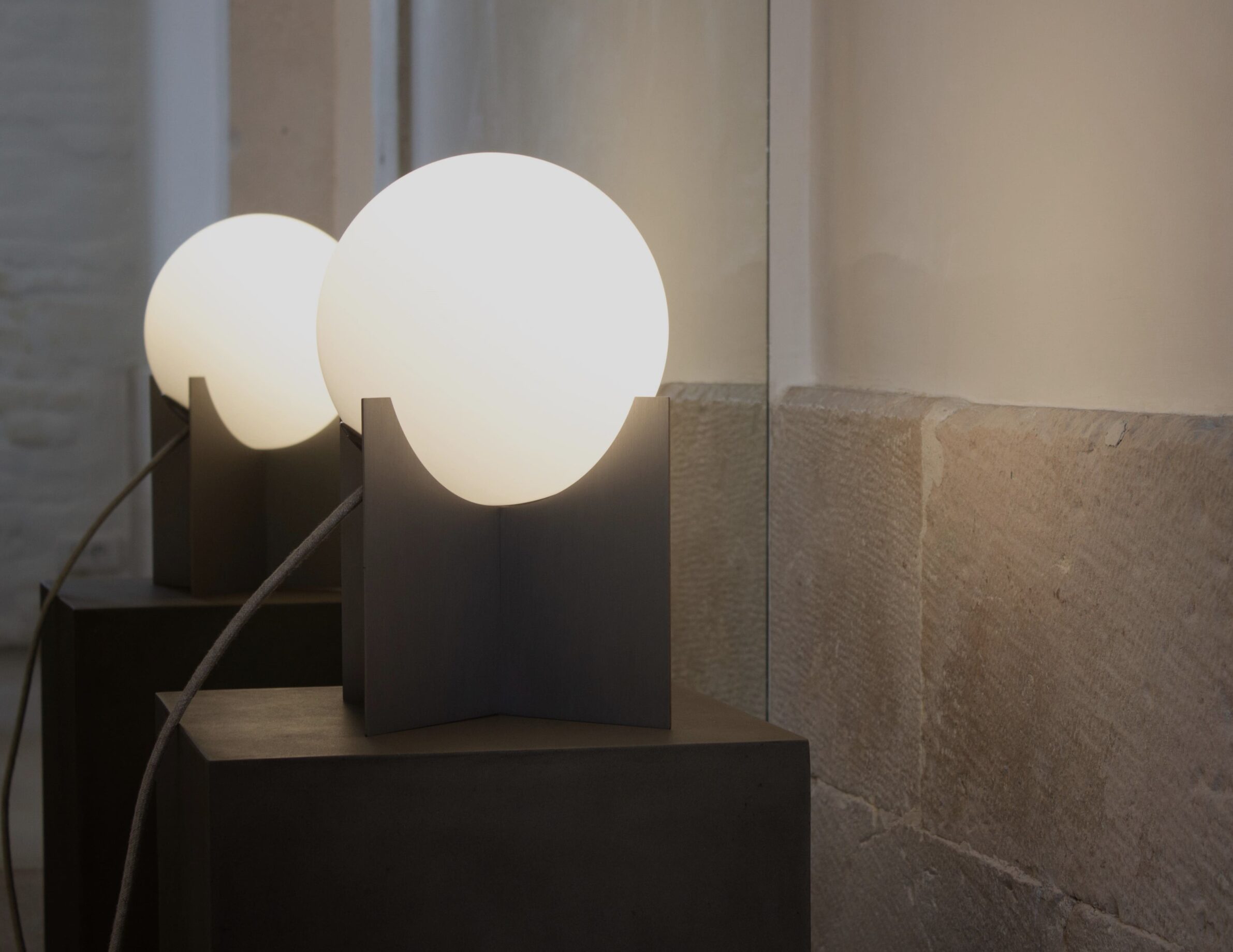
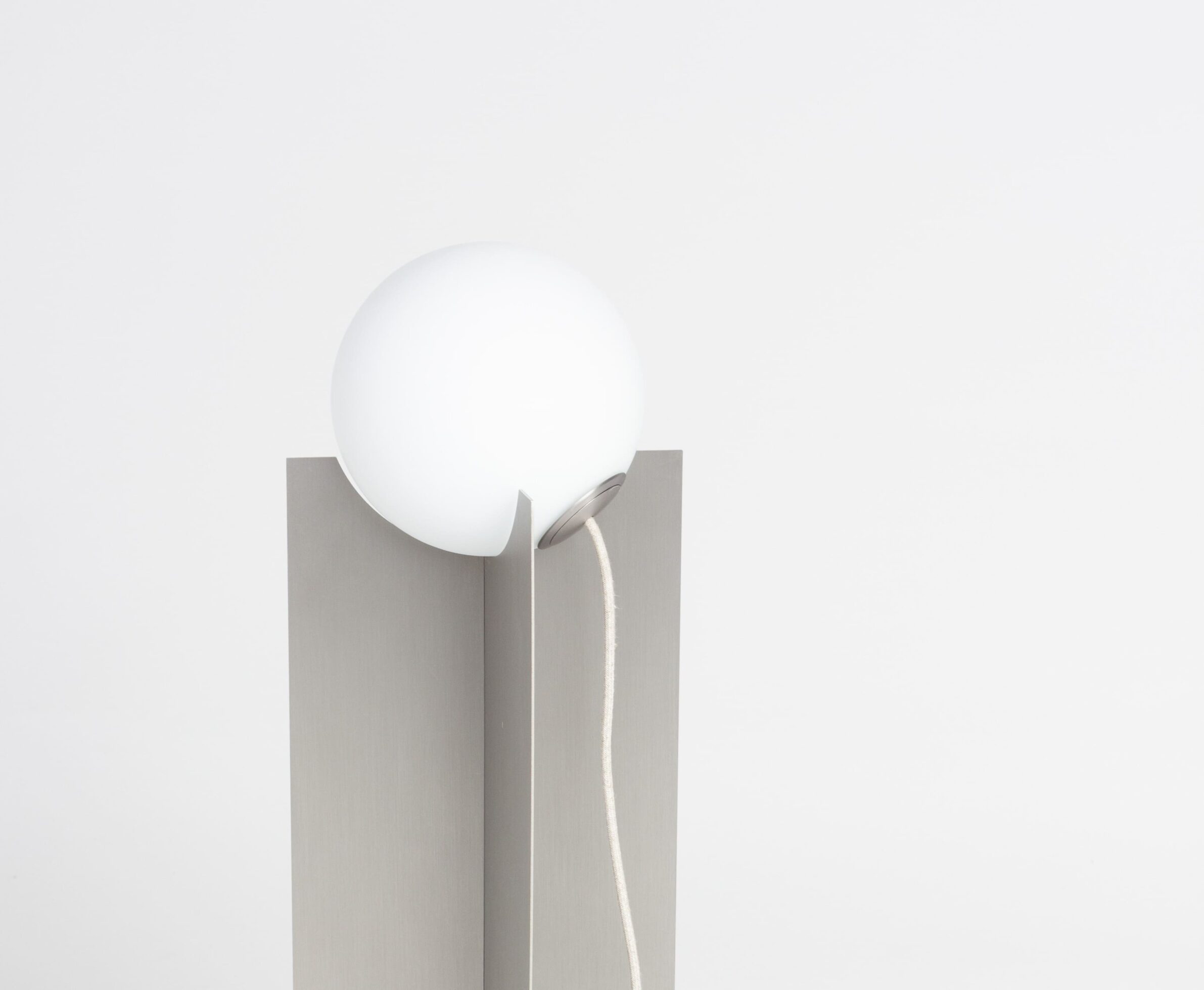
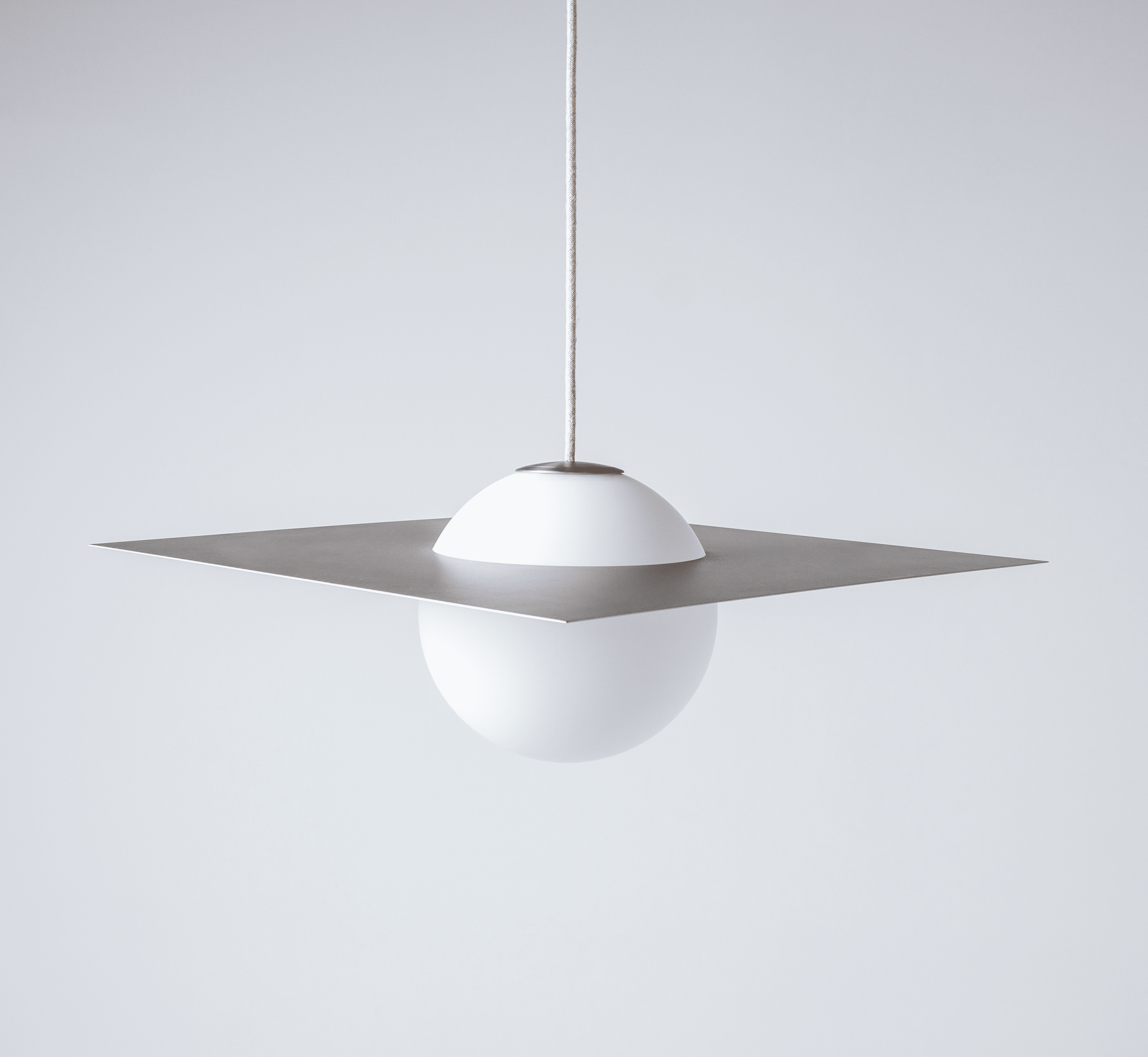
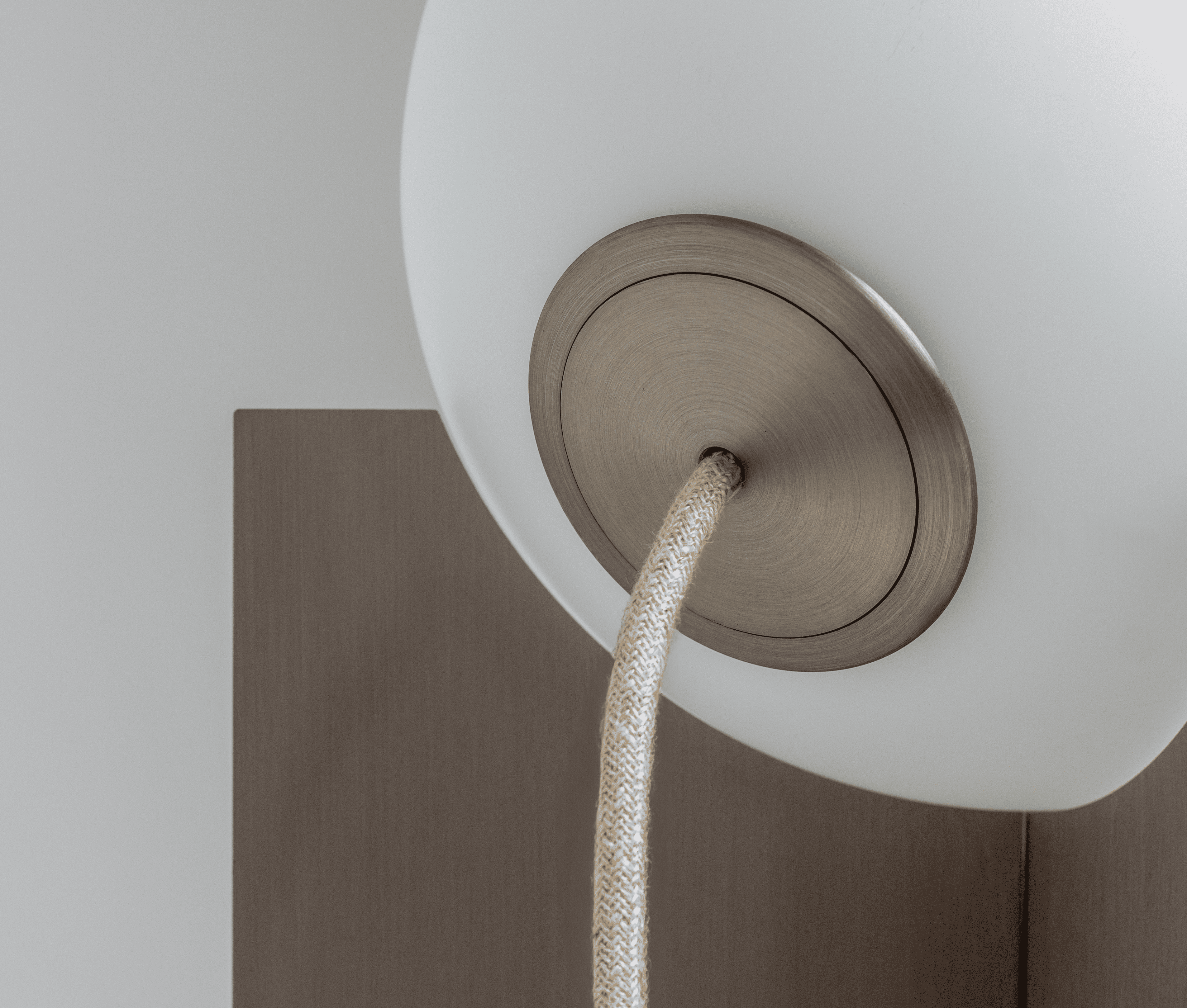
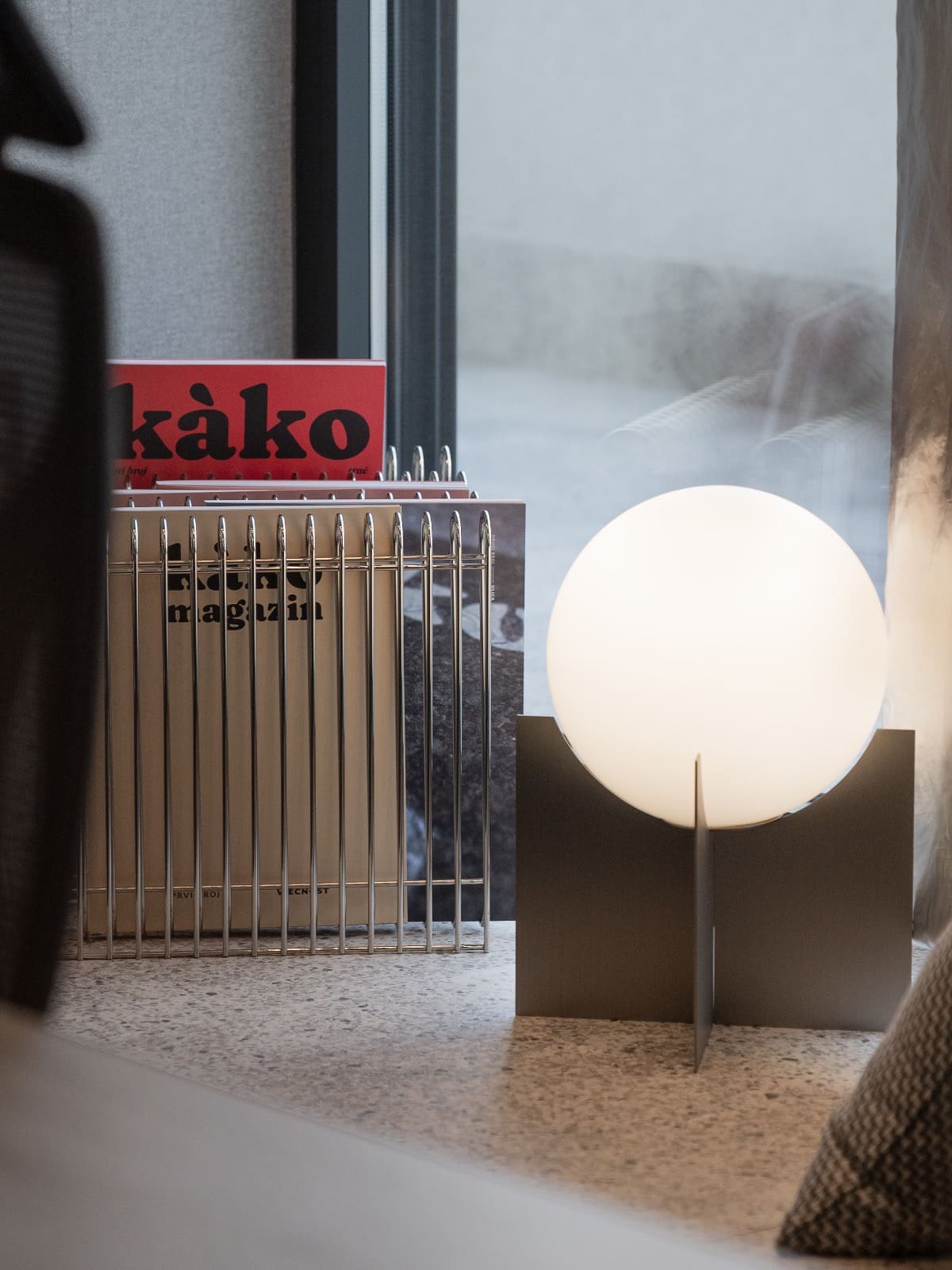
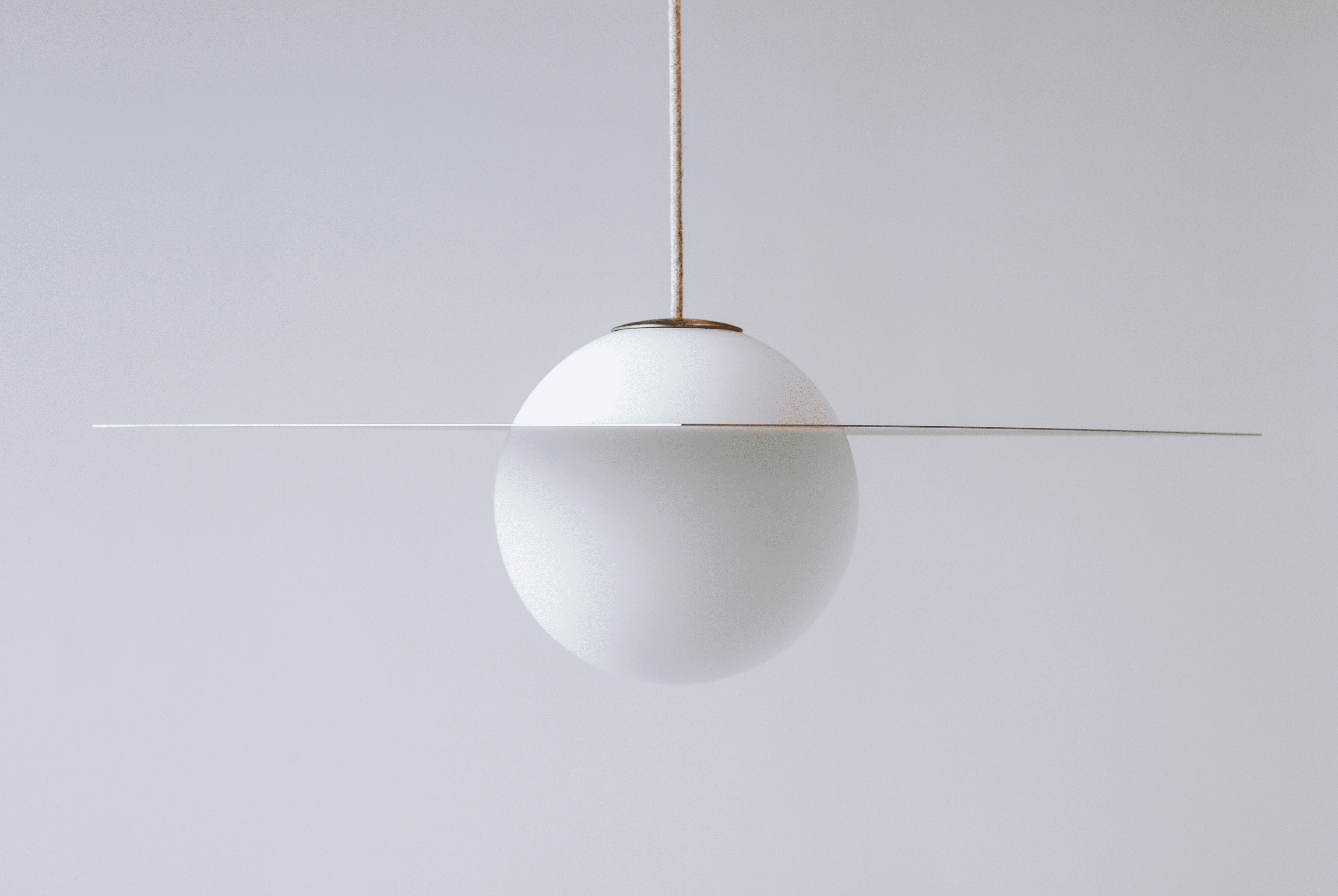
JA LAMPA reduces the light source to a familiar opal glass globe supported by a clearly drawn metal structure. The sphere remains the stable element across the collection, while changes to the steel frame turn it into a floor, table or pendant lamp. This separation gives the design its clarity: the glowing globe provides softness and visual familiarity, while the dark geometric support determines posture, scale and use. The light can be read immediately as a small moon, yet the reference is never developed into literal decoration. Hand-welded frames give the otherwise minimal objects a visible sense of construction.
2. Comet by ILANEL, designed by Ilan El
Australia, 2025
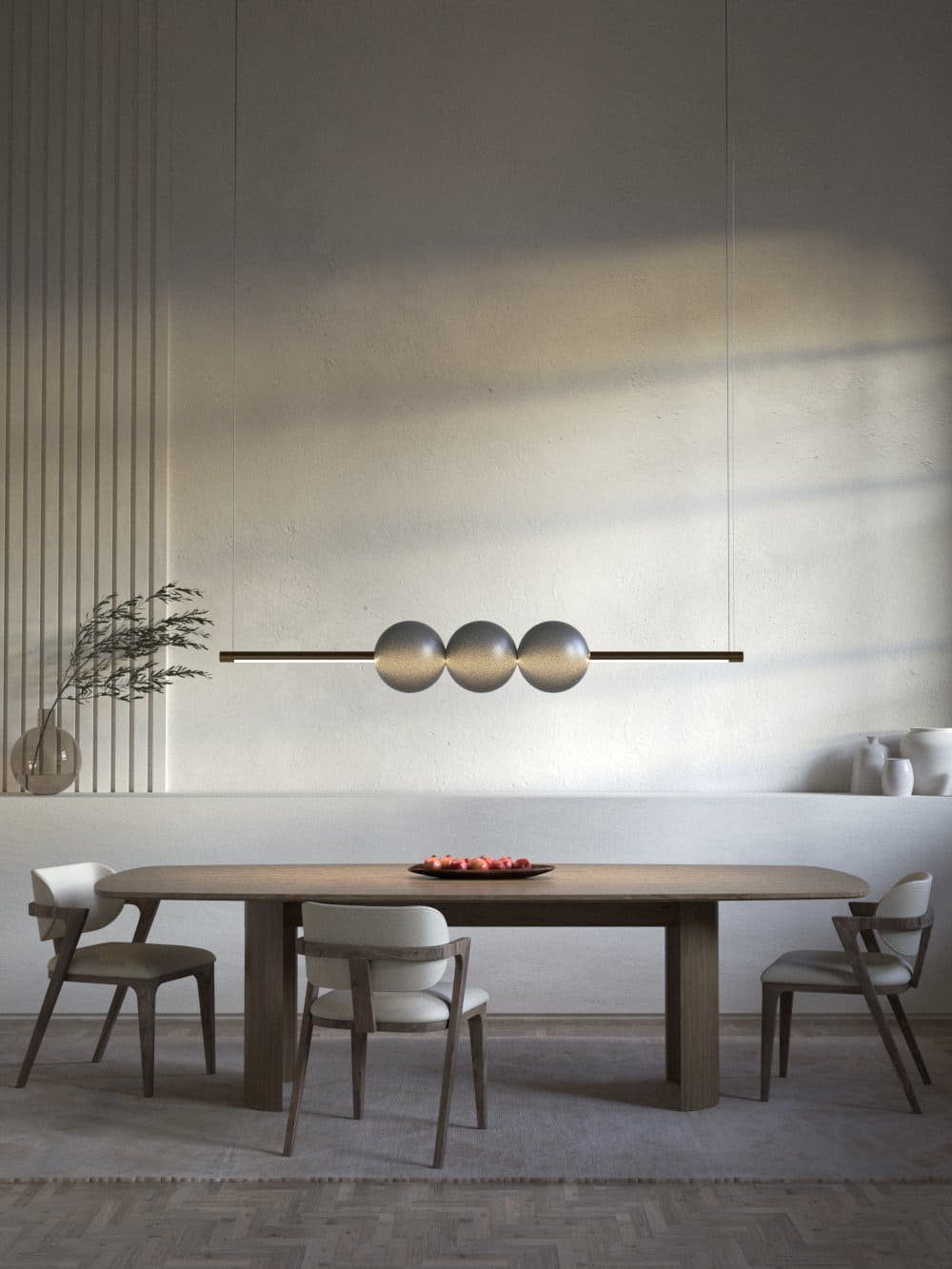
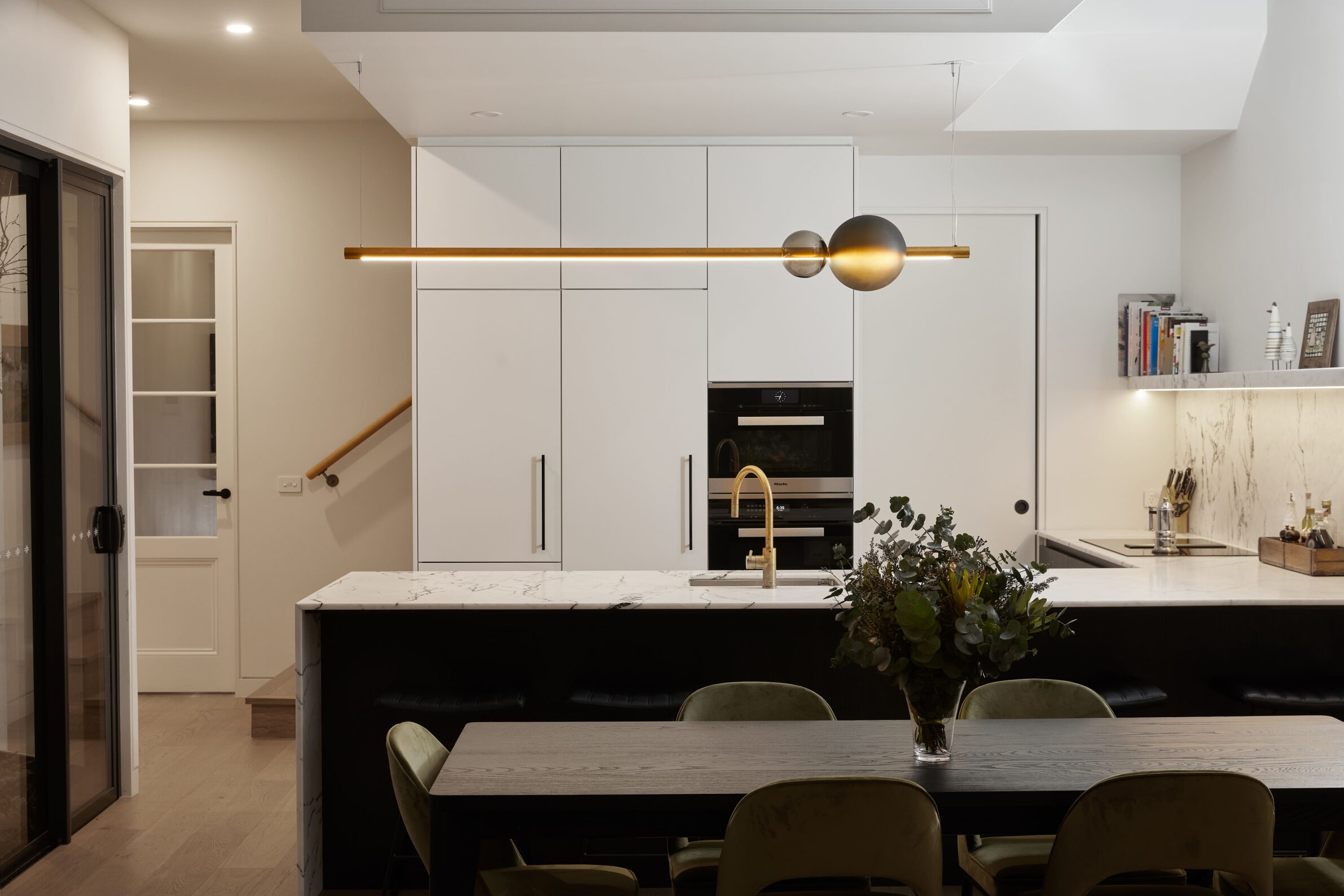
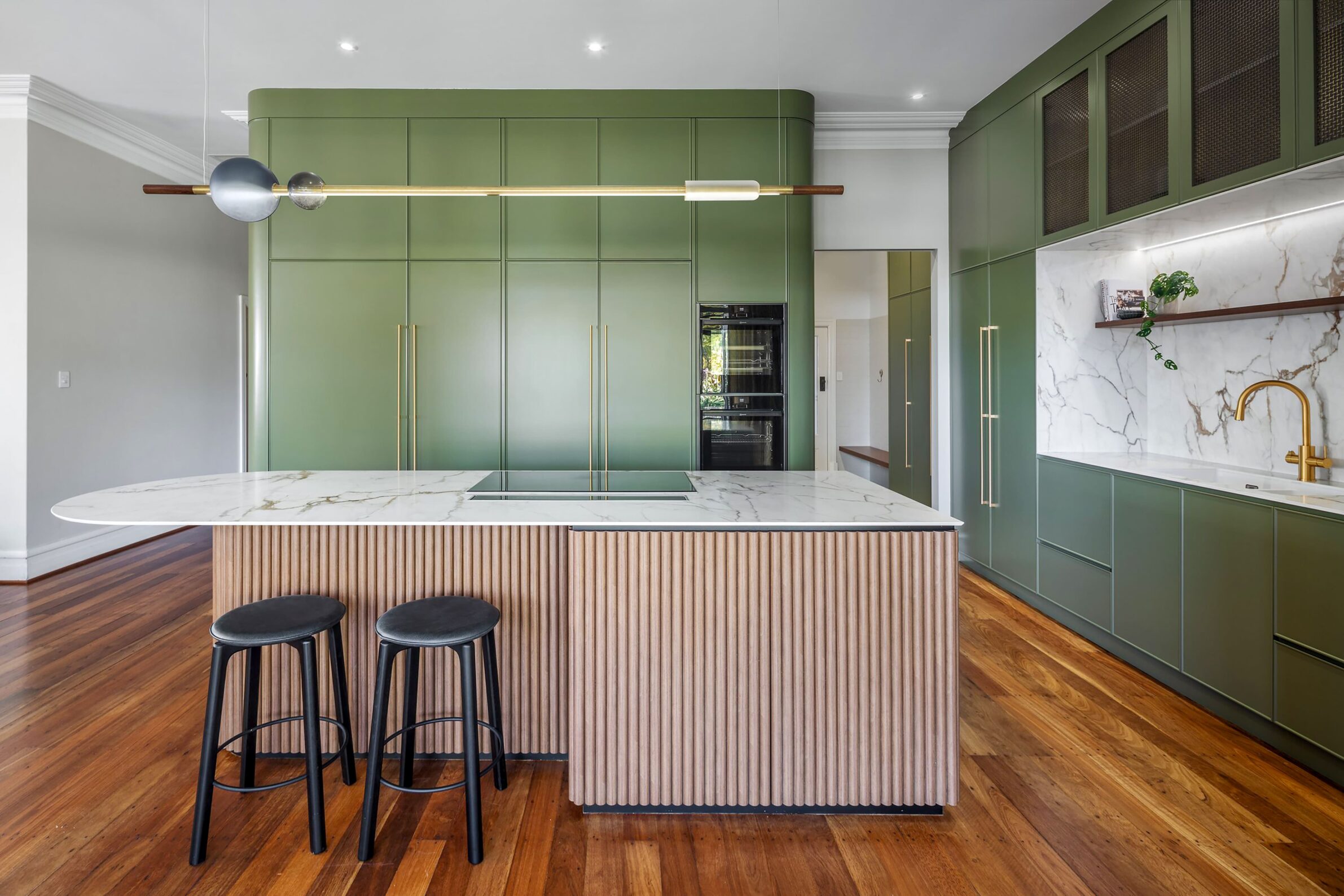
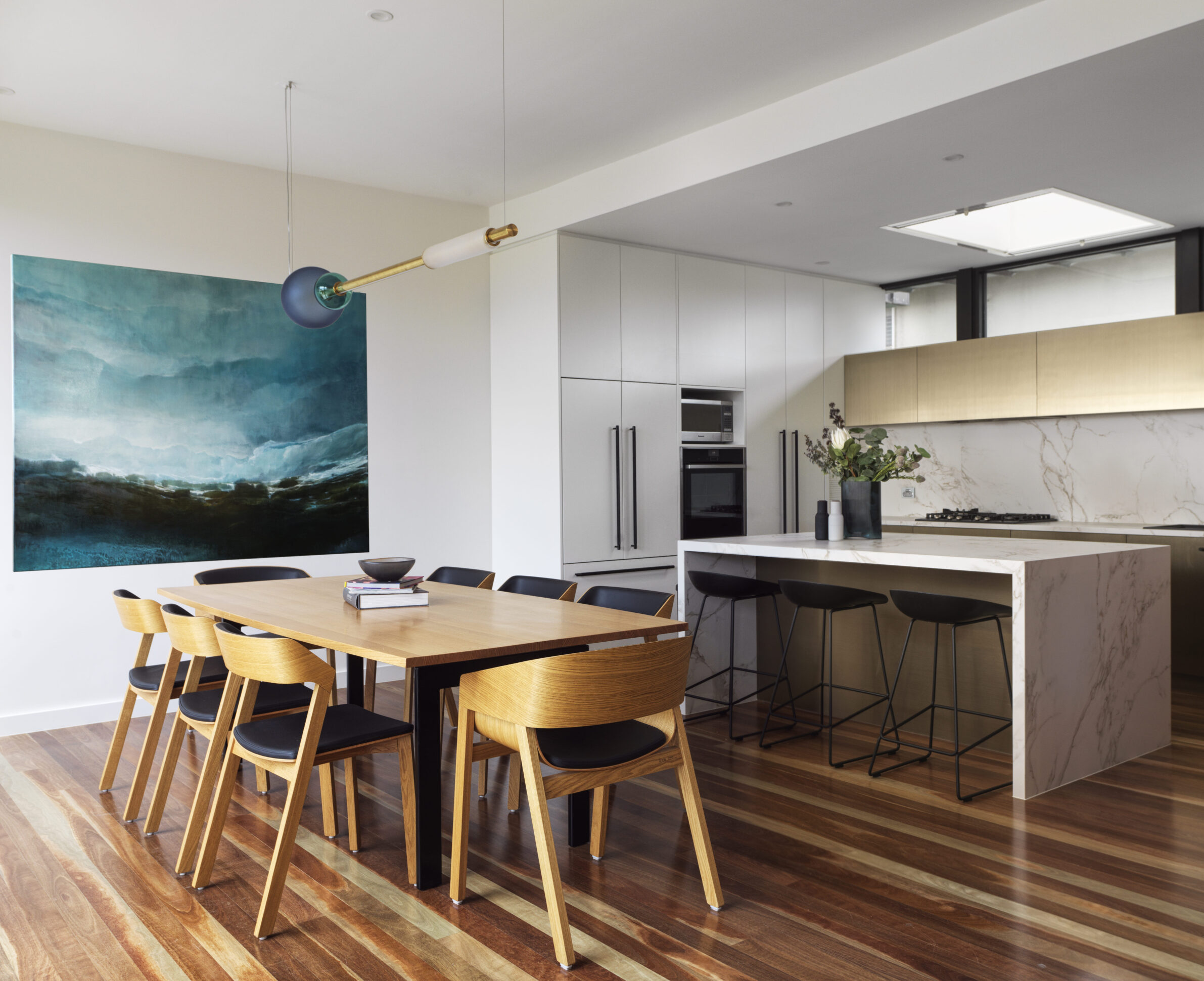
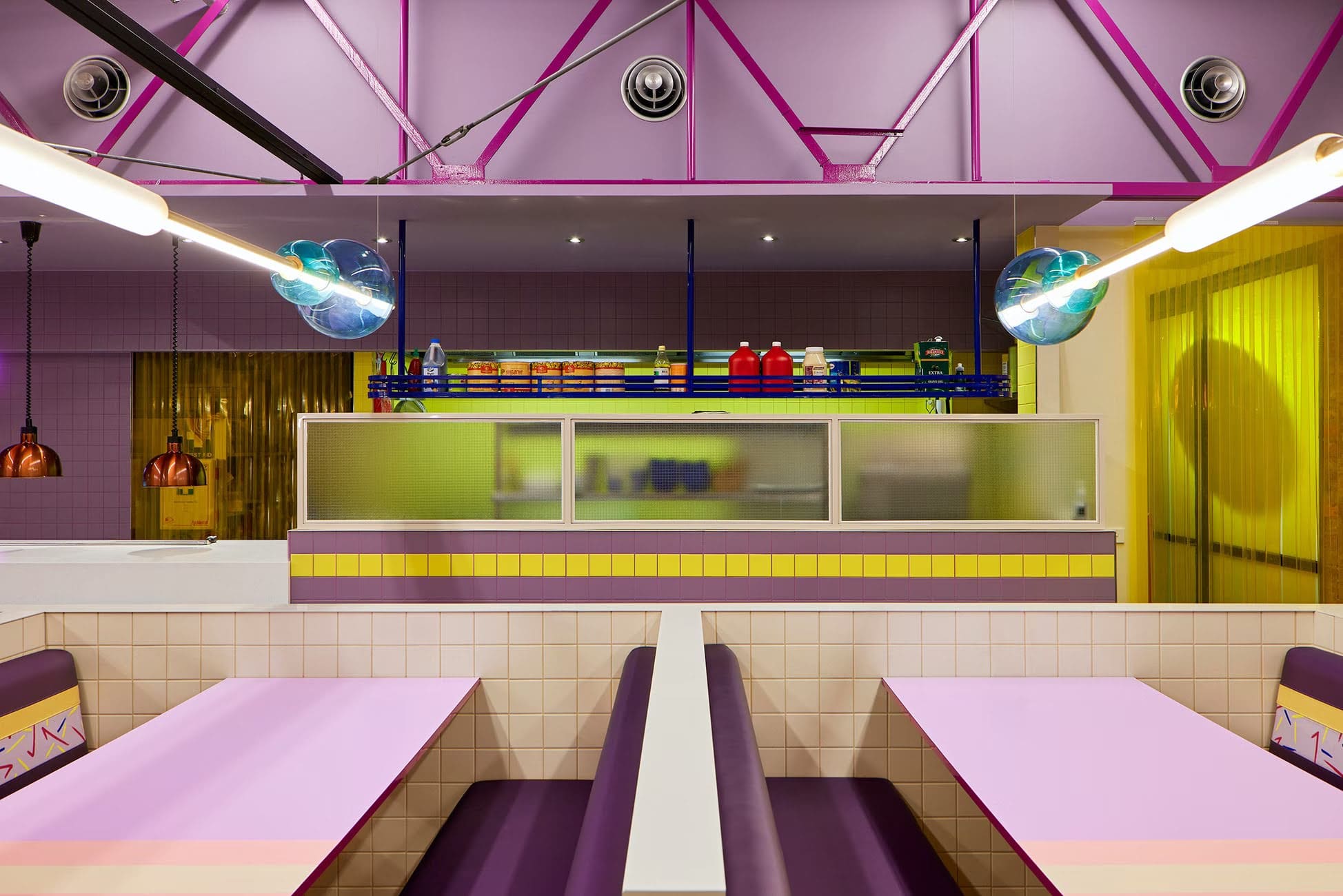
Comet brings the softness of hand-blown glass into a deliberately linear architectural light. A slotted brass tube contains a dimmable LED strip that directs glare-free illumination downwards, while a cluster of individually made glass spheres intersects the profile. The relationship between the two parts is central to the design: brass establishes direction and precision, while the rounded glass elements catch, reflect and soften the light. Different metal finishes, timber end caps and clear, frosted or tinted glass allow the composition to be adapted to long dining tables and kitchen islands. Like its celestial namesake, the lamp is read as a bright body travelling along a line.
3. Infinito by 9010, designed by Irene Cinel
Italy, 2026
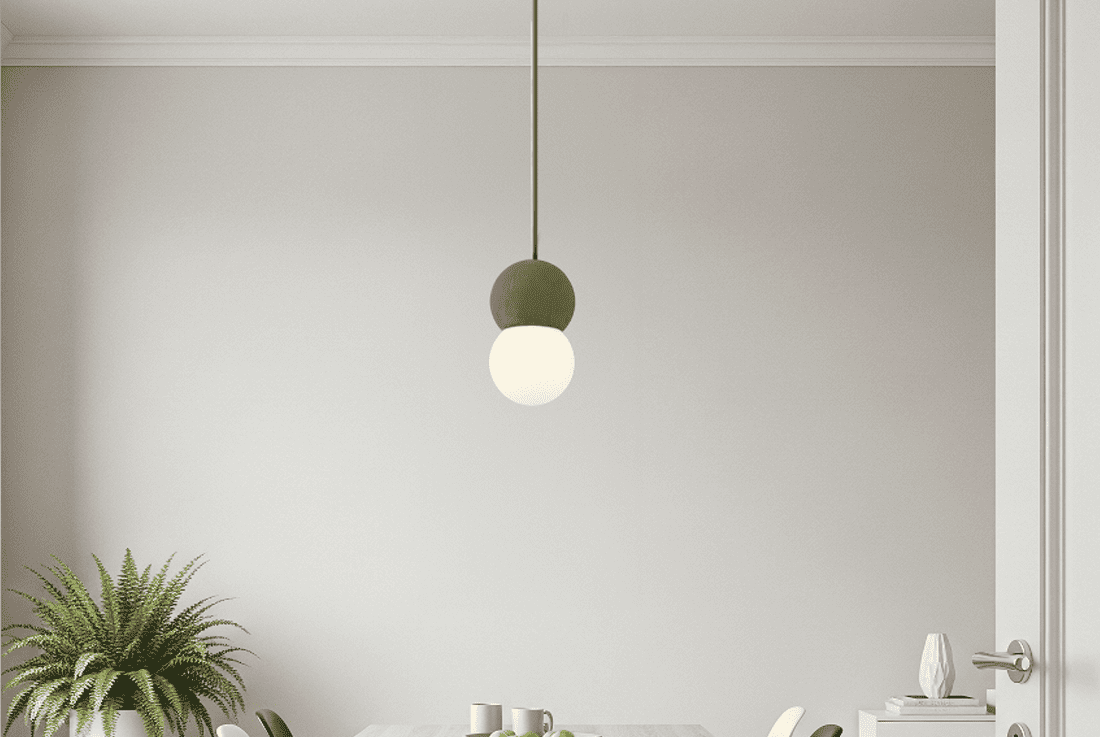
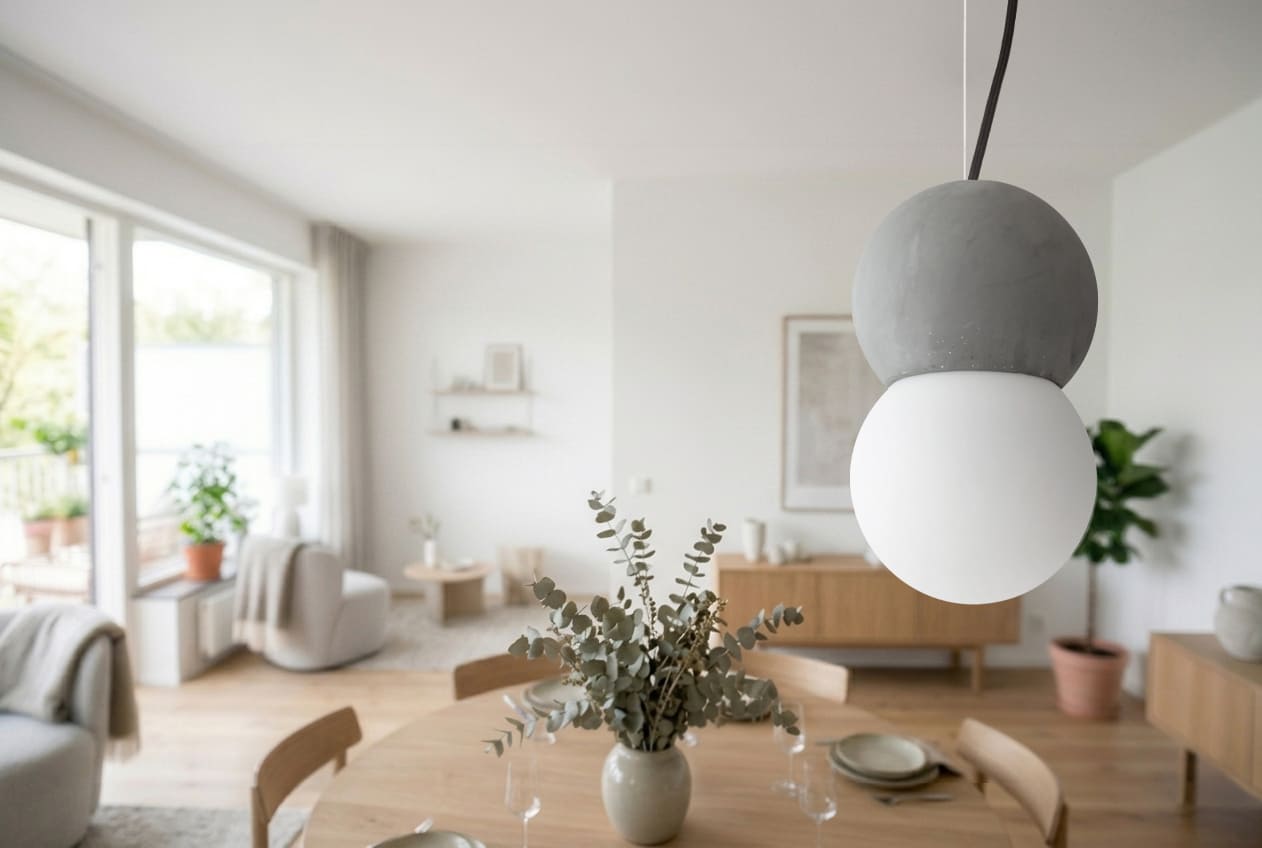
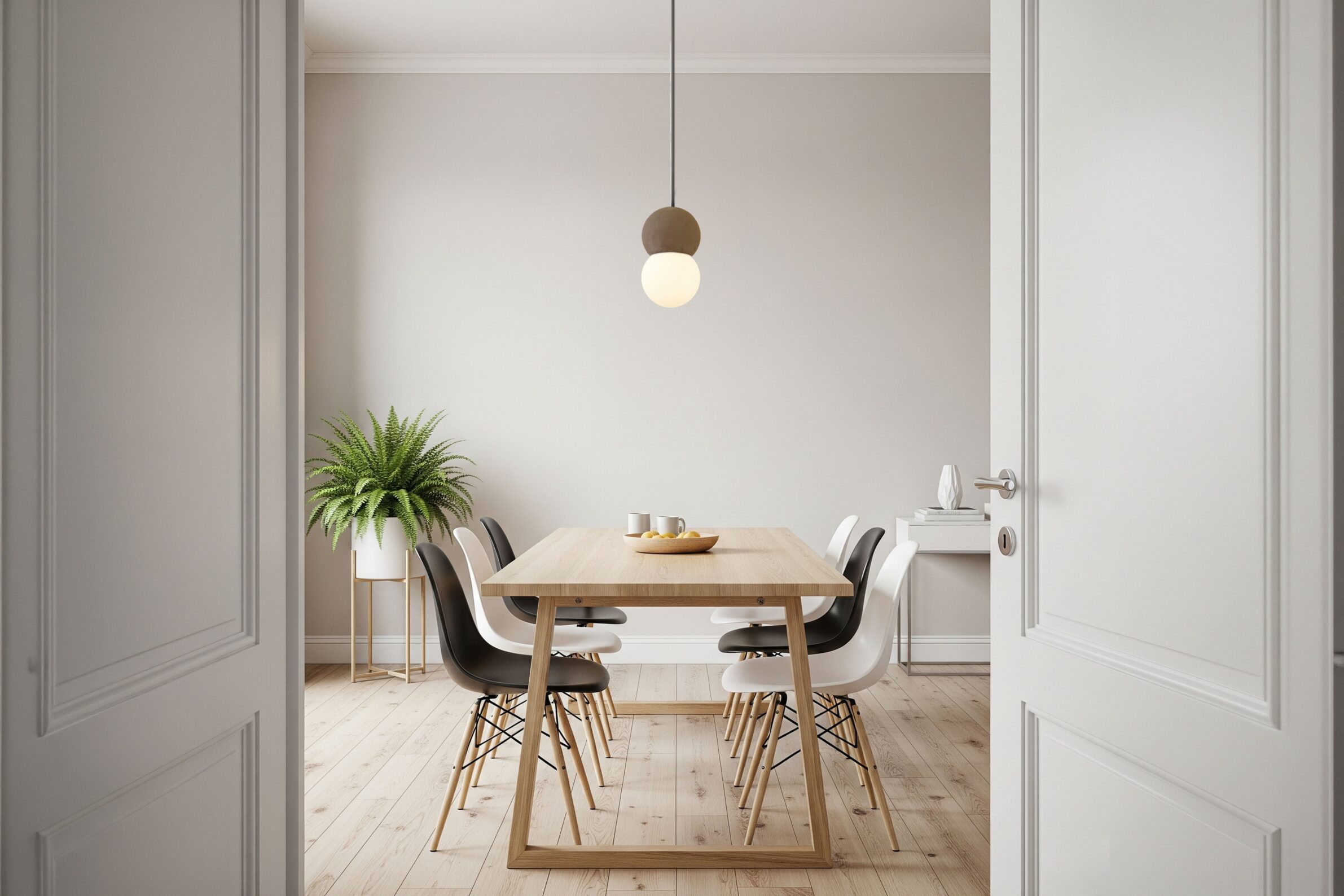
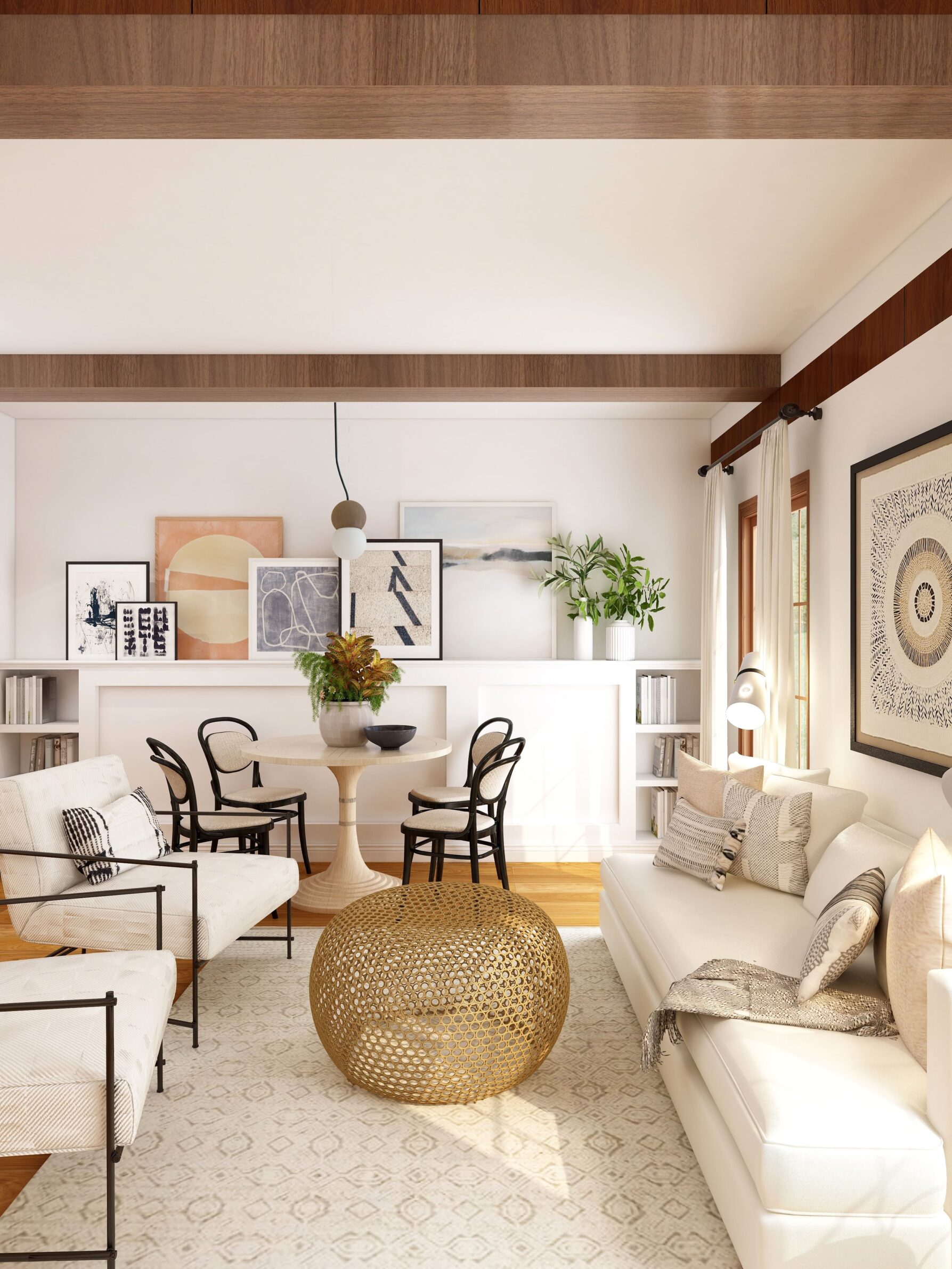
Designed by Irene Cinel, Infinito places the sphere itself at the centre of the object. The pendant is made entirely from BETALY®, giving the simple geometry a textured, substantial surface that differs from the smooth glass commonly used for globe lights. Illumination appears to emerge through a solid material rather than from a visible bulb enclosed by a shade. The restrained form allows changes in colour and finish to carry more weight, while the diffused glow softens the sphere’s physical presence. Suspended alone or in a group, it behaves like a small, self-contained body of light without requiring additional structural gestures.
4. Dry Luna by LED Luks
Slovenia, 2026
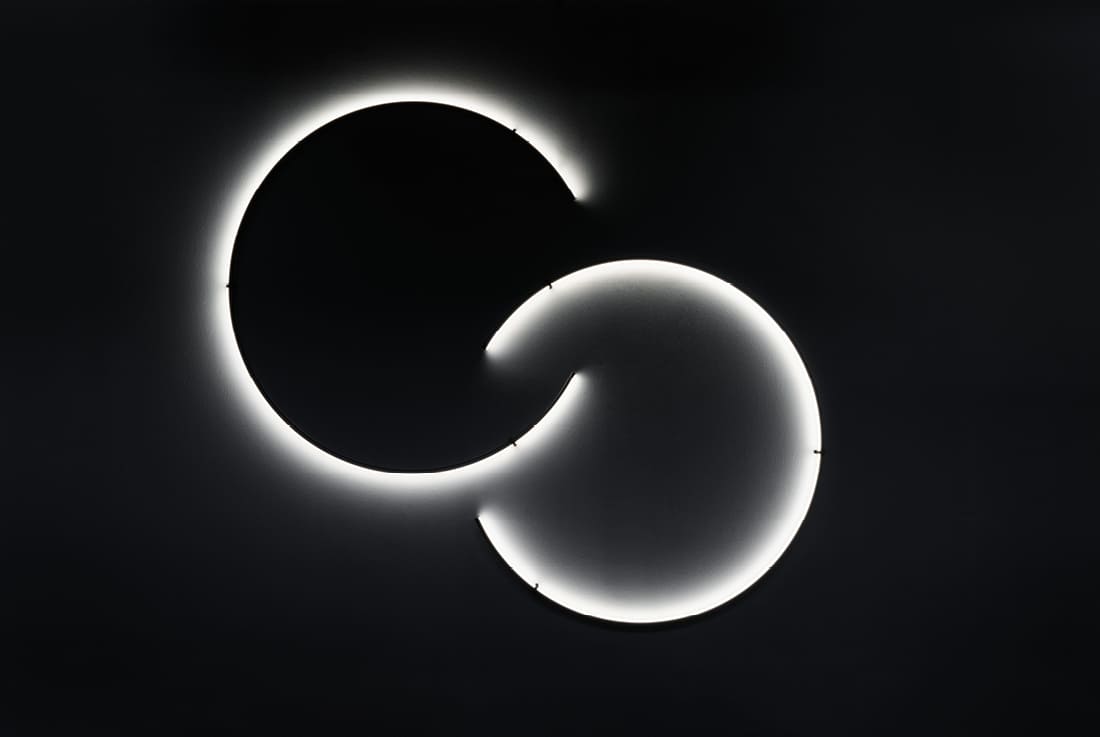
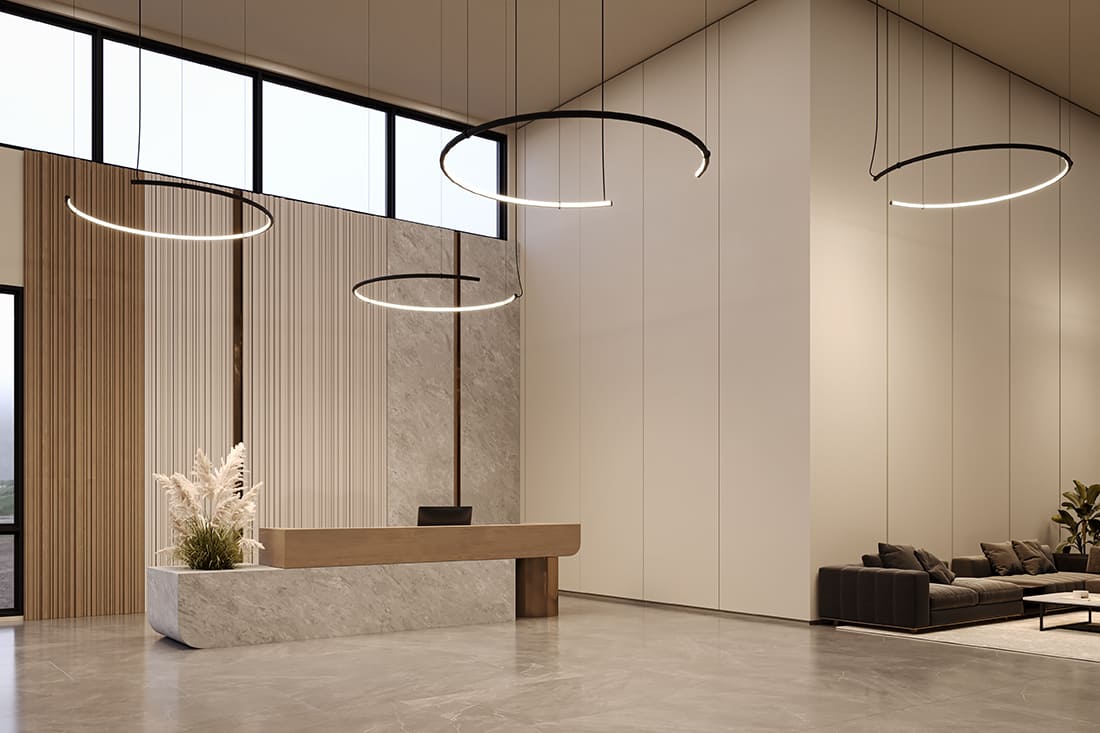
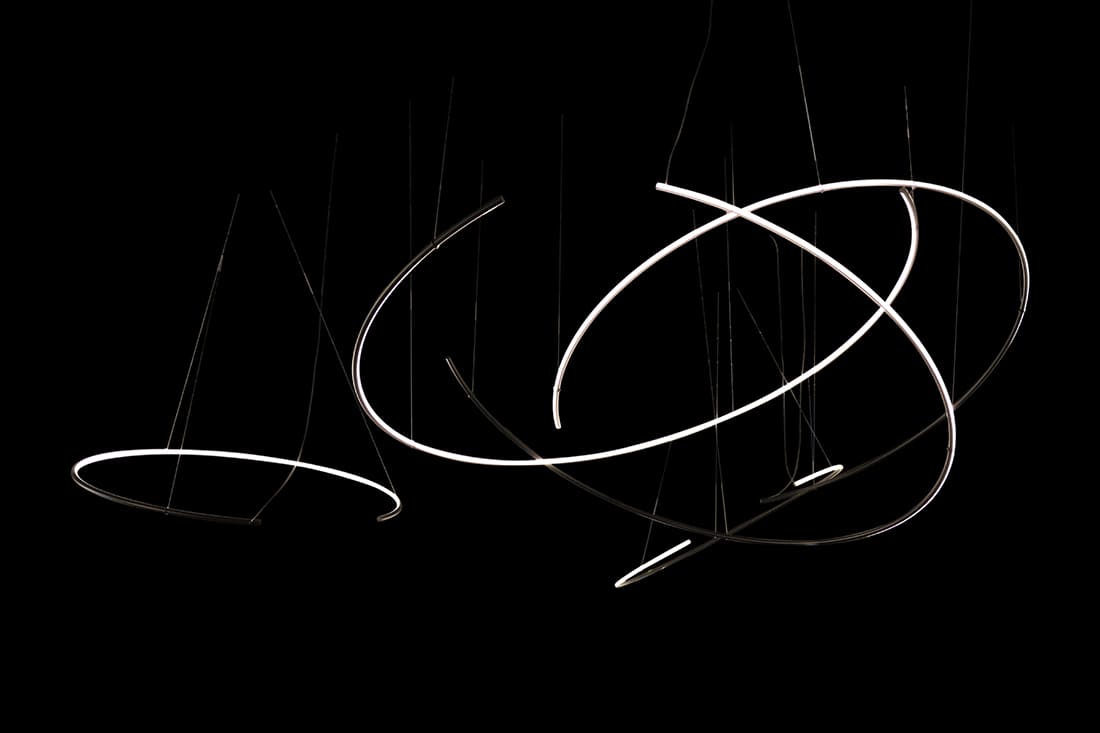
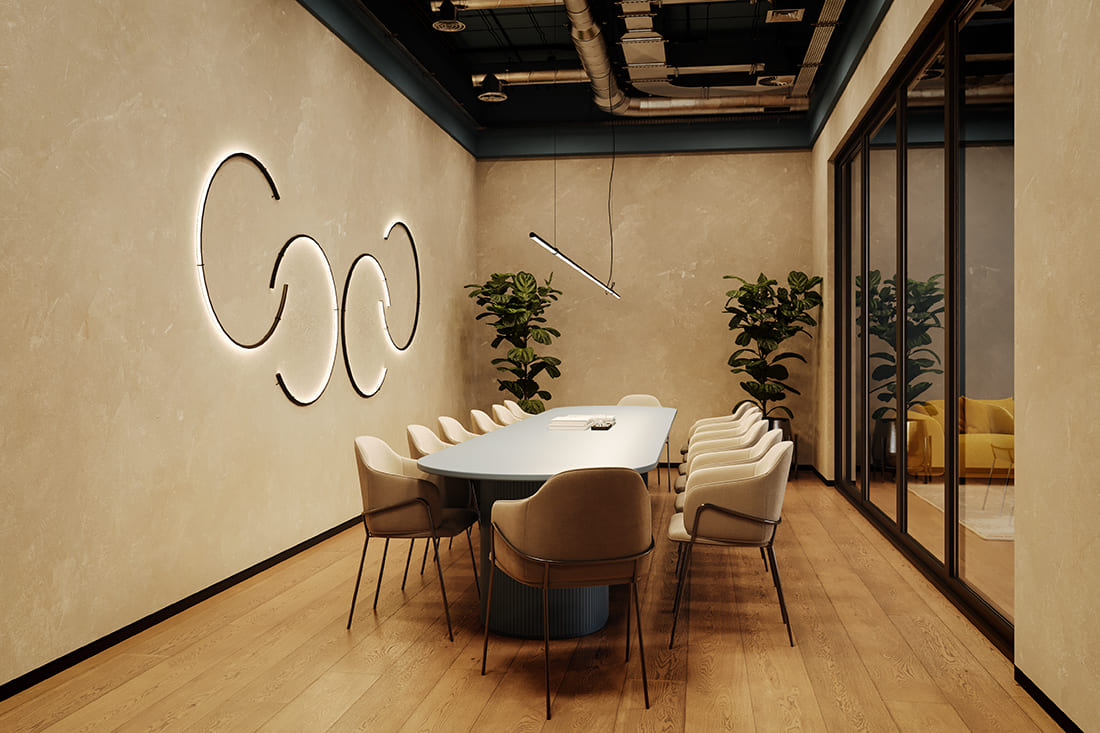
Dry Luna removes the centre of the circle and works instead with its illuminated perimeter. The slender aluminium ring is available in diameters of 900, 1,300 and 1,600 millimetres and can be installed as a pendant or attached to a wall or ceiling. Light can be directed either inward or outward, changing whether the ring reads as a glowing object or as a frame illuminating the space around it. At its largest scale, the lamp approaches an architectural element rather than a conventional fitting. Its lunar association comes not from a solid sphere but from an outline: a clear circular boundary made visible through light.
5. Pearls by NEU/ZEUG, designed by Lucy.D
Austria, 2017
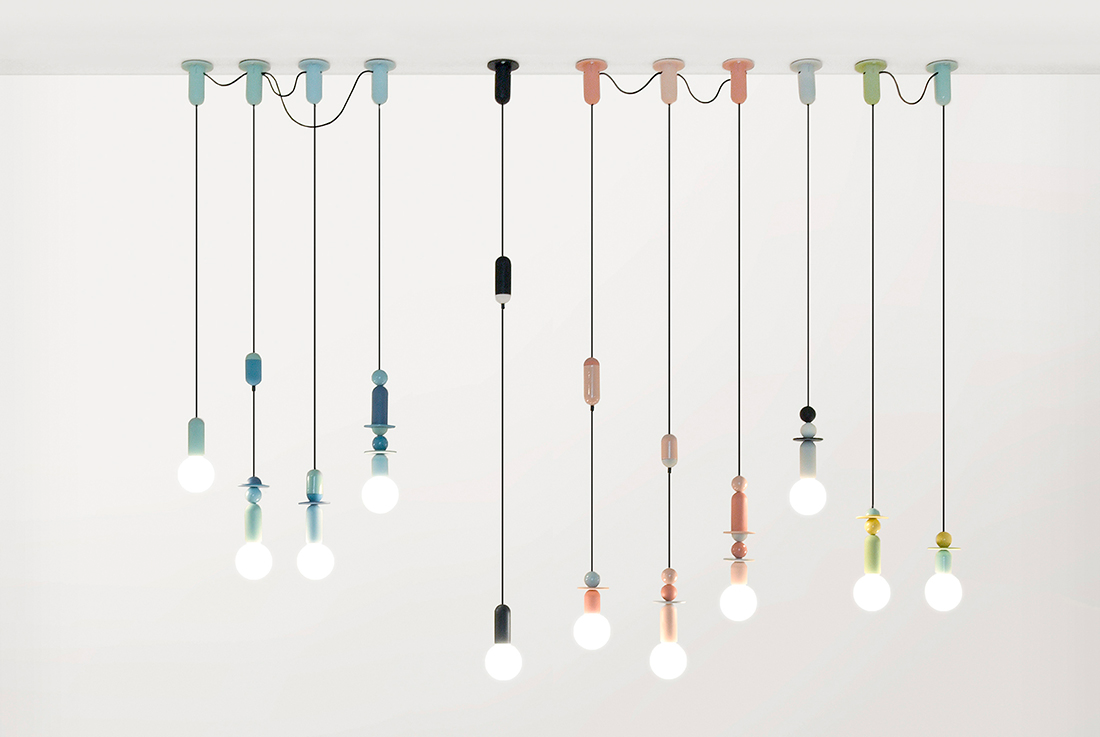
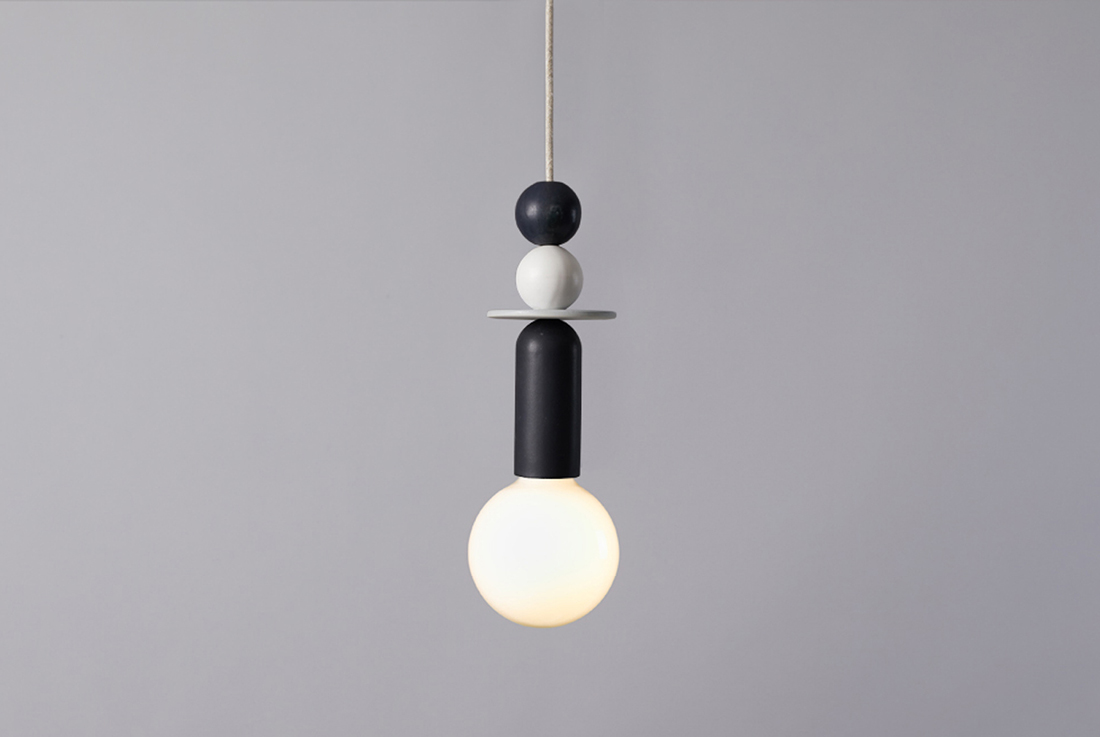
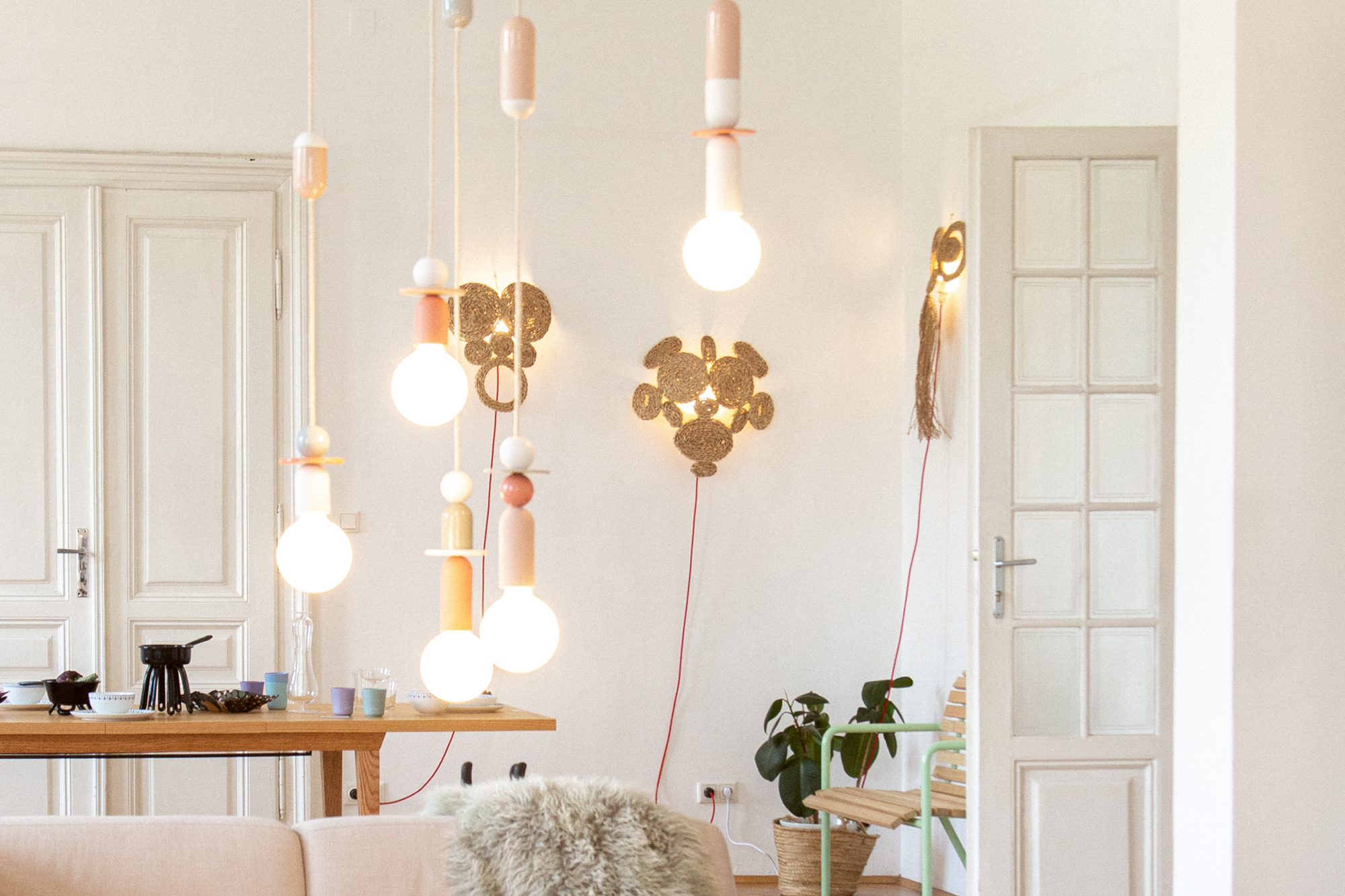
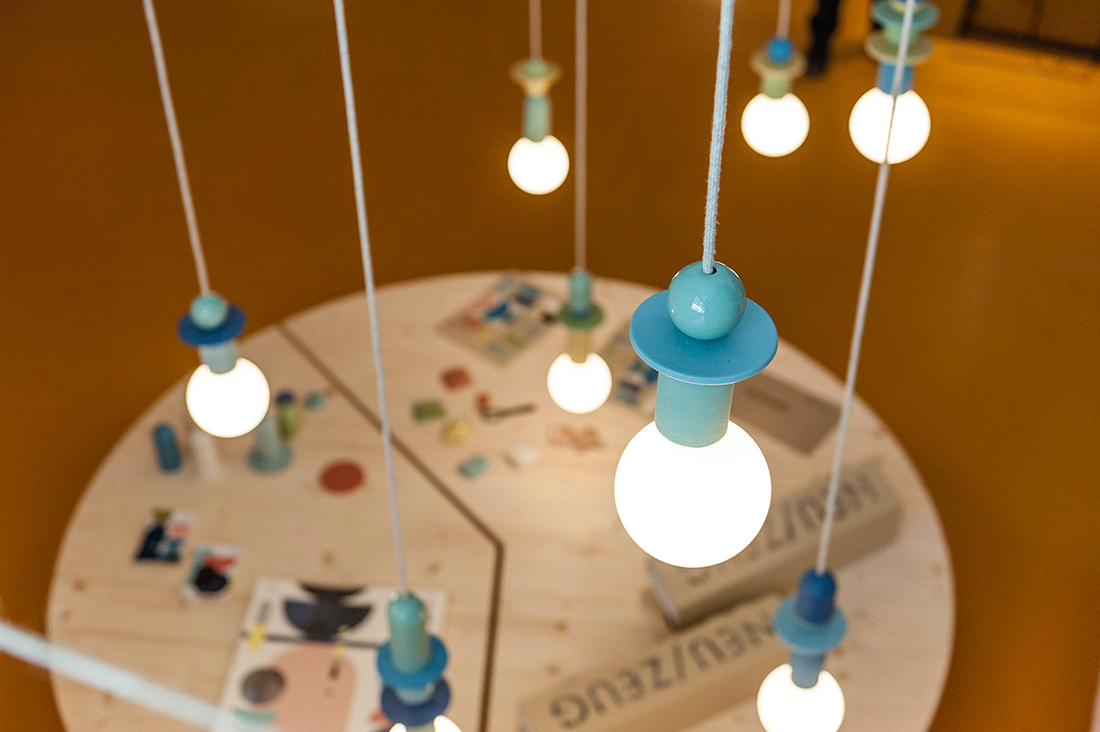
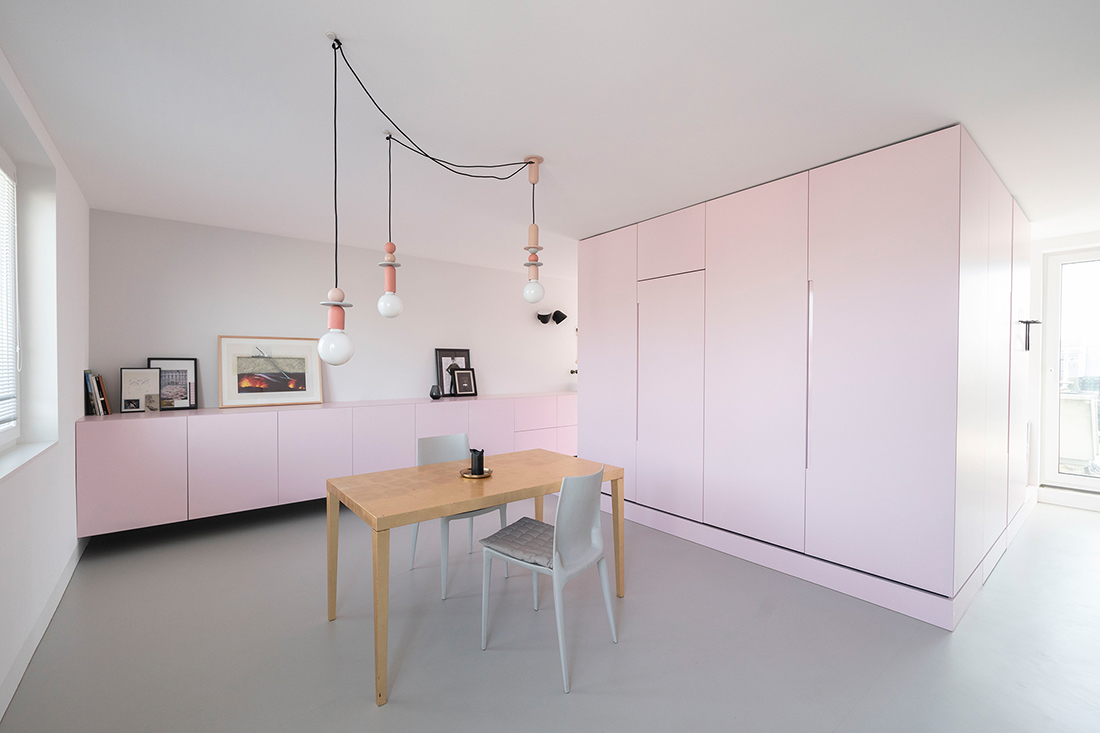
Pearls breaks the single luminous sphere into a sequence of smaller porcelain forms. Designed by Lucy.D, the modular collection combines five geometric elements in eleven colours, allowing them to be arranged as pendant lights, chandeliers and individual compositions. Each piece is hand-cast and colour-fired at the Neuzeughammer porcelain manufactory, giving the repeated shapes small material differences. Some colours draw from the original pigments of the Austrian Daisy porcelain service. Suspended along a cable, the elements resemble beads, small planets or objects held in orbit. Light becomes part of a composition that can be extended, rearranged and personalised rather than remaining one complete central globe.
Roundness alone does not make a lamp warm or inviting. That effect depends on scale, diffusion, material and the distance between the light source and the observer. A large aluminium ring can give structure to an office or public interior, while a small porcelain form can bring colour and intimacy above a table. The same basic geometry moves easily between technical lighting and a visibly handmade object.
The celestial references within these designs remain useful precisely because they are not overexplained. A globe, orbit or crescent is already familiar enough to be understood without imitation. Each lamp can therefore begin with a shared visual association and then develop its own character through glass, metal, mineral material or porcelain. The circle provides recognition; the design decisions determine what kind of light follows.
___
Works is an editorial series in the BIG SEE Magazine presenting carefully curated selections of architecture, interior and product design projects. Each article explores a specific theme, question or typology – sometimes through a collection of projects, sometimes through a single work that deserves closer attention. Rather than aiming for completeness, Works highlights projects that help us better understand the ideas, values and directions shaping the built environment today.
Powered by
Be There.

Edited by:
Tanja Završki
Photography ©:
insdim design office:
JIFANG Wood Ltd.
Harry Chiu
Ng Hoi
Lars Angaard Madsen /
PlanAbacus
Ben Newman and Mary Numair /
BNF Studio:
Graham Tolbert (orange-background images)
Evan Jenkins (white-background and white-sweep images)
Morroni
Bill Amberg Studio
and Elizabeth Roberts Architects:
David Cleveland,
Matthew Williams