


3 Questions for iRI Architecture Team
Q: What ideas or values are central to your architectural practice, and how are they reflected in The Pyramid of Tirana at this stage of your studio’s development?
A: At iRI, we see architecture as a process of dialogue and collaboration. Every project brings together different ambitions, constraints and forms of knowledge, and we believe that the quality of the result depends greatly on the quality of this process. Our role is not only to provide technical solutions, but also to keep the architectural idea and the values of a project visible throughout its development.
The Pyramid of Tirana reflects this approach very clearly. We joined the project from its early stages, bringing our knowledge of the building, the city and the local context into a continuous dialogue with MVRDV. Our involvement continued through design development, detailing and construction, working between the existing structure, the new programme, technical requirements and the many stakeholders involved.
The project also taught us a lot about working with what is already there. Rather than replacing the existing building or reconstructing what had been lost, the intervention works with its structure, material presence and history, while giving it a completely new public life.
For iRI, the Pyramid represents an important moment in the development of our practice. It demonstrates how collaboration can generate knowledge in both directions, and how a local practice can contribute not simply by implementing an idea, but by actively shaping the process through which an architectural concept becomes part of the city.
“Our role is not only to provide technical solutions, but also to keep the architectural idea and the values of a project visible throughout its development.”
Q: How do you see contemporary Albanian architecture today, and which local conditions, traditions or transformations are shaping its development?
A: Albanian architecture today is strongly shaped by the rapid changes taking place across the country. Tirana in particular has experienced an intense process of urbanisation and densification over the last three decades. At the same time, tourism, infrastructure, investment and growing international interest are transforming not only our cities, but also coastlines, villages and landscapes.
This creates many opportunities for architecture, but also many questions. We are constantly working between development and preservation, between the need for transformation and the need to recognise what is already there and has value. In Albania, this is not only about architectural heritage in the traditional sense. It is also about memory, landscape, informal development, patterns of everyday life and the relationships people have established with places over time.
I think one of the important questions for architecture today is therefore how to work with these existing conditions rather than simply replacing them. Development does not always have to begin from a blank page. What is already there—buildings, landscapes, communities, materials and memories—can become a resource for new projects.
International architects have also played an important role in Albania’s recent development, bringing different experiences, perspectives and ambitions. These collaborations are most valuable when they become a real exchange: when international experience is combined with a deep understanding of local conditions, and when both sides contribute to the architectural thinking behind a project.
“Development does not always have to begin from a blank page. What is already there—buildings, landscapes, communities, materials and memories—can become a resource for new projects.”
“A building may have a client, a budget and a property line, but its effects extend beyond all three.”
Q: What opportunities and challenges do you believe will define the next chapter of Albanian architecture, and what role do you hope a new generation of practices such as yours will play in shaping it?
A: Perhaps the greatest opportunity and challenge is the speed and scale at which Albania is developing. Decisions being made today will have consequences for our cities and landscapes for decades. Architecture therefore has to respond not only to immediate demands, but also to questions of public space, environmental responsibility, heritage and long-term collective value.
Architects may not determine investments, political decisions or development strategies, but we still have agency within these processes. Through design, we can ask questions, bring different interests into conversation and keep values present that are not always easily measured.
For iRI, this also means looking beyond the boundaries of an individual project. A building may have a client, a budget and a property line, but its effects extend beyond all three. It becomes part of a neighbourhood, a landscape and a shared experience of a place. We believe architectural responsibility begins with recognising these wider effects.
As Albania continues to develop, it is important that architects of different generations have the space to take an active role in this process. International collaborations have brought valuable knowledge and experience, and our own practice has grown through many of these exchanges. At the same time, it is important that local architects get increasingly involved not only in developing and delivering projects, but also in initiating ideas, leading design processes and taking responsibility for the architectural vision behind them.
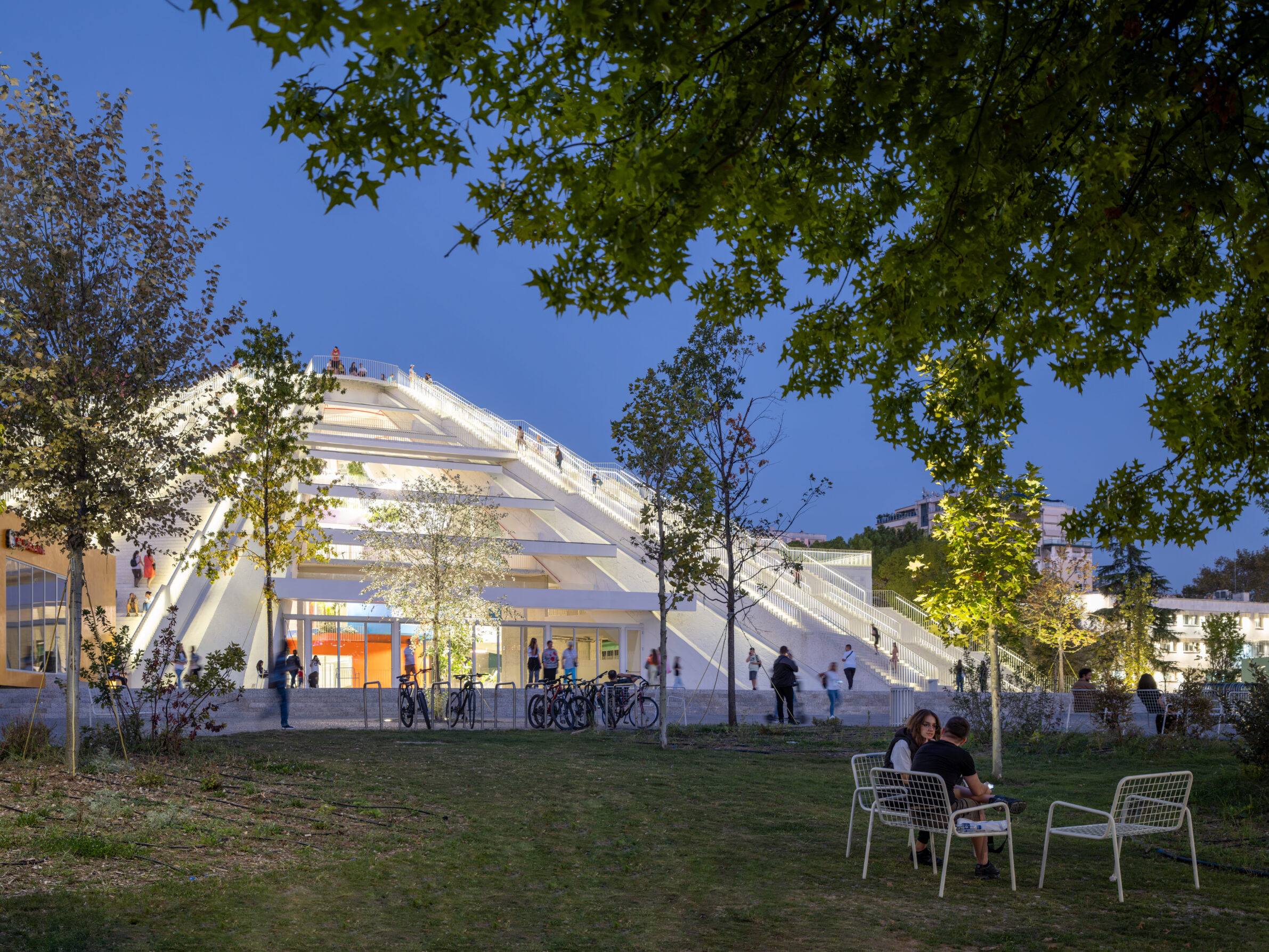
About The Pyramid of Tirana
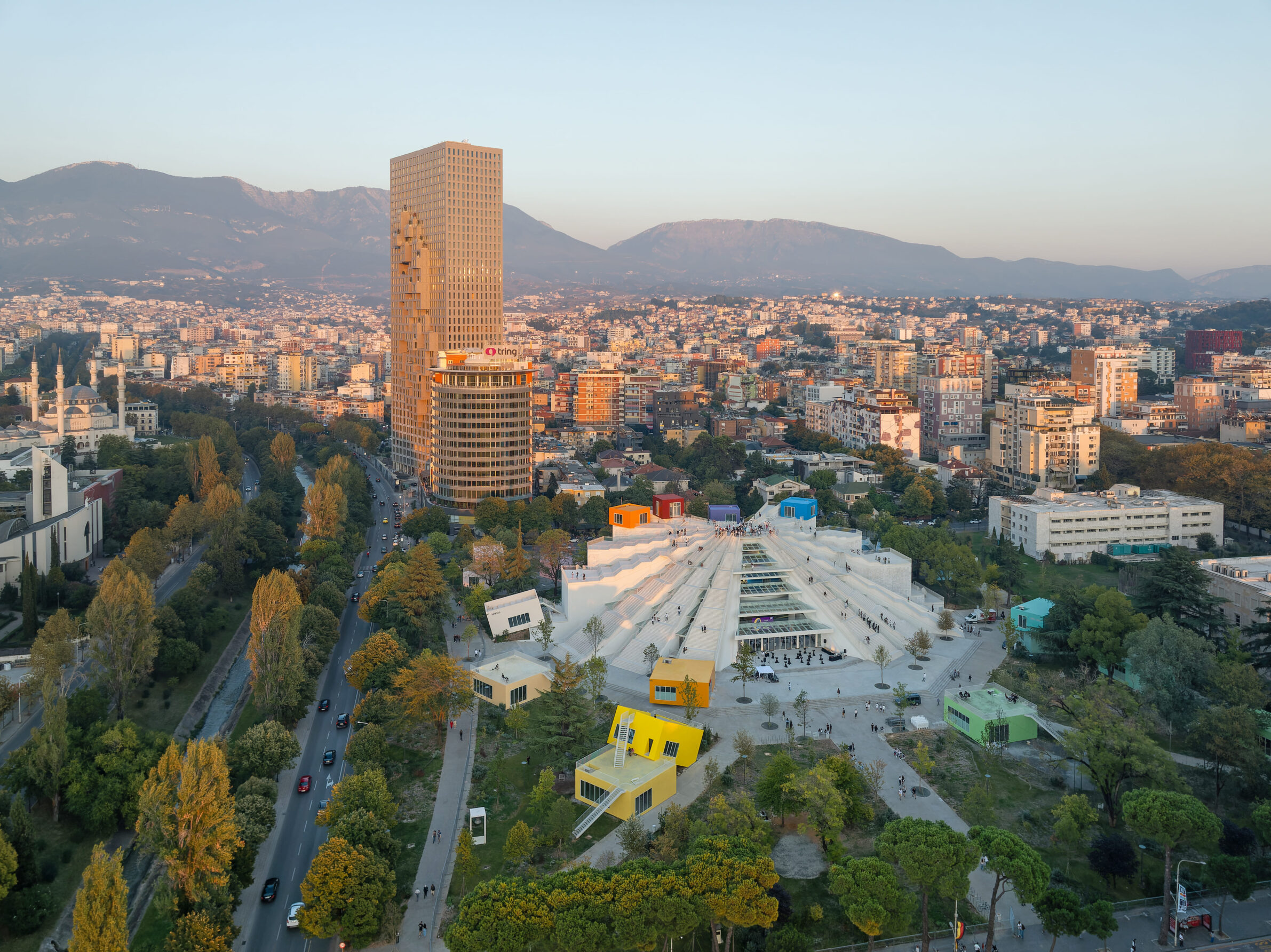
The Pyramid of Tirana is one of the city’s most recognisable and historically complex buildings. Completed in 1988 as a museum dedicated to former dictator, it passed through numerous uses after the fall of the communist regime before gradually becoming abandoned and facing the possibility of demolition. Its transformation therefore represents not only the adaptive reuse of an existing structure, but a changing relationship between Tirana and its recent past.
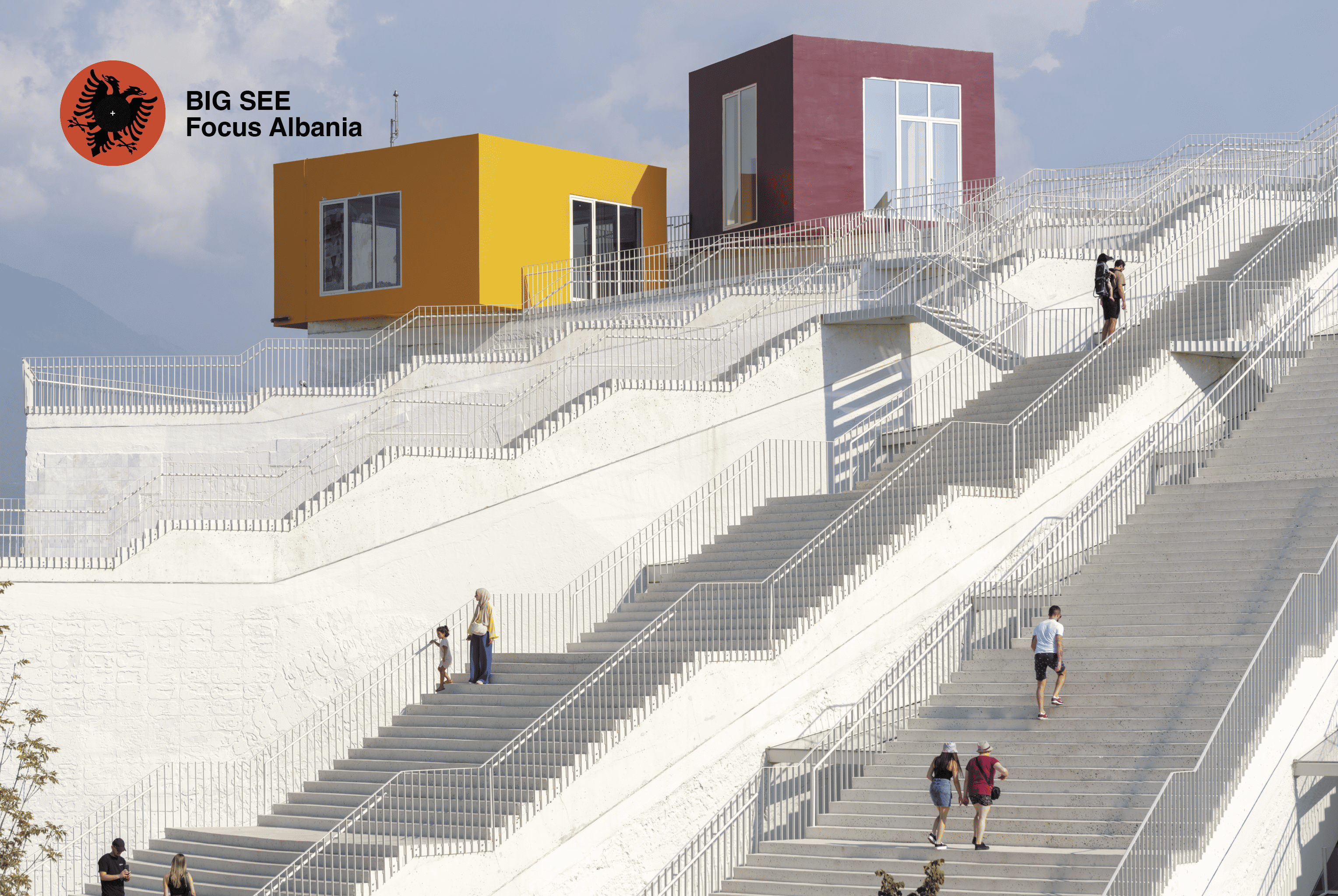
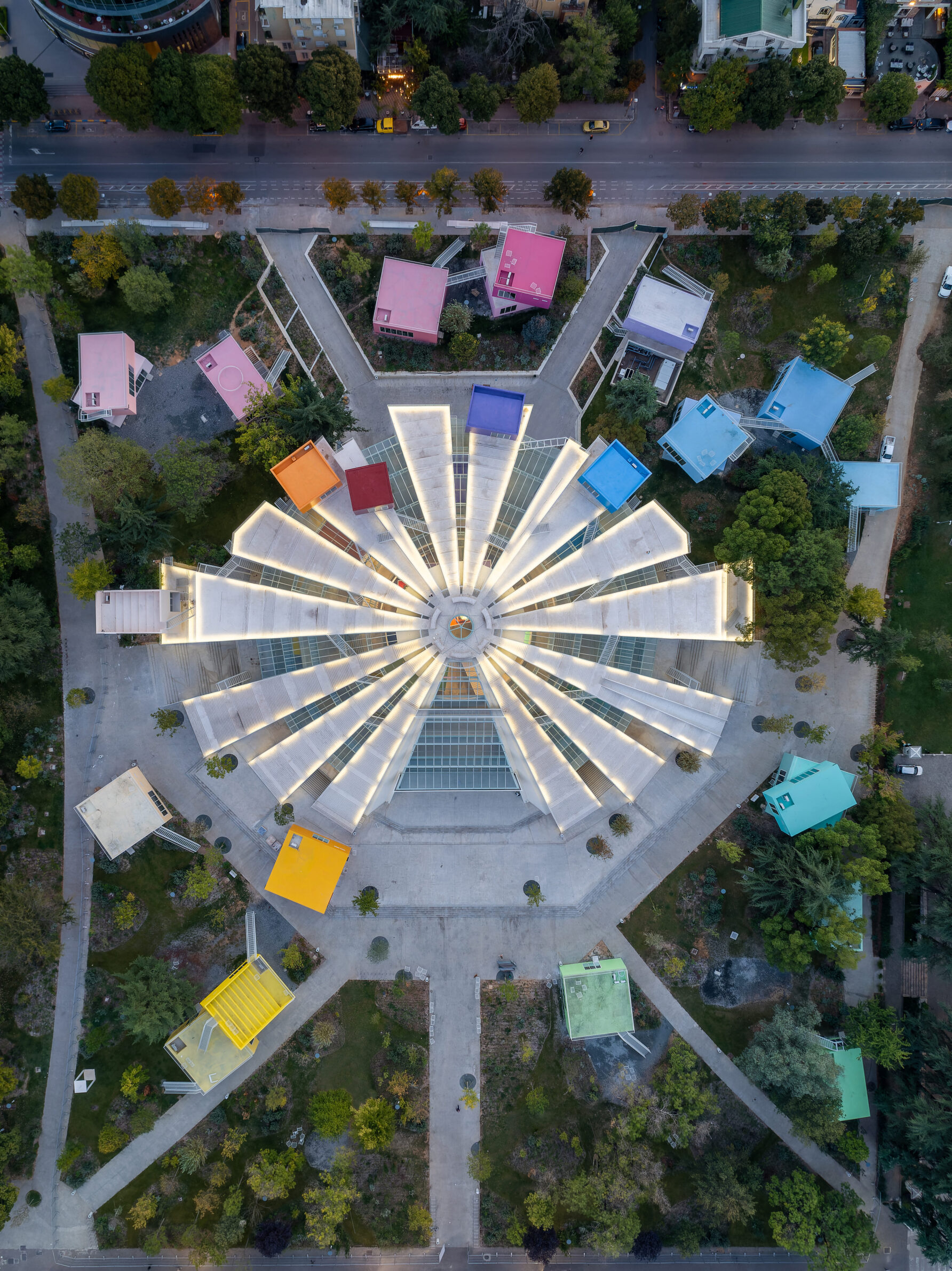
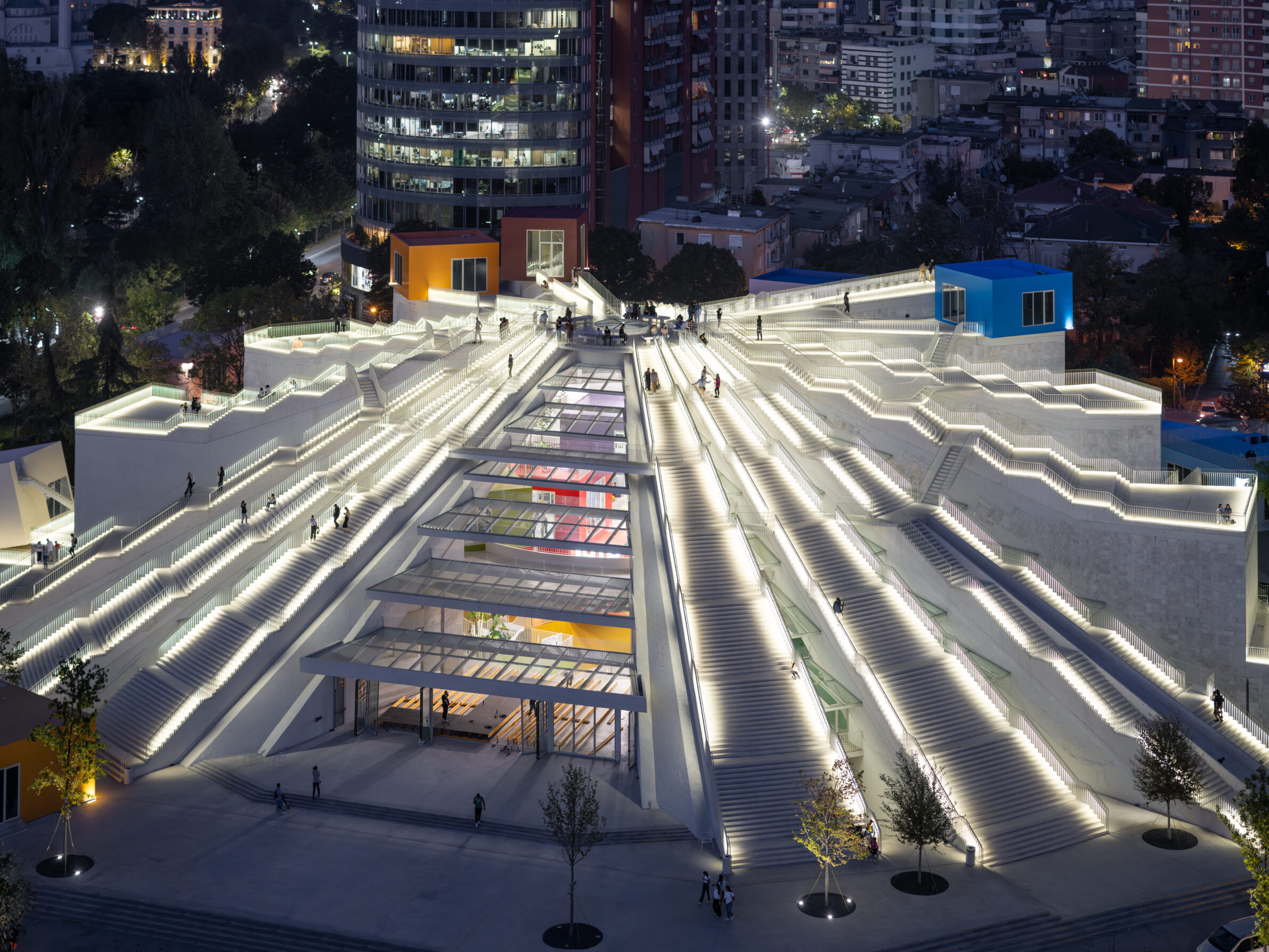
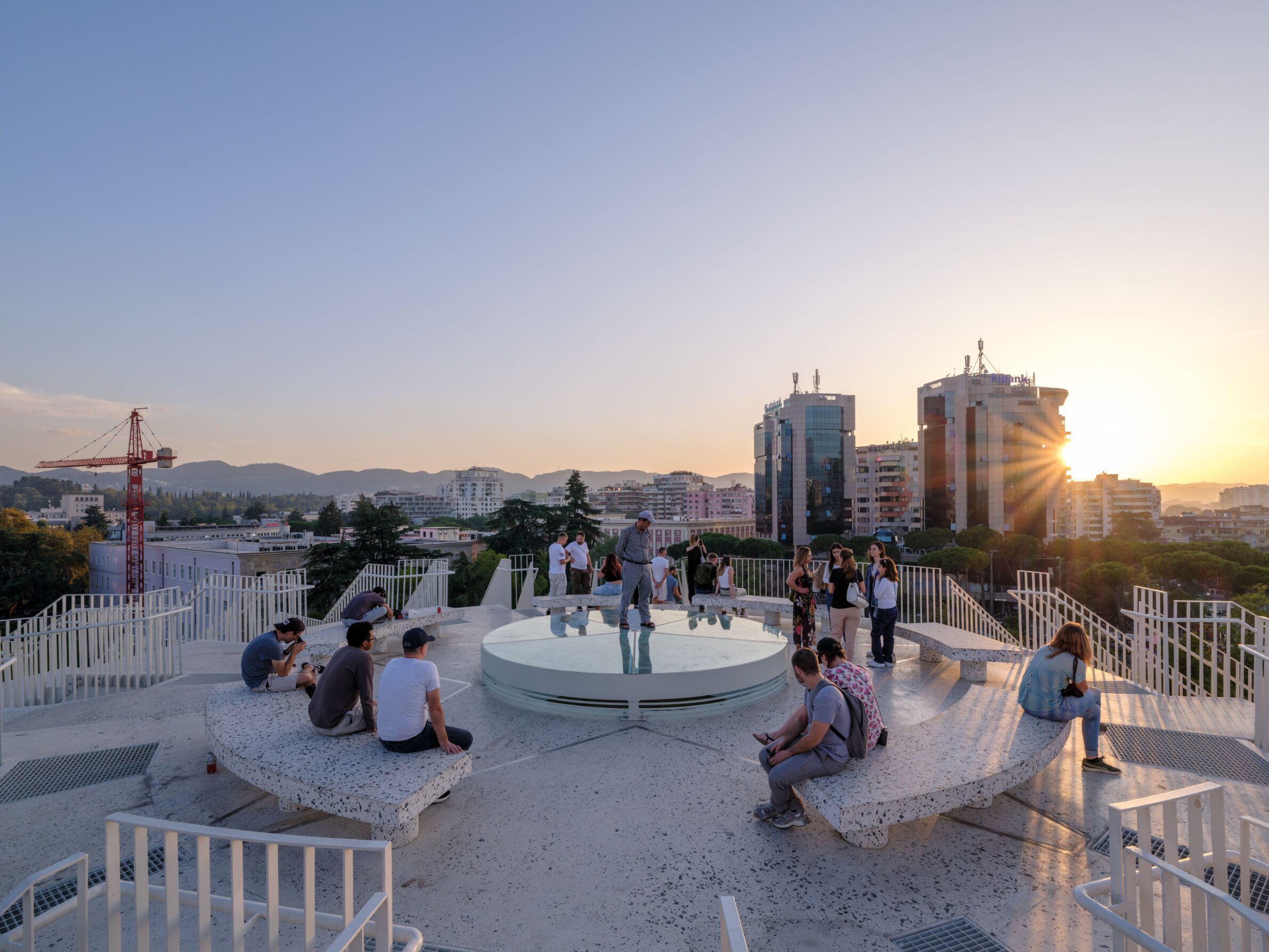
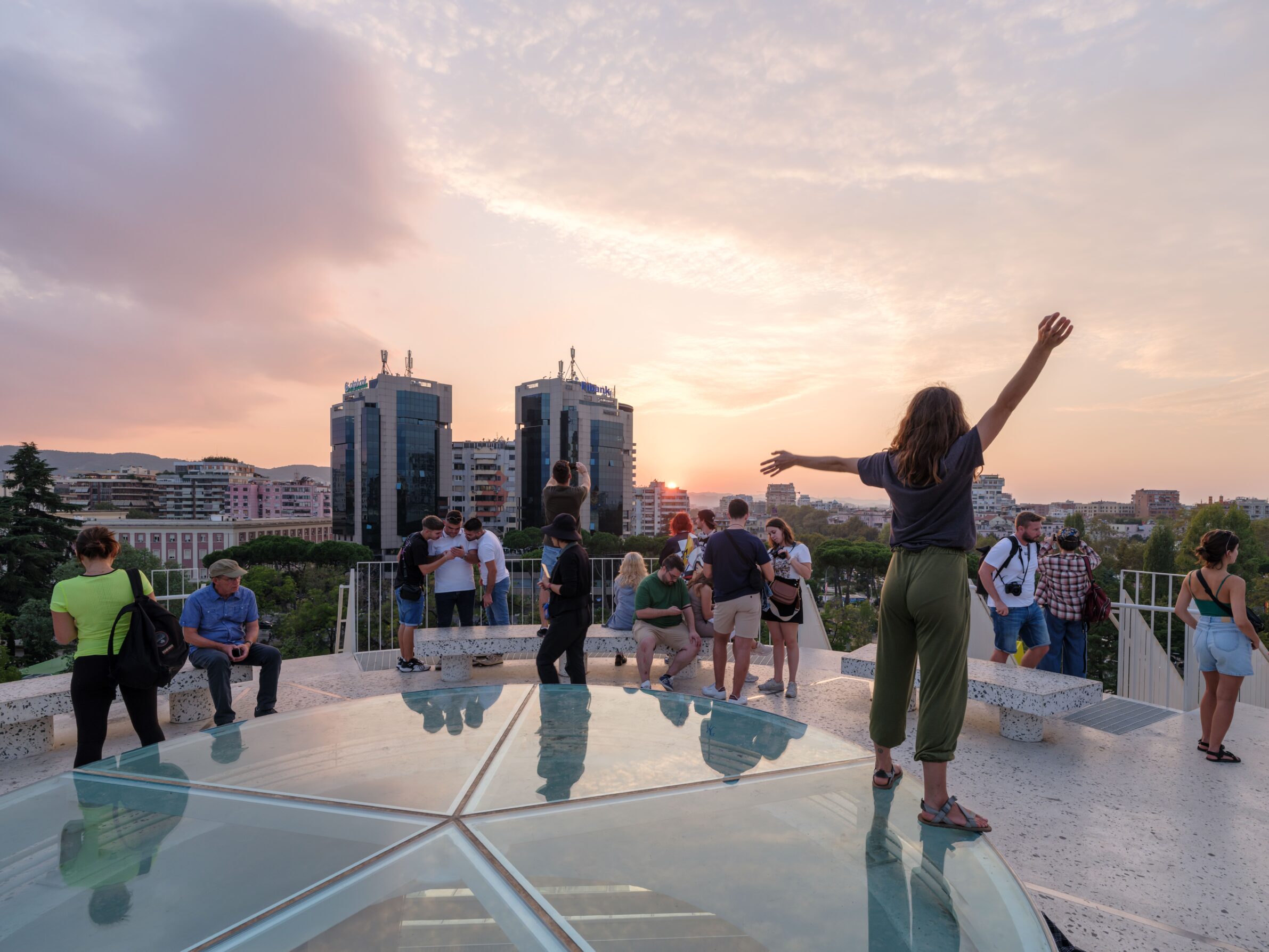
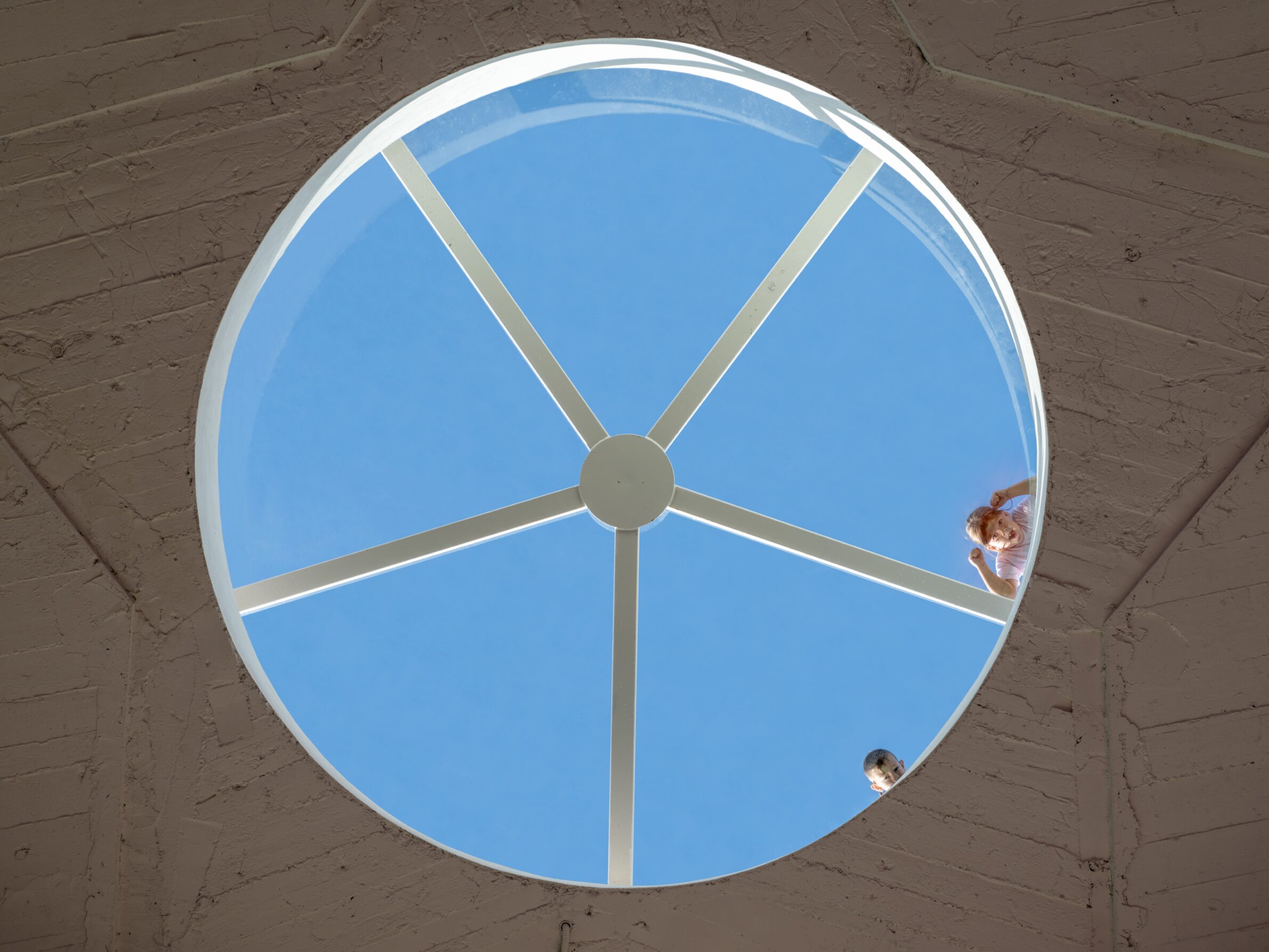
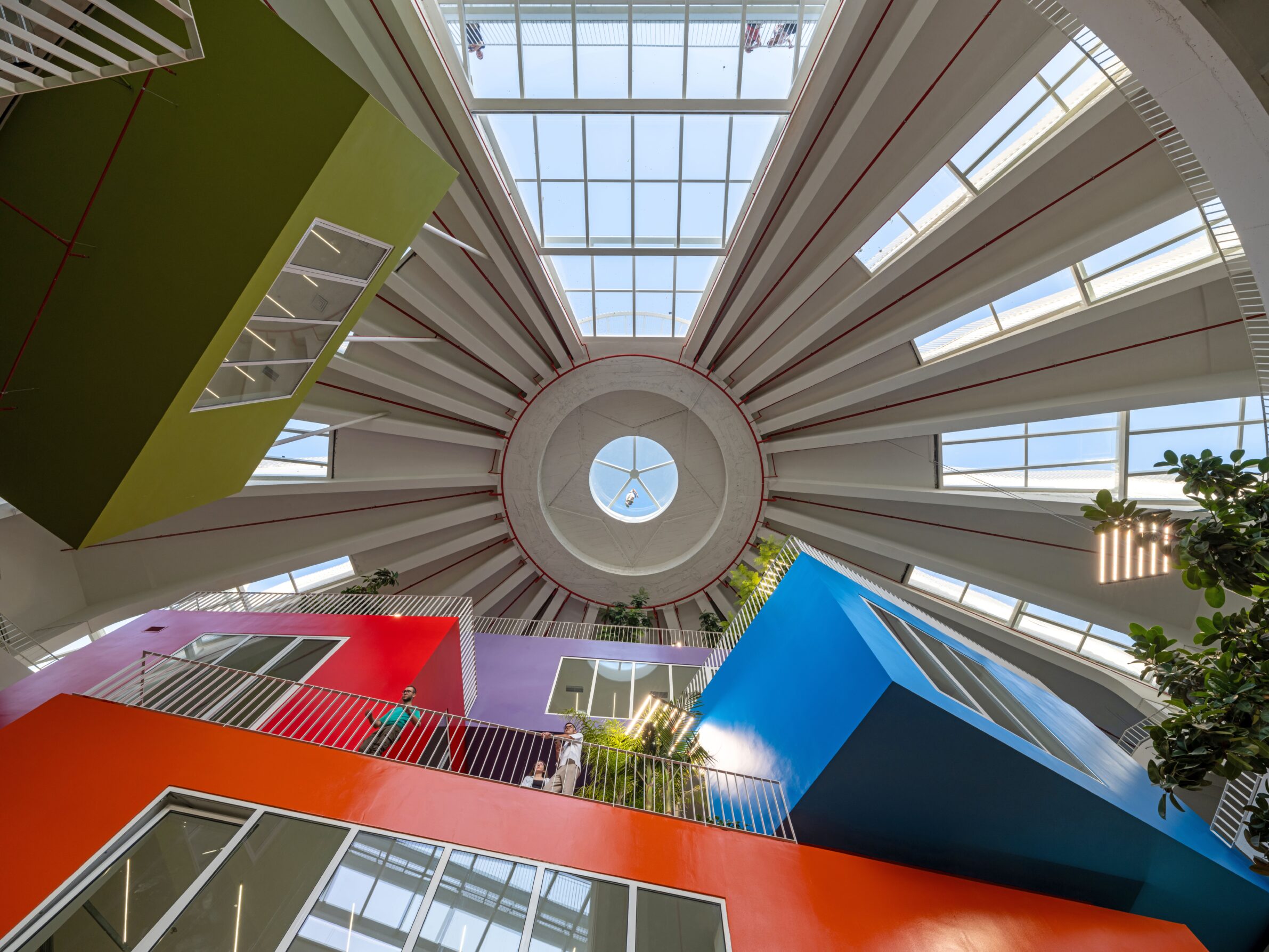
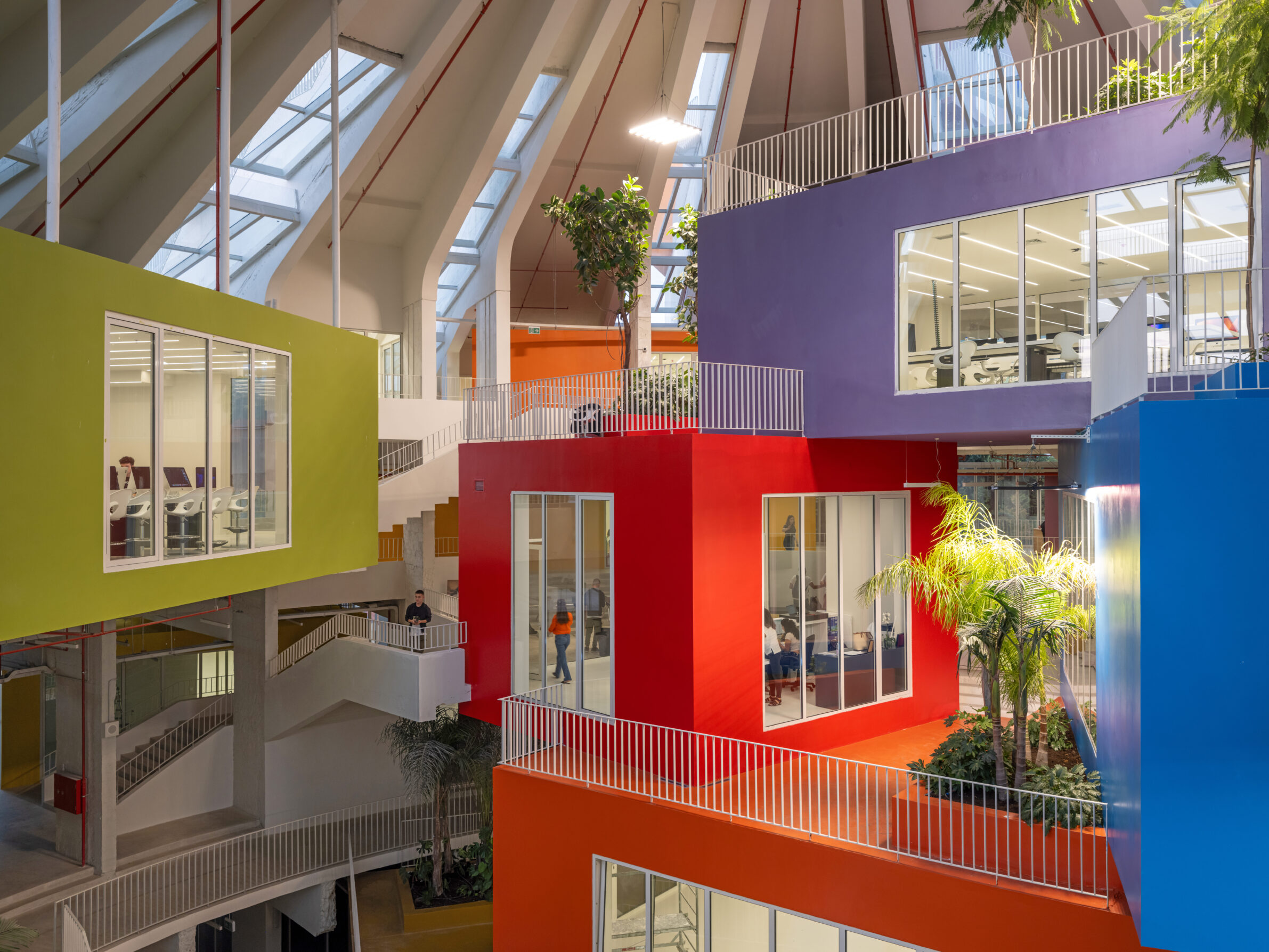
Designed by MVRDV, with Winy Maas leading the project, and developed in collaboration with Tirana-based iRI Architects as co-architect, the project preserves the Pyramid’s existing concrete structure while radically opening it to the city. New steps climb its sloping façades, transforming the former monument into an accessible public landscape, while colourful volumes inserted within and around the structure accommodate spaces for education, culture, work and social activity.
As the local architectural studio, iRI was involved from the early stages of the project, beginning with the analysis, surveying and documentation of the existing building and continuing through design development, detailing, coordination and construction. Our role also included close on-site follow-up and artistic supervision, maintaining a continuous dialogue with MVRDV throughout the process.
Rather than reconstructing what had disappeared, the intervention seeks to preserve and reveal the qualities of what remained, adapting the existing structure to contemporary needs. Today the Pyramid has become an active place for education, creativity and public life. For us, its transformation that reflects a complex inheritance reinterpreted as an open and forward-looking platform for future generations.

Irida Shupo,
Architect at
iRI Architecture
Irida Shupo is an architect based in Tirana, Albania. She has been part of iRI Architecture since 2018, working on architectural and urban projects across different scales and stages of development, from concept and coordination to implementation. Her professional experience includes complex public and urban projects in Albania, developed in collaboration with multidisciplinary teams and both local and international architectural practices. Alongside her professional practice, she has been teaching at the Faculty of Architecture and Urbanism at the Polytechnic University of Tirana since 2022, combining architectural practice with education. She studied Architecture at Sapienza University of Rome, where she also completed a second-level Master’s degree in the Management of Complex Architectural Projects.
Project
The Pyramid of Tirana
Studios:
MVRDV,
iRI Architecture
Year of Completion:
2023
Location:
Tirana,
Albania
Photography:
Ossip van Duivenbode
Edited by:
Tanja Završki
Powered by