


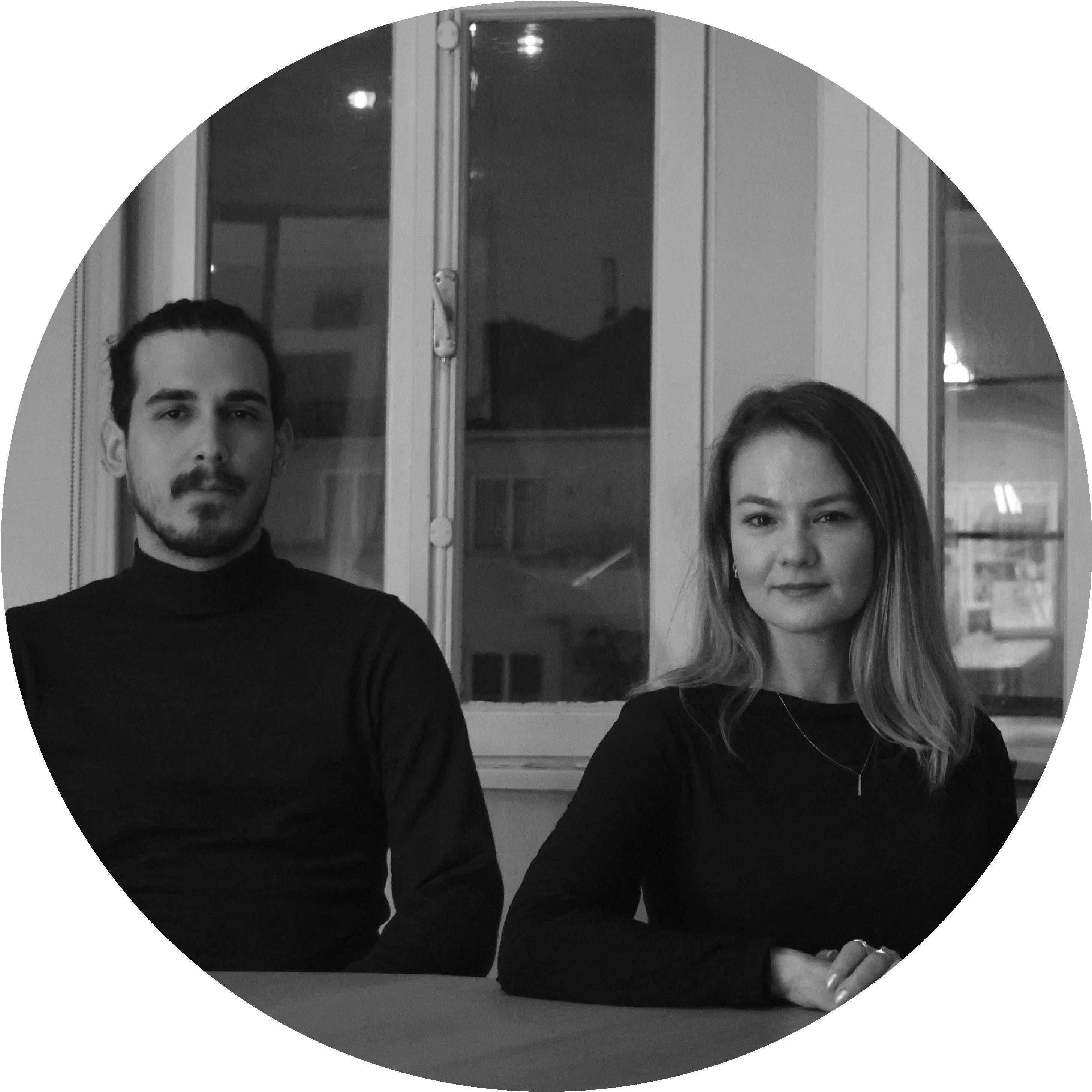
Cirit Avcı Architecture & Design, Turkey, 2026

Nominator: Alper Deriboğaz
Nominator's statement
Cirit Avcı Architecture & Design emerges as a promising Istanbul-based practice whose architectural position is shaped by contextual sensitivity, social awareness, and a research-driven design methodology. Their work reflects a thoughtful engagement with architecture as a tool for spatial dialogue, public interaction, and contemporary interpretation of place.Within their current trajectory, it becomes evident that their focus extends across both local and international contexts, as they are actively involved in projects where they've recently been working on the Üsküdar Art House project, a public space for encounters. They are also continuing the design and development of a bazaar and square in Libya. This direction reveals a practice that approaches architecture as a social infrastructure, capable of hosting collective experience while responding to cultural specificities.Among their realized works, particular emphasis is placed on a project that encapsulates both narrative depth and spatial sensitivity. Their installation project FLU, dedicated to healthcare workers after the pandemic, is uniquely significant within their practice. This reflects an understanding of architecture not merely as form, but as a medium through which memory, care, and collective resilience are spatially articulated.In evaluating their contribution to the discipline, their position is clearly defined through a methodological consistency. As a young office, they define their contribution to architectural practice through our research-based design approach, nourished by a culture of architectural competition. This process, supported by awards, encourages them to produce better and more sensitive solutions in every project. By considering the local context, user needs, and current production techniques together, they aim to create simple, sustainable spaces that add value to their surroundings. This approach situates their practice within a constructive balance between experimentation, contextual responsibility, and technical awareness.Their vision extends beyond present production toward an ethically grounded future for the profession. For the future of the architectural profession, their imagine is a field grounded in fairness, collaboration, and strong ethical values an environment where economic conditions support creativity, competition is shaped by quality rather than inequality, and sustainability becomes a fundamental responsibility rather than a trend. They envision architecture that meaningfully integrates innovation and artificial intelligence, remains inclusive and transparent, and ultimately empowers both designers and the communities they serve. This perspective demonstrates a reflective maturity and a commitment to shaping architecture as a socially conscious and forward-looking discipline.Taken together, these positions reveal a coherent practice that navigates between theory and production, sensitivity and rigor, ambition and responsibility. Cirit Avcı Architecture & Design represents a young yet intellectually grounded voice within contemporary architecture, and I believe their trajectory aligns strongly with the ethos of the BIG SEE Perspectives Award, signaling a meaningful and evolving contribution to the future of the built environment.
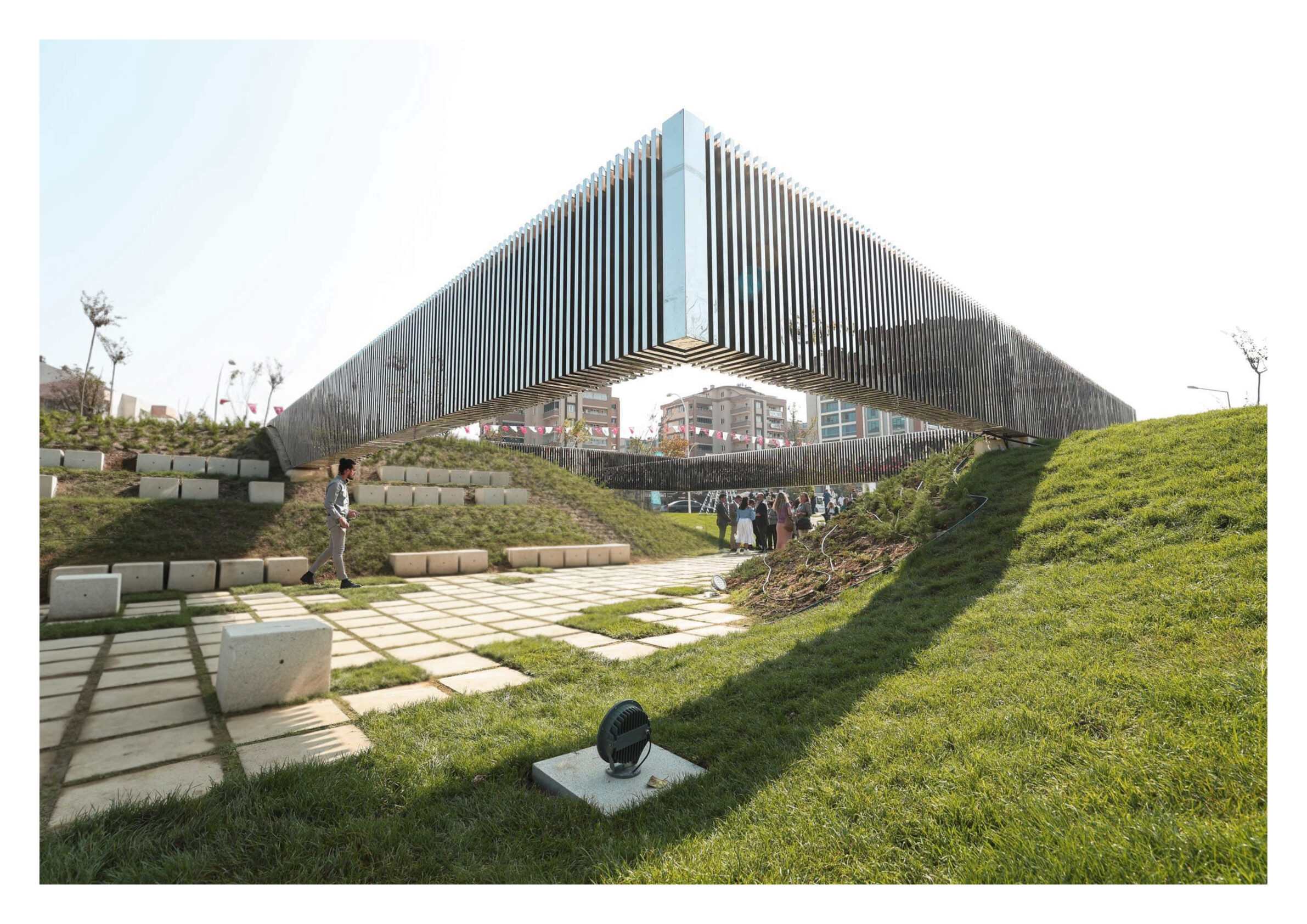
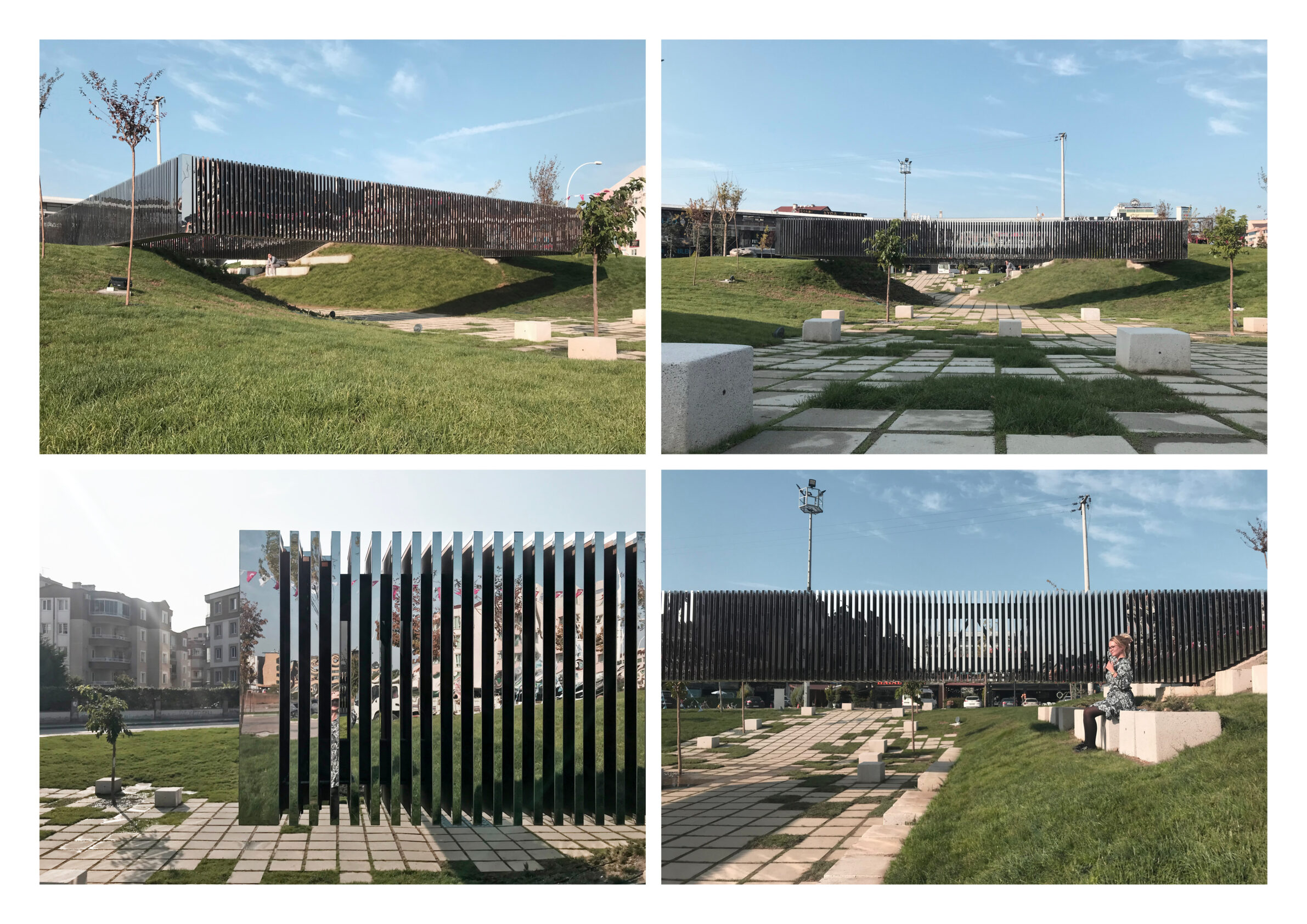
FLU - Art Monument Competition Dedicated to Healthcare Workers
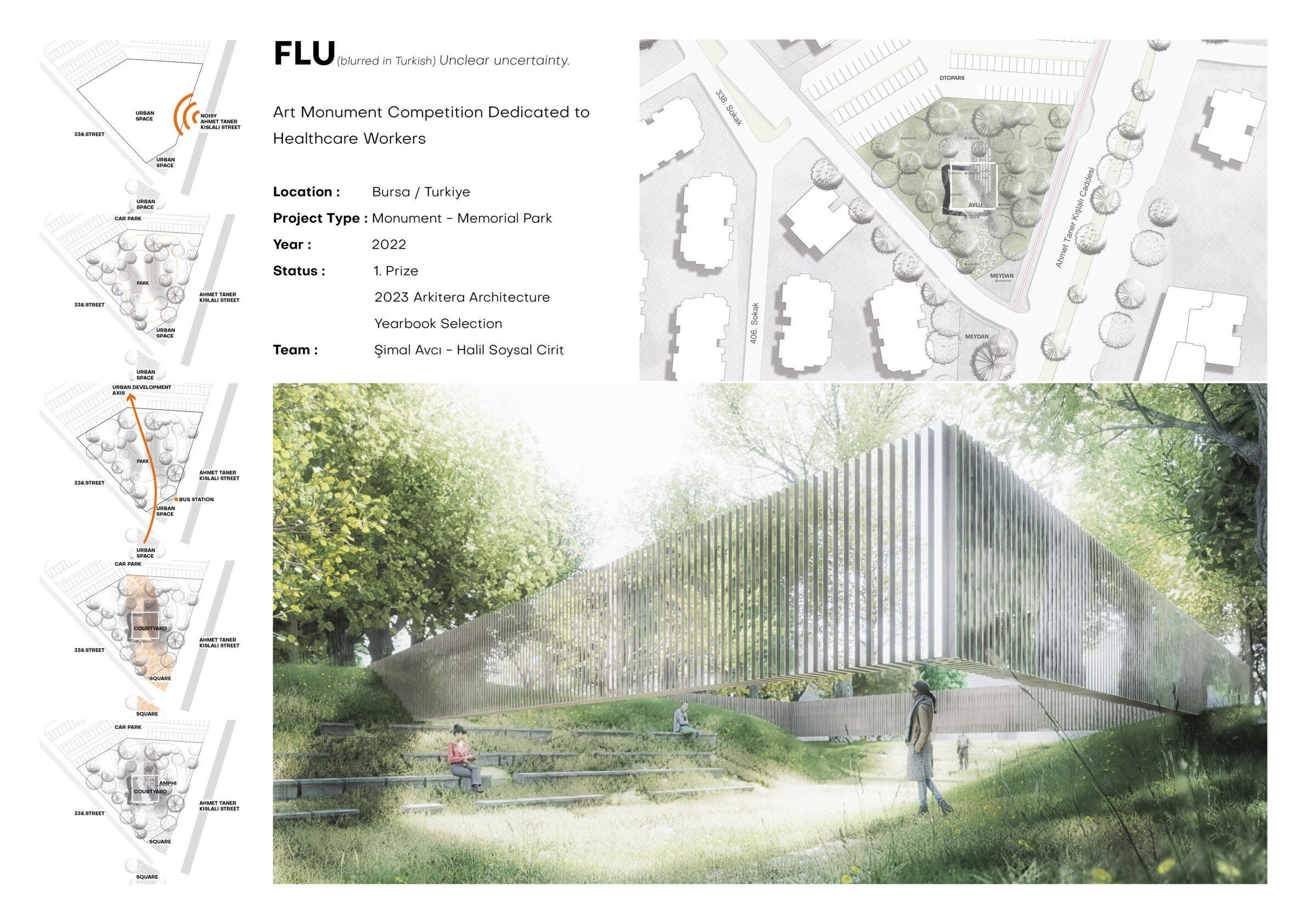
The monument is conceived not only as a physical object but as a spatial interface that reconstructs urban memory through its process of production; through the relationships it establishes with its surroundings, it carries the city and its inhabitants into a new realm of experience. The project site is located in Nilüfer, Bursa, along an axis of urban growth, in a zone where agricultural lands have transformed into residential areas and where urban voids are evident. The intense vehicular traffic and noise surrounding the triangular plot necessitated positioning the monument in a central and sheltered location. The design draws on the conceptual dualities associated with healthcare workers, such as being singular and collective, visibility and invisibility, uncertainty, and solid–void relations. While the square form composed of modular units defines the urban square, the monument’s ambiguous relationship with the topography allows it to rise from landscape in some areas and touch the landscape in others, generating threshold spaces. Reflective surfaces carry the sky and surroundings onto the monument, inviting urban dwellers into moments of pause and awareness. Through the tension between inside and outside, the monument creates a memory courtyard for commemoration and gathering, adding a new layer to urban life.
 TRACE - 2023 Republic of Türkiye 100th Anniversary Monument Idea Competition
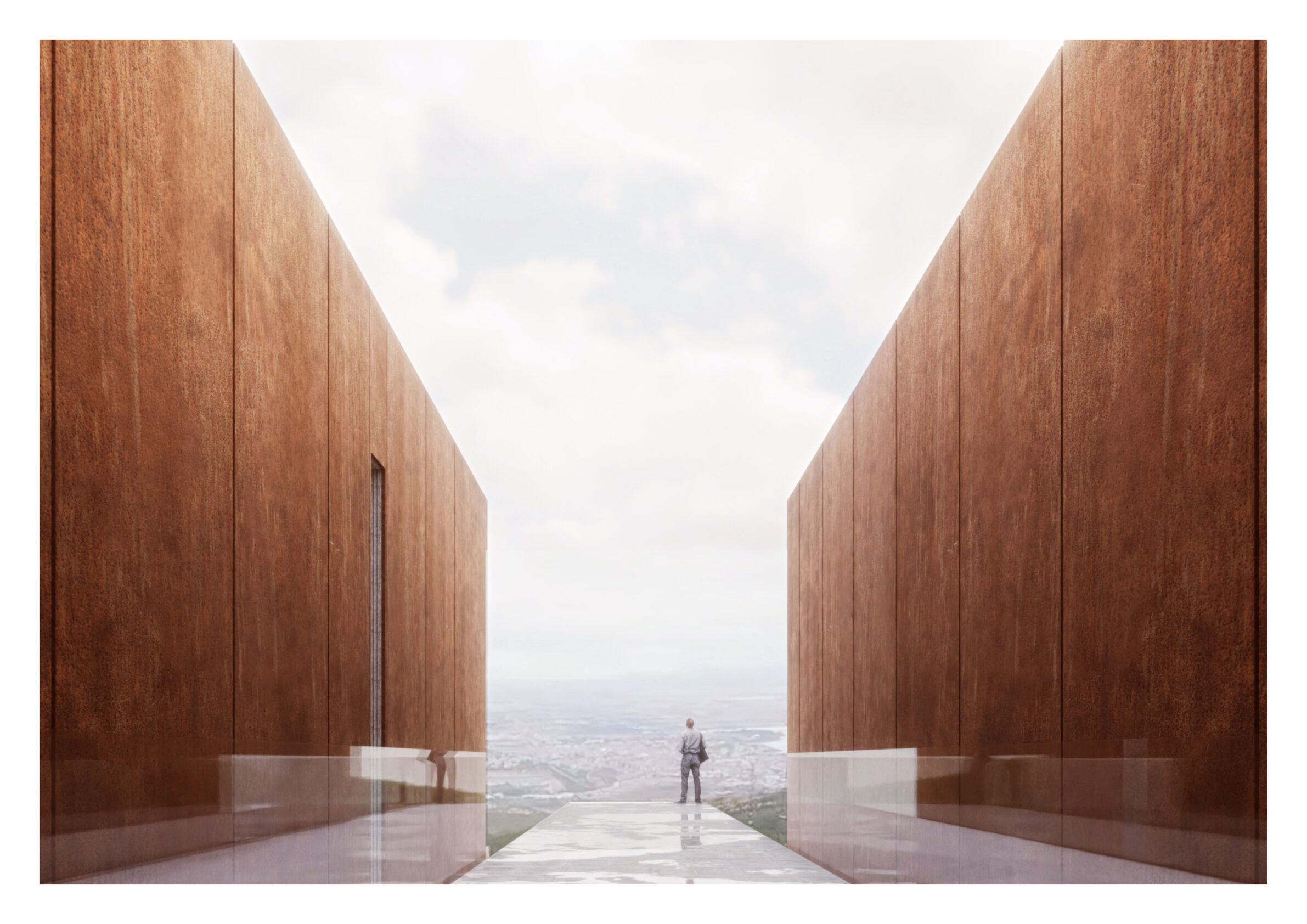
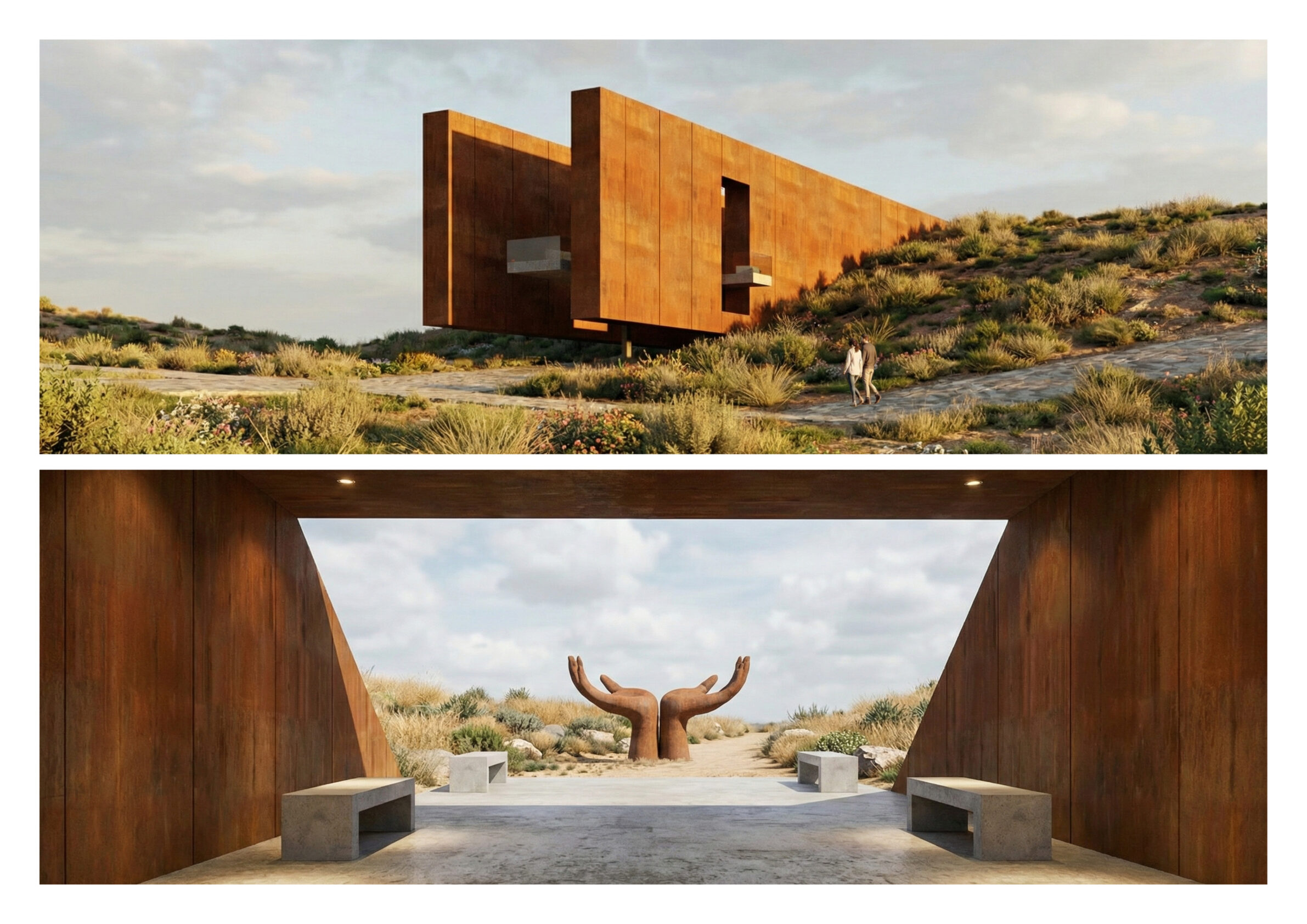
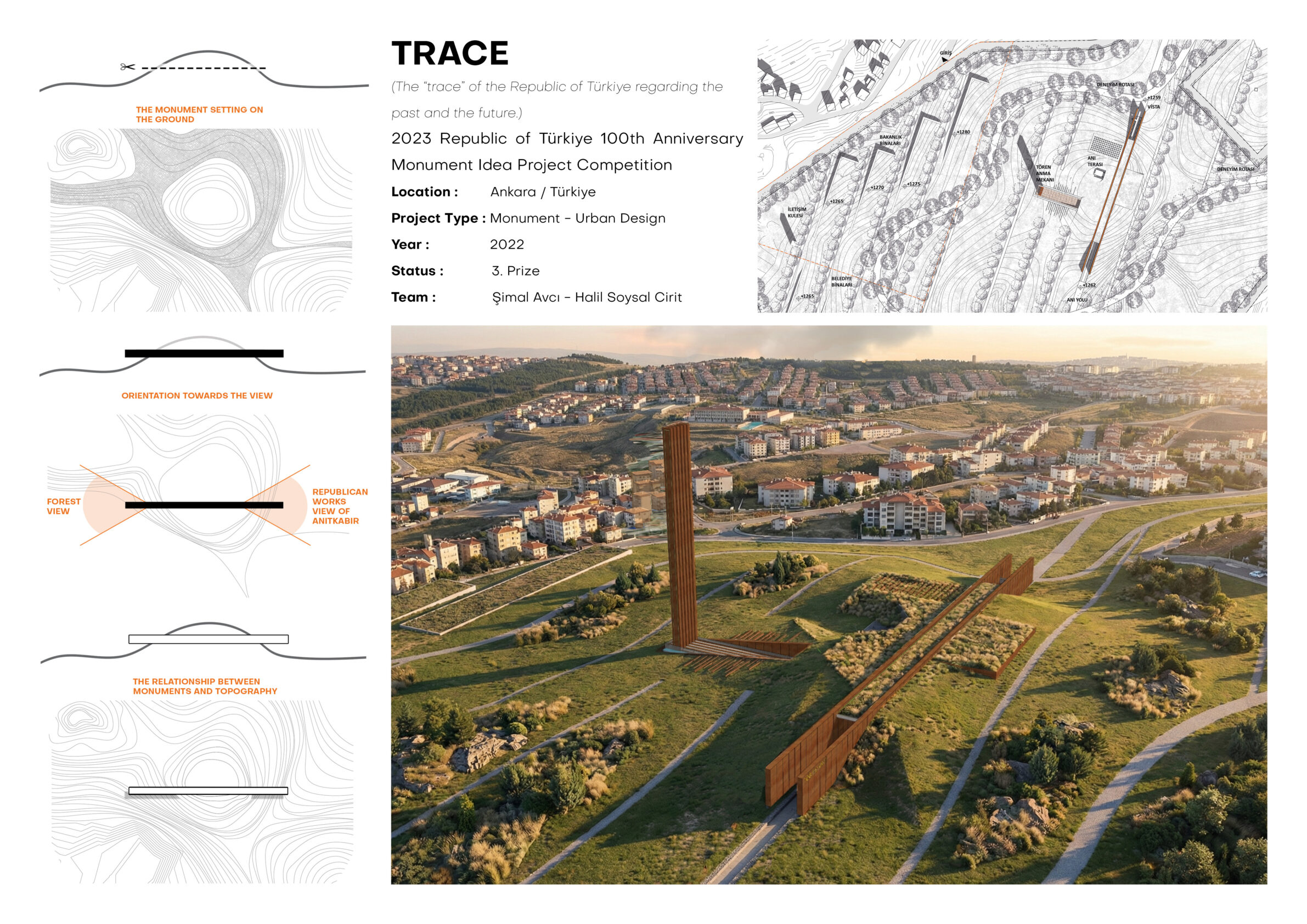 The Republic is a continuous process of transformation where Anatolia's multifaceted historical heritage meets modernization ideals. This process represents not only a form of government but also the redefinition of public space, the construction of social memory, and a shared vision of the future. Çaldağ Hill, having witnessed one of the symbolic beginnings of the War of Independence, is a unique threshold space bearing the traces of the Republic's founding memory. The monument's design, with its linear axis that cuts through the topography, conveys the idea of continuity and stability to the space, while its opening and closing spatial sequences experientially make the Republic's transformation within historical processes visible. The holistic relationship the structure establishes with the landscape transforms the monument from a mere symbol into a public experiential space integrated into the spirit of the place. The vista point that opens to the view (Anıtkabir, Republican-era buildings vs.)at the end of the process transforms the Republic's future oriented horizon and claim to continuity into a spatial narrative.
 UNALAN HEALTH CENTER AND URBAN SQUARE
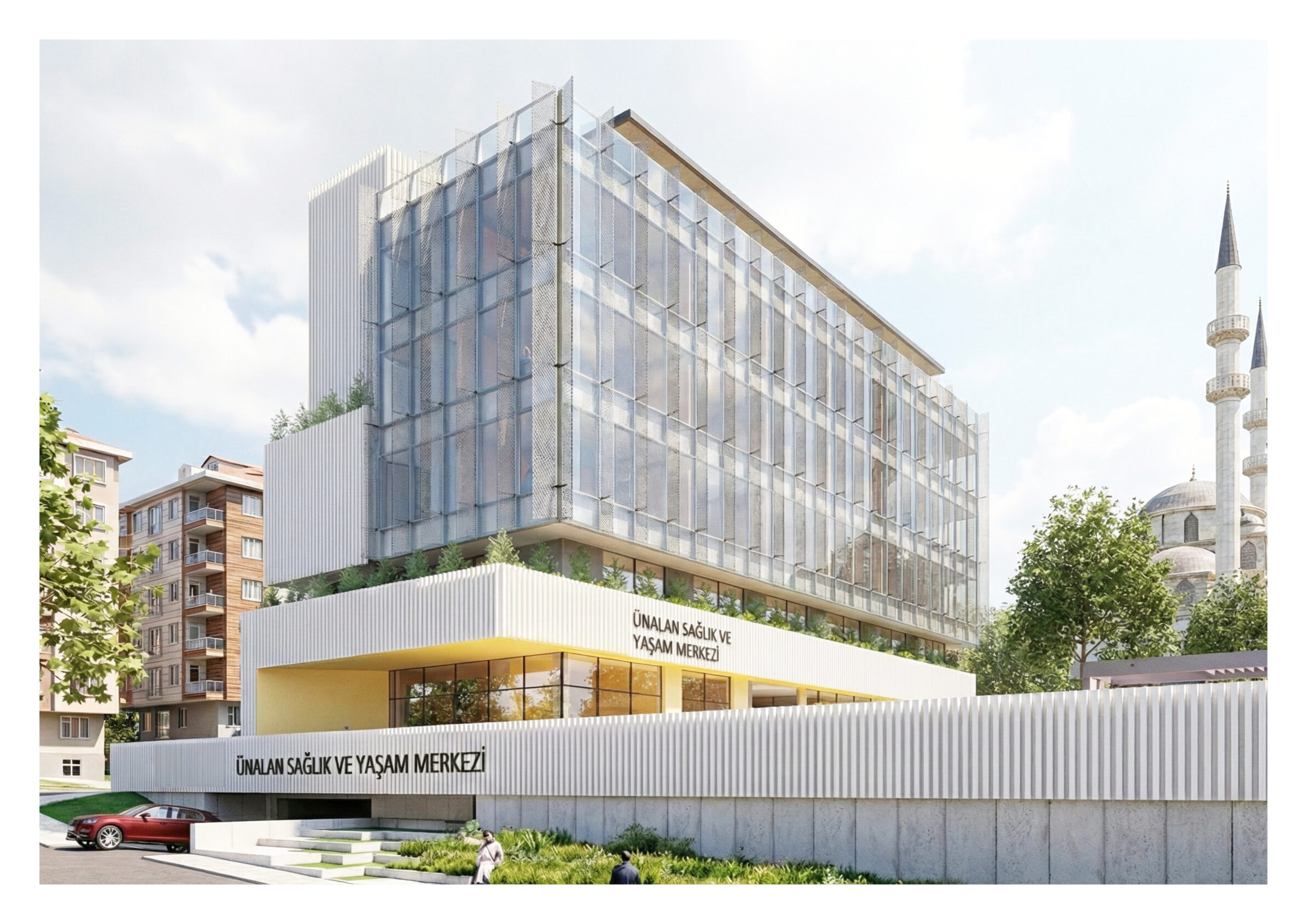
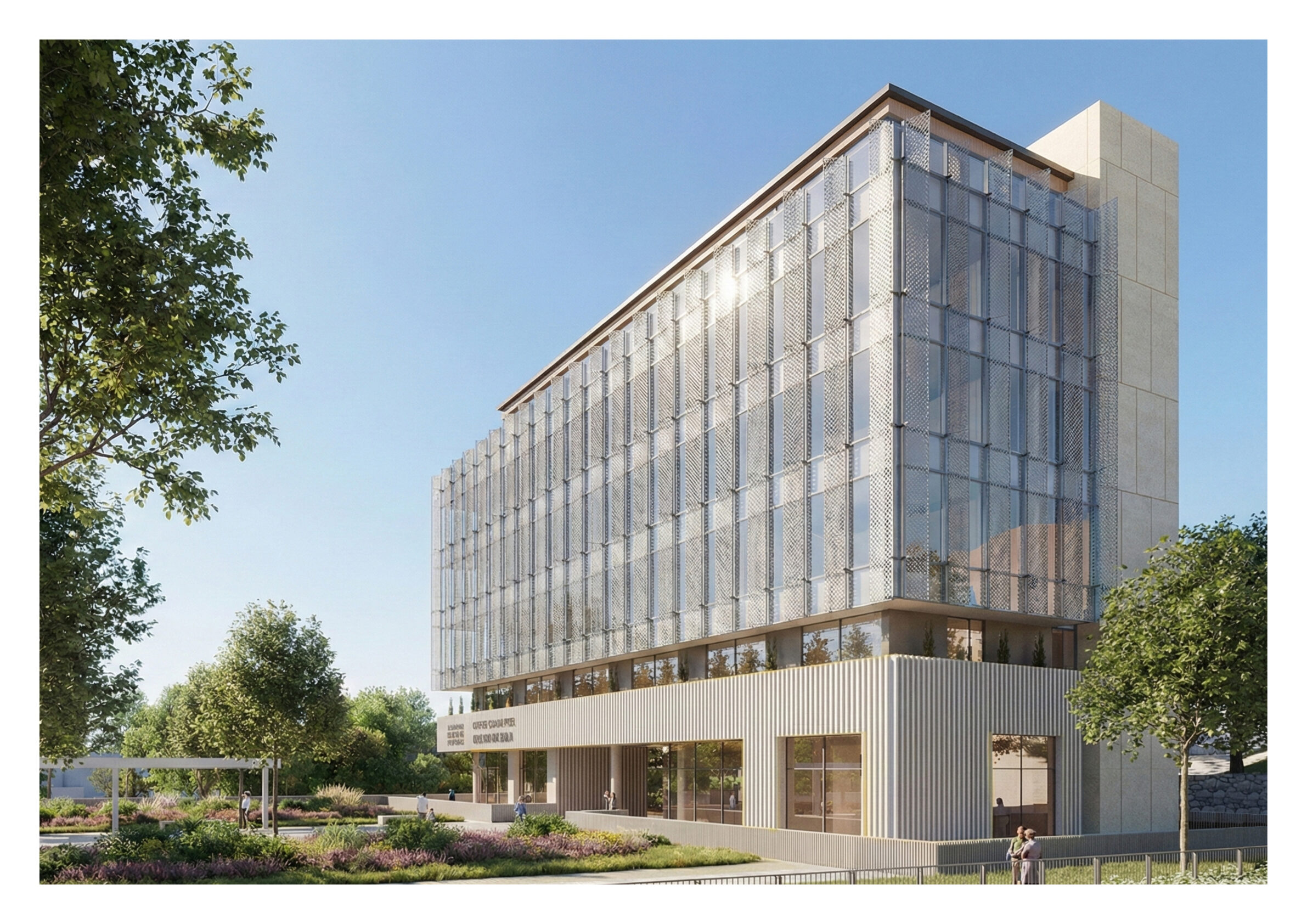
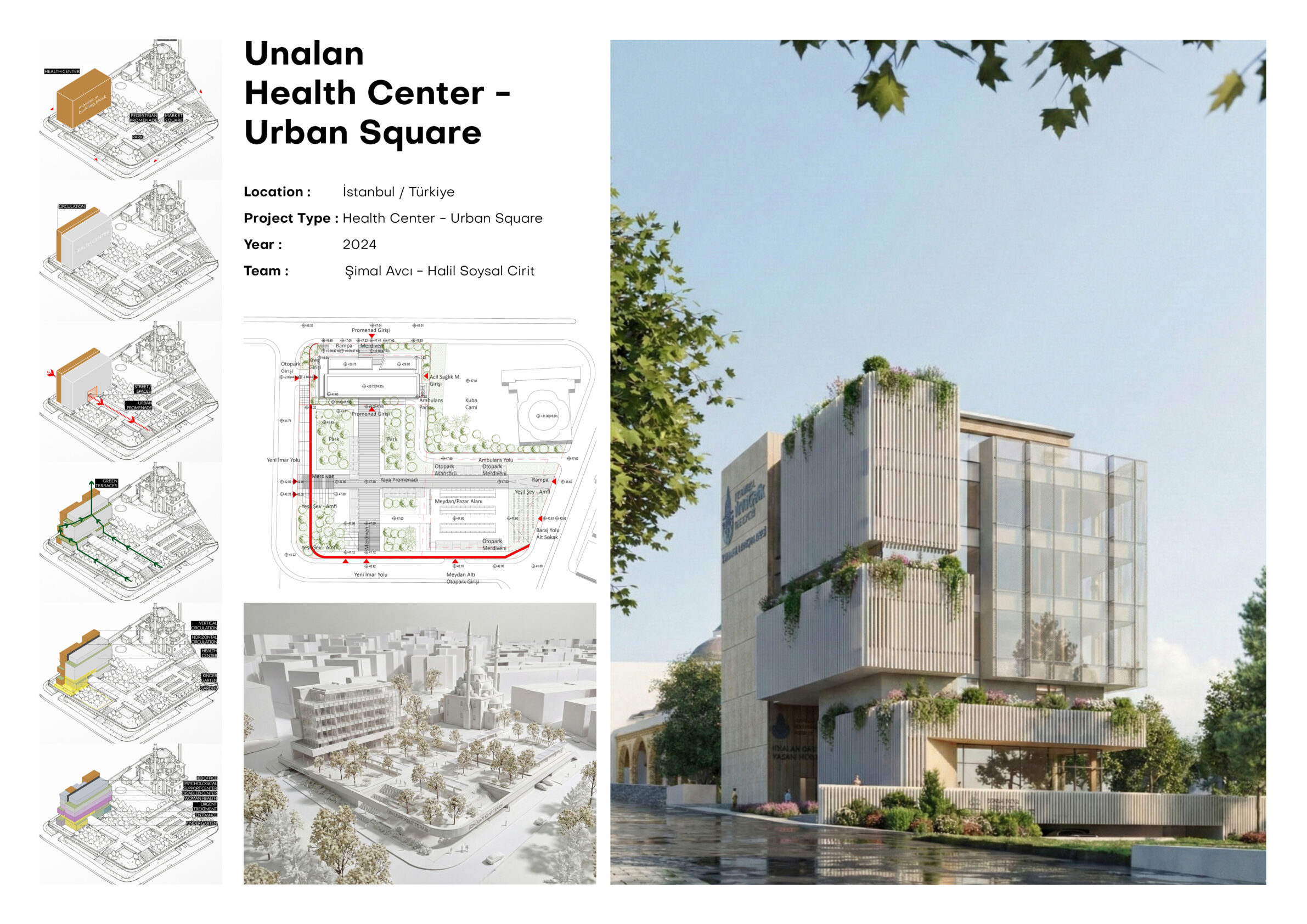 The health center is conceived as a public well-being hub that transcends the typology of closed, inward-facing, and singular-function healthcare facilities. Psychological support, nutritional counseling, and preventive health units for women find their expression in the spatial design through transparency, permeability, and terrace gardens. Accordingly, the building is designed not as a rigidly defined mass, but as a permeable threshold that establishes continuity with the park and square. Residential pattern density and pedestrian continuity on Kıvılcım Street are conveyed to the park and square via a semi-open passageway created by dividing the mass at ground level; the building becomes part of the urban flow. The fragmented mass on the street facade, through overlapping terraced volumes, provides a reference to the surrounding dense fabric in terms of scale and rhythm. The mass, receding at the upper levels, establishes a relationship with the view through terrace gardens and a large terrace on the 5th floor, while creating a lighter silhouette in the perception from the park. On the facade facing the park, transparent glass surfaces and movable galvanized mesh sunshades redefine the interior-exterior relationship through controlled permeability. The continued use of the market in the square positions the structure as a public focal point integrated into the flow of daily urban life.
Cirit Avcı Architecture & Design
Cirit Avcı Architecture & Design is an Istanbul-based office that builds its production practice on relationship with its context, producing award-winning projects of architecture and urban design. The architectural process understanding that developed during the student years of Soysal Cirit (b. 1995) and Şimal Avcı (b. 1995) gained its corporate identity in 2021 and continued under the name Cirit Avcı Architecture & Design. The office integrates an environmentally conscious and place-centered design approach with social and economic needs, while considering the tension between topography, light, and materials as the main components of spatial design. Offering multi-layered spatial experiences behind simple geometries, their productions emphasize the legibility of the structure and the naturalness of the material; by making the boundaries between interior and exterior permeable, they invite the user into a continuous dialogue with their environment. Focusing on collective production, the office creates a dynamic design environment that constantly experiments with contemporary architectural approaches through competition practice and treats each project as a context-specific research area.
Contact
info@ciritavci.com
Powered by