



Julianna Skrabák, Hungary, 2026

Nominator: Gábor Zombor
Nominator's statement
I have taught Julianna Skrabák over the past eight years in several architectural design courses while she was a student at the University of Debrecen. Most recently, as a student at Moholy-Nagy University of Art and Design, she invited me to serve as an external consultant for her diploma project. It was a great honor for me, as the level of care, dedication, and intensity with which Julianna develops her designs is truly exceptional. She is tireless. Her distinctive lines of thought generate unique spatial situations in her projects, and she has an exceptionally precise understanding of architectural relationships. She also possesses the rare ability to position architecture within a broader context, including its ethical dimensions, mapping it onto wider social processes. She is highly focused and deeply committed. Alongside her own professional achievements (Media Architecture Award – Student Grand Prize, 2024; 1st Prize in the “Cívis Houses in Debrecen” competition, 2025; participation in Hello Wood architecture camps, 2019–2020), she also contributes to architectural education as an invited lecturer at the University of Debrecen, sharing her
unique architectural perspective.
NOVELLA QUARTER
In collaboration with Marcell Korhán
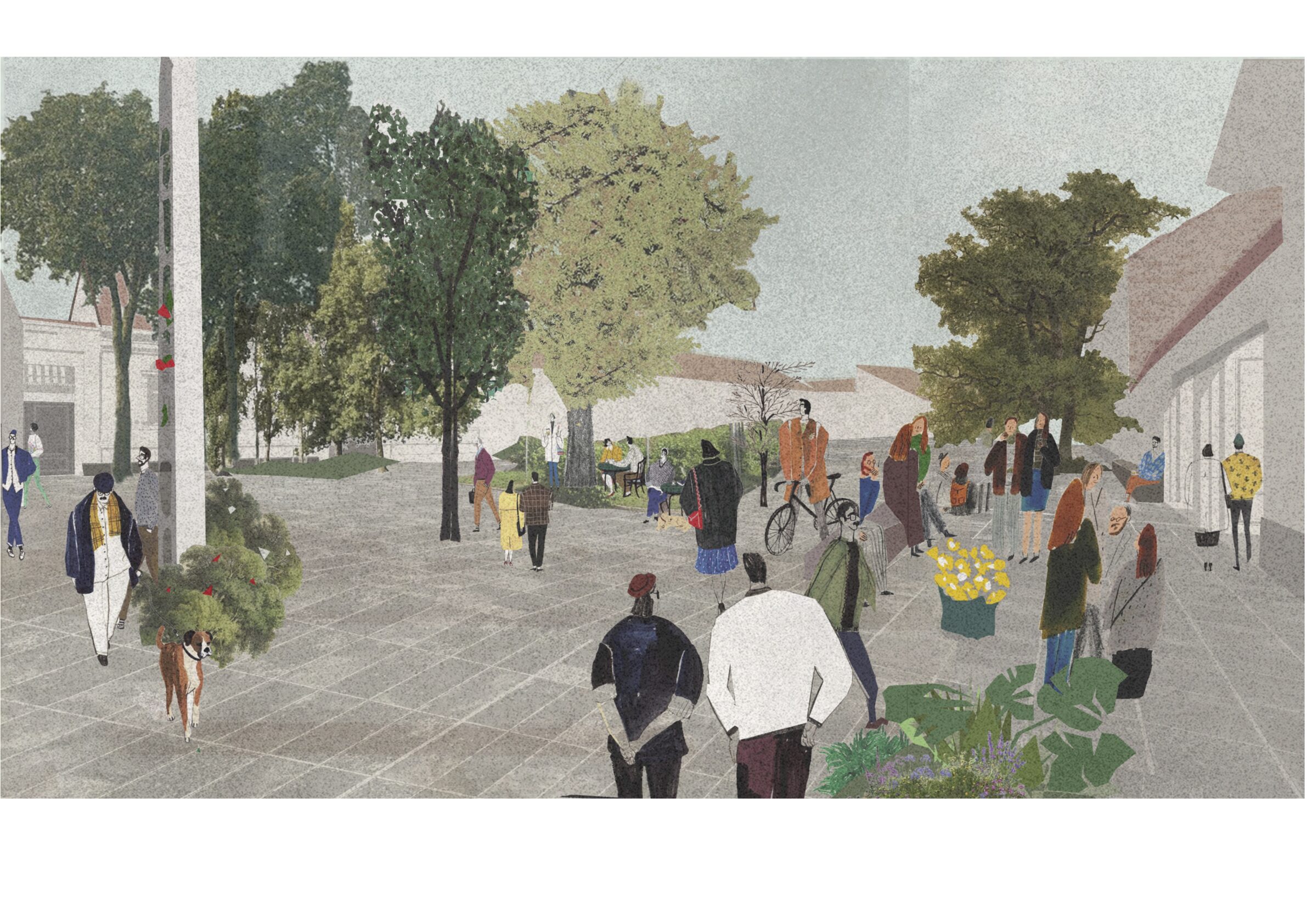
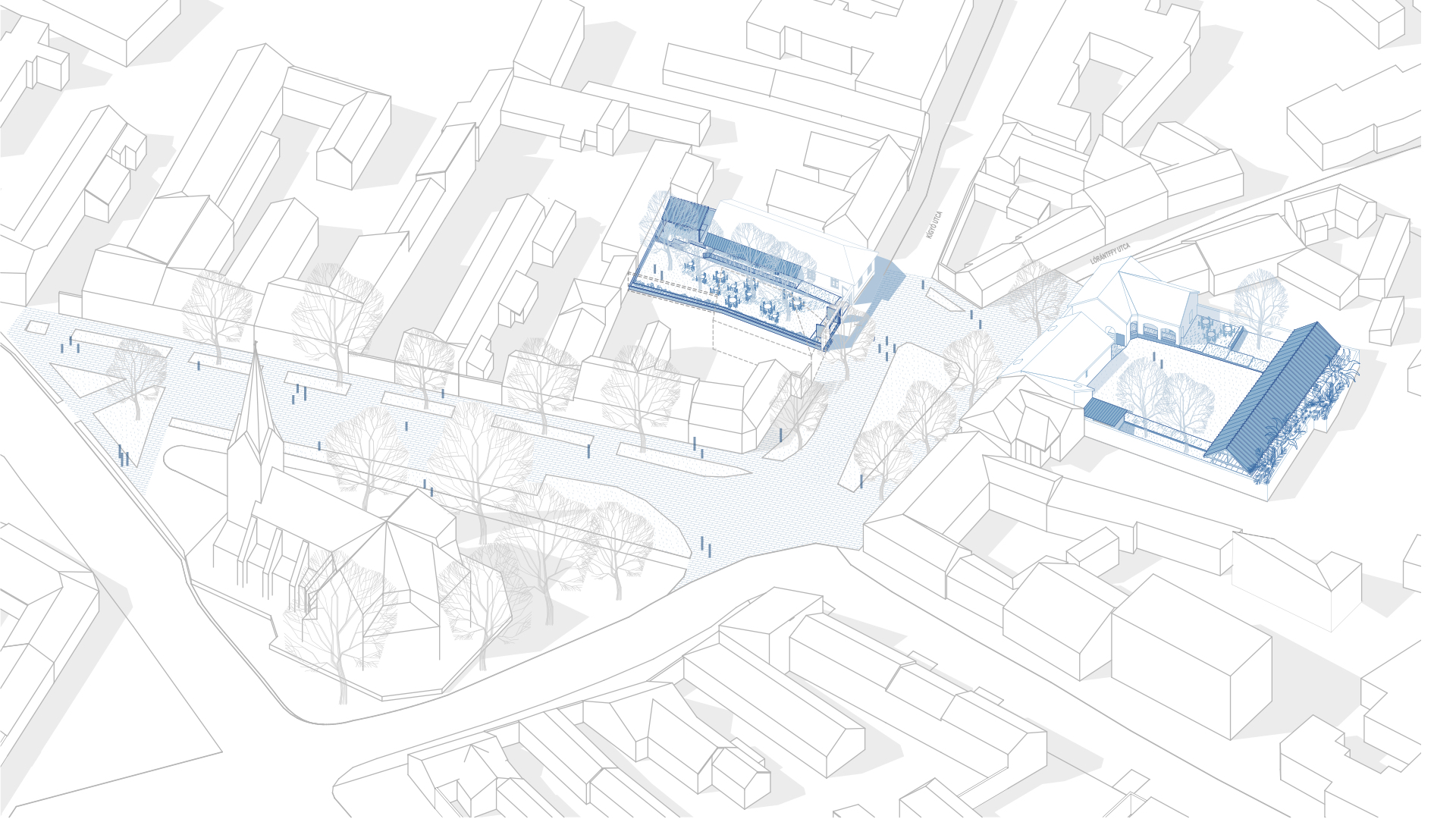
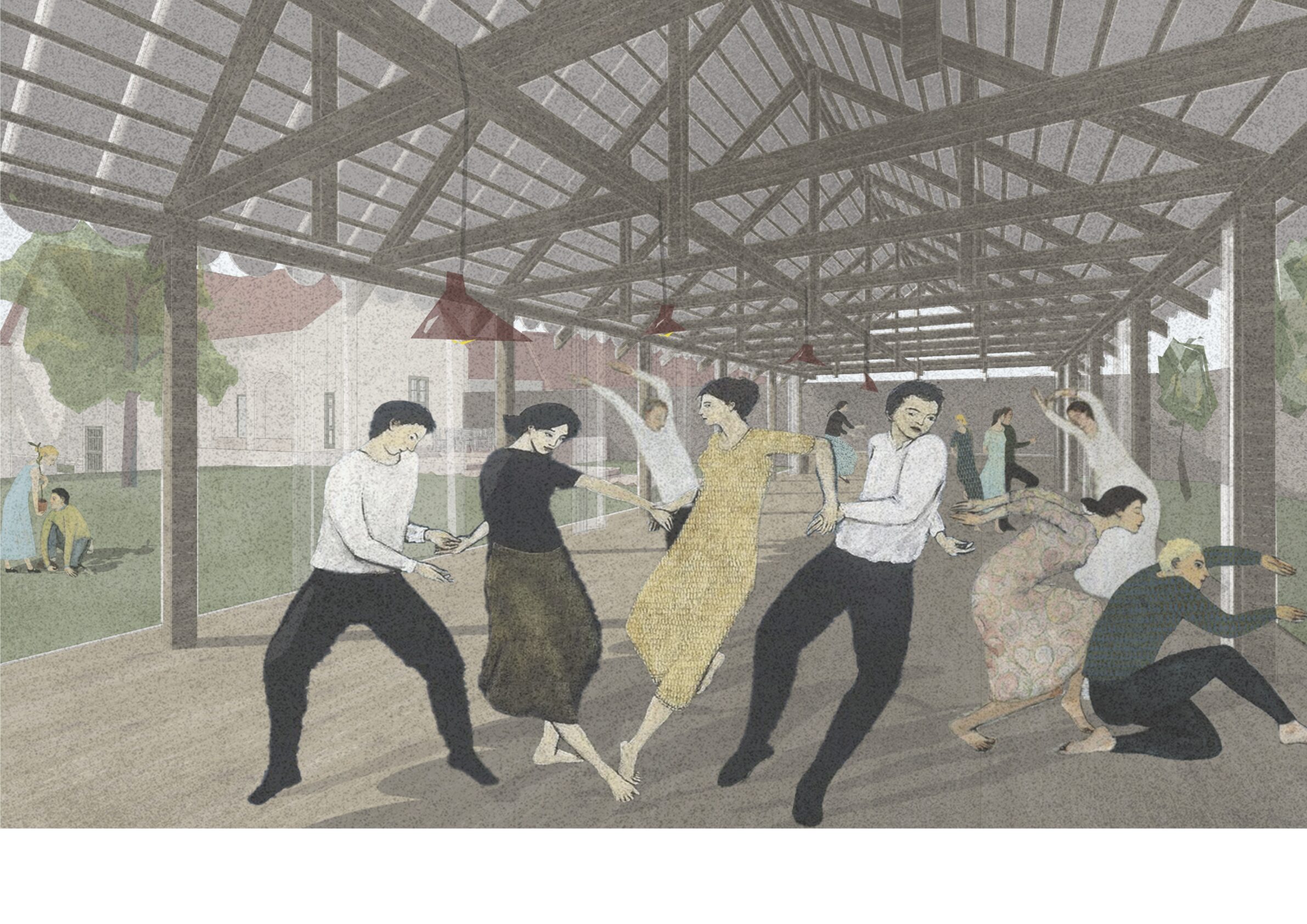
Our proposition for the competition was to define how architects can provide their knowledge for the community outside of their design desks. We believe that architects can bear the responsibility of a coordinator in many cases. We presented a design solution where architecture is not just about spaces and forms, but rather focuses on the collaborative needs. We believe the first step to reactive an urban fabric to its cultural meaning, is to first recreate the everyday city life itself. We made contact with small scaled cultural groups of Debrecen, who have limited access to spaces in the city.The message was clear, we need to use some sort of collaborative sufficient architecture, which could help these cultural groups to have continual access to space, so this cultural quarter can be a starting point for the future.
PLACE IN BETWEEN - Alluvial spaces and strata communities along the Danube
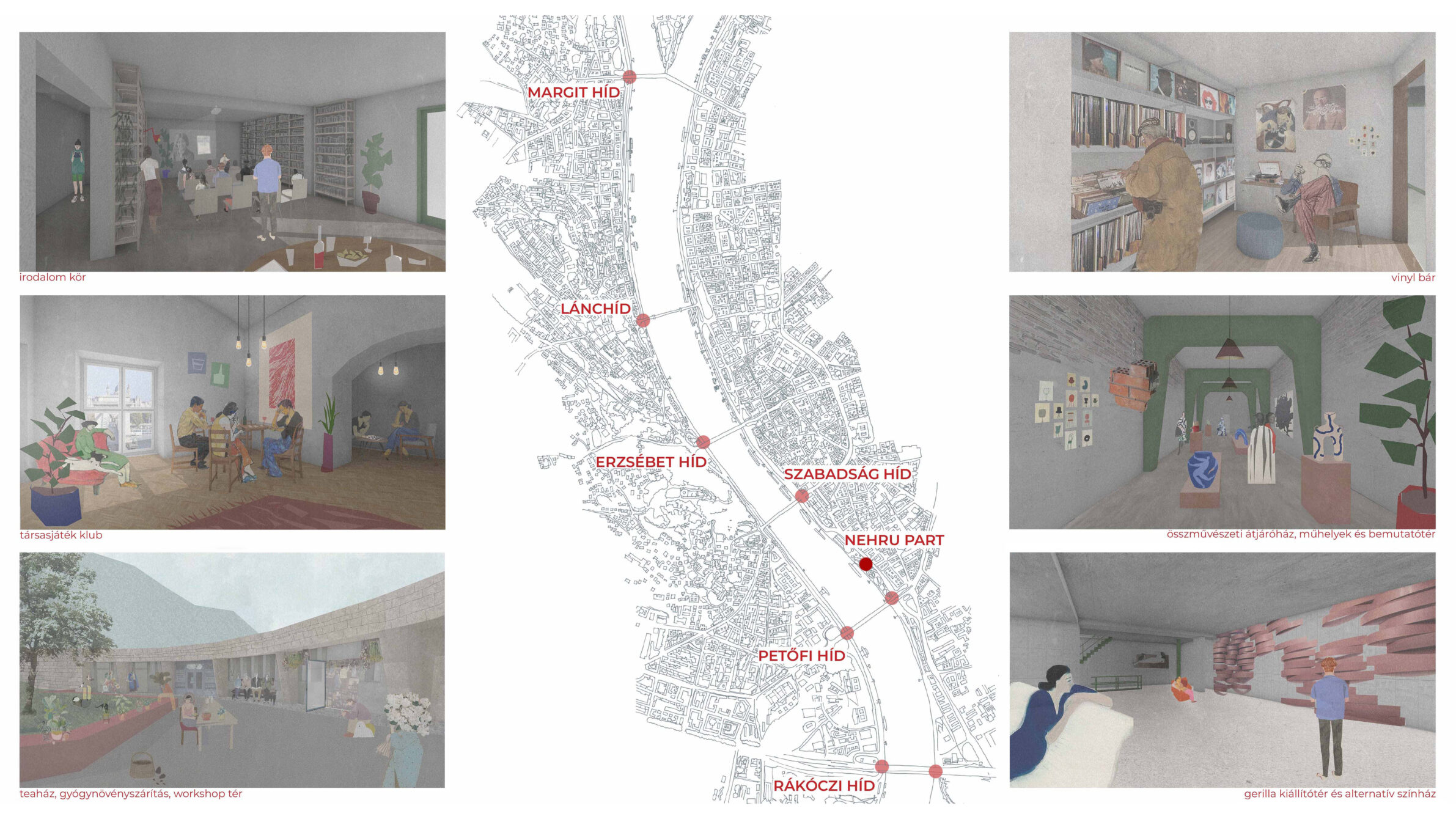
It would be an important step for Budapest to create space for local micro-communities ensuring to strengthen the importance of the presence of special, alternative city dwellers, with additional nuances of the quality of local life. I assign groups of inclusions, communities that are not noticed in everyday life, to alluvial spaces that have lost their function and are hidden along the downtown section of the Danube in Budapest. The eight locations around the bridge piers together with my design location form a system. The latter, the Nehru coast, is the priority planning area.
The Nehru acts as an enclosure in the urban fabric, and it is separated from the Danube by Budapest's highest embankment. By connecting the Nehru and the Danube, my concept is to create a third, intermediate quality, where the use of buildings changes along with the movement of the Danube. The building remains unnoticeable, similar to the alluvial spaces of the bridge piers’, in the form of a sauna wall built behind the quay wall, the spaces of which are permeated with water. Galleries and saunas carved out of the quayside wall open towards the Danube. The interior of the sauna is the only enclosed core not accessible by water. The balconies of the galleries and saunas towards the Danube enable a closer visual connection, and the deep plunge pools allow a physical perception of the Danube water. Chimneys and stairs that break to the surface are symbolic objects. The sauna, as a ritual space, provides an opportunity to escape from the fast city life and to slow down. It creates the transition between the life around us and our inner reality.
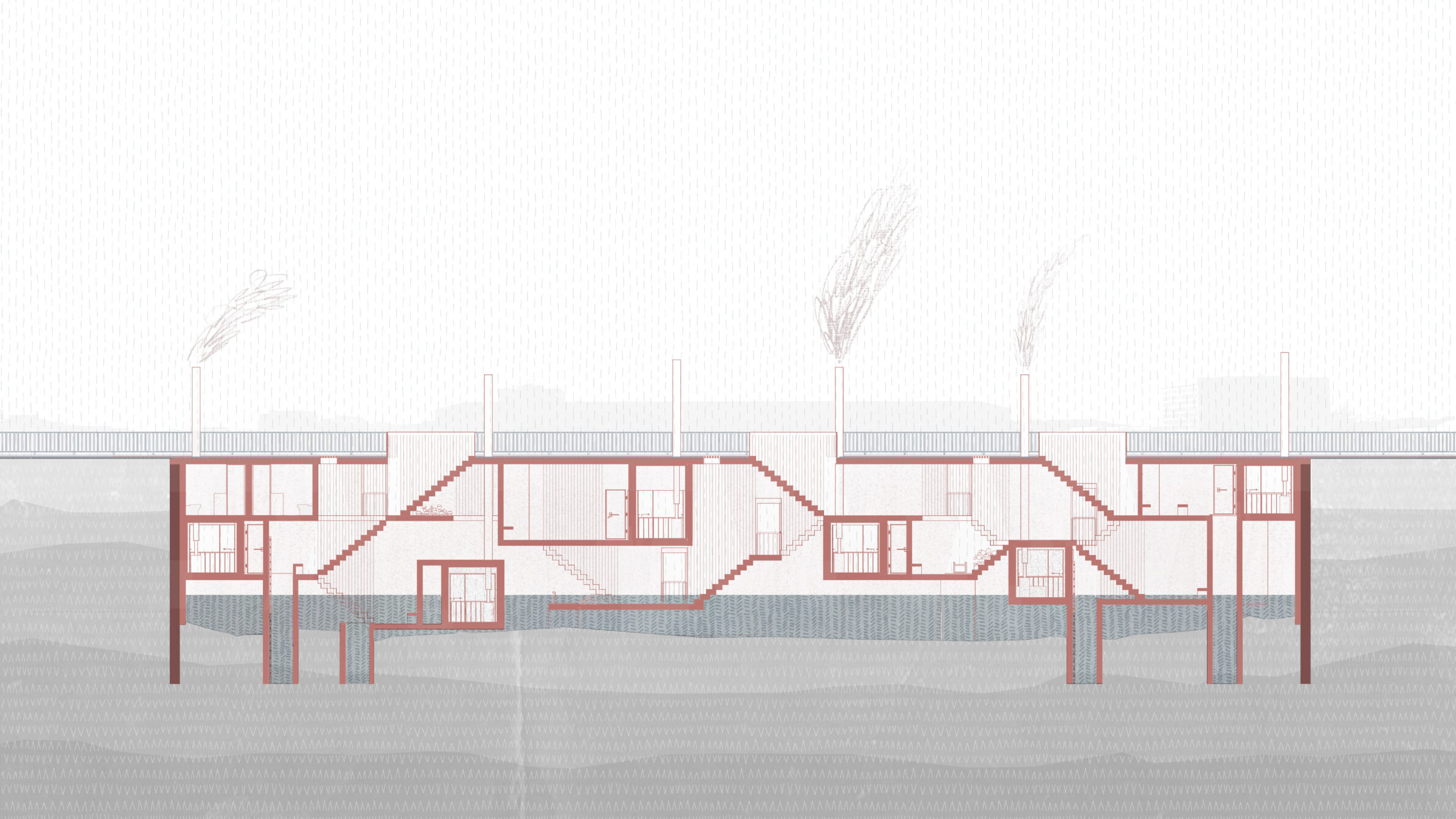
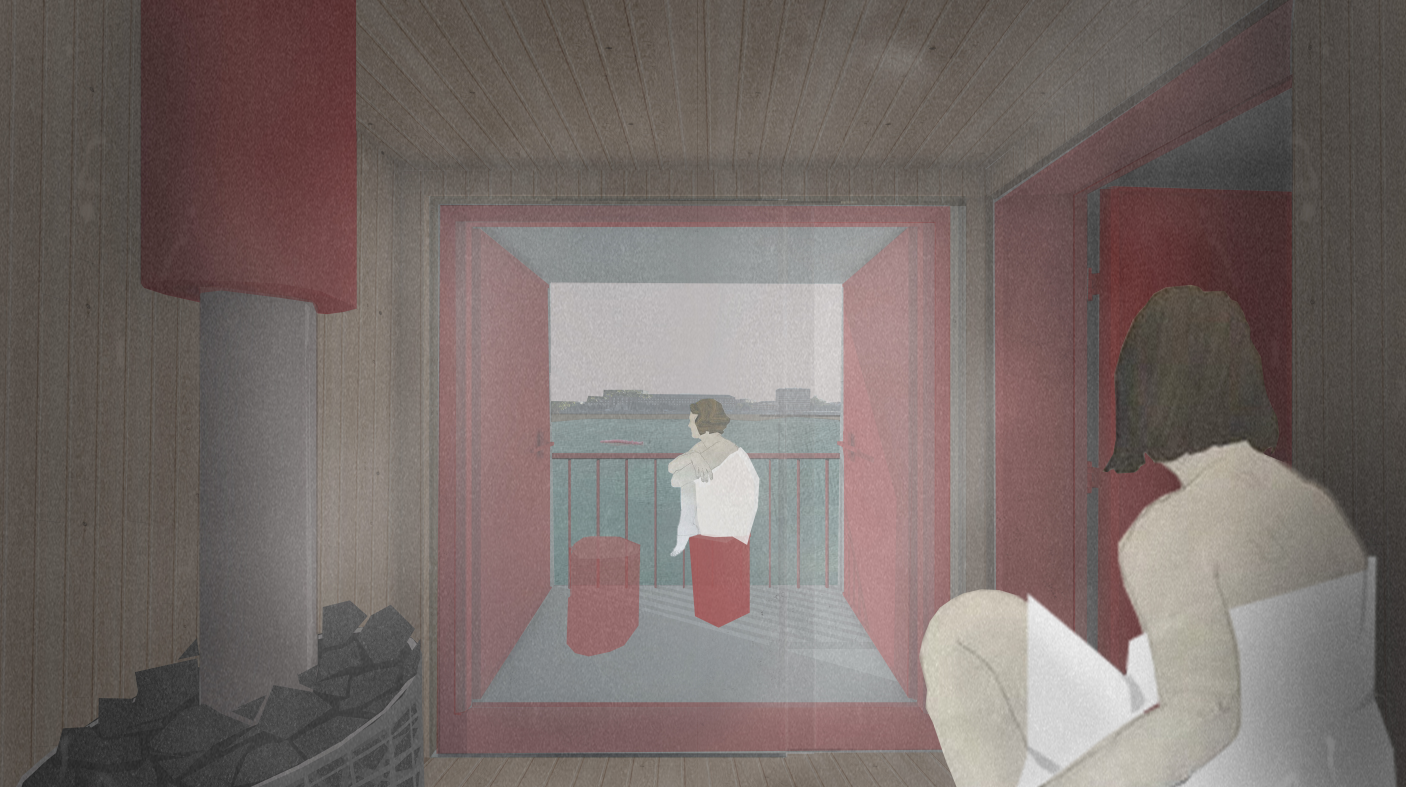
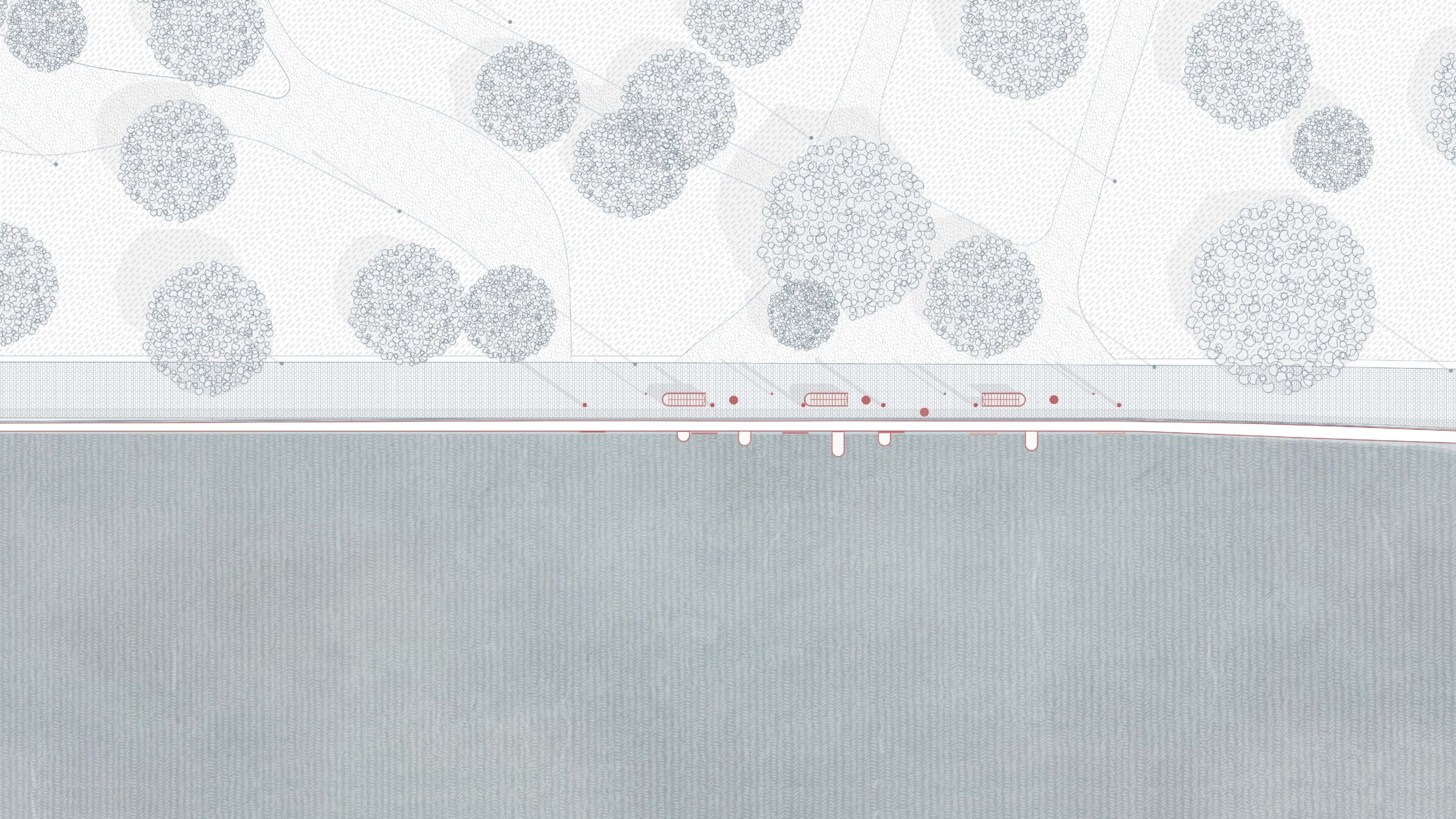
DUNA.POSTA
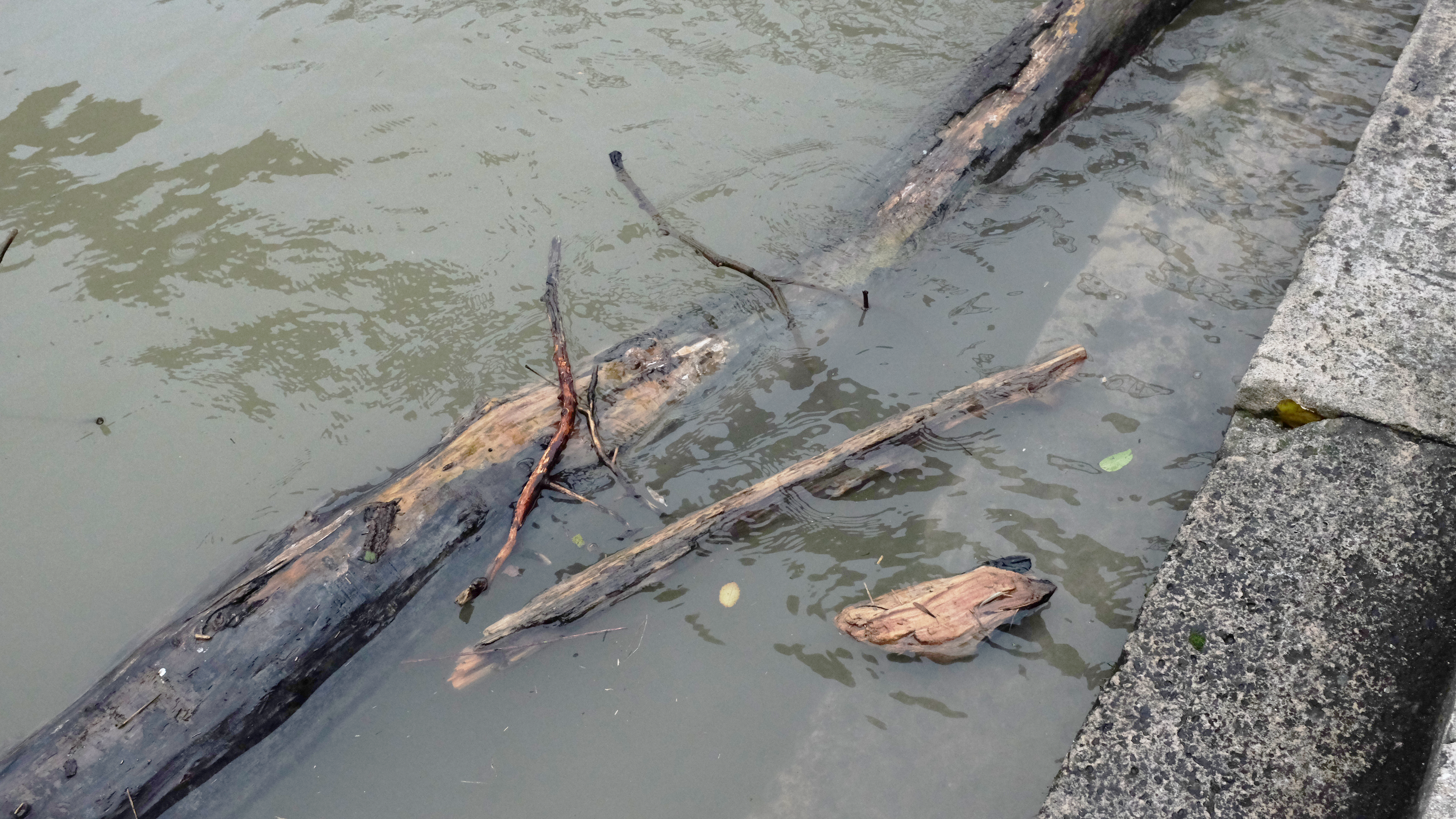
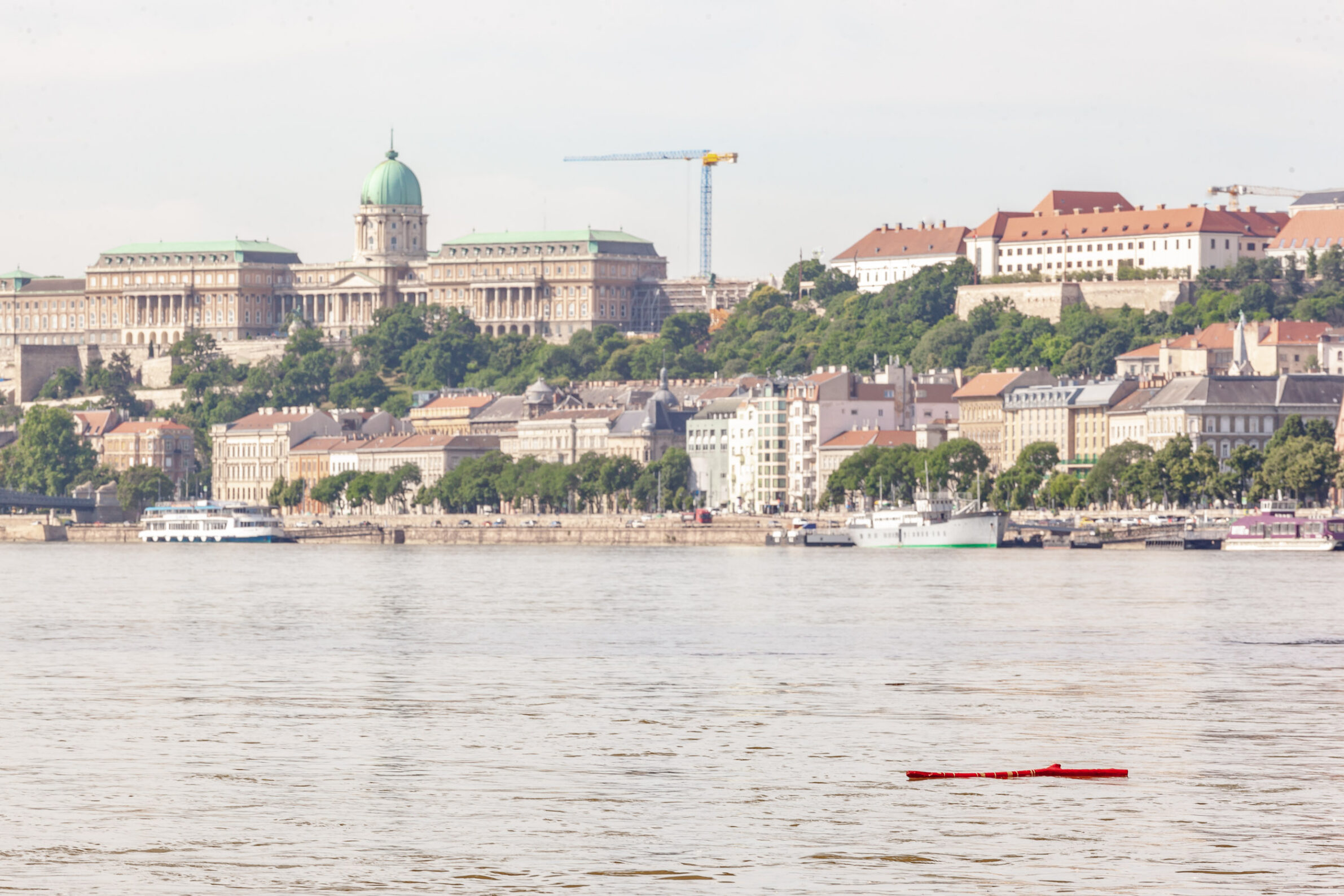
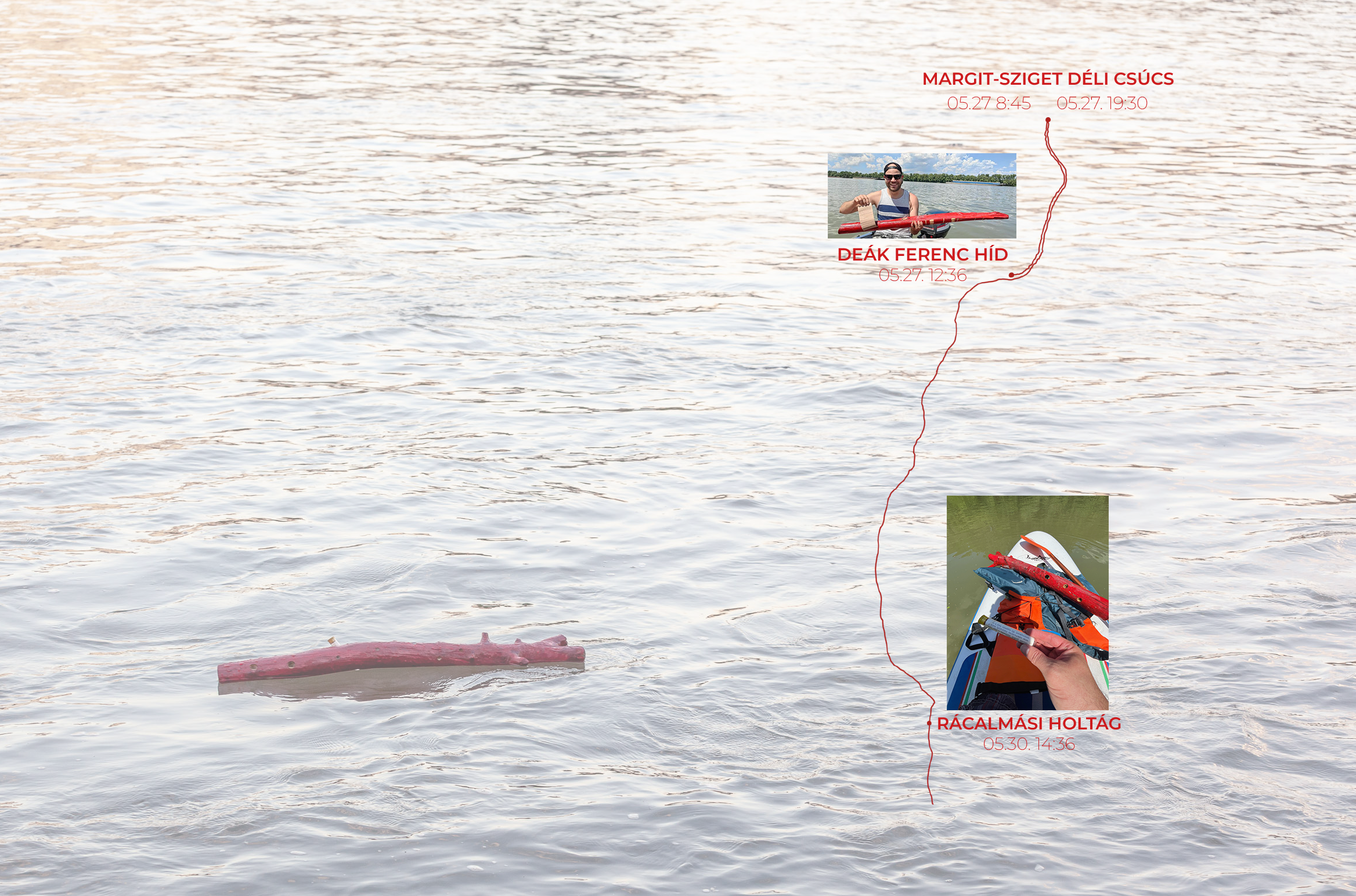
DUNA.POSTA is an experimental work, the significance of which is synthesized on the intellectual level, as well as in the active act of processing and setting off, the formal appearance is only a consequence of the creative process. I see the driftwood handcrafted with analog methods as message carriers.The possibility of the project is that someone else can gain insight into the world of the person floating the message, to whom the natural medium of the Danube throws the content launched at their feet. In the act of releasing, letting the message flow, release, hope, the past and the future plane of time appear at the same time, thus connecting two or - by continuing to float the driftwood - more strangers, between whom the Danube mediates as a natural medium, and outlines a spontaneous, imagined micro-community.
Julianna Skrabák
My name is Julianna Skrabák. I am an Architectural Designer based on Budapest, currently working at Budapesti Építőművészeti Műhely. I studied the fundamentals of architecture at University of Debrecen, where we founded DEMŰHELY, a self-organized community with architecture events. I continued my master studies at Moholy-Nagy University of Art and Design (MOME). I am highly interested in the enclosed spaces required and “something” between the outside and the inside, the boundaries of architectural design and the transitional spaces. I am a consultant at the University of Debrecen, where I strive to engage in a dialogue with students that allows us to get to the heart of the matter together every single time. I view architecture as a significant public matter that can be created collectively, contingent upon the past, the environment, the situation, the function, and the participants. Personal and independent in different scale.
Contact
skrabakjulianna@gmail.com
Powered by