


Marcell Korhán, Hungary, 2026
Nominator: Orsolya Kern
Nominator's statement
Marcell Korhán earned both his BSc (2022) and MSc (2024) degrees at the Department of Architecture of the University of Debrecen. His distinguished diploma project and thesis, titled "Unfolding Space.
Debrecen", was a continuation of his research on "Urban Acupuncture", which won 1st place at the institutional Scientific Students' Associations Conference.
He places a strong emphasis on architectural community building, as well as physical spatial experiments and installations. This is evidenced by his role as a co-founder of the Architecture Students' Workshop of Debrecen (DEMŰHELY). In 2022, under the direction of the Fuzzy Earth collective, he collaborated on the
creation of a public concrete installation named Shimmer and in 2023, he participated in the summer architecture camp organized by the department. In 2024, his installation titled "Elevation" (Emelkedés) was
featured at the AUTOPOESIS exhibition.
At the Cívis Architectural Values ideas competition (2025) organized by the Hajdú-Bihar County Chamber of Architects, his joint entry with Julianna Skrabák won first place.
As an early-career architect, he has collaborated with the dmb, D4, Archiko,andKompaktarchitecture studios. With the latter team, he won a Purchase Prize in the design competition for the Renewal of the Wolff Palace in Debrecen in the autumn of 2025.
Following the completion of his studies, he serves as an invited design consultant at the Department of Architecture of the Faculty of Engineering at the University of Debrecen.
NOVELLA QUARTER
In collaboration with Julianna Skrabák
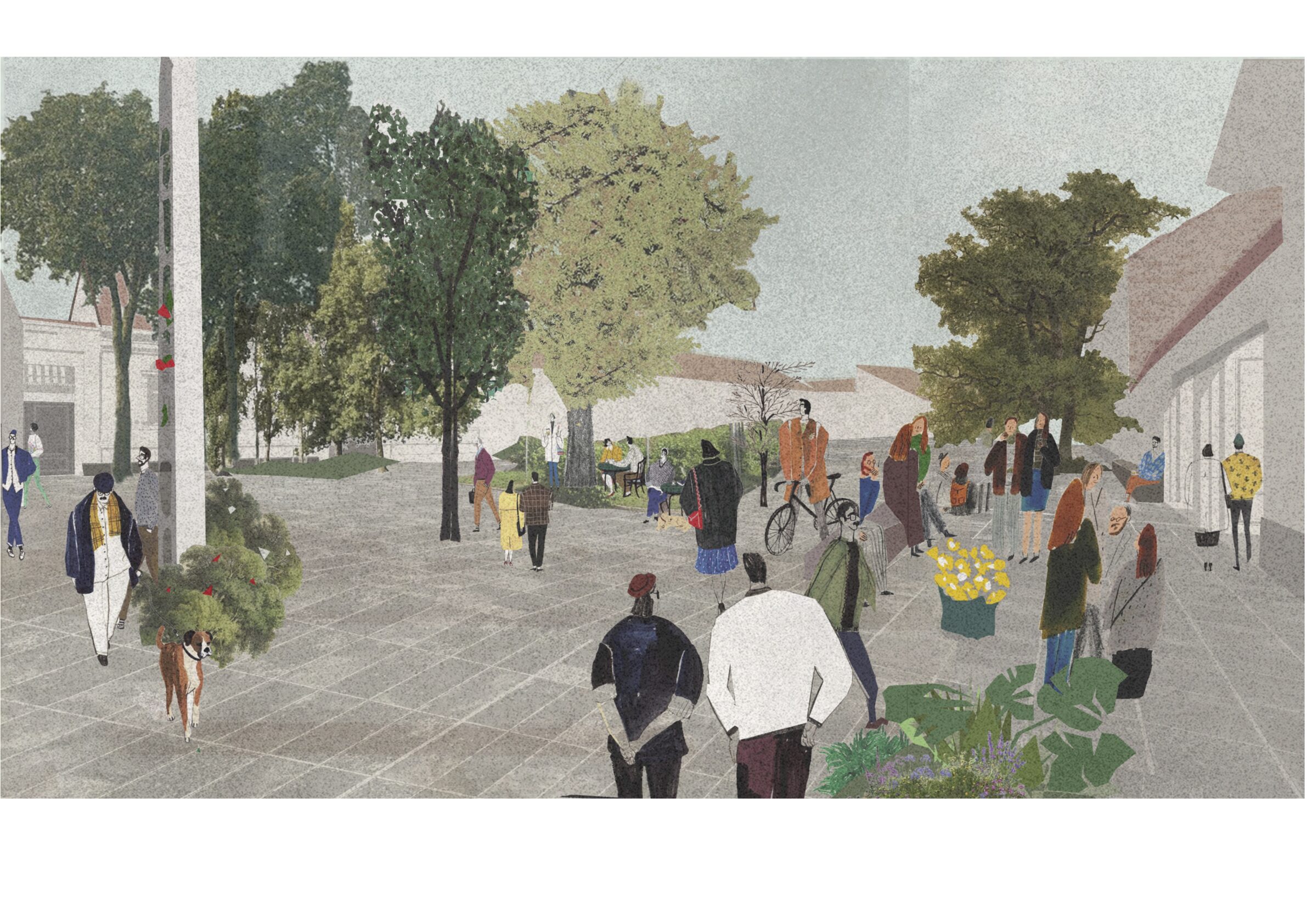
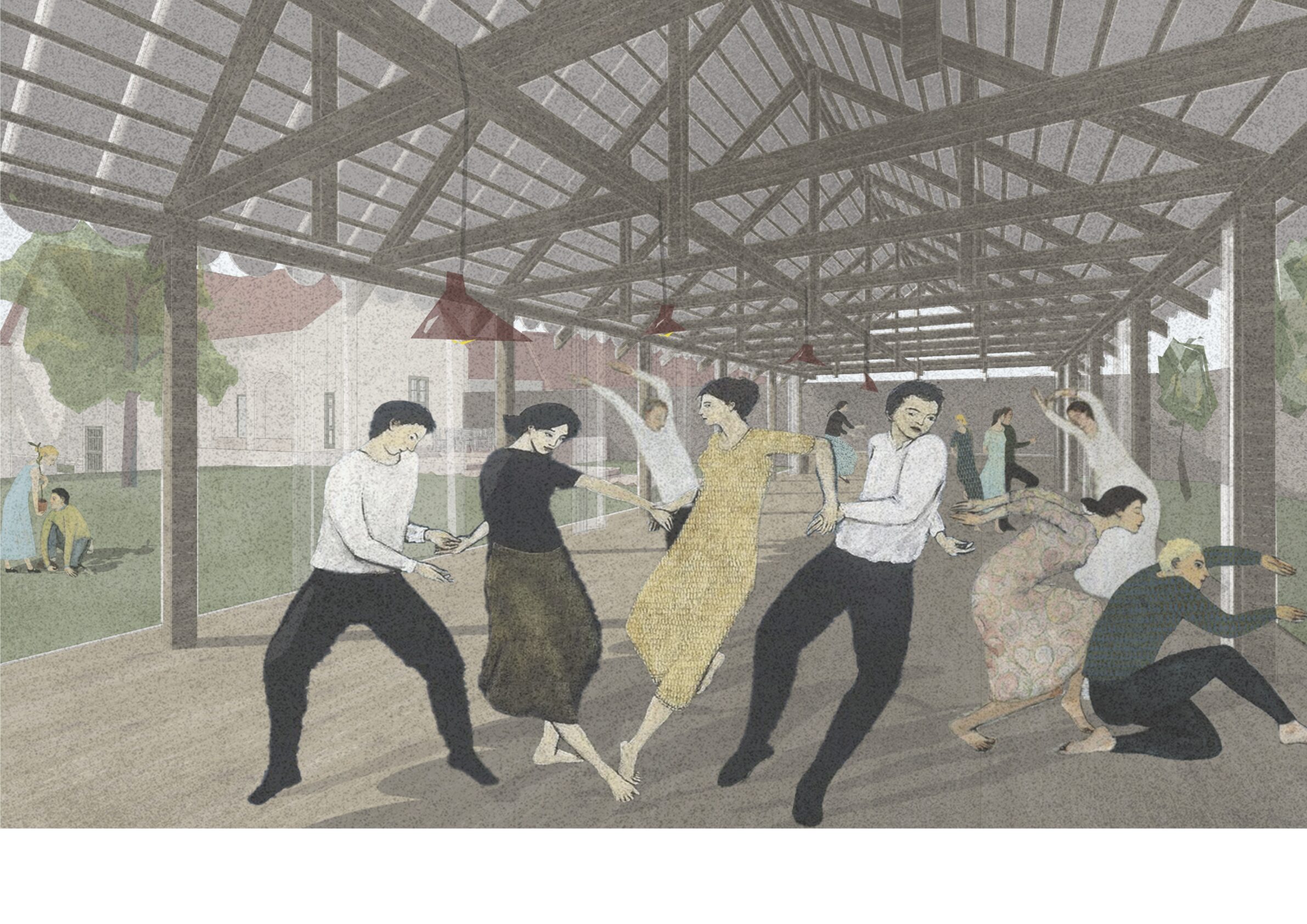
Our proposition for the competition was to define how architects can provide their knowledge for the community outside of their design desks. We believe that architects can bear the responsibility of a coordinator in many cases. We presented a design solution where architecture is not just about spaces and forms, but rather focuses on the collaborative needs. We believe the first step to reactive an urban fabric to its cultural meaning, is to first recreate the everyday city life itself. We made contact with small scaled cultural groups of Debrecen, who have limited access to spaces in the city.The message was clear, we need to use some sort of collaborative sufficient architecture, which could help these cultural groups to have continual access to space, so this cultural quarter can be a starting point for the future.
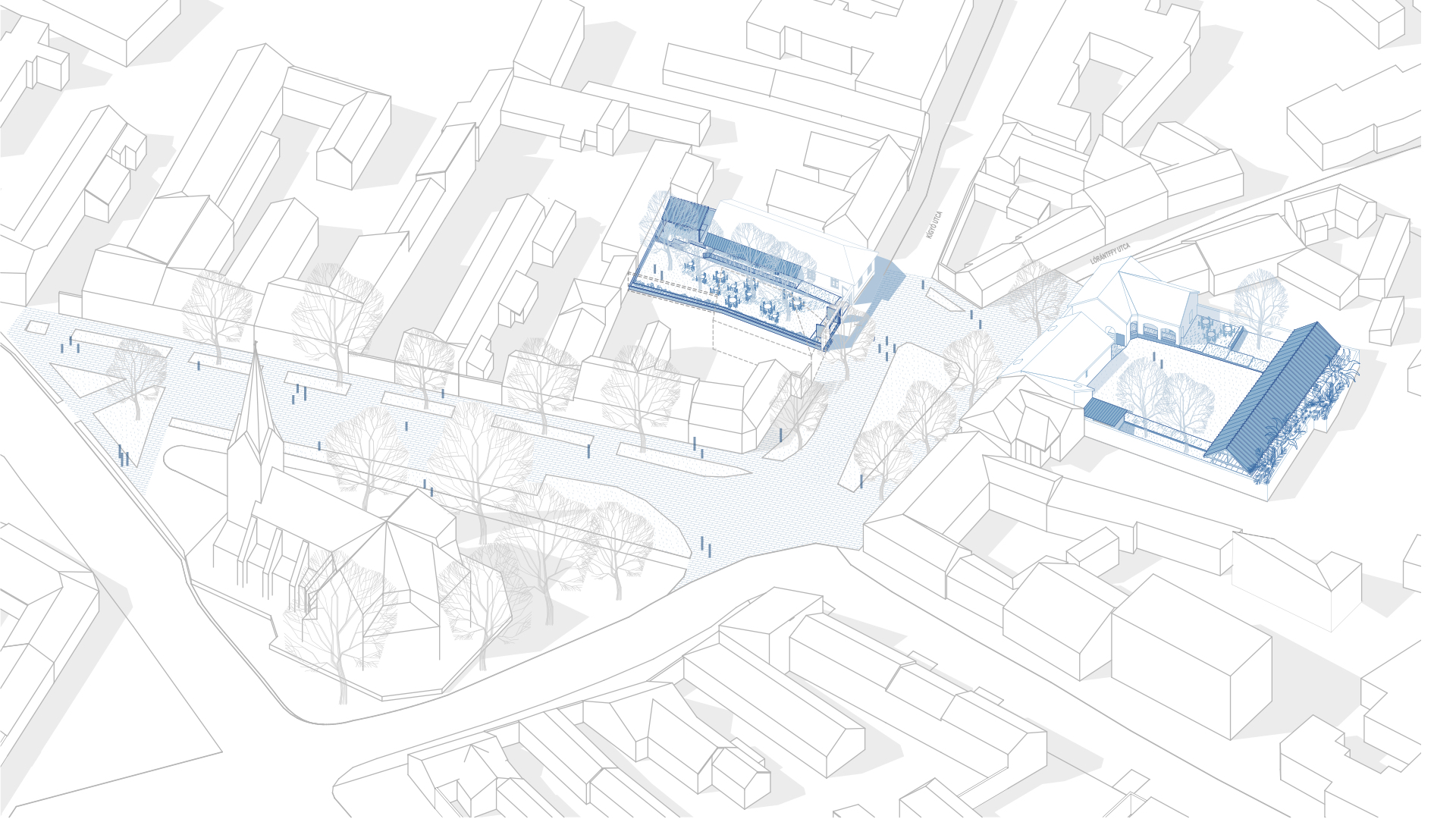
URBAN SPOTTING
with DEMŰHELY
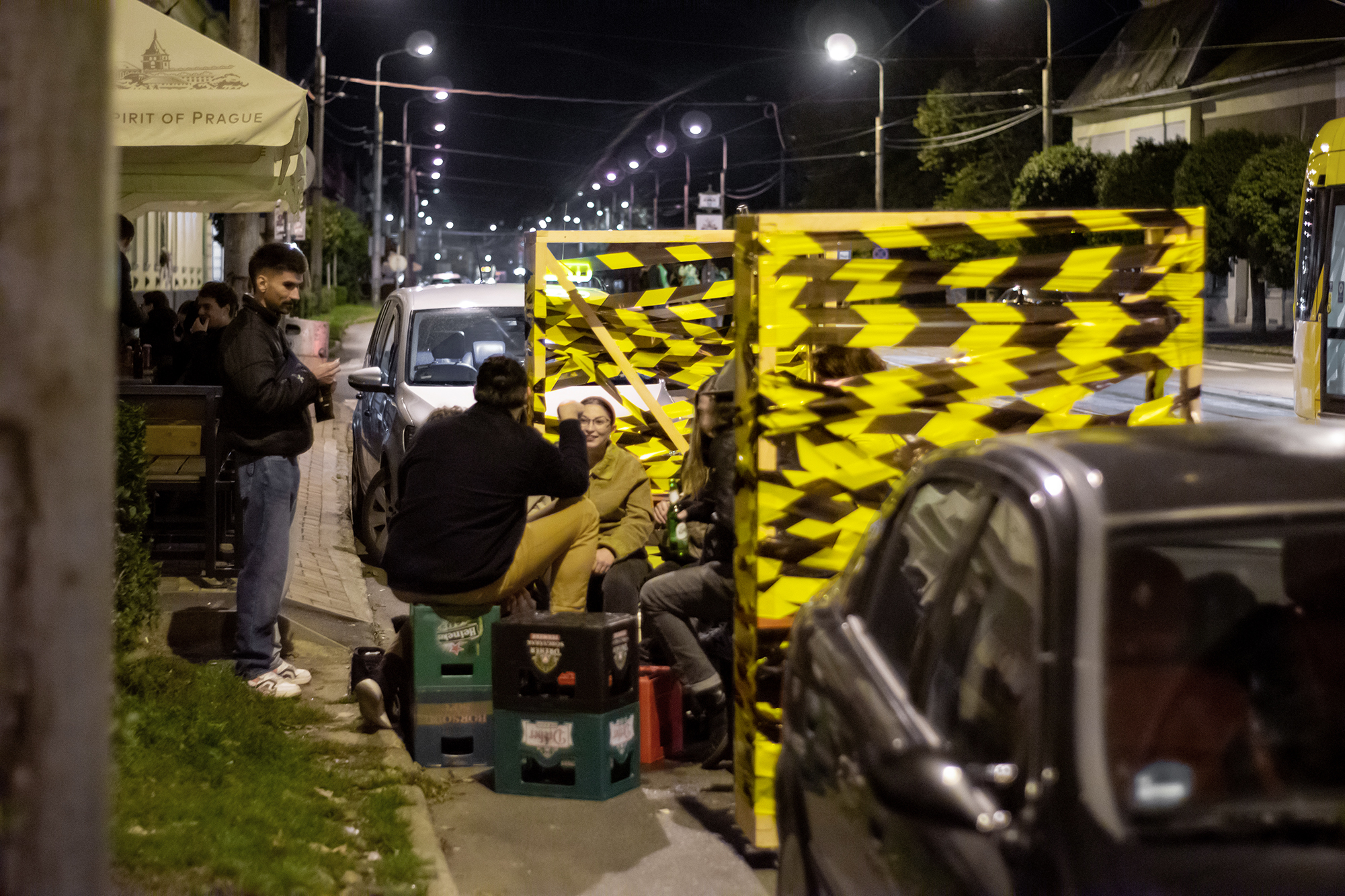
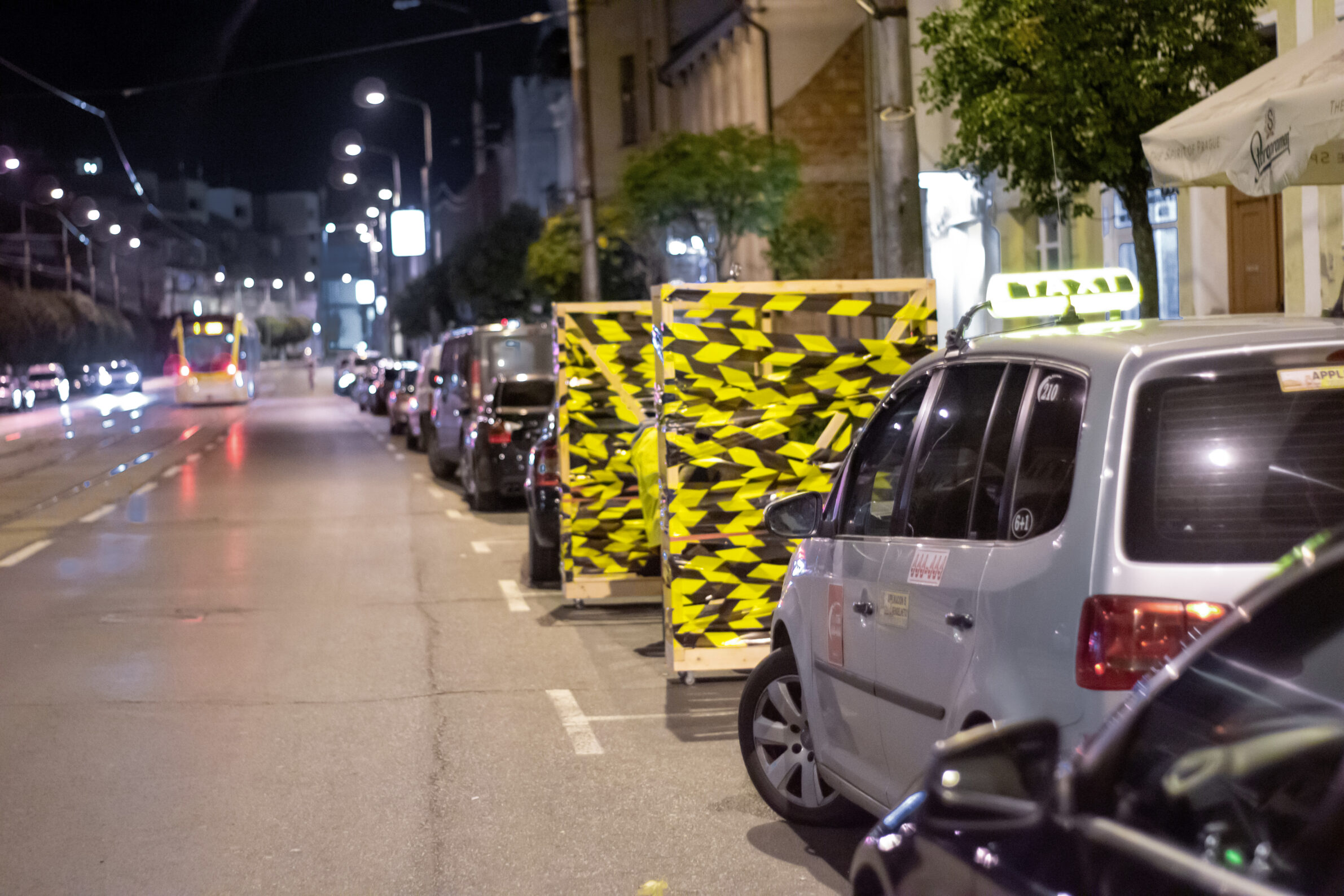
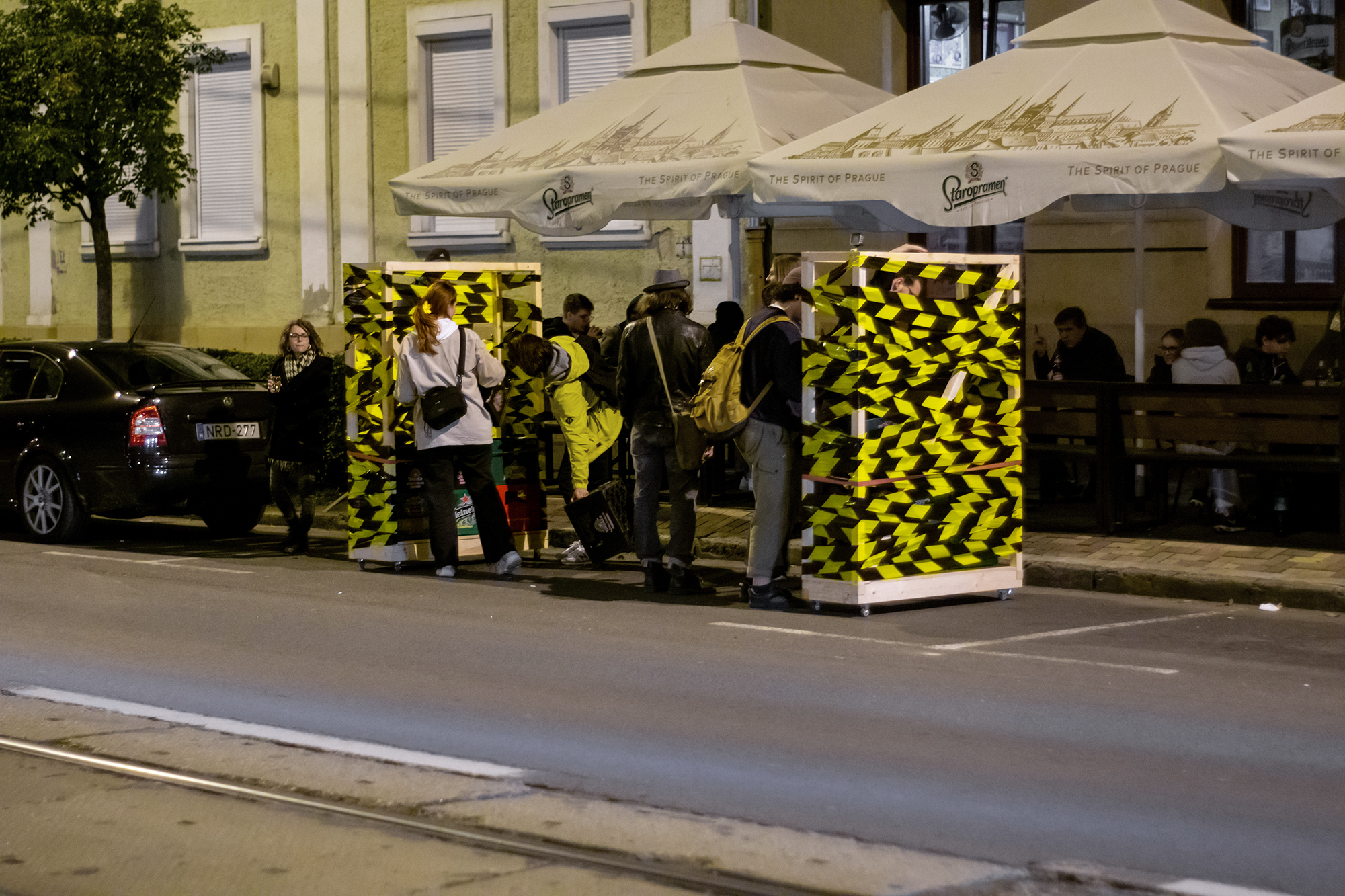 With the disappearance of our physical spaces, we must devote more and more energy to protecting our own collective microenvironments, as globalization increasingly reinforces individual interests.
Active engagement within the city is an essential form of intervention in terms of presenting alternatives. It involves identifying new needs and shaping participatory planning. The resulting urban activity affects people’s psychological perceptions, which needs to be recorded and analyzed. Active engagement with the urban environment is unavoidable, because in the long term this approach is capable of responding to the rapidly changing dynamics of the present and future world.
Urban acupuncture is a strategy that can handle these issues in a sufficiently dynamic and flexible manner, and can be implemented without leaving physical scars on the urban fabric.
PROJECT:SCALE
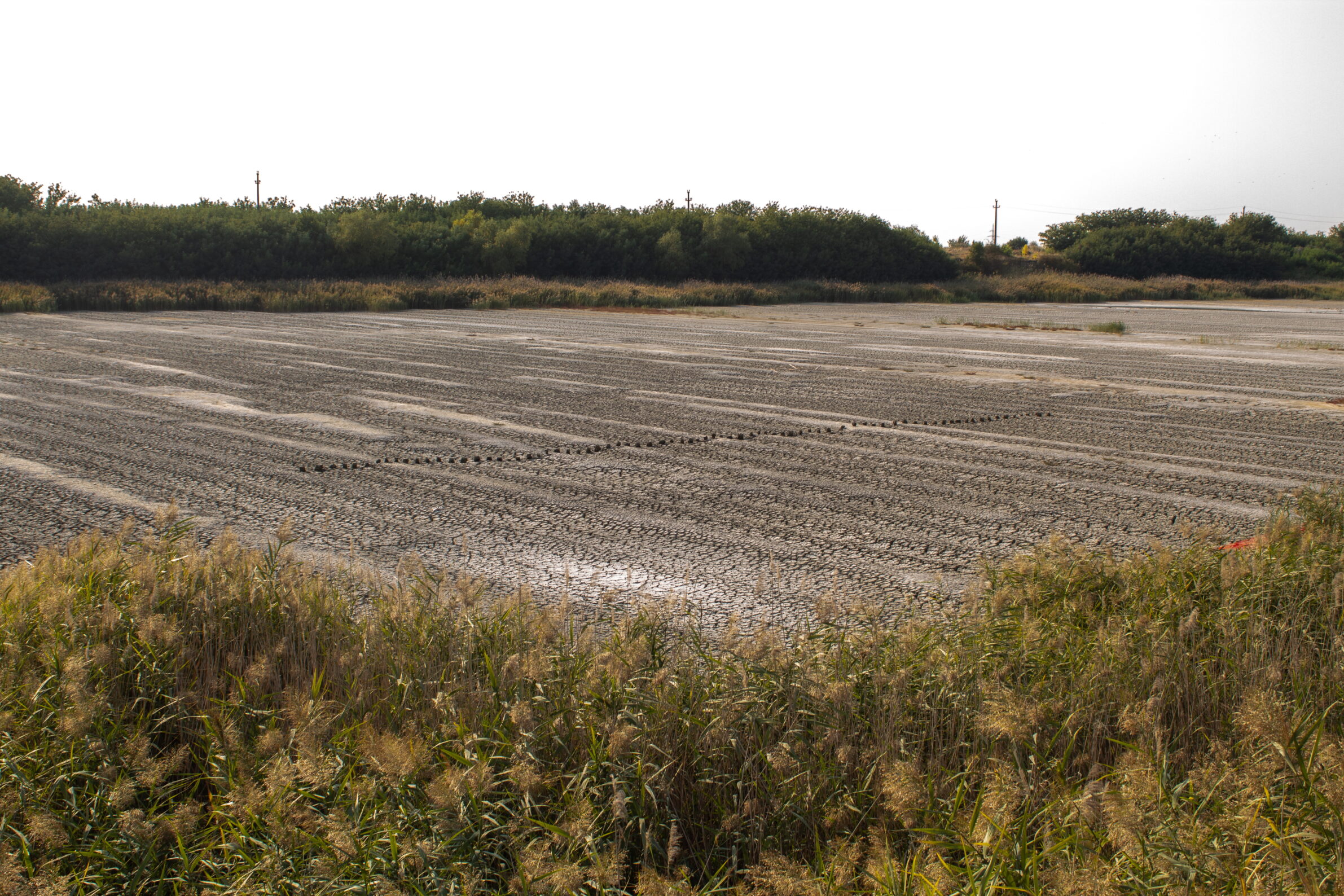
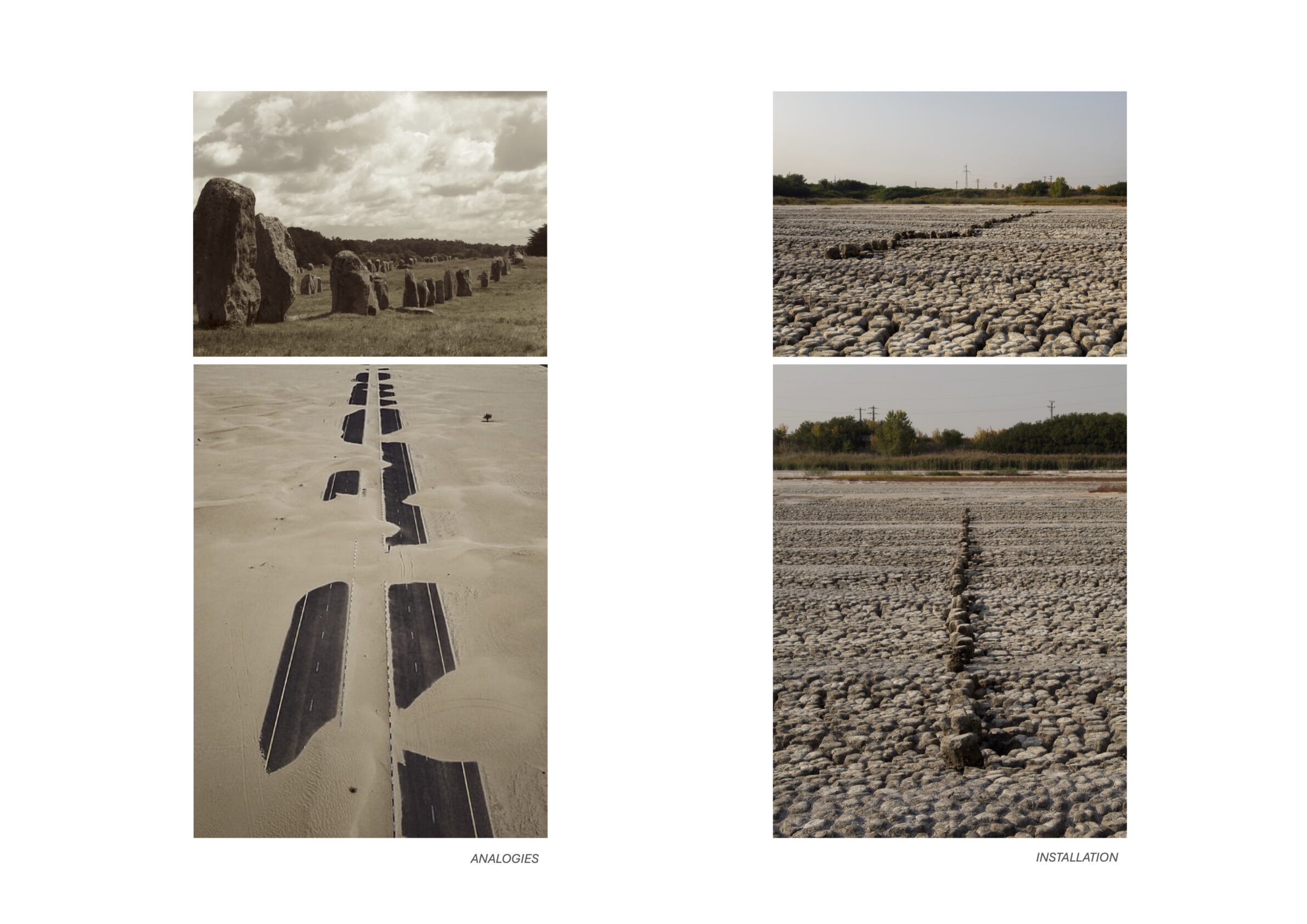
The water circulation of Jimbolia quarry lakes in Romania is ever changing. Originally designed for clay production, the basins have gradually filled with water over time, turning into fully formed lakes. Due to their enormous size, the qualities of space-scale are imperceptible.
As the water recedes, the soil of the lake basins breaks into micro-sized forms like islands, which can be easily extracted and moved aside.I have created a line of 100 pieces per metre, which is therefore exactly 100 metres long. The straight line, not only represents the space-scale of the lake, but also the space-landscape of the lake. It also reveals the quality of the material of the lake, which traces the physical transformation of the landscape.
The installation is exposed to time and change by the erosion of its natural material, and thus disappears, just as nature heals itself.
The phenomenon persists until the fragments, once suggestive of human interventions, are disappear completely.
Marcell Korhán
As an architect, I am highly intrested in our collective cultural surroundings. Our past, present, and future, therefore the cohesion between these elements.
Personally I believe in contextualized architecture whether it is integrated with arts, spatial experimentation, the existing urban fabric or small scale urban interventions.
The section of these definitions, represents the everchanging, continuious human values, which leads us to understand the world and culture we live in.
I strongly beleive in the power of communities so, we (Julianna Skrabák, Diana Bodorkos, Katalin Kiss) founded DEMŰHELY (Debrecen Architecture Students' Workshop) in 2020 which is a self organized, community based, creative workshop. The workshop still lives on with new people and new perspectives as one of the most important students’ collective at University of Debrecen.
Enchance acutality,
Believe in community,
Trust in humanity.
Contact
marcell.korhan42@gmail.com
Powered by