


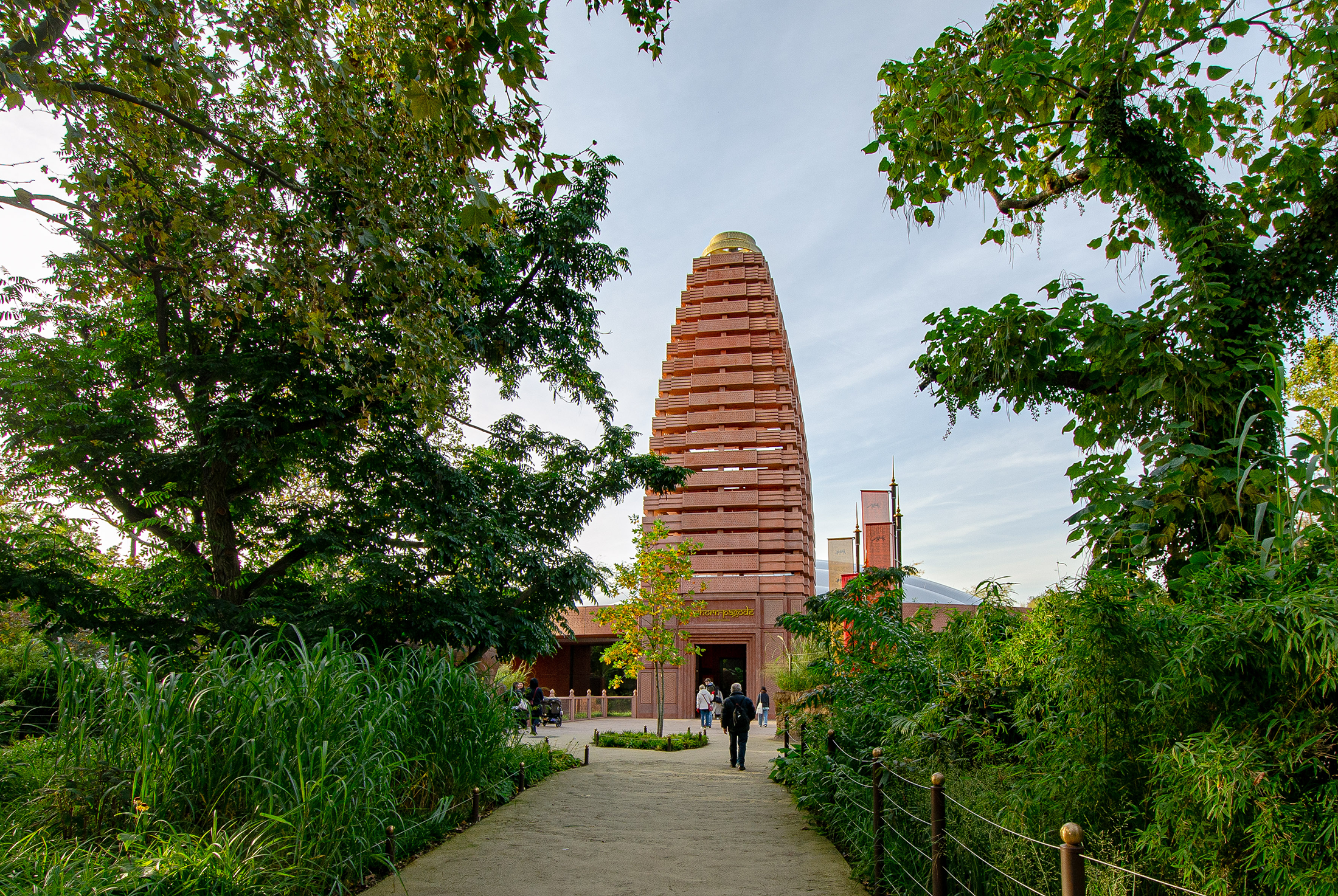
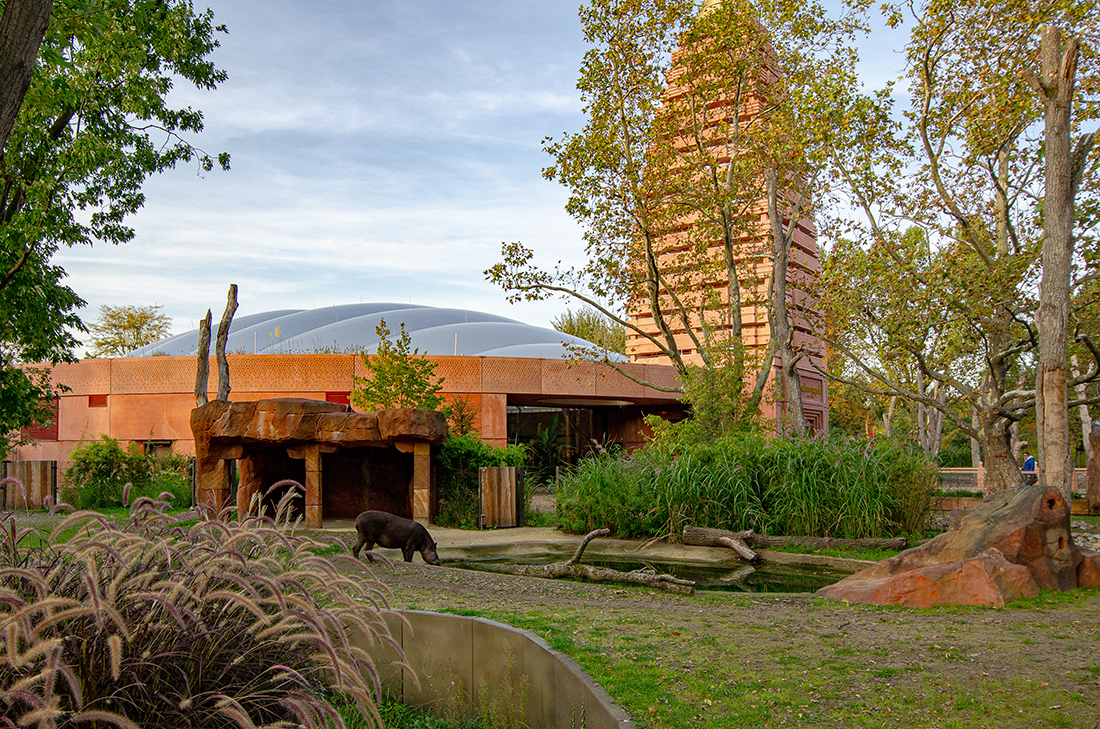
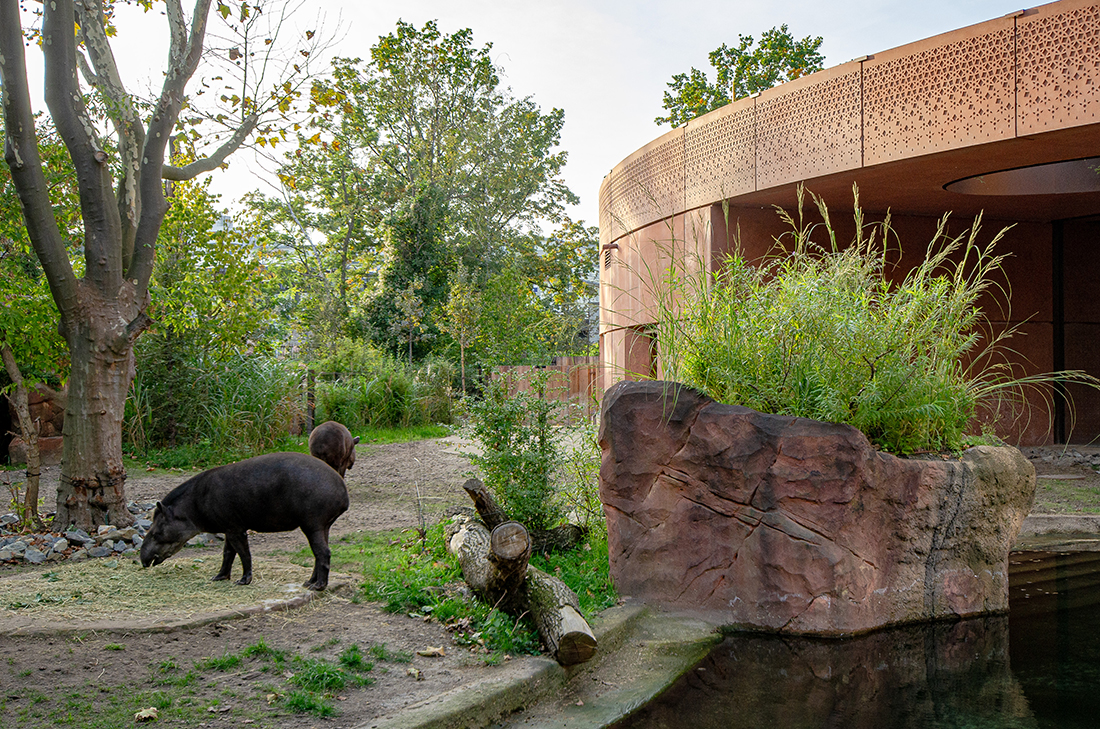
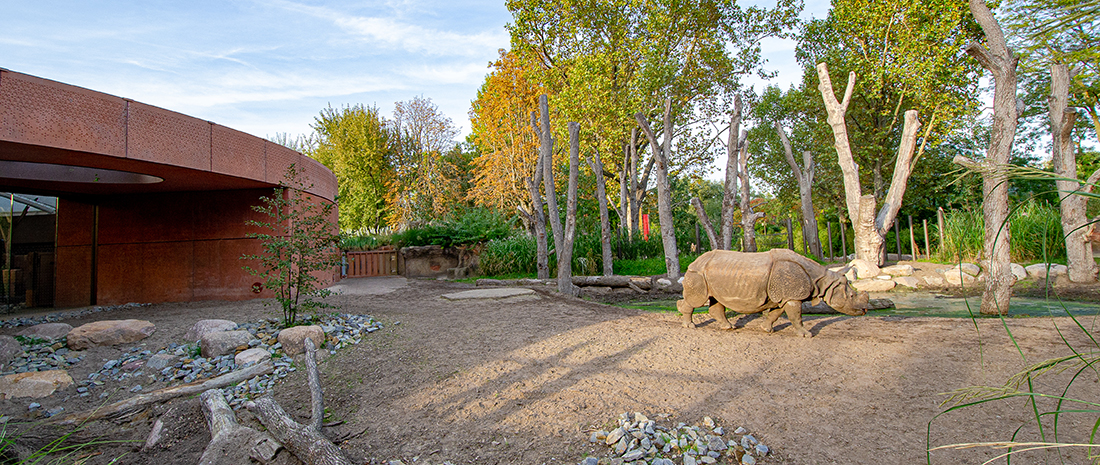
The RHINO PAGODA in the Berlin Zoo is the new home for Asian rhinos, warty pigs and tapirs on an area of 14.000 m².
The goal of the architectural design for the Rhino Pagoda was to create a landmark for species conservation and the Berlin Zoo. The new facility stands for modern and transparent animal husbandry. Following a biodiversity approach, the animals can be experienced in the context of their natural ecosystems with complementary species. Spatial boundaries between landscape and architecture as well as between visitors and animals are visually dissolved.
The overall design draws on the tradition of the Berlin Zoo and its historical buildings, but in a contemporary interpretation.
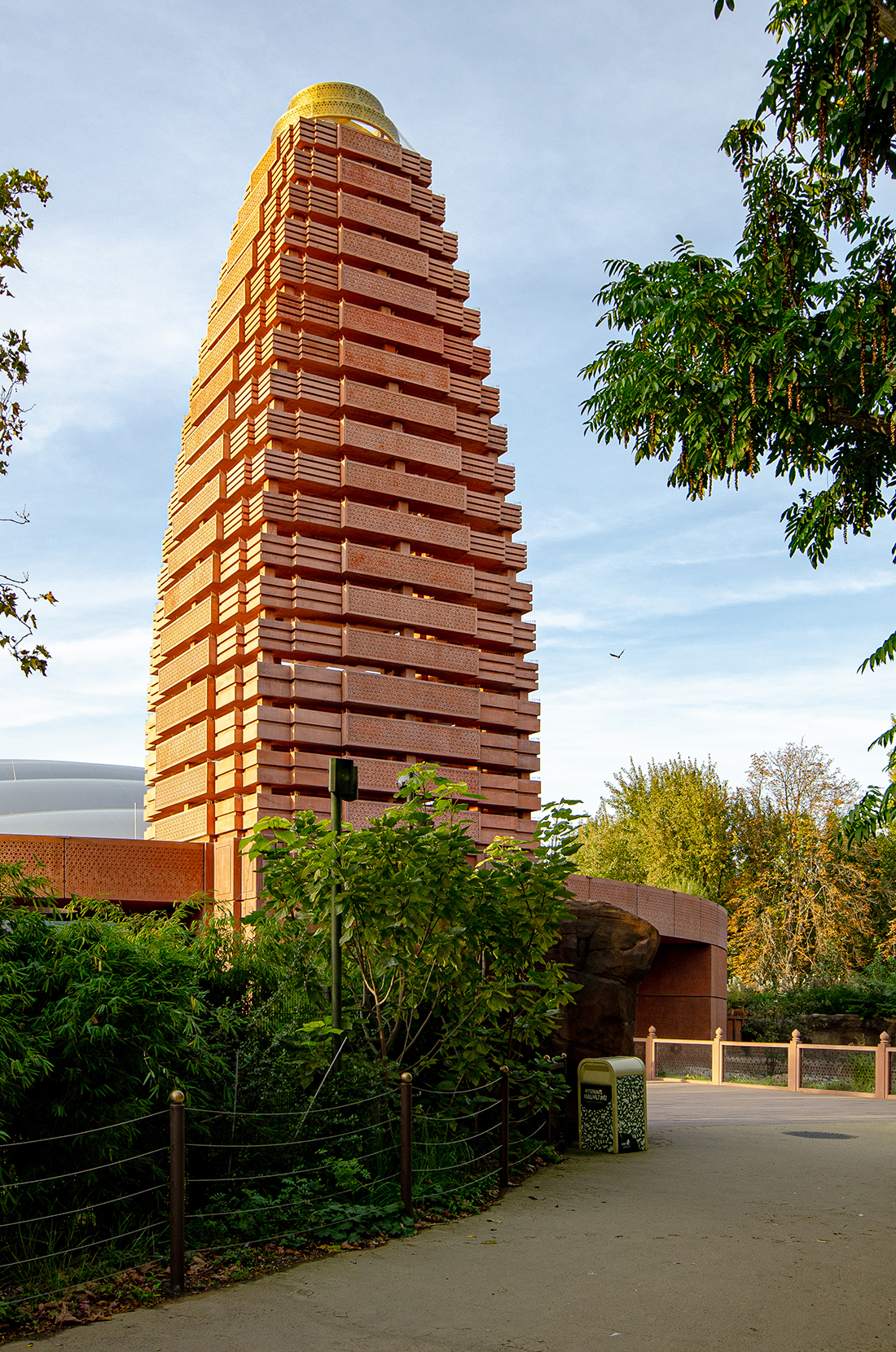
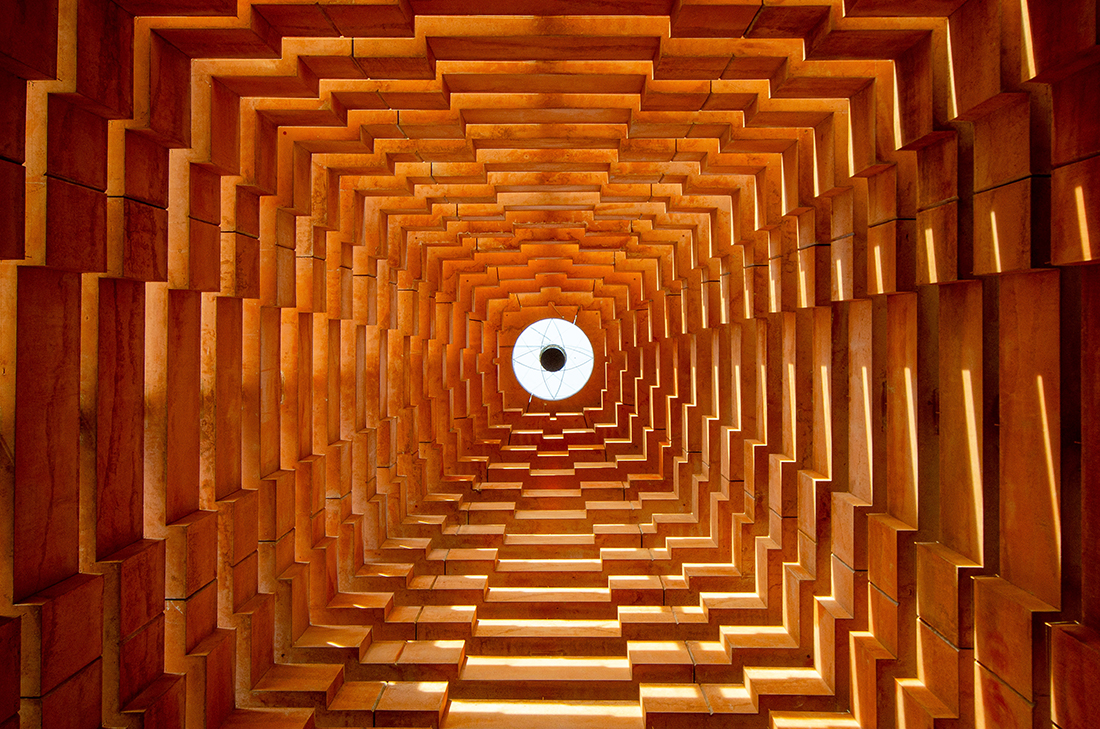
The building is divided into two parts: the immersive visitor show house with integrated technical and operational areas and the temple tower as entrance and exhibition area. The 25 m high, open-air tower pays homage to the guiding principles of Indian architectural semantic with its formative, cultural elements, the materiality and the play of light and shadow. Specially developed ornamentation appears on the tower and elsewhere. The landscaped immersive indoor visitor area allows the visitors up close engagement with the animals, including a world’s first underwater viewing area for rhinos.
In terms of sustainability, an insect-friendly planting concept, solar thermal energy and a water technology that significantly reduces water consumption by filtering and recycling in the basement are important features of the design. The interior largely dispenses with a floor slab. The roof area is about 2.050 m², integrating 300 m² of intensive roof planting. Rainwater is collected in two underground cisterns (60 m³) and used for automatic irrigation of the planting areas. A circular ETFE roof (span 37 m/steel construction) allows daylight utilization as well as allowing UVA and UVB transmittance for an ideal environment for plants, animals and visitors. Thermal simulation optimizations eliminated the need for air conditioning and two waterfalls contribute to the ideal humidity.

Details
Architecture
dan pearlman Experience Architecture; Kieran Stanley, Anna Buttkus, Björn Persche
Client
Zoologischer Garten Berlin
Year of completion
2023
Location
Berlin, Germany
Total area
14.000 m2
Site area
1.500 m2
Photos
BNB
Powered by