


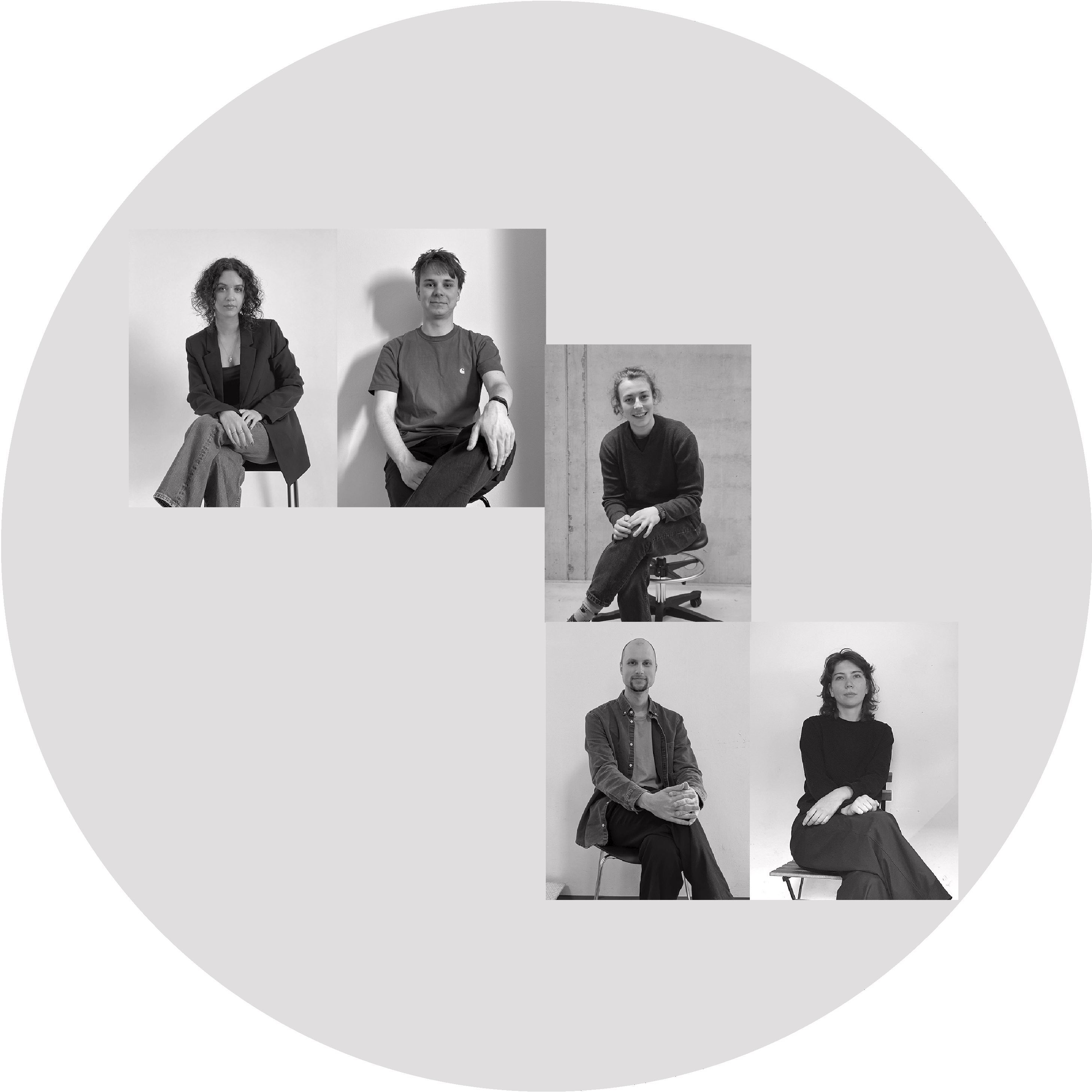
Zoja Čepin; Marko Gorenak; Jaka Kordiš; Klara Maček; Anja Tudjan, Slovenia, 2026

Nominator: Barbara Prinčič
Nominator's statement
The mentioned group of students managed to develop three applications in just three months for a Slovenian company operating in the production and dispensing of concentrated juices and other beverages for the HoReCa sector. The project addresses two key challenges faced by the company: the return of expired juices back to the main production facilities and their disposal, as well as the extensive use of polyethylene (PE) film in pallet packaging, where up to 58 meters of film are used per pallet.
Because these are concentrated juices with a high sugar content—whose natural property is stickiness—the idea emerged to process the waste syrup into an adhesive. Due to their high sugar content, these concentrates are not suitable for composting. Based on this, a development plan was created for three applications: an anti-slip coating, a liquid adhesive, and glue sticks.
Through in‑depth experimental work, carried out mostly in the Green Lab of the ROG Centre, the students succeeded in developing all three desired applications within a short time and presented them successfully to the company, which is already building on their work with its own market‑oriented development.
ANITO - BIOADHESIVES FROM EXPIRED SYRUP
Nektar Natura, the largest syrup and juice producer in the EU, throws away around 10,000 liters of expired syrup every year. To ship their product, each pallet gets wrapped in up to 78 meters of plastic stretch film. These two facts sat side by side, unconnected.
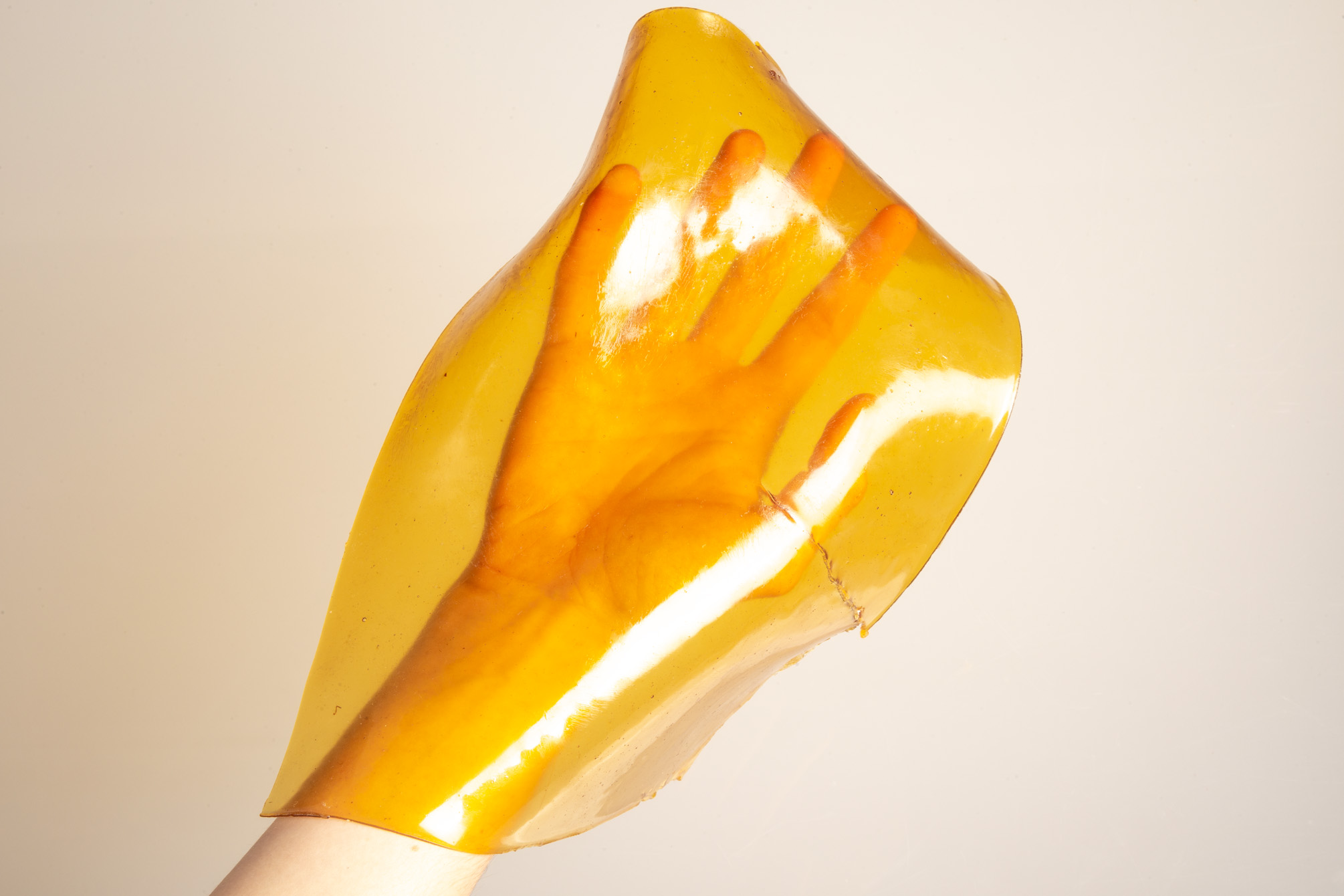
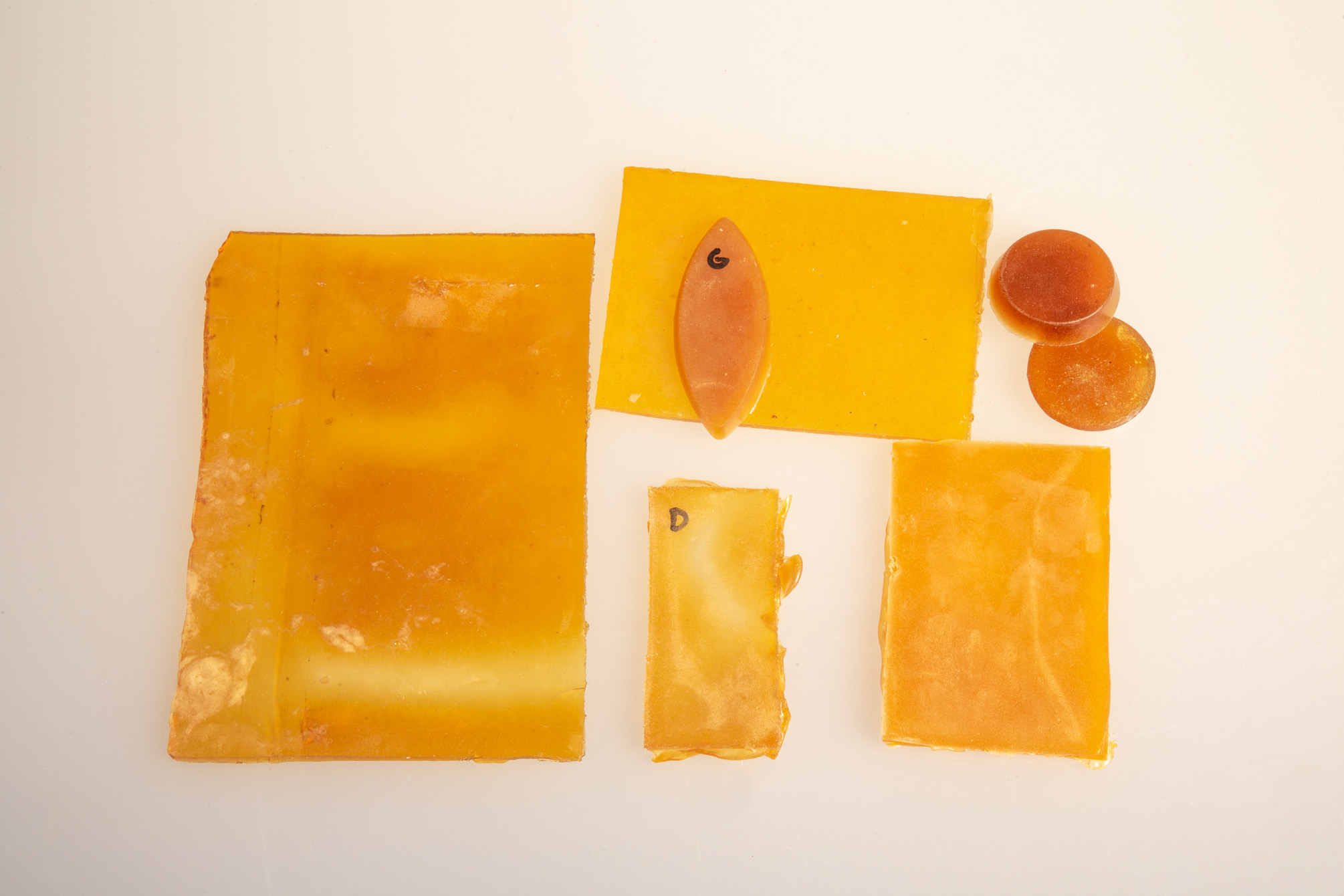
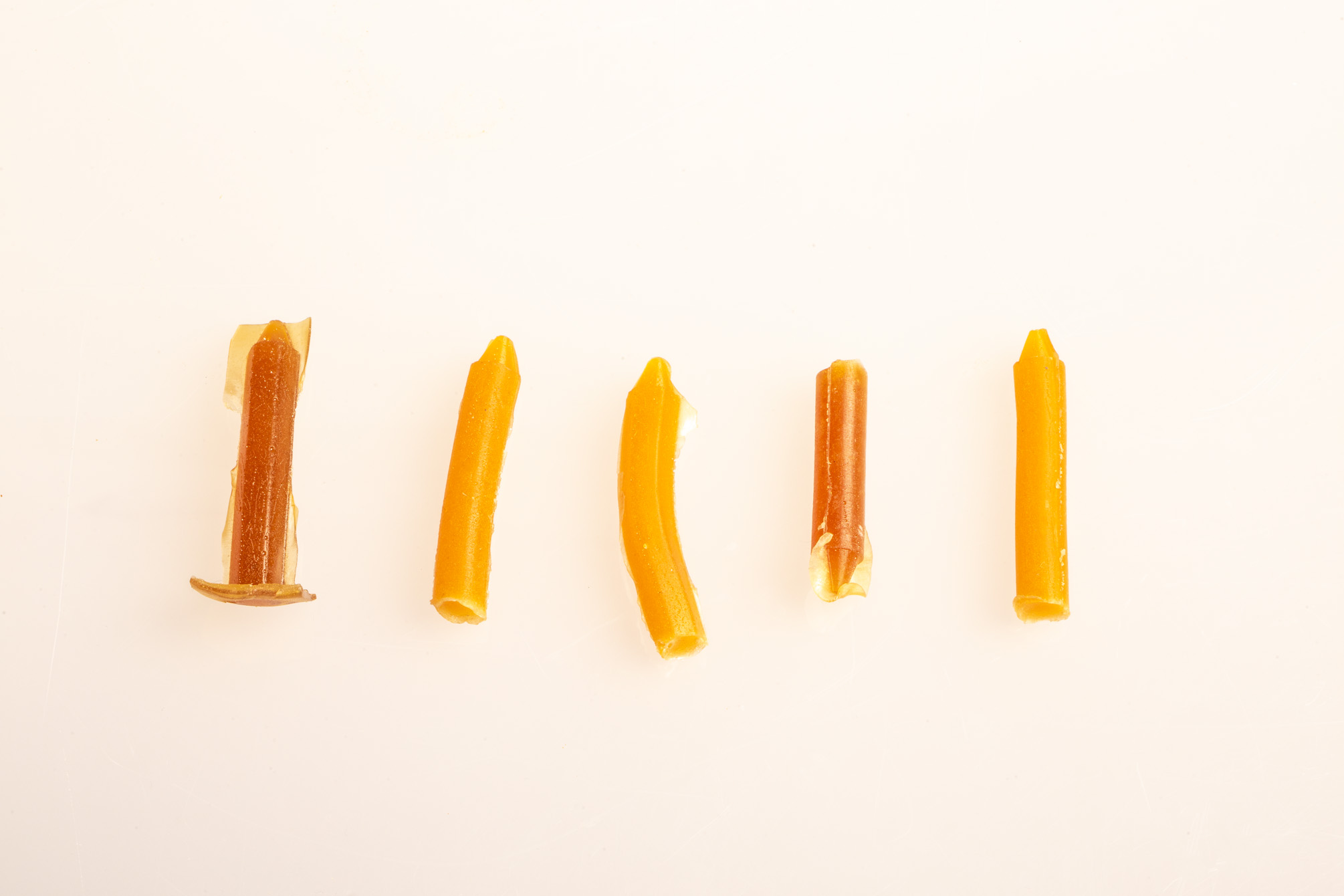
The project started with a simple question: what if the syrup wasn’t waste? Through hands-on material testing, we cooked, cast, and reformulated expired syrup with natural additives: gelatin, gum arabic, starch, into something useful. The result is a set of three bio-based materials: a liquid adhesive that holds stacked cardboard boxes together during transport, an anti-slip pad that sits between pallet layers, and an experimental hot-glue stick variant. The adhesive bonds well, peels off clean, and leaves no residue on the cardboard. Used together, plastic film consumption drops significantly. Everything comes from within the company’s own production. No new materials, no outside inputs, just a waste stream finally put to work.
Team: Zoja Čepin, Marko Gorenak, Jaka Kordiš, Klara Maček and Anja Tudjan
BIODESIGN CHALLENGE 2025
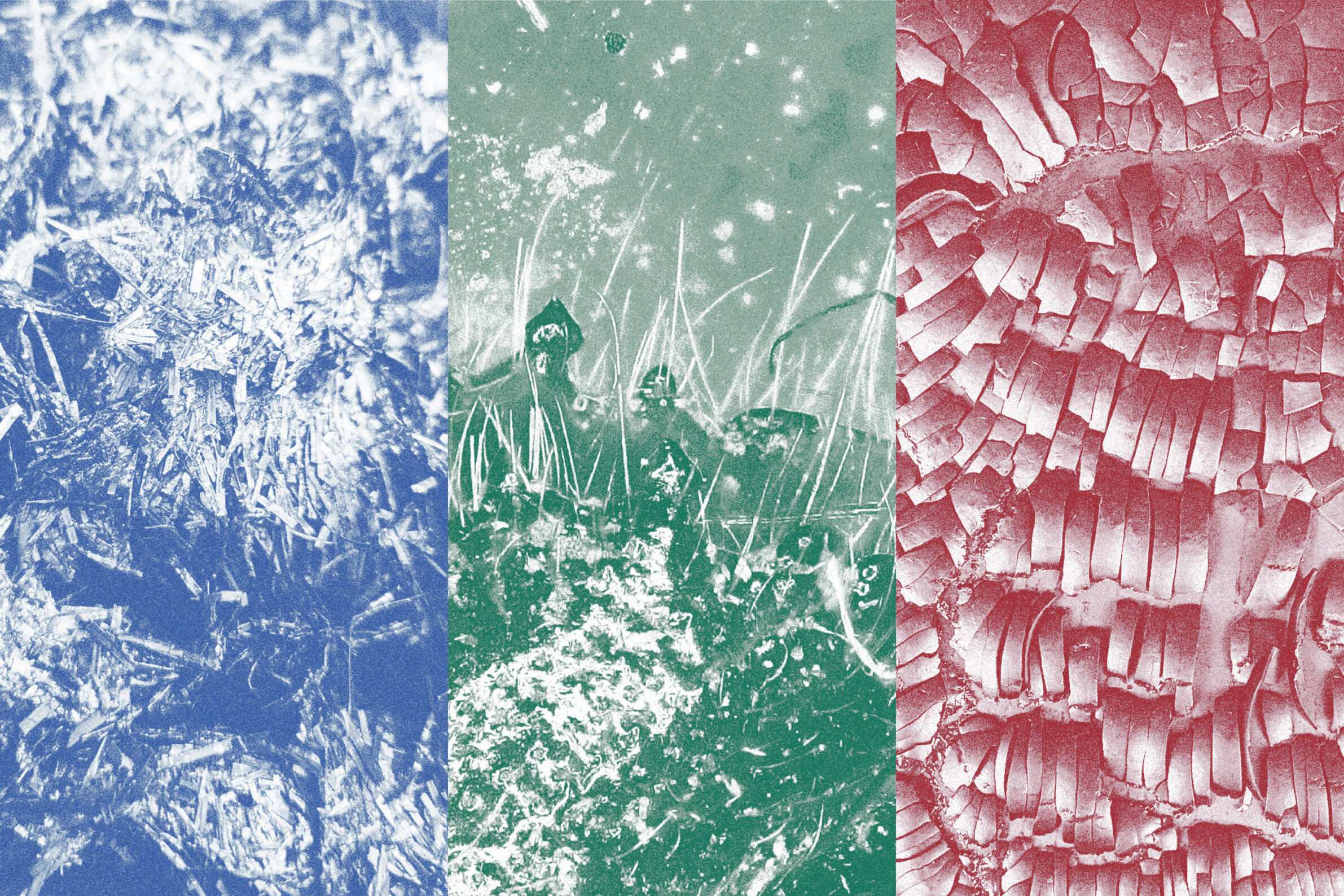
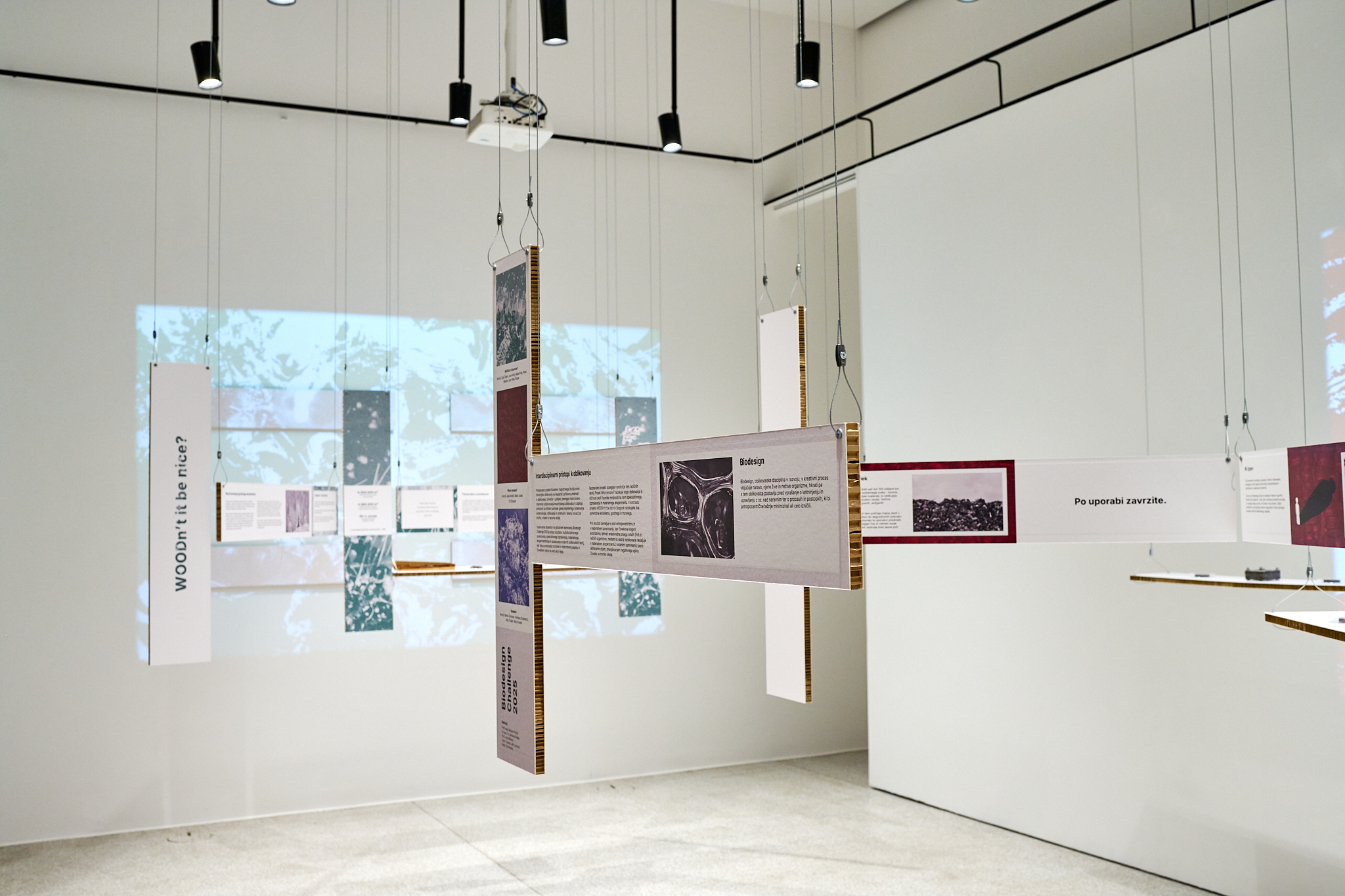
The group’s participation in Biodesign Challenge 2025 brings together speculative inquiry, material experimentation, and contemporary design theory, centred on the entangled relationship between human activity and the living systems around us. The results are three biodesign projects, each taking a different ecosystem as its starting point. They move beyond the conventional role of the industrial designer, opening space for critical reflection on the relationship between biotechnology, design, and art.
What Remains? approaches human mortality as a design and ethical question, developing a biodegradable burial urn from blood and hair. It was presented among finalists at Parsons School of Design and MoMA in New York.
WOODn’t it be nice? examines the bark beetle as a symptom of monoculture forestry, grounded in post-anthropocentric thinking where the human role in ecosystems is equivalent, not authoritative.
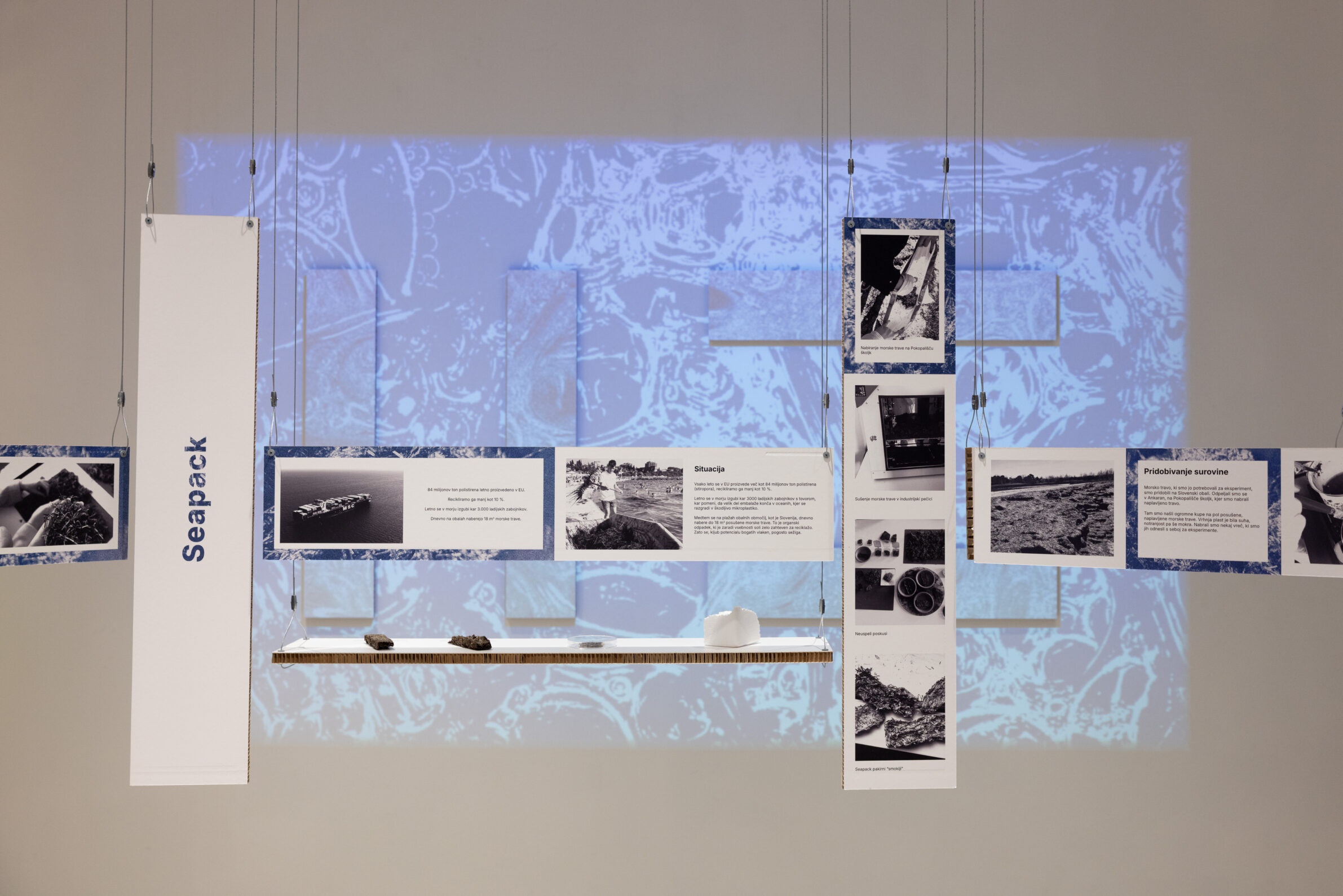
Seapackprocesses coastal seagrass waste into a biodegradable alternative to petroleum-based packaging foam a material that can safely return to the environment it came from.
Team: Zoja Čepin, Umihana Dizdarević, Marko Gorenak, Jaka Kordiš, Jure Kralj, Maša Kralj, Matic Lesjak, Klara Maček, Črt Štrubelj, Leon Rojk Štupar, Anja Tudjan, Nina Vranješ

Zoja Čepin; Marko Gorenak; Jaka Kordiš; Klara Maček; Anja Tudjan
A group of students brought together through the Industrial Design MA program at the Academy of Fine Arts and Design, University of Ljubljana. Coming from backgrounds in multimedia, painting, product, inclusive, and game design, the group approaches industrial design from perspectives that sit outside its traditional boundaries, combining material research with speculative thinking, cultural reflection, and cross-disciplinary making.
Contact
jaka.kordis@gmail.com
Powered by