



Teodora Stojanović, Serbia, 2026

Nominator: Danijela Dimković
Nominator's statement
Teodora Stojanović, M.A, is a designer and teaching assistant at the Faculty of Applied Arts in Belgrade, engaged in courses in the field of interior architecture. Throughout her undergraduate, master’s, and doctoral studies, as well as through her work with students and professional engagements in interior and furniture design, and scenography, she has demonstrated an exceptional ability in creative problem-solving, connecting deeper conceptual meaning with practical project realization. Her master’s thesis, “Library for Dostoevsky – Literature as a Starting Point in Interior Design,” is an excellent example of an interdisciplinary approach, where, through situational analysis and the use of various media, she addressed the context that memorial spaces should embody. Her distinctive creative versatility represents a new approach to spatial design that transcends purely interior solutions. This work was presented at several self-titled solo exhibitions in the form of large-scale models, whose installation simulated movement through the designed space.Her professional engagements, including restaurant interior design, demonstrate her expertise in developing detailed execution projects as well as hands-on involvement in the realization process, from production to installation. Experience gained in a design studio, as well as in a furniture manufacturing company, further contributes to her comprehensive knowledge and practical skills in independently handling complex projects. Her work on scenography for films, commercials, and music videos expands her range of knowledge and skills, particularly in creating fast, efficient, and visually effective solutions using lightweight materials suitable for assembly and disassembly.
MUSEUM OF FYODOR DOSTOEVSKY - LITERATURE AS A STARTING POINT IN INTERIOR DESIGN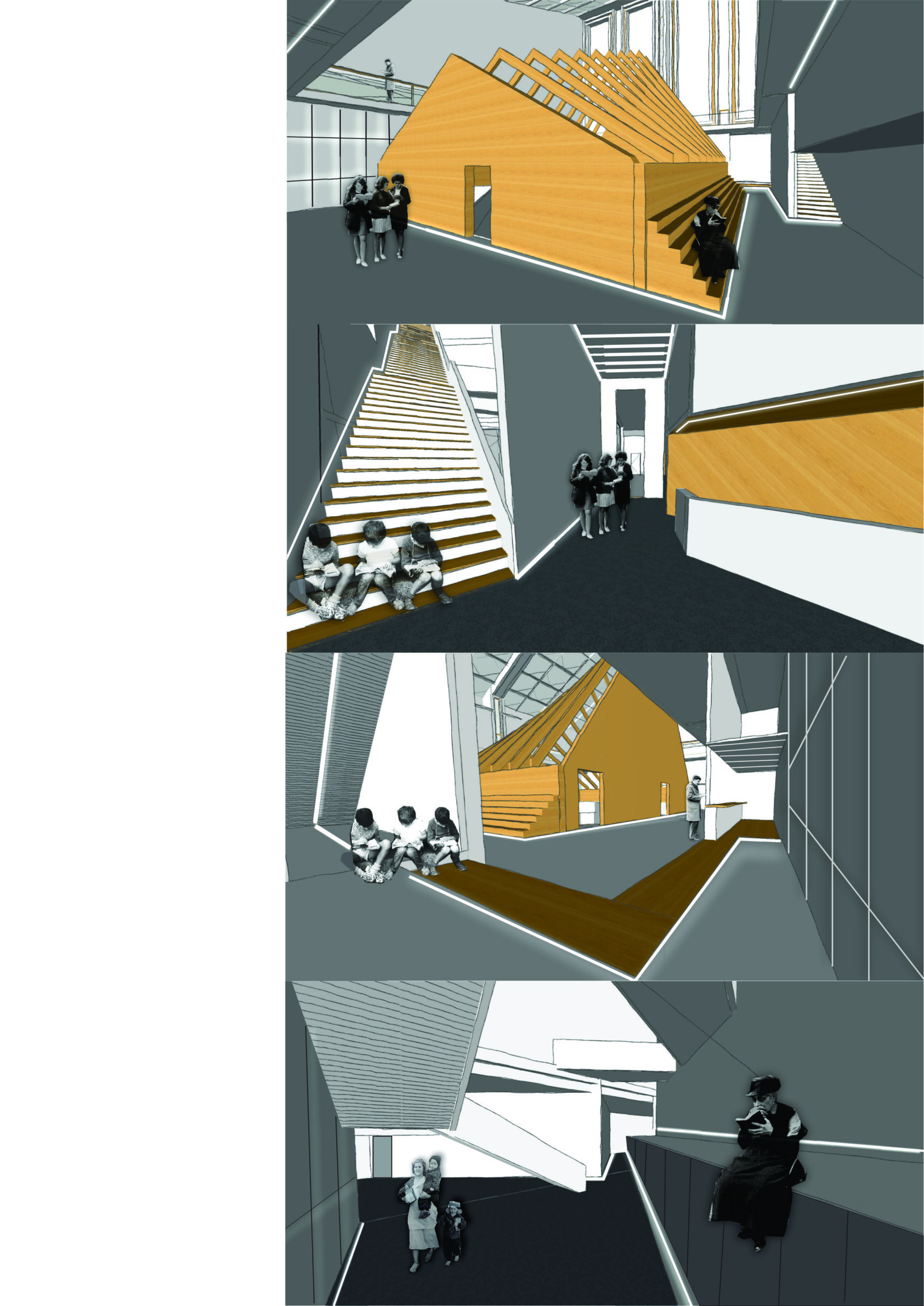
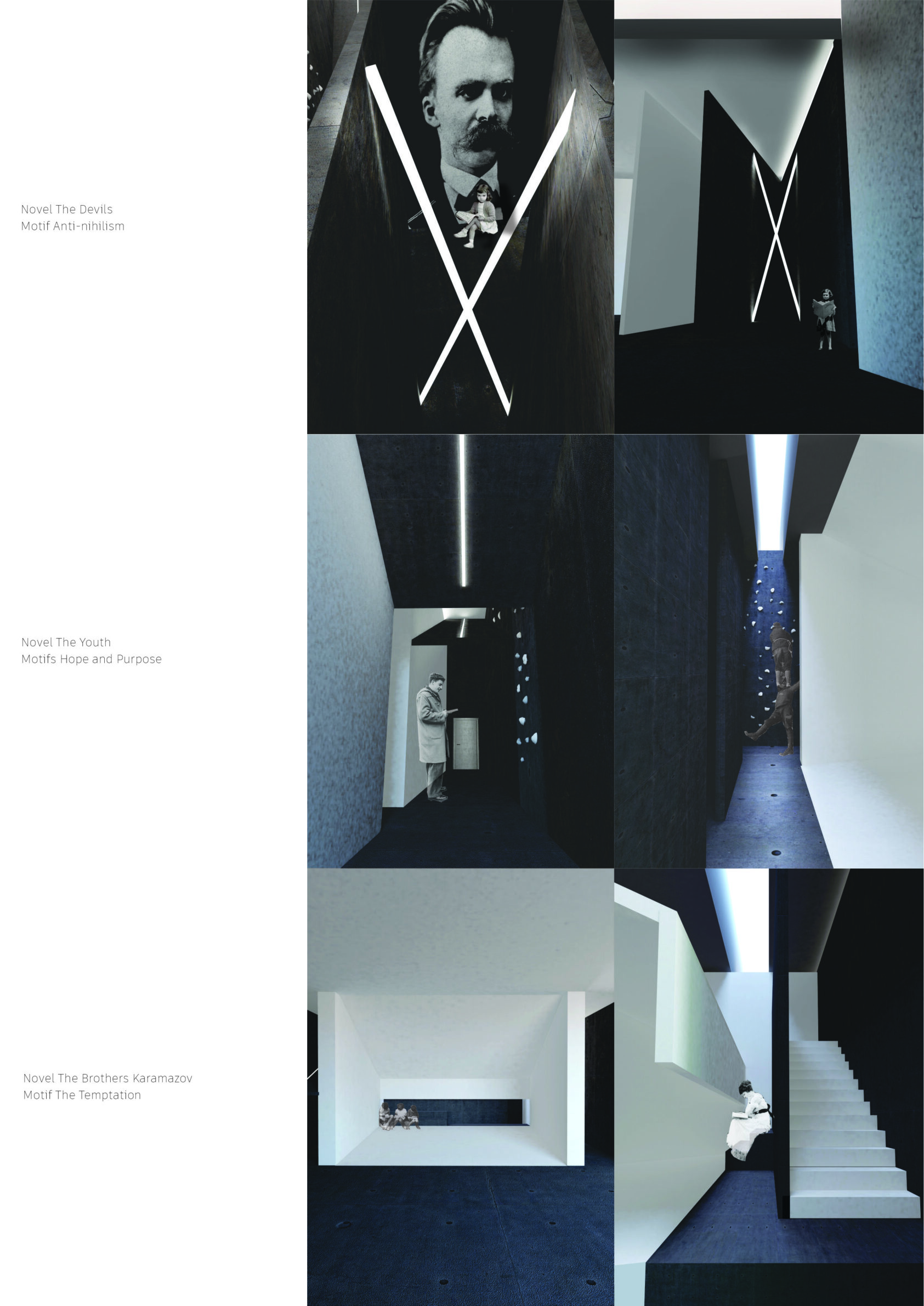
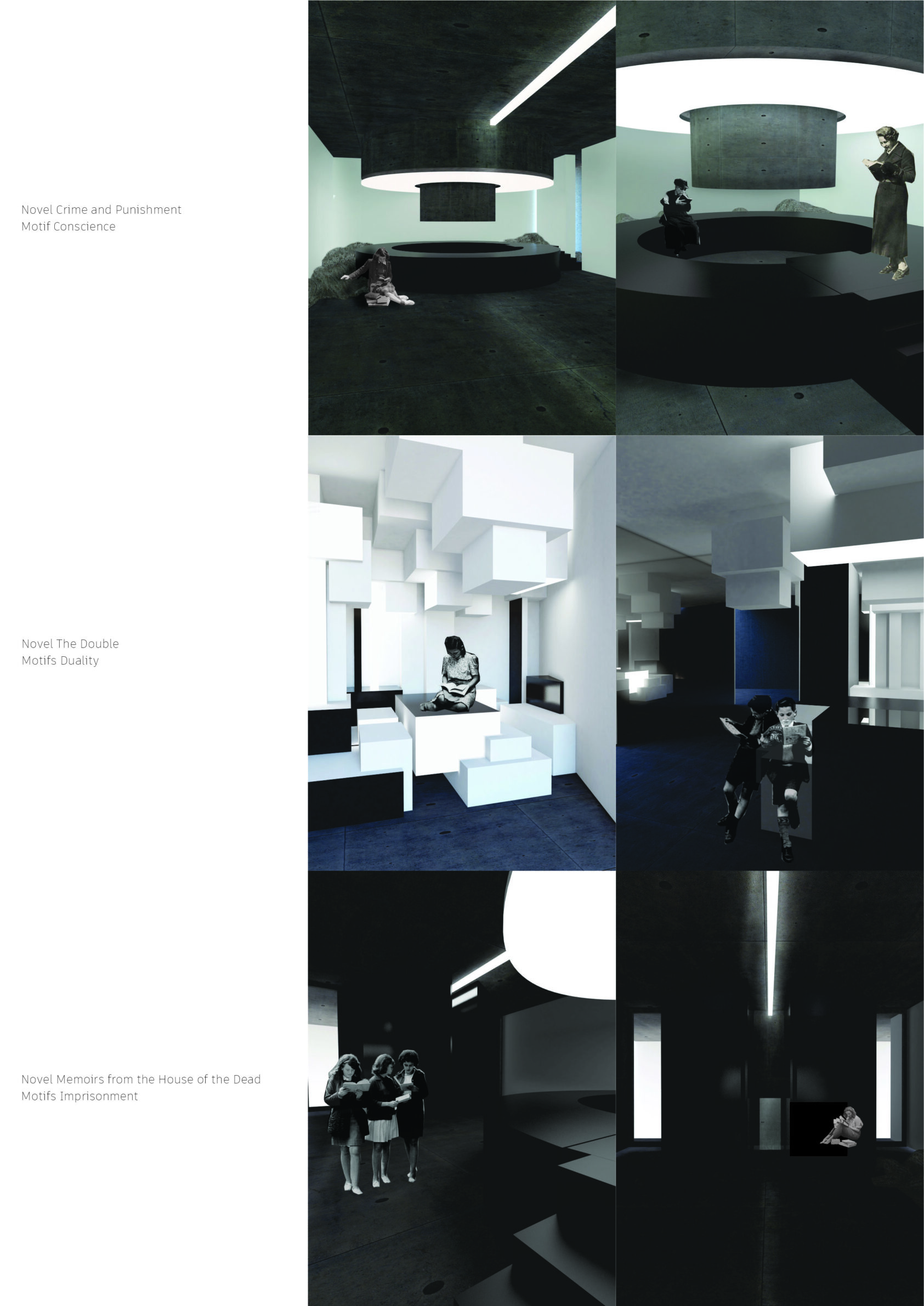
The concept explores the psychological atmosphere present in Dostoevsky's personal life and novels and translates it into spatial sequences and scenographic environments. The form of the object, together with the movement of the observer through it, creates a specific spatial experience that connects the narrative of Dostoevsky and his literary works with architecture.
The basement entrance of the building simulates the entrance to the memorial museum in Kuznetsky Lane, Saint Petersburg, in the house where Dostoevsky lived and passed away. The building is divided into two sections, reflecting his personal duality and serving as an ode to the glassed-in novel The Double. The central part contains an atrium with an object within the object. It represents the outlines of a house as a symbol of unstable family relationships in his life and in the lives of his characters. The space is interwoven with bridges and pathways leading somewhere or nowhere-six bridges for six deaths that affected him: his father, mother, brother, wife, son, and daughter.
The museum exit is achieved through a narrow tunnel evoking the time of Siberian exile, followed by a confined split between the two sections, referencing the end of the writer's life, which concluded with an epileptic seizure and suffocation. Upon exiting, the visitor finds themselves in a wheat field, as in the epigraph of Dostoevsky's last novel (Truly, truly, I say to you, unless a grain of wheat falls to the ground and dies, it remains one; if it dies, it produces many crops.), with a massive facade rising behind them, far larger than the one at the entrance at the beginning of the journey, symbolizing everything writer left behind.
1300 CORPORALS - IMMERSIVE SPATIAL INSTALLATION
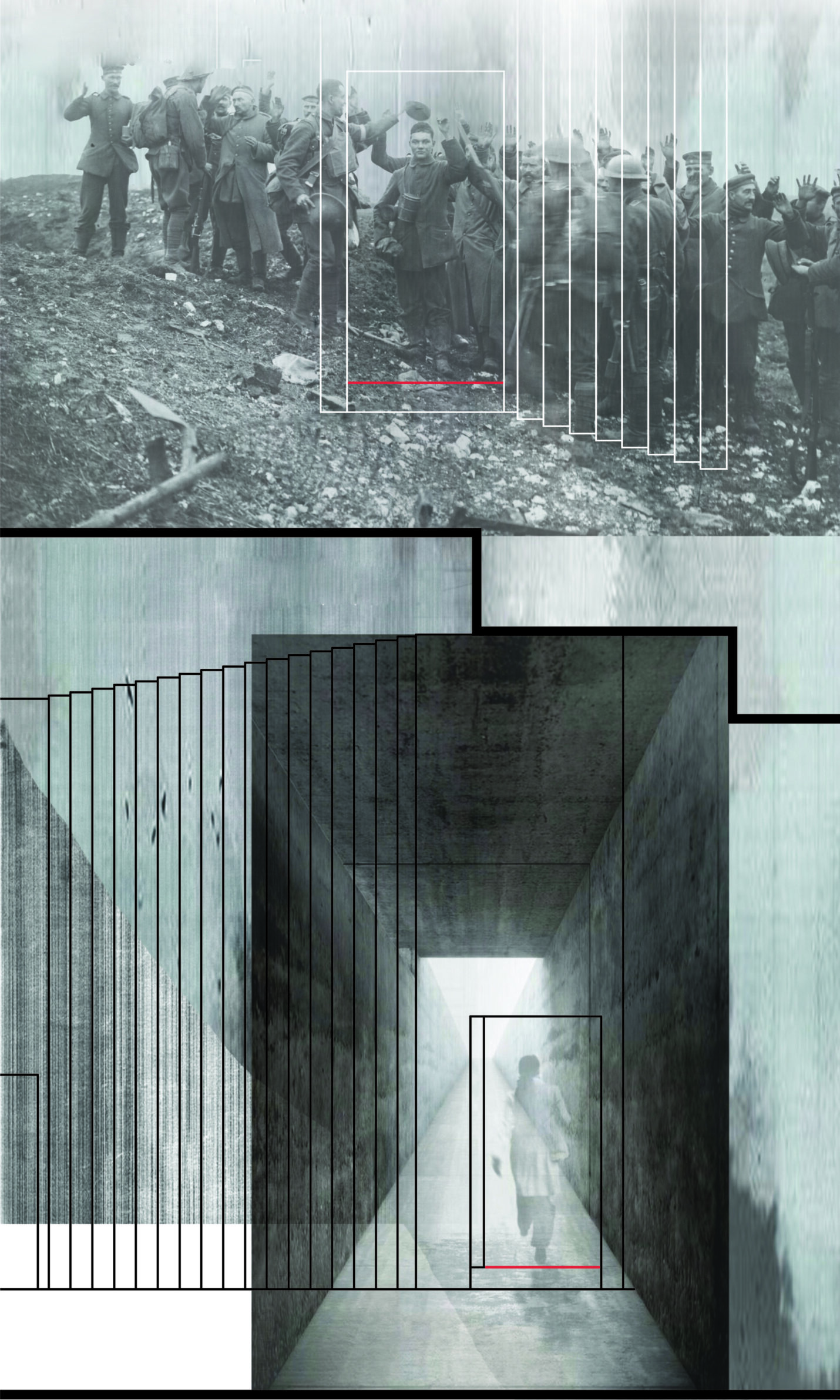
The entire Serbian young intellectual elite, united in the student battalion of 1,300 corporals, gave their lives defending their country. Among them was Momčilo Gavrić, the youngest corporal in world history, who, after six years of active participation in the war, became a non-commissioned officer at the age of twelve.
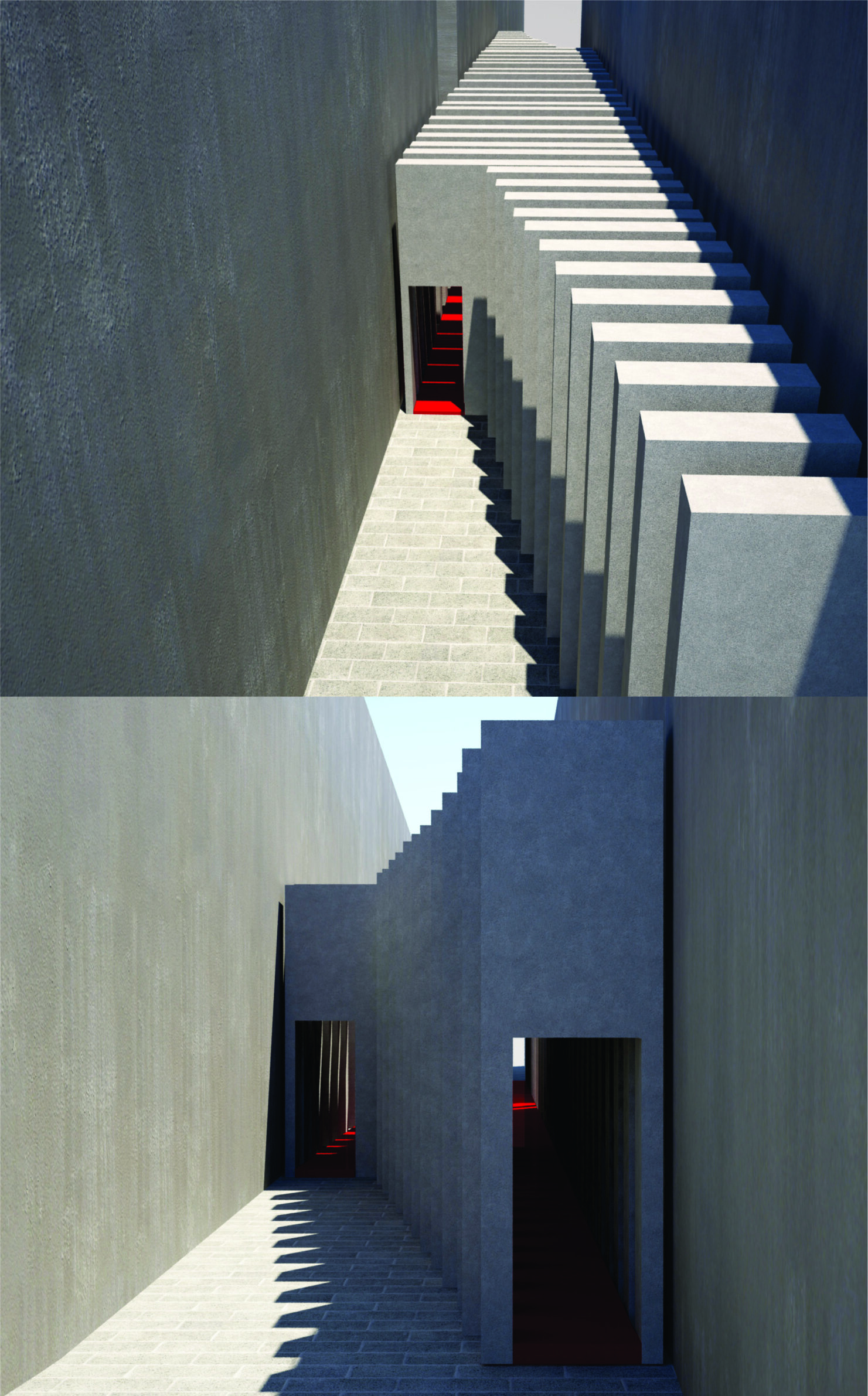
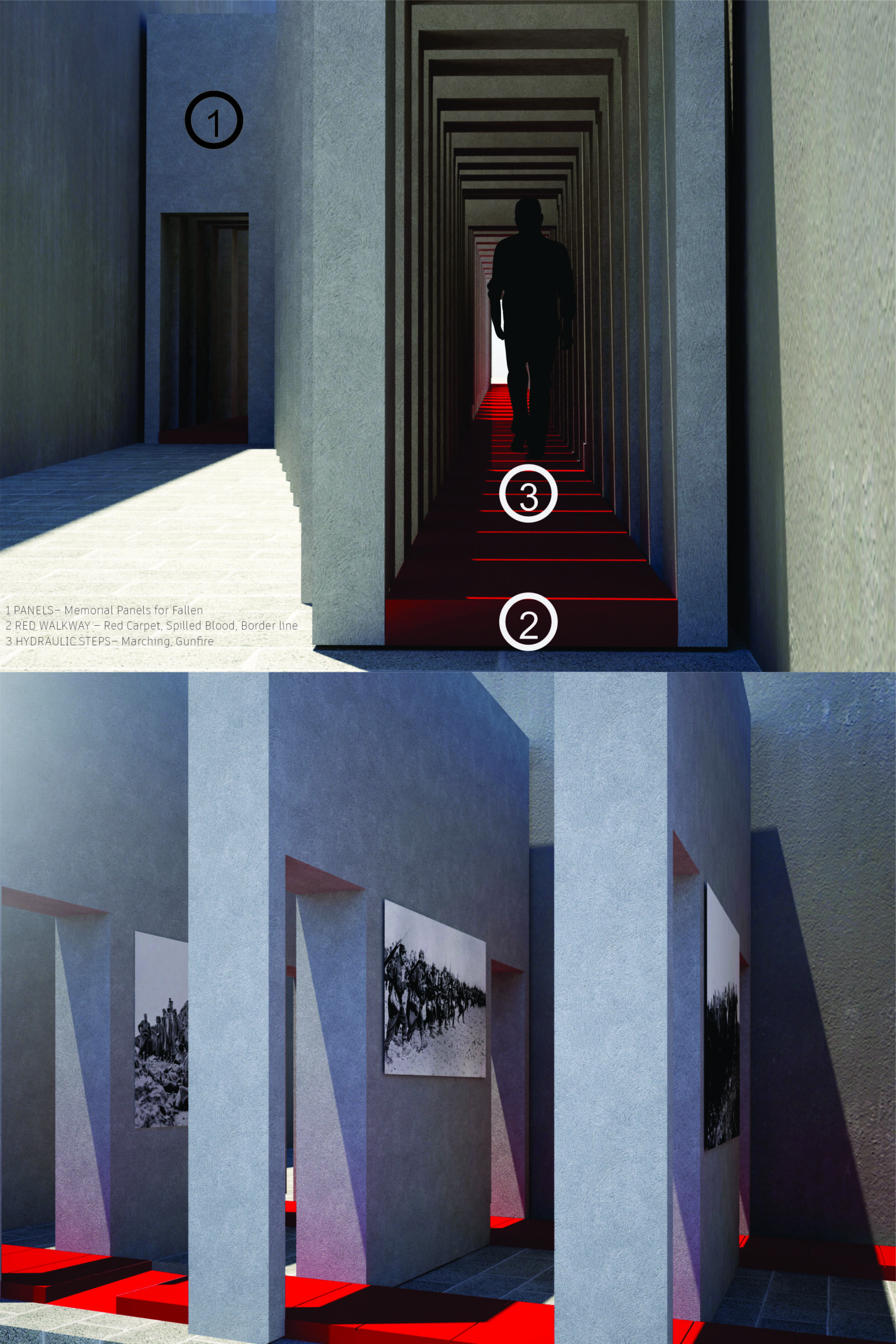
In their honor, I designed a spatial installation located in 1300 Kaplara Street in the center of Belgrade. The installation generates the sound of gunfire as the user moves through the openings in the panels and steps onto the metal plates, creating an immersive and participatory experience.
The panels function as memorial elements dedicated to the fallen corporals, while the red walkway symbolizes both a ceremonial path of tribute and the spilled blood, acting as a powerful boundary line. The hydraulic steps create the impression of marching, further reinforced by the sound of gunfire, evoking the atmosphere and memory of collective sacrifice.
ISTOK NOT ISTOK - ASIAN RESTAURANT
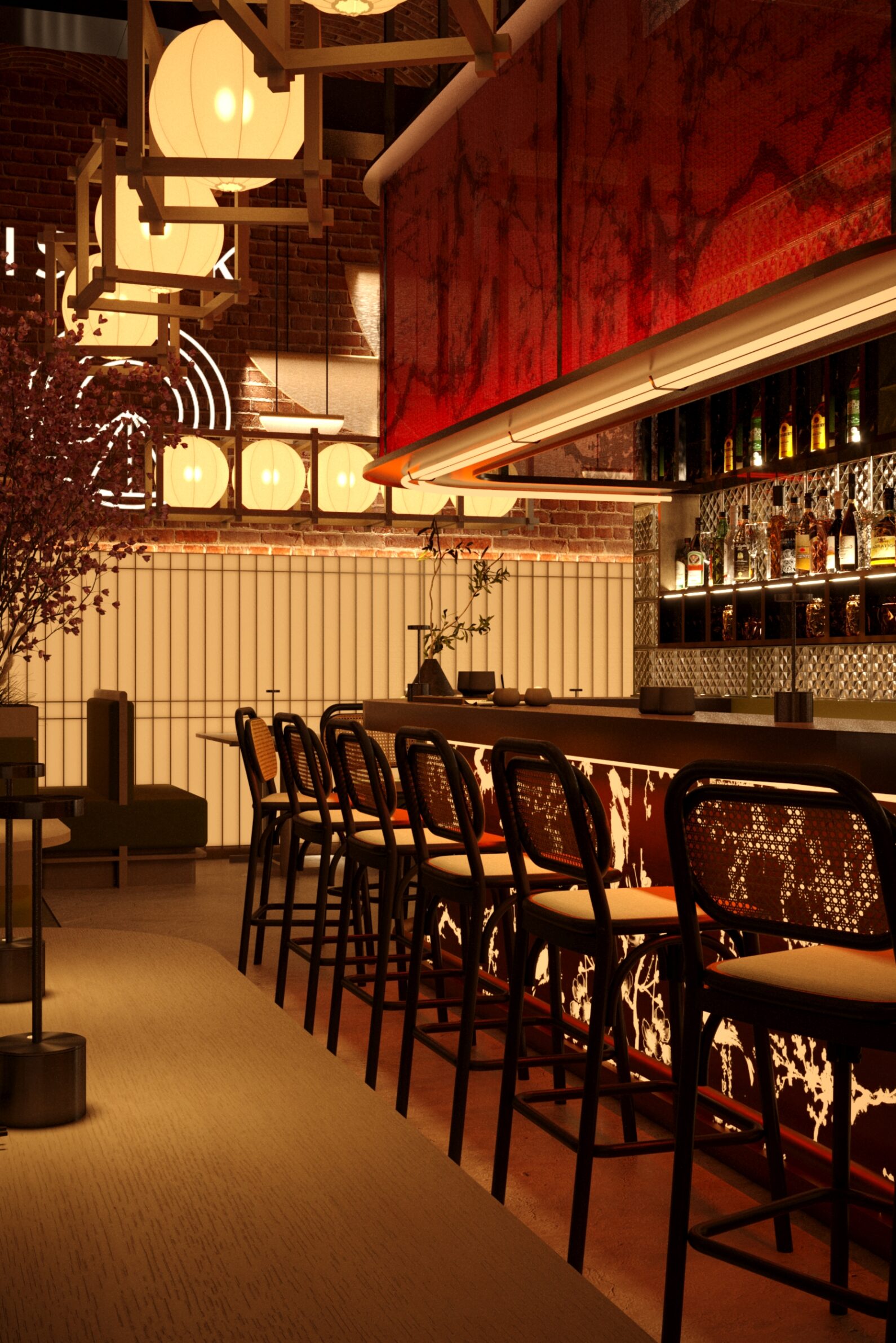
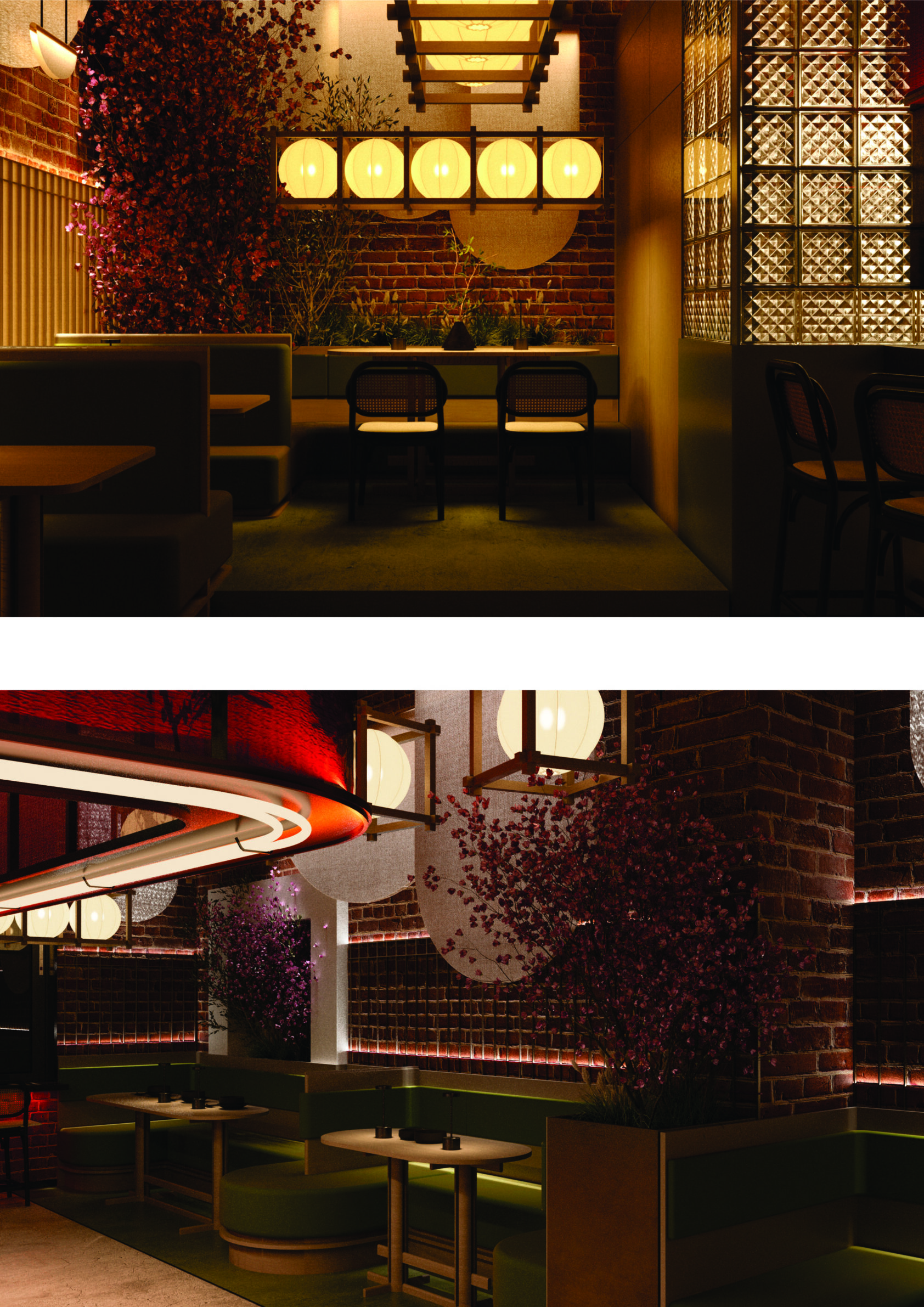
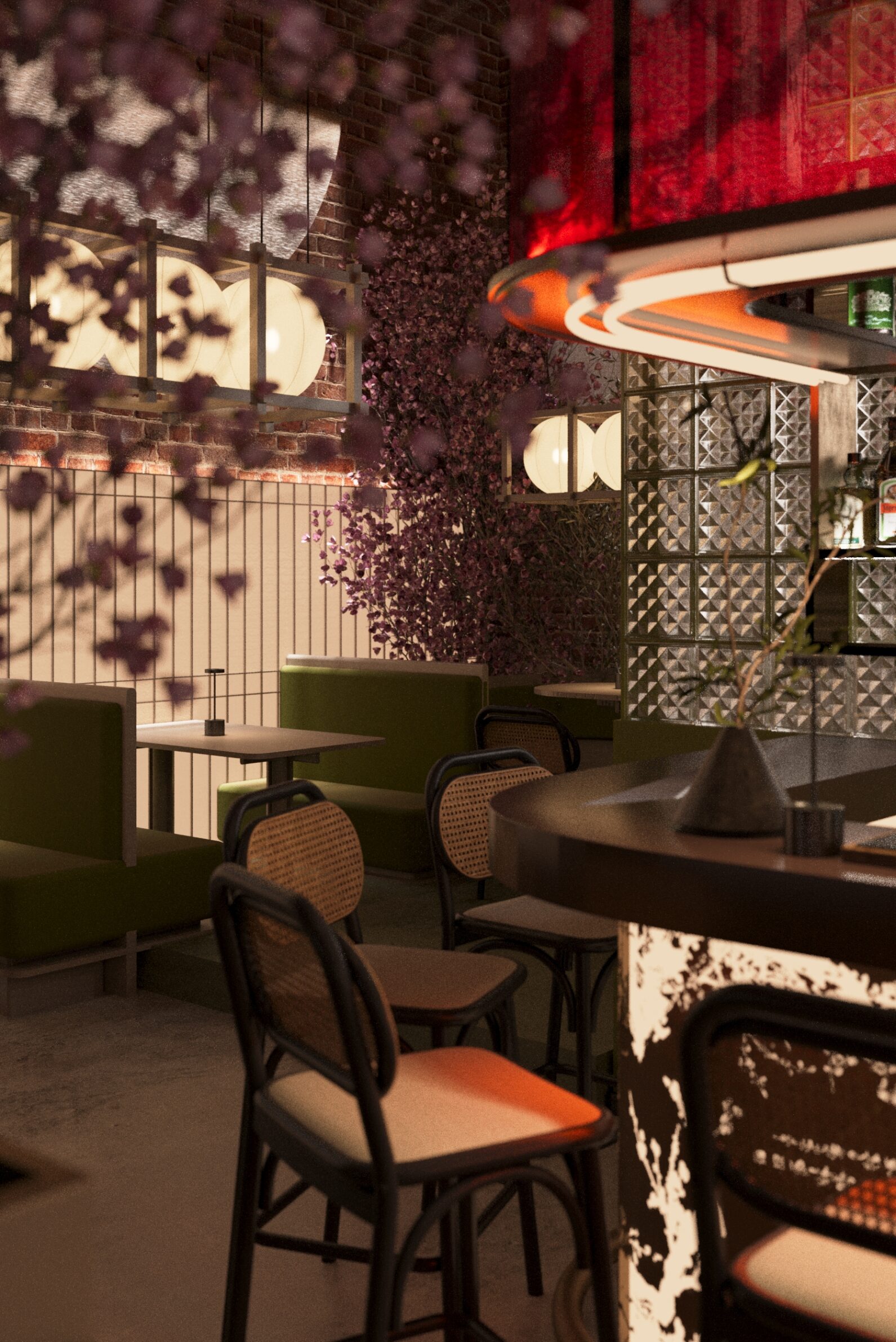
The interior design of the Asian restaurant and cocktail bar is conceptually grounded in a contemporary interpretation of traditional Asian aesthetics. The project draws inspiration from characteristic materials, textures, colors, and graphic motifs, translating them into a cohesive and spatially refined design language.
Through the use of natural materials, layered compositions, and carefully selected decorative elements, the space reflects recognizable cultural references while avoiding literal or overly decorative expressions. Patterns, tonal contrasts, and subtle symbolic details are integrated into the interior to evoke a sense of authenticity and atmosphere.
The interplay of light, materiality, and spatial sequencing creates an immersive environment that balances tradition and modernity. In this way, the design establishes a distinctive identity that both references Asian heritage and reinterprets it within a contemporary interior and ambient framework.

Teodora Stojanović
I am Teodora Stojanović, M.A., an interior and furniture designer and teaching assistant at the Faculty of Applied Arts, University of Arts in Belgrade, where I am also a PhD candidate within the Applied Arts and Design program. I am actively engaged in undergraduate and master’s academic studies at the Department of Interior Architecture and Furniture Design.
Throughout my undergraduate, master’s, and doctoral education, as well as through my academic role and professional practice, I have developed a strong ability for creative problem-solving, bridging conceptual thinking with practical project realization. My pedagogical work reflects my commitment to knowledge exchange and mentorship in the field of interior architecture.
My master’s thesis, “Library for Dostoevsky – Literature as a Starting Point in Interior Design,” represents an interdisciplinary exploration in which I examined the contextual and symbolic dimensions of memorial spaces through situational analysis and the use of diverse media. This project reflects my approach to spatial design, which seeks to move beyond conventional interior solutions. It was presented through several self-initiated solo exhibitions in the form of large-scale models, with installations designed to simulate movement through the conceived space.
I have gained professional experience through my work at the Faculty, in design studios, and within the furniture industry, including a role in a children’s furniture manufacturing company. I have also worked as a lecturer in interior design courses, further expanding my engagement across both educational and professional contexts. These experiences have provided me with comprehensive knowledge and practical skills in developing detailed design documentation and independently managing complex projects from concept to execution and installation.
In addition to my primary focus on interior and furniture design, I have expanded my practice through work in scenography for films, television series, music videos, commercials, and events. This experience has strengthened my ability to create efficient and visually compelling spatial solutions using adaptable and lightweight materials suited to dynamic production environments.
My professional engagements, including restaurant interior design projects, demonstrate my ability to develop detailed execution plans while being directly involved in the realization process, from production to final installation. My experience in both design studios and furniture manufacturing enables me to approach projects holistically, integrating design sensitivity with technical expertise.
Contact
sdespodora@gmail.com
Powered by