



Dora Živadinov, Croatia, 2026

Nominator: Antonija Plavotić and Siniša Zdjelar
Nominator's statement
We first met Dora Živadinov as a young student during her internship at ZDL Architekti, and she immediately impressed us with her curiosity, maturity, and genuine passion for architecture. From that moment, it was clear that she stood out among her peers, and it is with pride that we nominate her as a promising young talent and a bright future of Rijeka’s architectural scene.
Dora’s work combines design intelligence with social awareness and a deeply human approach. A fifth-year student at Politecnico di Milano, pursuing a double-degree master’s program with Technische Universität Graz, she consistently merges thoughtful design with social responsibility.
Her approach emphasizes adaptive reuse, sustainability, and community-oriented design. She creates spaces that balance private and collective experiences, address contemporary societal challenges, and foster inclusion across generations. Dora’s empathy, collaborative spirit, and vision distinguish her as a compelling and inspiring voice among the next generation of architects.
CONVIVIO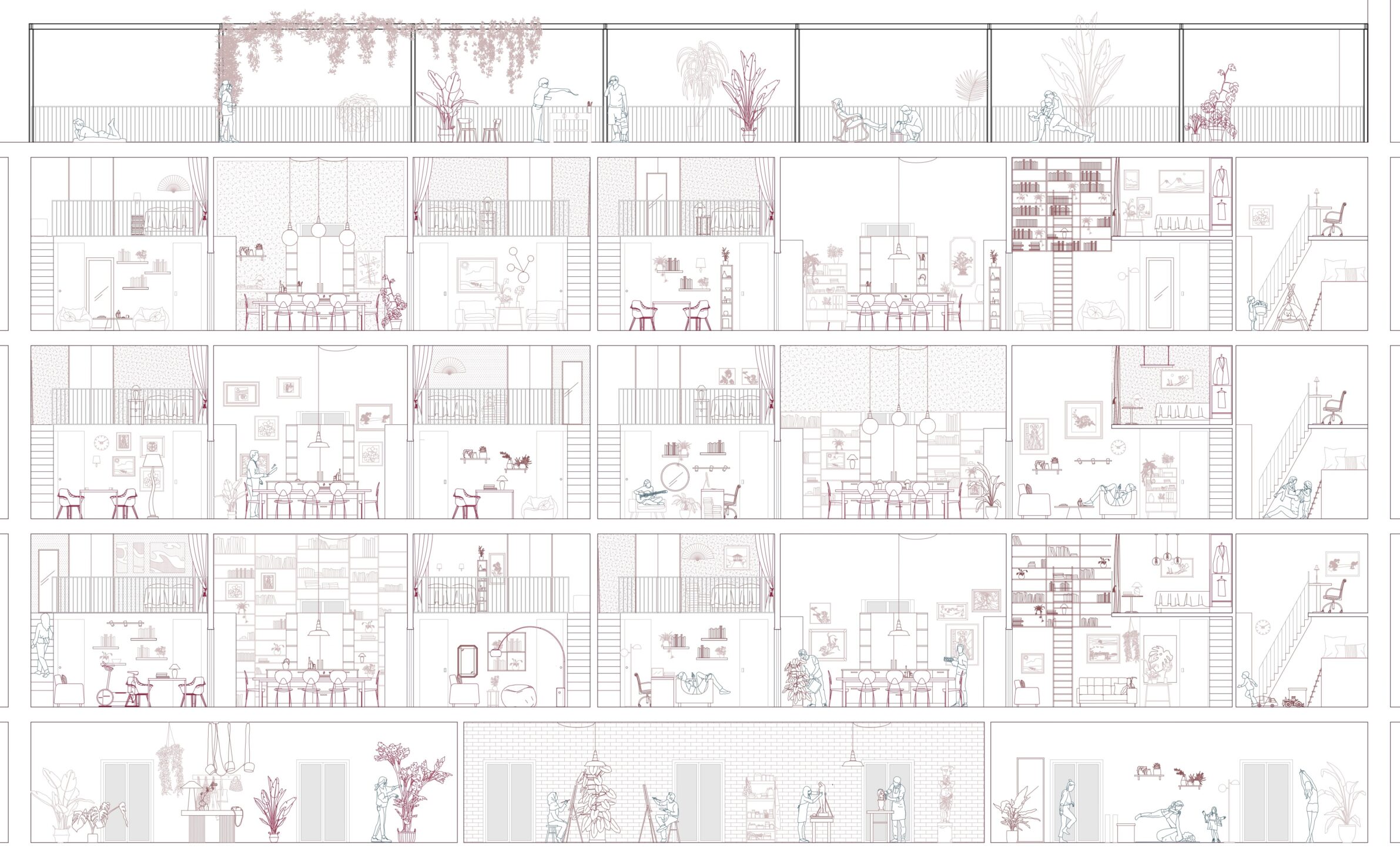
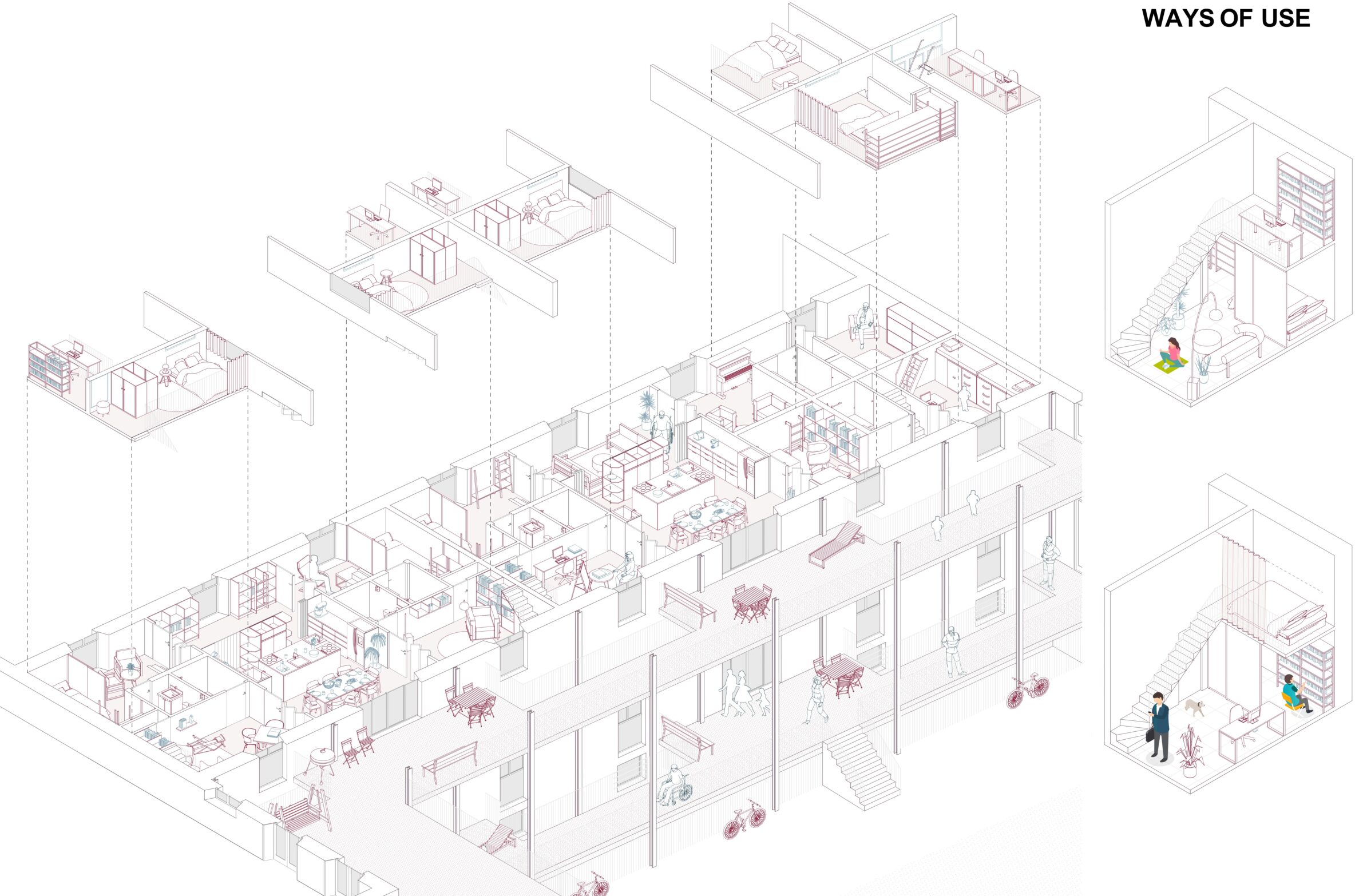
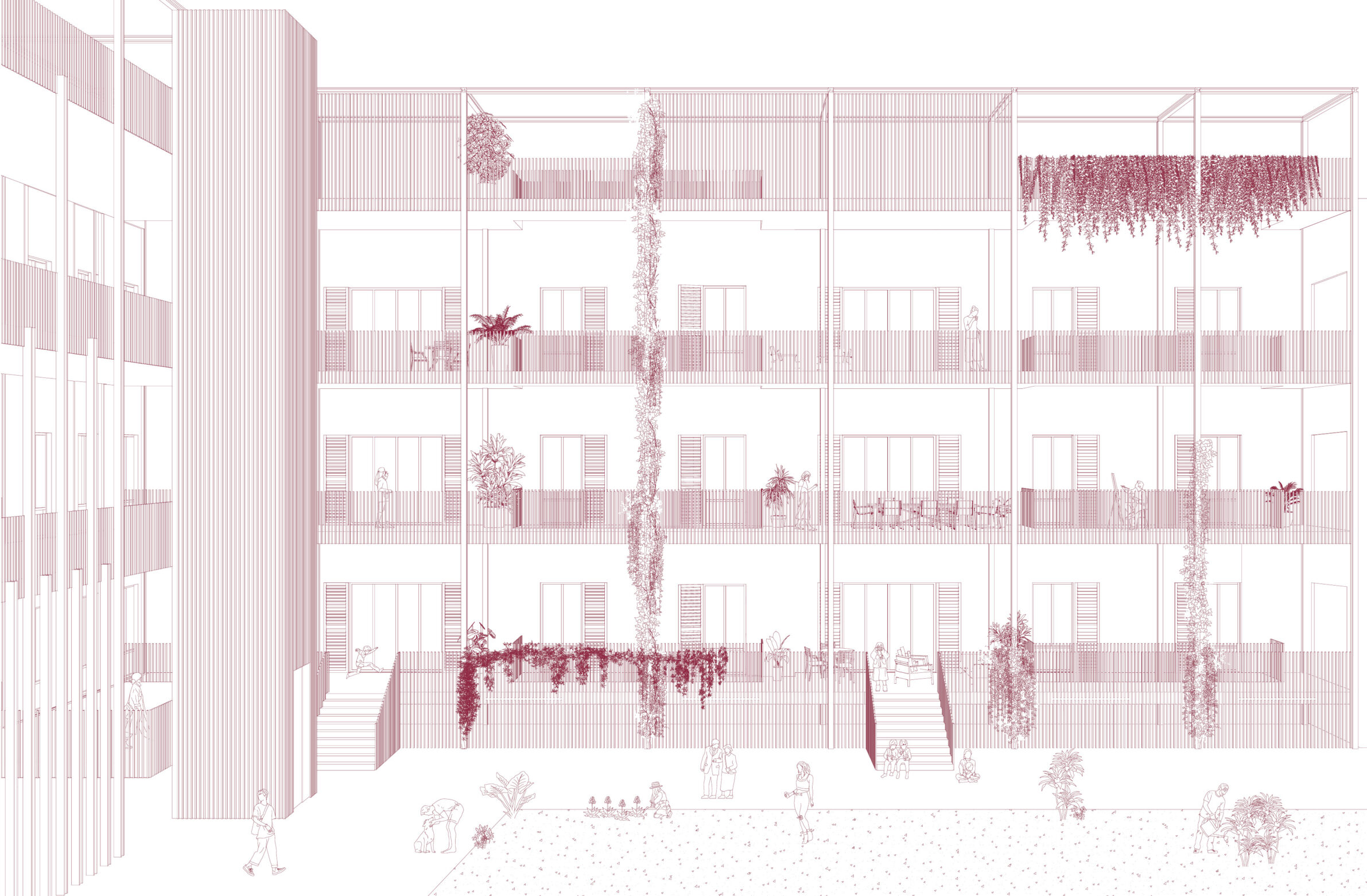
This project transforms a former military hospital in Bari, Italy into affordable and adaptable housing designed to foster community and social inclusion. The intervention introduces a gradient of private and shared spaces, ranging from personal niches and mezzanines within individual units to collective kitchens and communal areas, allowing residents to balance privacy and interaction. Newly added open-air galleries redefine the central courtyard as a social core, creating circulation spaces that encourage everyday encounters and shared activities. At ground level, the complex opens toward the neighborhood through workshops, a market, a daycare, and spaces dedicated to elderly activities, reinforcing connections between residents and the wider community. Through adaptive reuse, the project establishes an accessible and intergenerational environment that addresses contemporary housing challenges while promoting sustainability, flexibility, and collective living as drivers of long-term urban regeneration. The project, developed as part of the UAH research group at Politecnico di Milano, was exhibited at the Biennale di Venezia in September 2025.
BRICK COMMONS
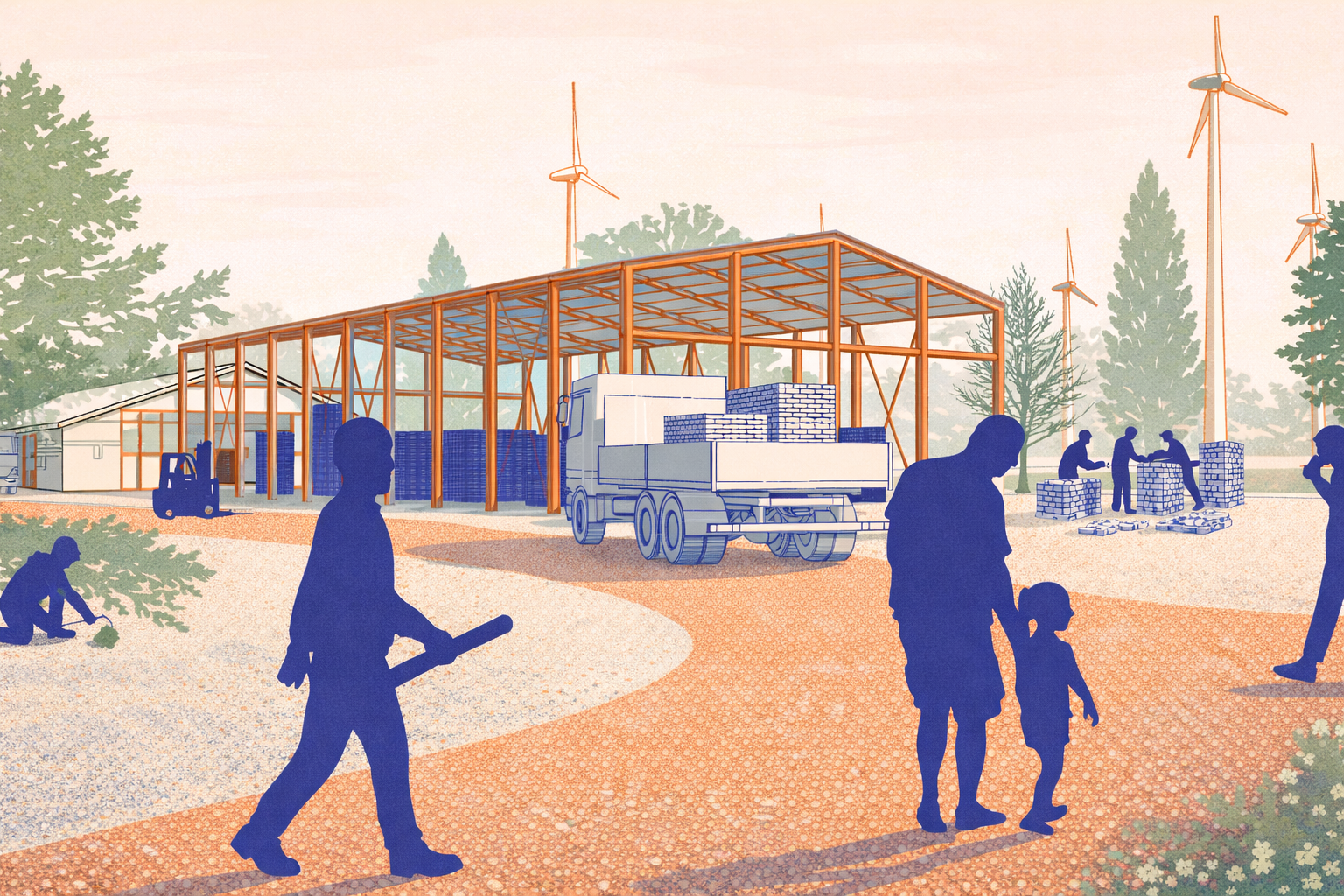
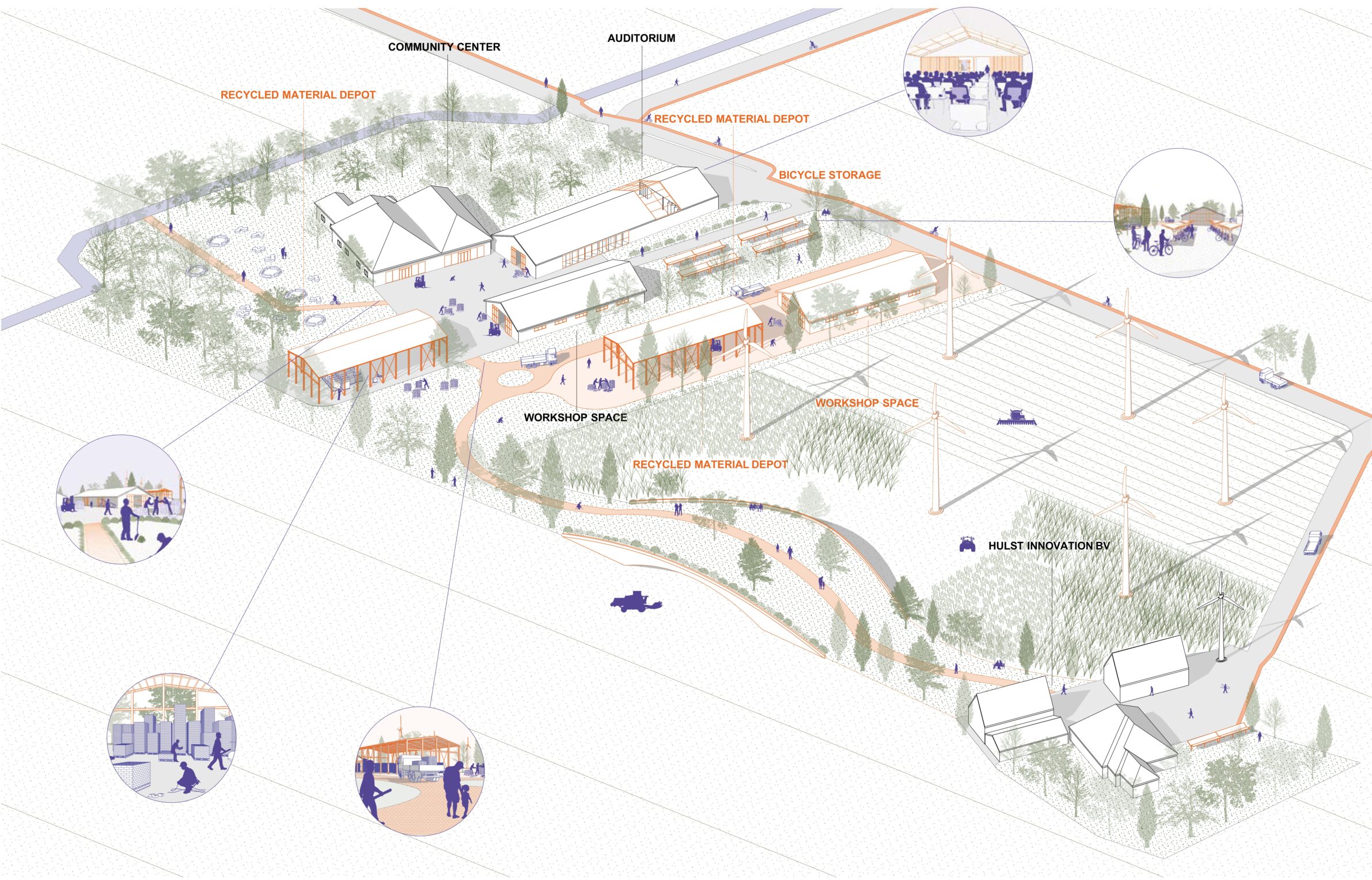 The project addresses the long-term damage caused by earthquake activity related to gas extraction in the Groningen region, Netherlands, focusing on the resulting social and spatial fragmentation of local communities. Its aim is to support community reassembly while promoting a circular economy through the reuse of building materials. Five of the most affected villages, including Westeremden, are organized into a regional network, each assigned a specific role within a shared territorial strategy. The site near Westeremden is developed as a brick material depot using reclaimed elements from demolished houses, combined with a community center, workshops, and an auditorium. The intervention adaptively reuses three existing buildings, introduces new openings, and adds three lightweight volumes that support material processing and collective activities. A raised bridge connects the site to a nearby innovation hub while preserving agricultural land, transforming the area into an open, collaborative platform that links sustainability, local identity, and regional resilience.
 STUDENT CAMPUS LE OCCASIONI
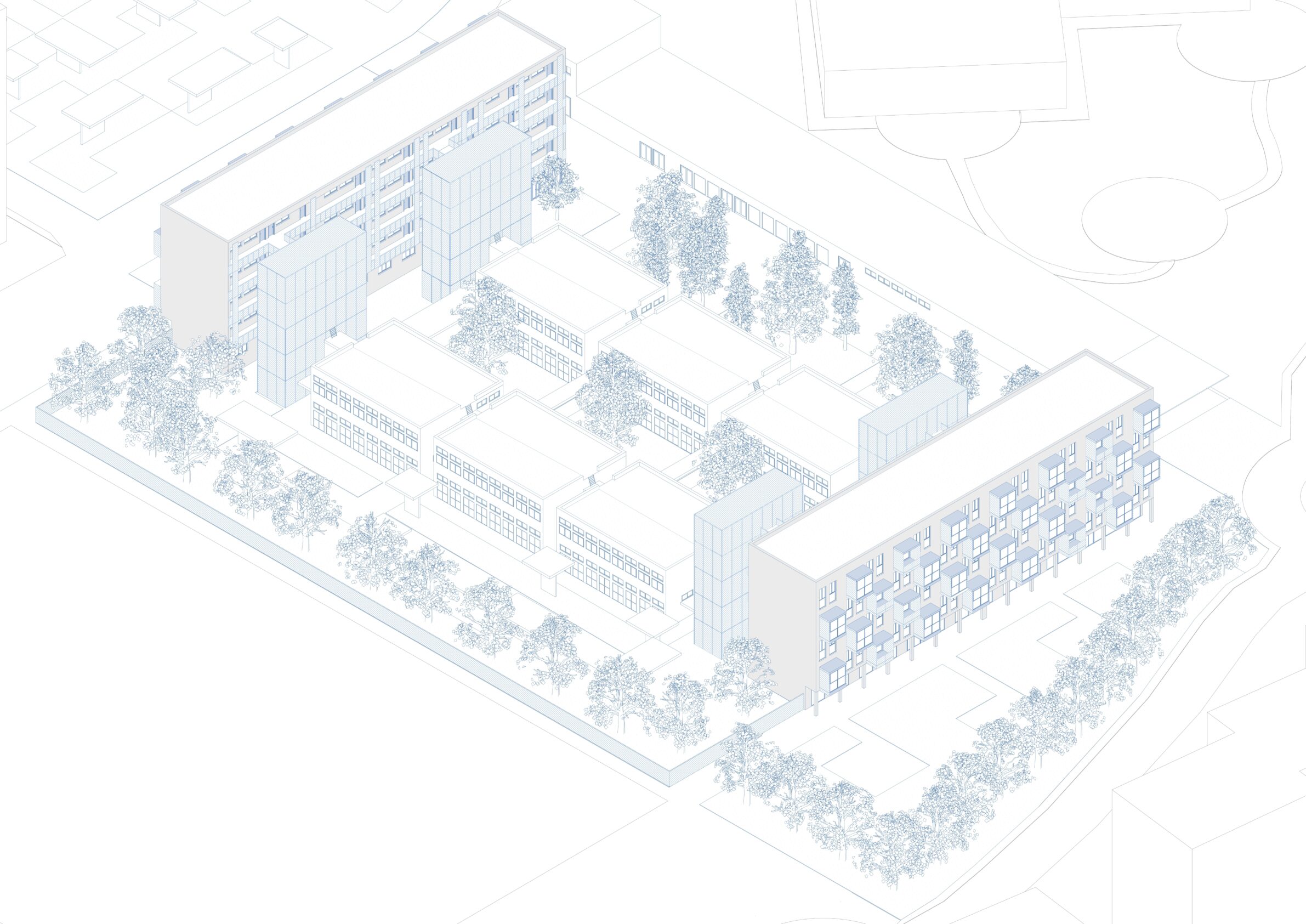
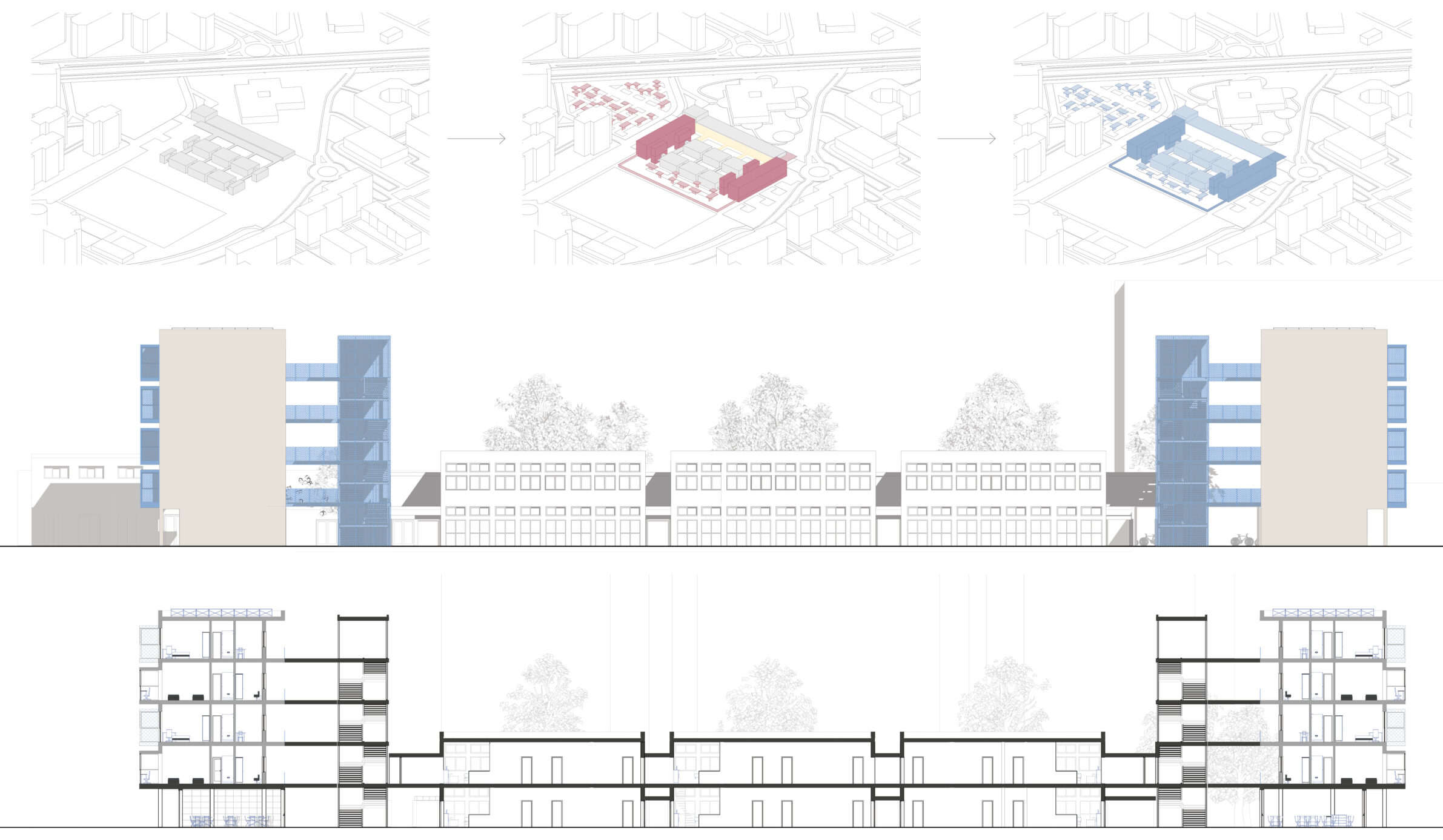
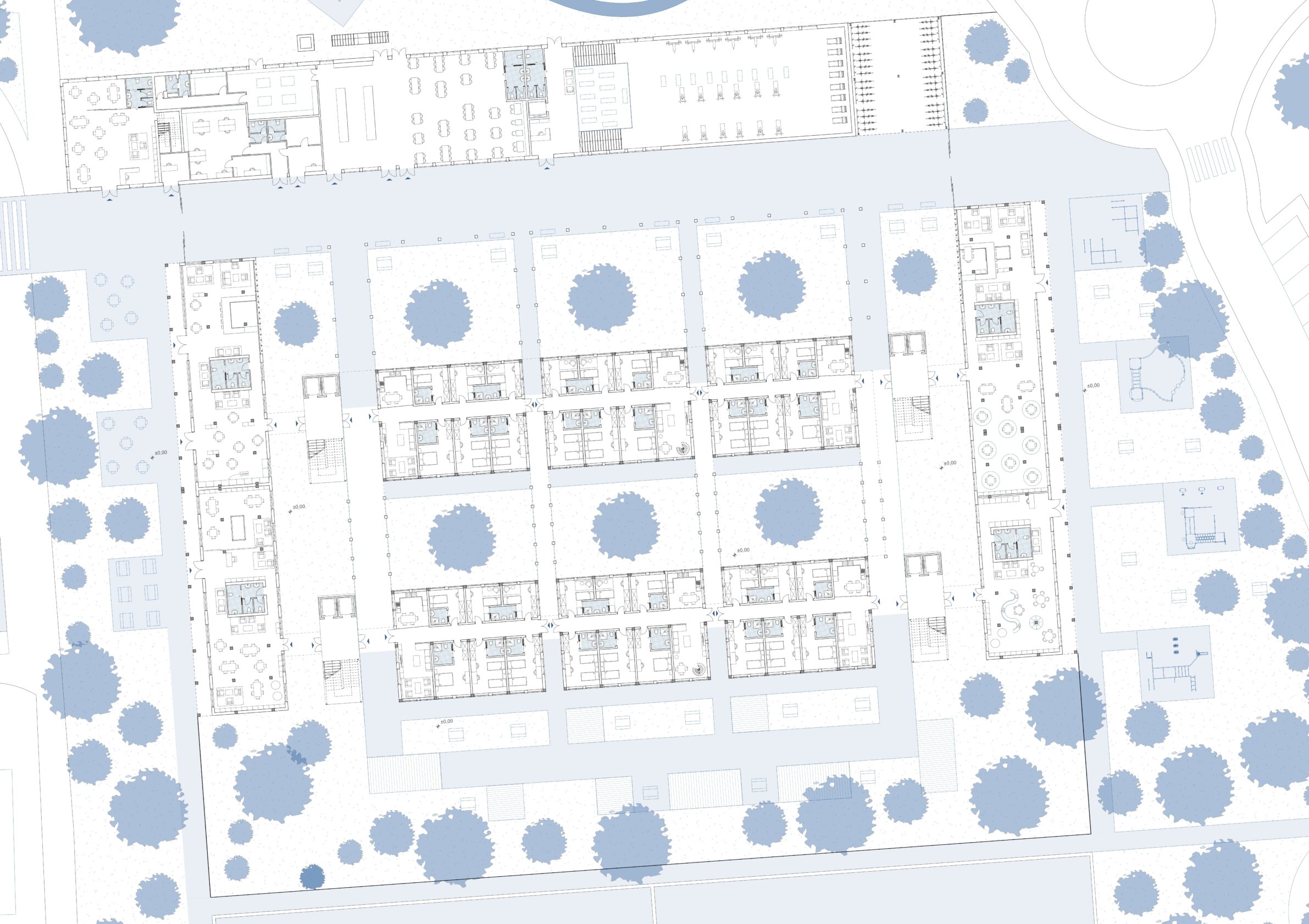
The project reimagines the former Eugenio Montale Primary School, built in the 1960s in Cologno Monzese (Milan, Italy), as a contemporary university residence that combines student housing with inclusive and sustainable communal spaces. Through an adaptive reuse approach, the proposal preserves most of the existing structures while introducing two new residential volumes that frame a protected inner courtyard, conceived as the social heart of the campus. Ground-floor public functions including a bar, cultural center, study areas, and co-working spaces promote interaction between students and local residents, reinforcing the relationship between the campus and its urban context. The project prioritizes environmental responsibility, spatial flexibility, and collective living, transforming an obsolete educational complex into a resilient and socially driven environment. By balancing preservation and innovation, the intervention positions architecture as a catalyst for community, everyday life, and long-term urban regeneration.

Dora Živadinov
My name is Dora Živadinov, I come from Rijeka (Croatia) and I am a fifth-year Architecture student specializing in the Built Environment and Interiors. I began my studies at Politecnico di Milano in Italy and am currently enrolled in a double-degree master’s program between Politecnico di Milano and Technische Universität Graz, Austria.
Building and shaping spaces has always been a passion of mine, and studying architecture has strengthened my sense of belonging to the discipline. Throughout my academic journey, I have worked on projects at different scales, with a particular interest in adaptive reuse and spatial narratives, often developed through collaborative work. I am currently writing my master’s thesis on the student accommodation crisis in Europe, focusing on reusing existing buildings for students and young professionals. I have participated in several workshops, including one in summer 2025 at Politecnico di Milano focused on shared strategies for student housing. My work on the requalification of a former military hospital in Bari, developed as part of the UAH research group at Politecnico di Milano, was exhibited at the Biennale di Venezia in September 2025.
Contact
zivadinov.dora@gmail.com
Powered by

Be There.