



Anđela Bubanja, Montenegro, 2026

Nominator: Dijana Vučinić
Nominator's statement
Andela Bubanja is a young architect whose exceptional talent is visible across her entire creative body of work. From the conceptual sketches or 2D drawings, she effortlessly transforms ideas into convincing spaces.
In a profession where demanding technical challenges and long working hours easily overshadow the importance of good judgment, Andela’s sense of taste is the base of her entire approach. It shapes the way she engages with topics and guides her through the development of even the most complex design tasks, giving her work clarity, coherence, and a grounded point of view.
What truly sets her apart from her generation is the distinct way she approaches design: whether creating furniture or dealing with intricate spatial narratives, her work radiates curiosity, precision and focus. She brings both openness and discipline to every project. I have been honored to work beside her on many projects.
Andela Bubanja is exactly the kind of emerging perspective that the BIG SEE Perspectives Award aims to recognize – an architect whose talent, vision, and commitment to high-quality work promise a future for the discipline.
DEVELOPMENT PERSPECTIVE OF SCENIC ROUTES: ARCHITECTURAL SOLUTIONS AIMED AT AFFIRMING THE LANDSCAPE IDENTITY OF MONTENEGRO
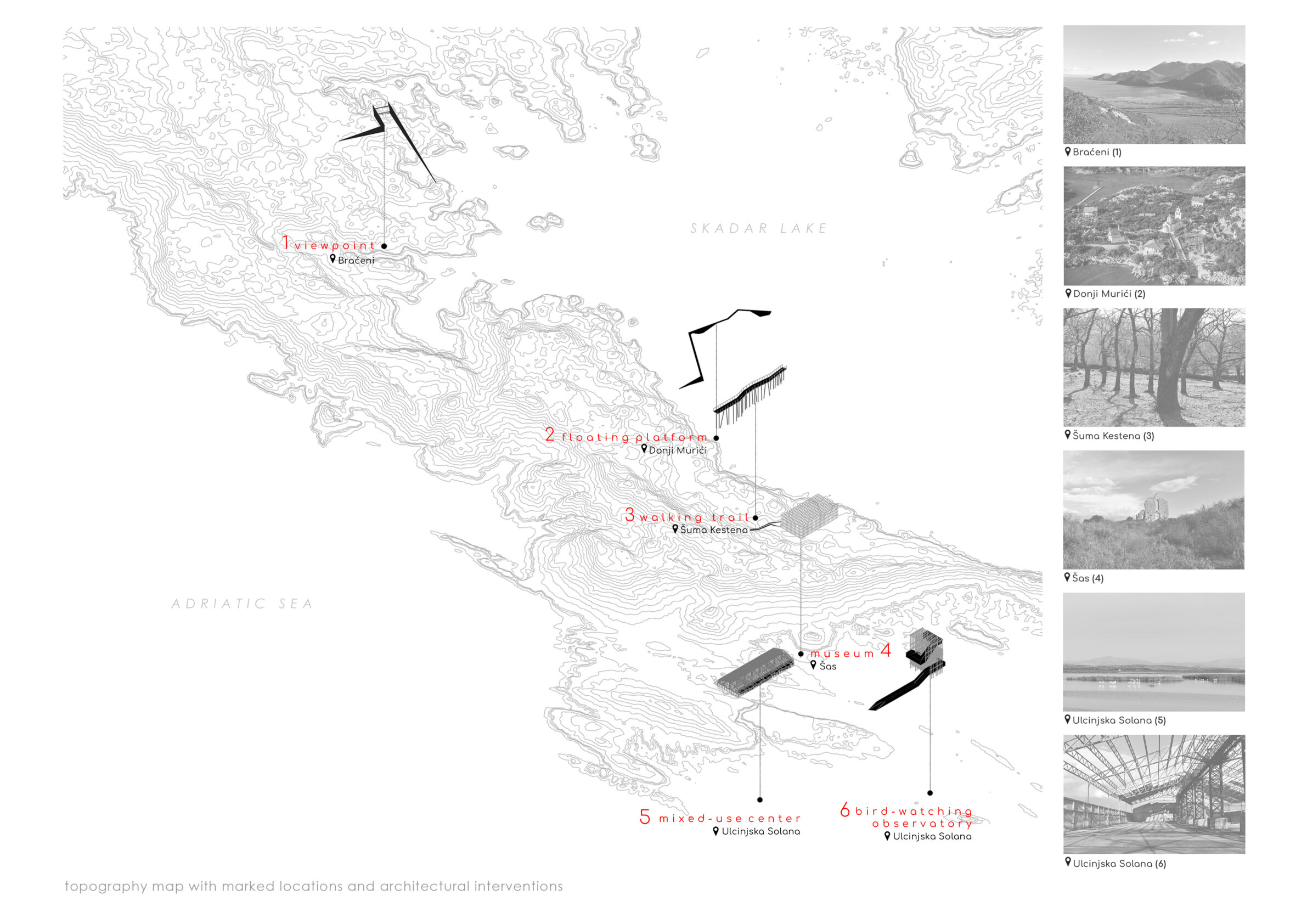
Montenegro is defined by its striking landscapes and scenic routes. The project seeks to activate these well-known pathways through a sequence of targeted programs and spatial interventions positioned along them. The design proposal is grounded in extensive research and developed through a series of drawings, collages, and renderings that articulate its spatial and conceptual framework.
Through the analysis of all existing scenic routes in Montenegro and the development of criteria for their
evaluation, the route identified as the most suitable for intervention—due to its exceptional panoramic potential and diversity of landscapes—was the Sea and Heights route. Within the route, key intervention points were recognized — Braćeni (Virpazar), Donji Murići (Bar), Šuma Kestena (Bar), Šas (Ulcinj) and
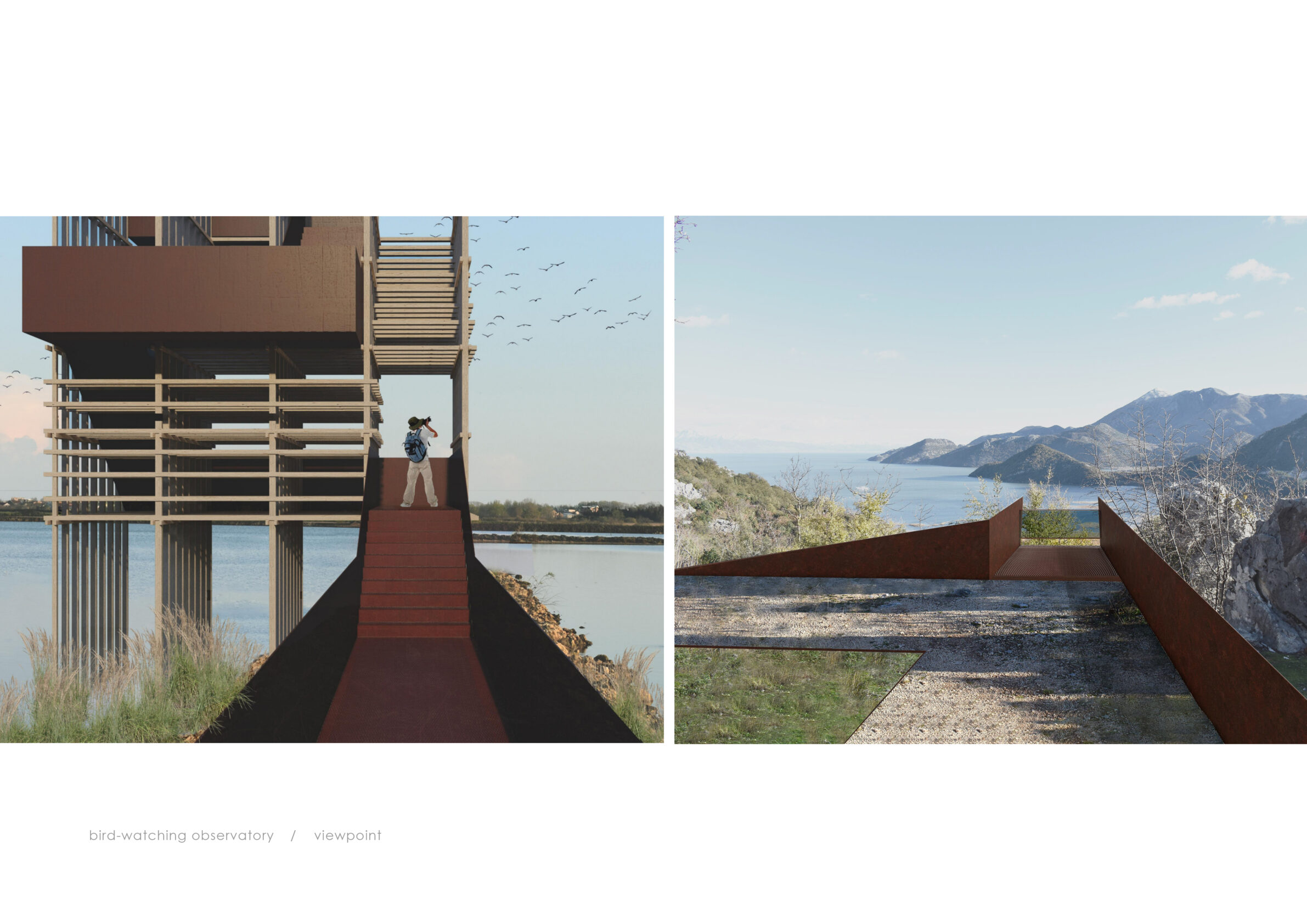
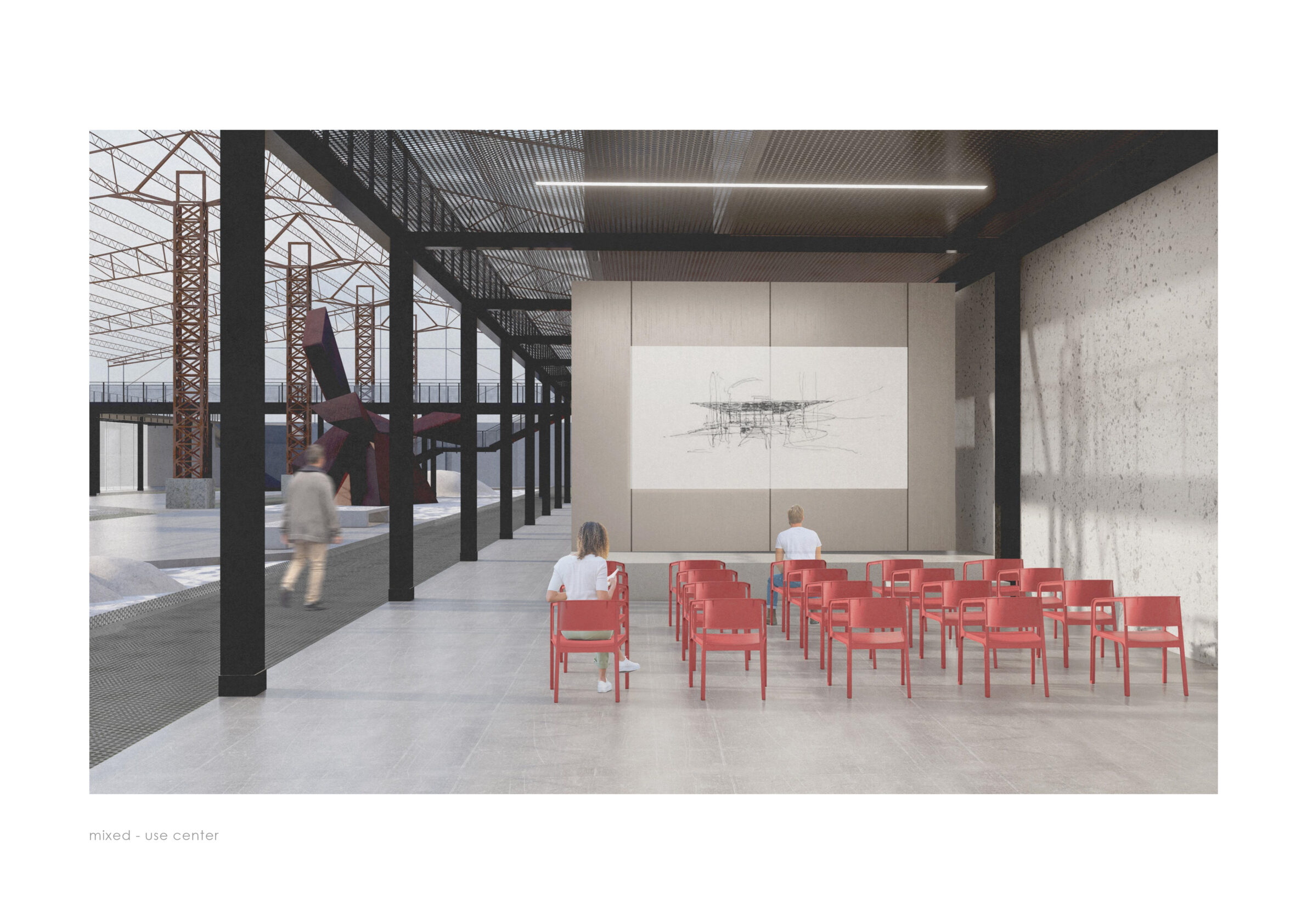
Solana Ulcinj. These sites served as the basis for six conceptual designs: a viewpoint, floating platform, walking trail, museum, mixed-use center and bird-watching observatory, each responding to its natural surroundings through materiality, form, and function.
SECOND HIGH SCHOOL BUILDING IN PODGORICA
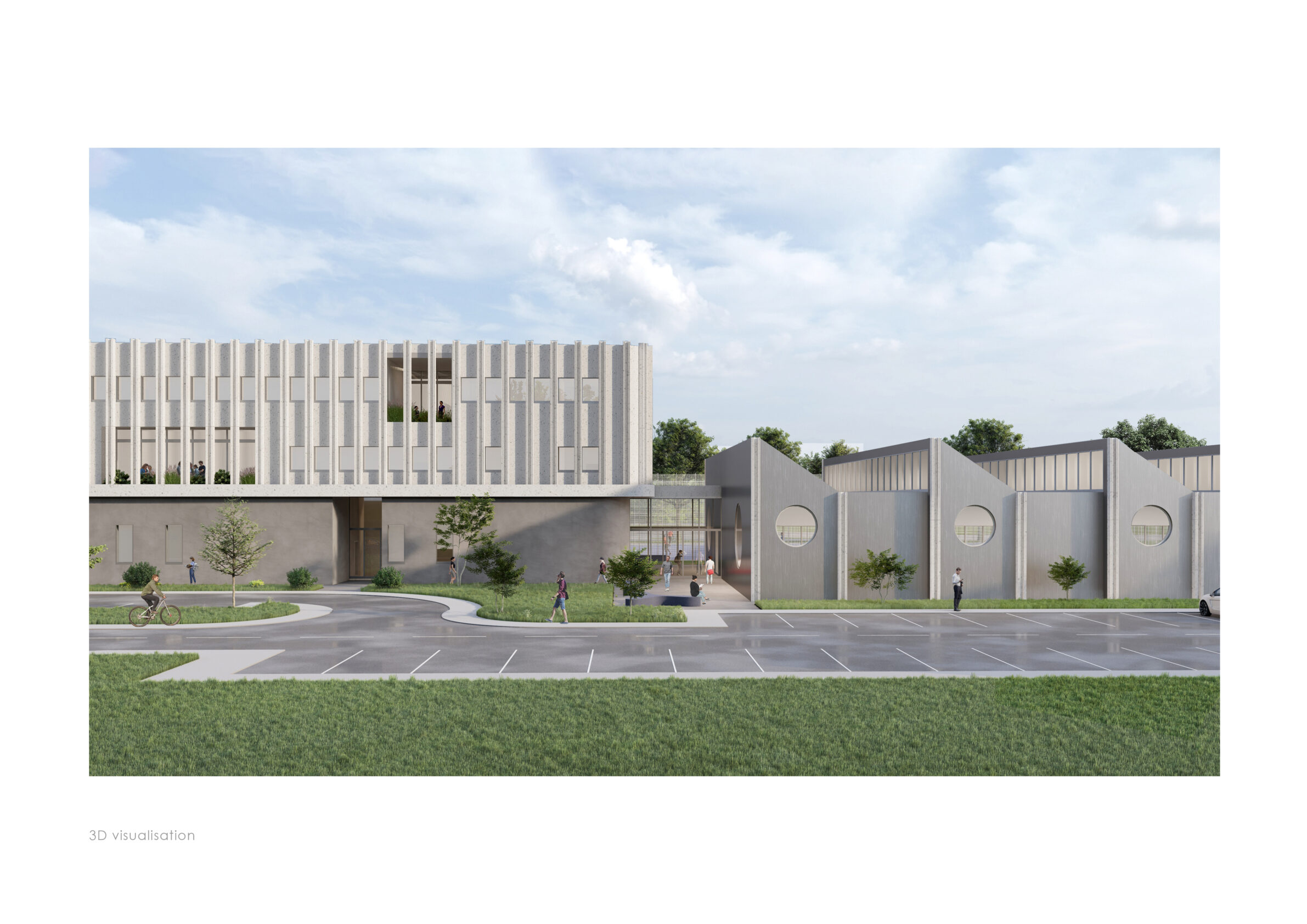
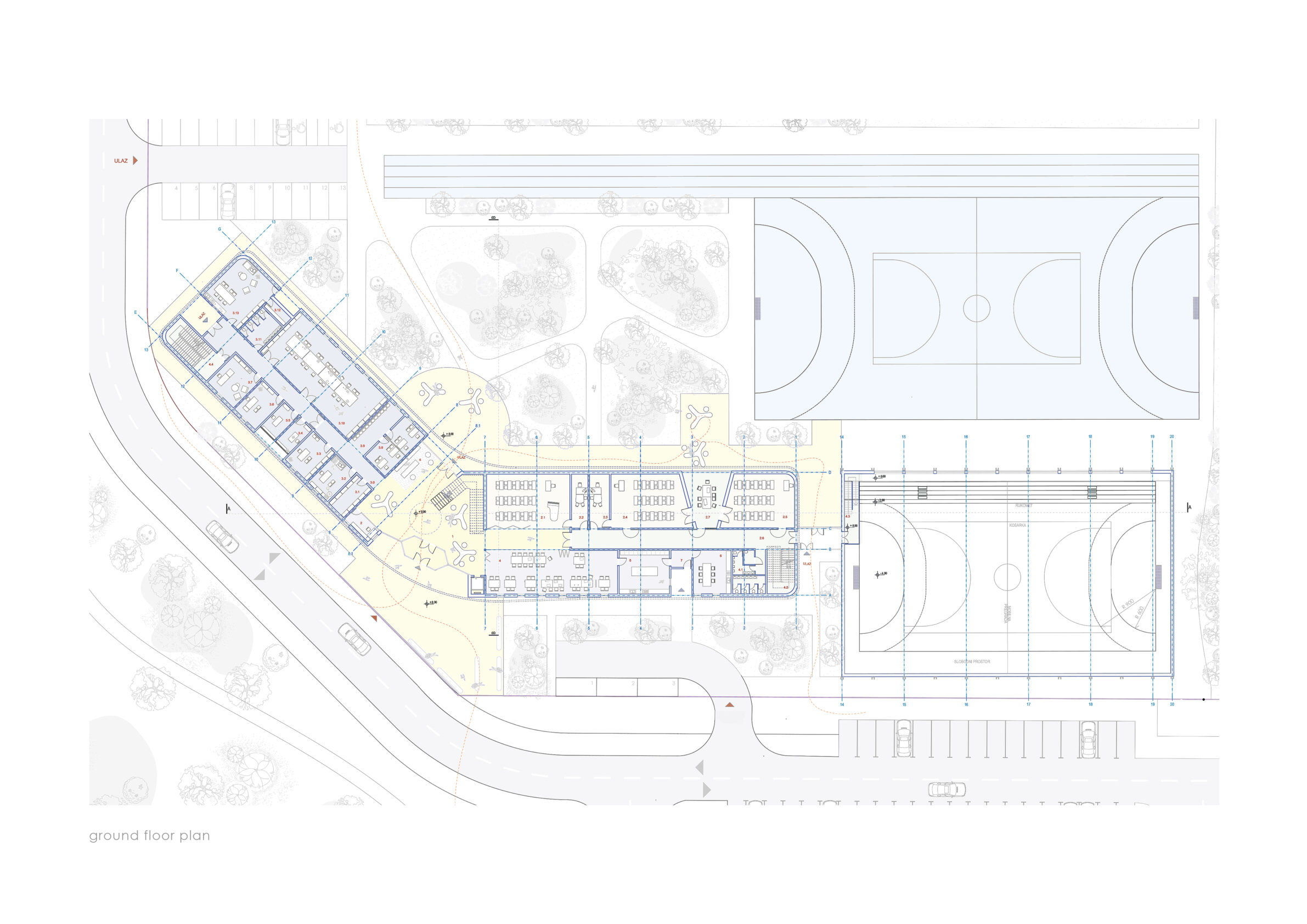
The Second High School Building in Podgorica was a competition proposal developed with DVARP team, the competition was announced in 2025 by the Ministry of Spatial Planning, Urbanism and State Property.
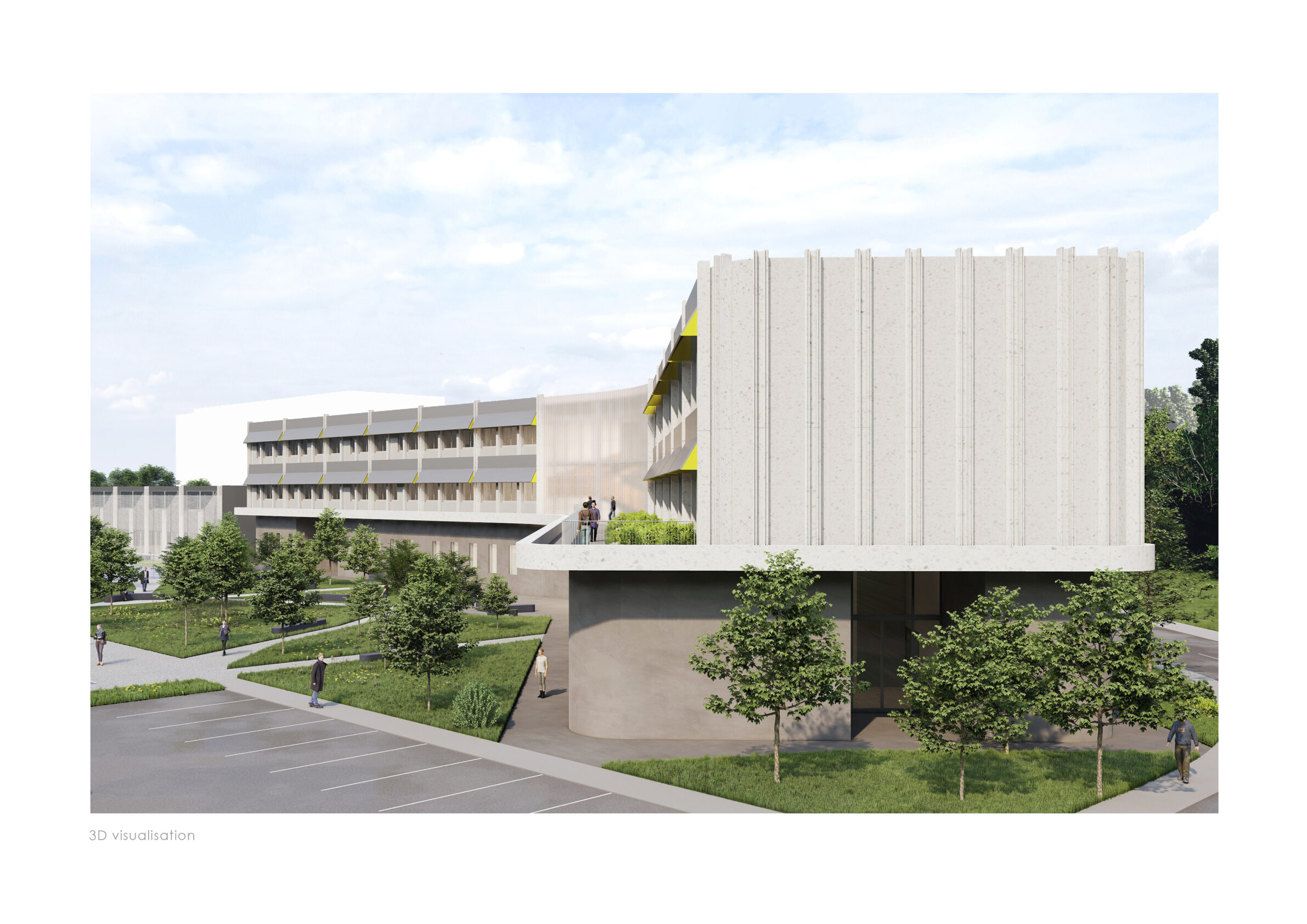
The high school building is located near the University campus. Its spatial organization clearly distinguishes three pavilions: two pavilions for learning facilities, and a third pavilion dedicated to sports and recreation. All three pavilions are connected into a unified structure, while the school courtyard is linked to the University campus, thereby establishing a connection with the surrounding educational facilities.
Sustainability was a key consideration in the selection of façade materials. Prefabricated microcement elements allow the building to heat up and cool down more slowly, while brushed aluminum canopies provide a comfortable environment in the classrooms during the summer days and sunlight to penetrate during the winter.
The form, materiality, and spatial organization were designed with the goal of creating energy-efficient
building that provides students with a comfortable environment throughout the year.
CONTOURED BENCH
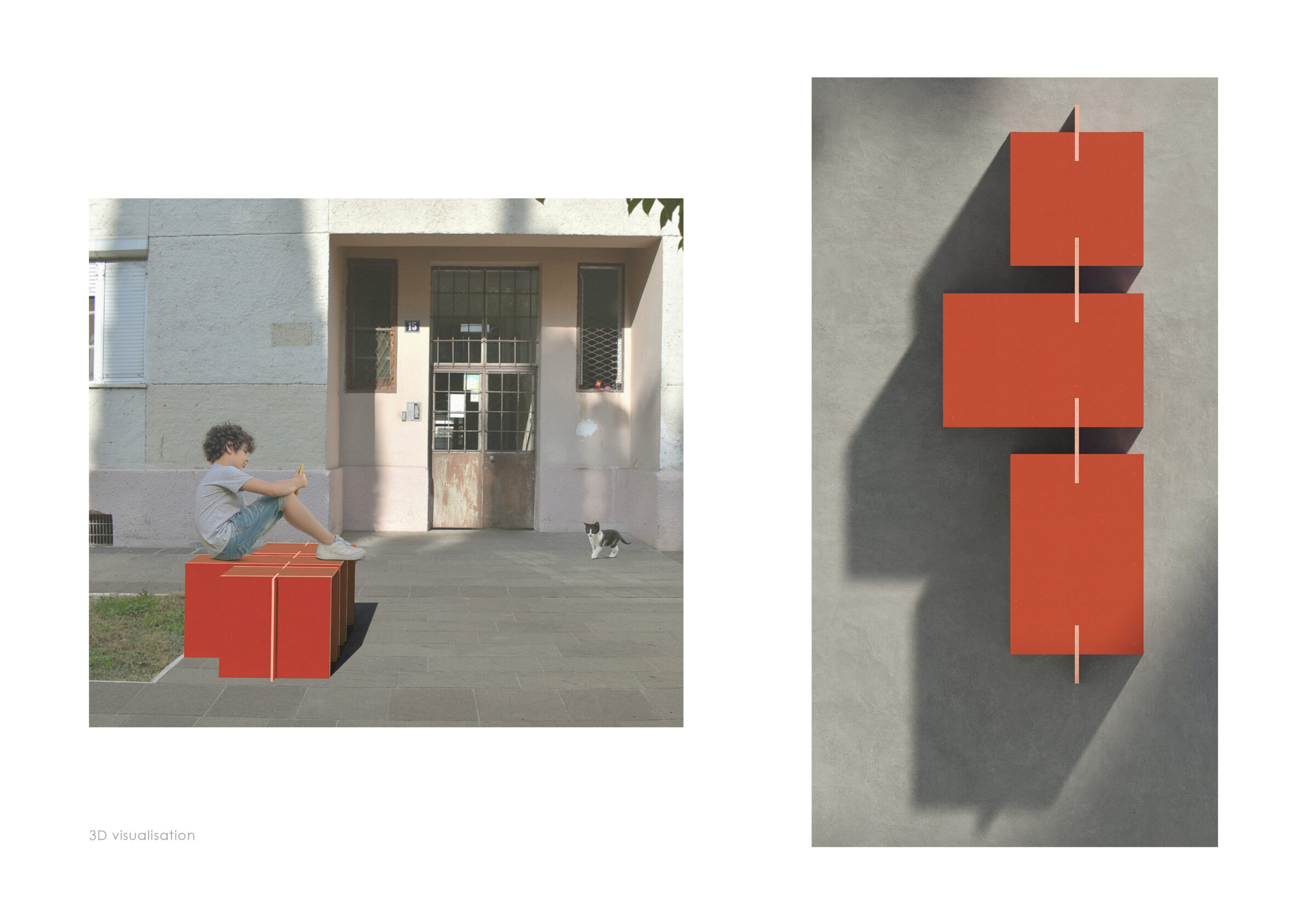
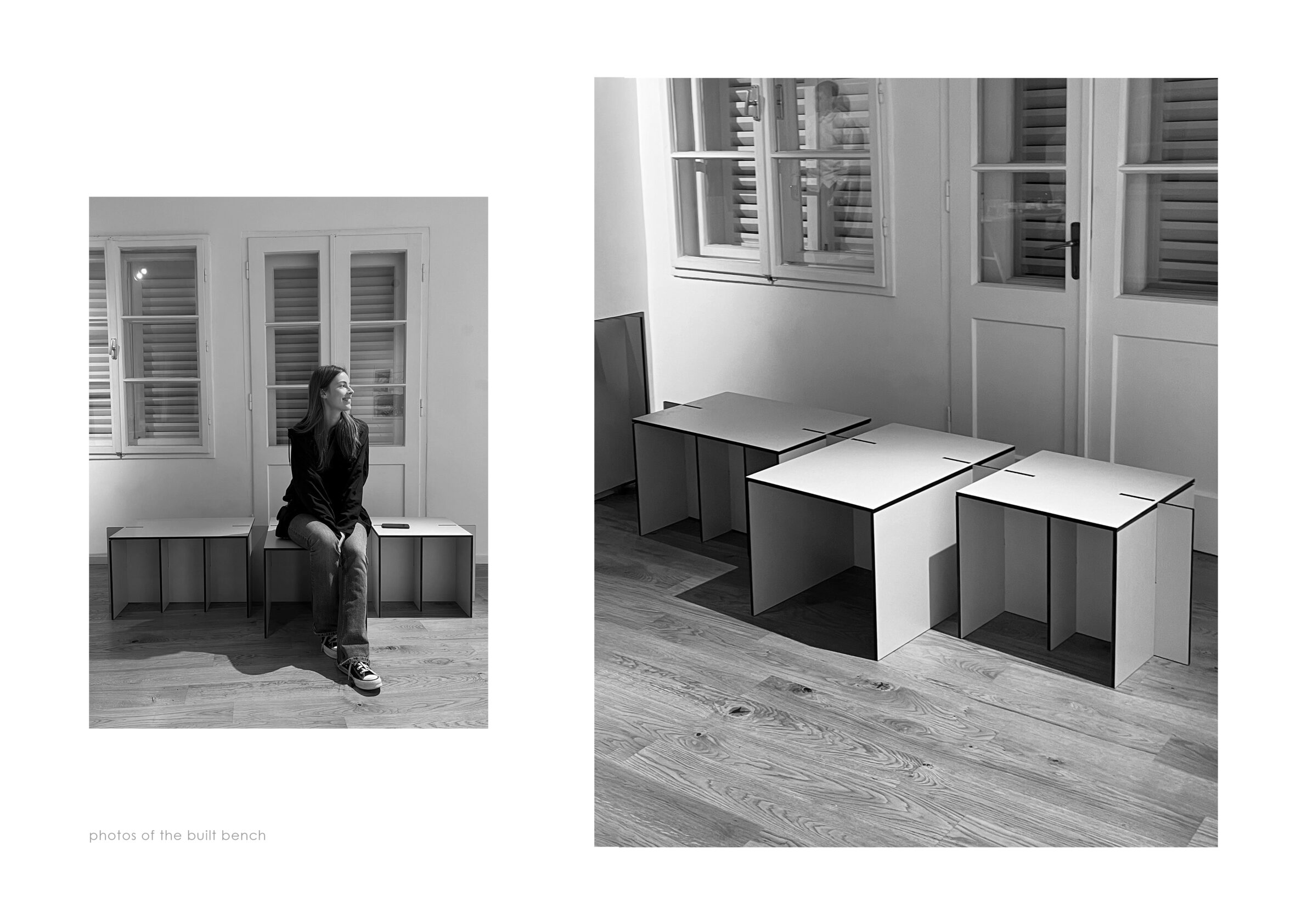
The Contoured bench was developed in response to a student competition for urban furniture design in Podgorica. It was awarded first prize and subsequently realized.
The contoured bench is designed for both, outdoor and indoor environments, where form and function merge into a seamless whole. The bold contrast between the red surfaces and their light edges emphasizes the bench's silhouette, clearly articulating each component with refined visual clarity.
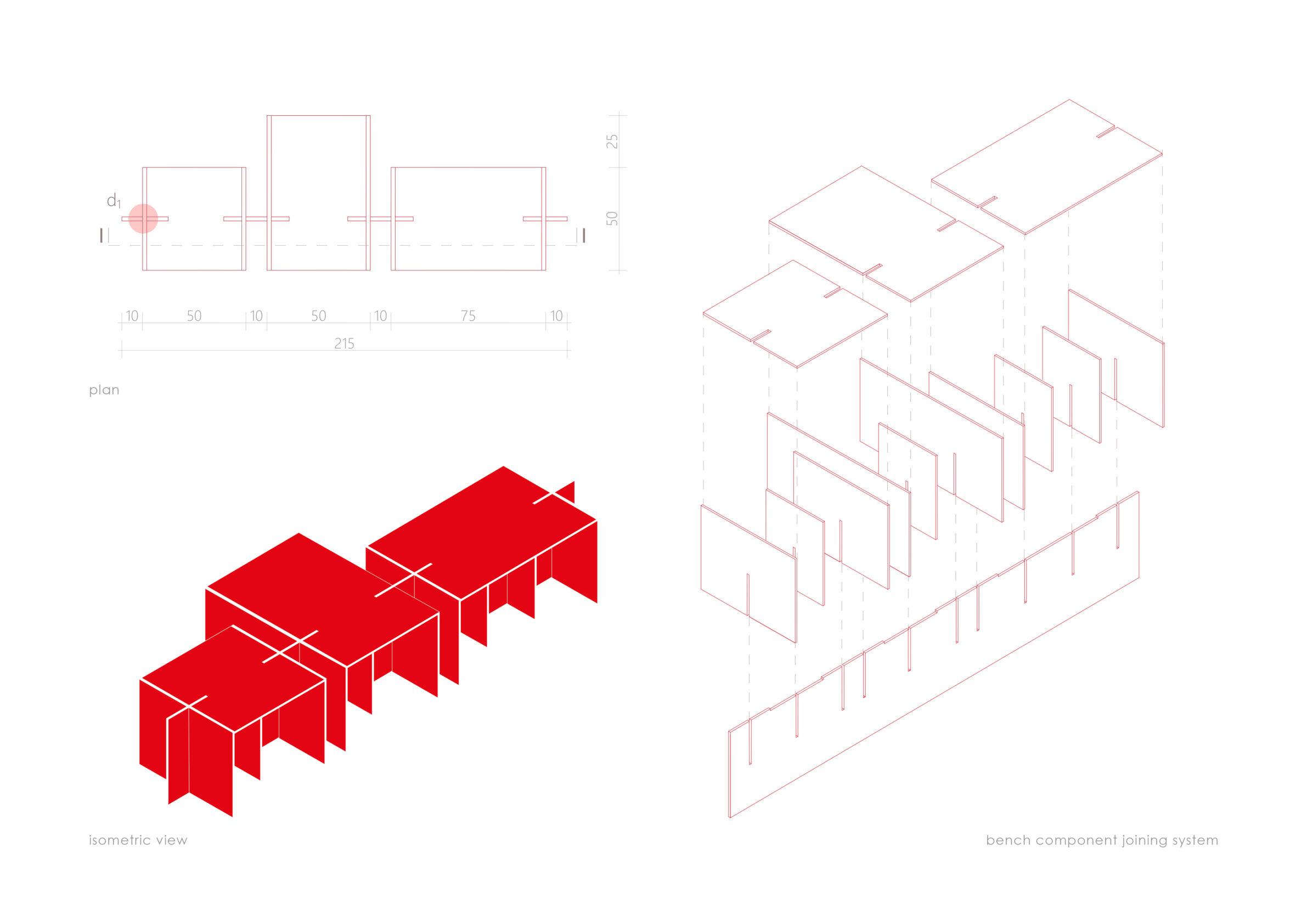
The design process begins with a 50 cm square module, replicated with a 10 cm gap to establish a consistent rhythm between the elements. By extending the initial square into a rectangular form, a dynamic composition emerges while also enhancing ergonomic comfort.
The seating surfaces are supported by vertical structural elements, whose stability is reinforced by a
series of smaller cross-components spaced at regular 25 cm intervals-half the width of the original module. These pre-formed elements allow for effortless assembly and disassembly, making the bench highly mobile and adaptable to a variety of spatial contexts.

Anđela Bubanja
Anđela Bubanja graduated from the Faculty of Architecture in Podgorica. Her approach to architecture is shaped by an artistic orientation, allowing her to perceive architecture not only as a functional and spatial discipline, but also as a medium of expression, creative experimentation, and interaction with the surrounding context.
During her studies, she participated in several national architectural competitions, receiving awards, and was among the authors of Canopée, the first realized student-built pavilion within the University Campus in Podgorica. This early experience informed her ongoing interest in small-scale structures and exhibition architectures as tools for activating public space.
In her master’s thesis, she explored principles of intervention in landscape, with a particular focus on scenic roads and the influence of landscape elements on the design and materialization of the newly designed structure.
Following graduation, she joined the architectural studio DVARP, where she has worked on residential and public projects, as well as national and international competitions through research-oriented practice. Her practice combines conceptual precision with attention to spatial experience, material articulation, with a strong emphasis on sustainability and the quality of spatial experience for users.
Contact
abubanja99@gmail.com
Powered by