


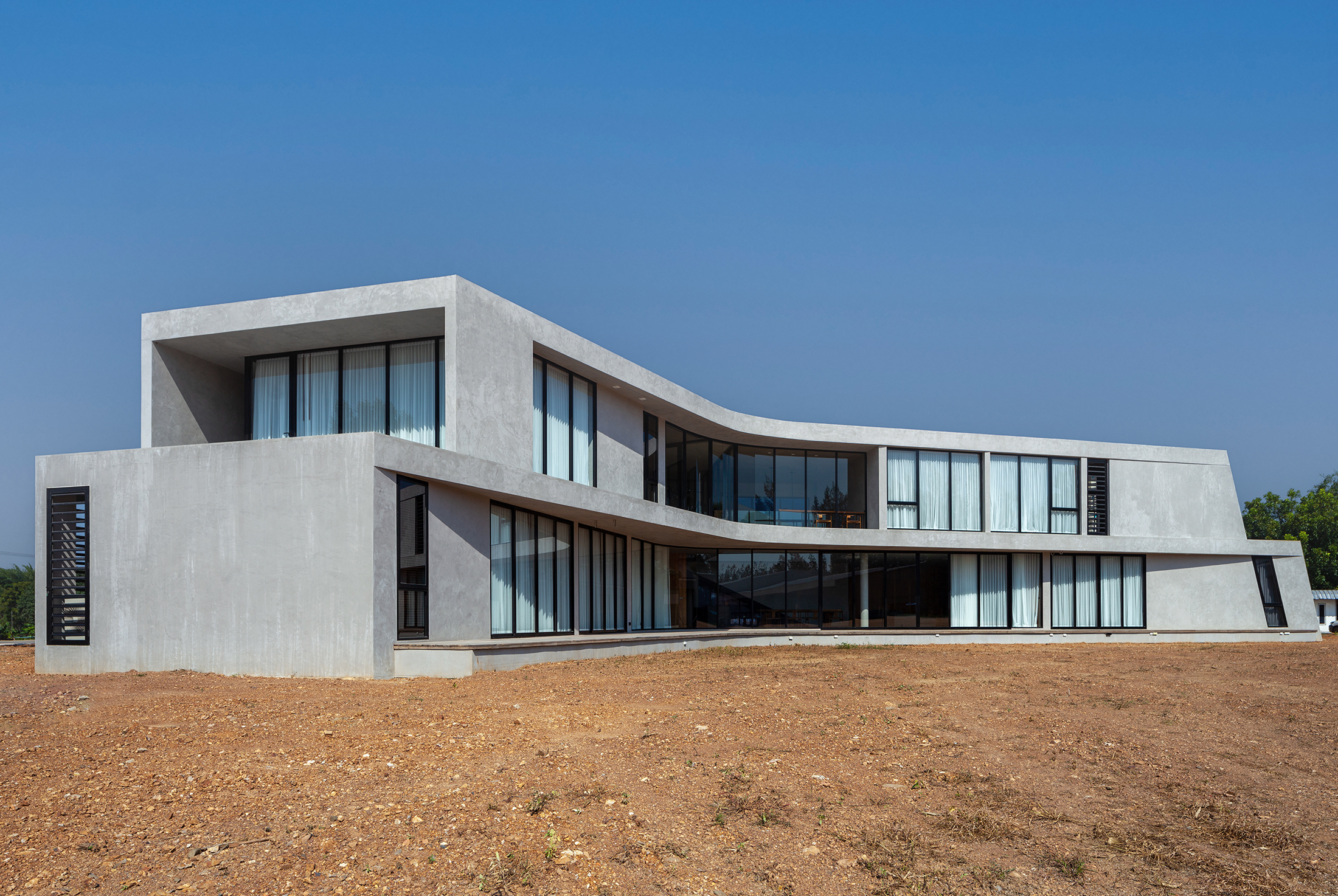
The house is located in close proximity to a large agricultural processed-food factory owned by the owner’s family, in order for the management and supervision of all operations to be done closely and conveniently. One side of the residence faces an old house, while the other faces a drying bed field, with a distant panorama of Indian pine trees and mountains.
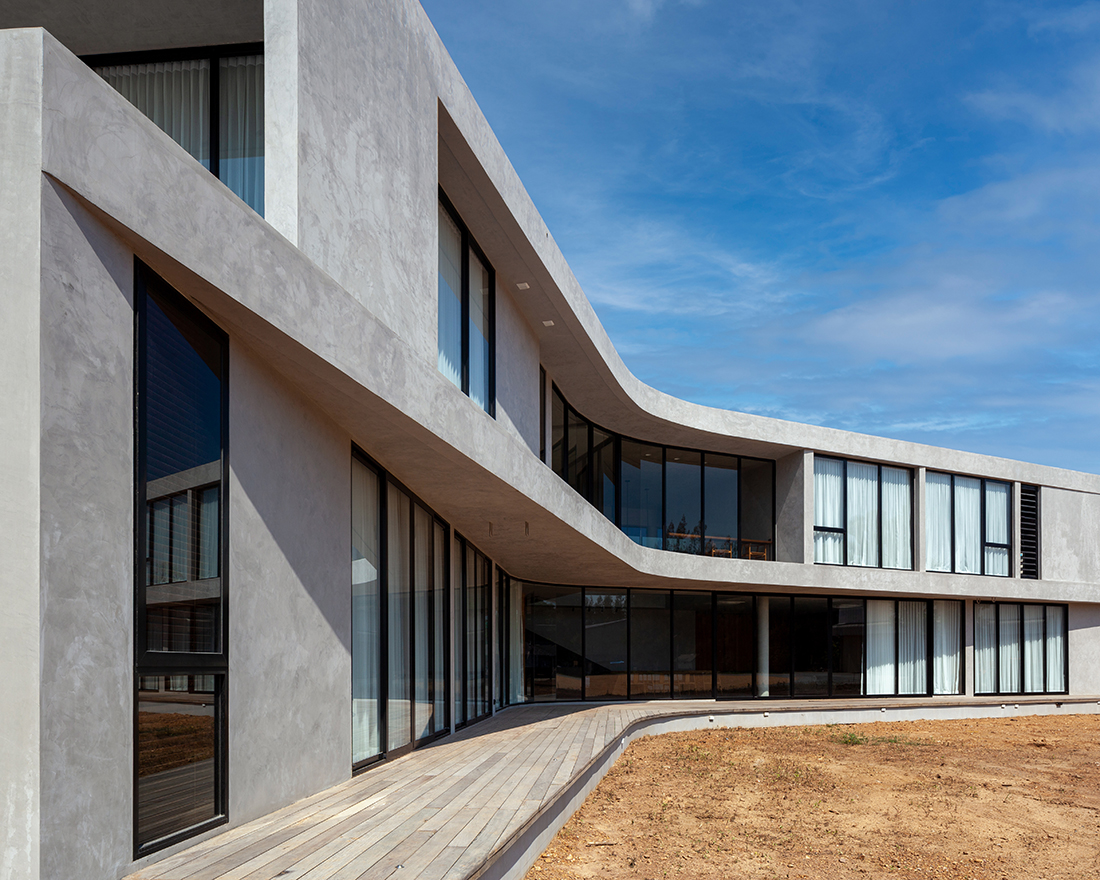
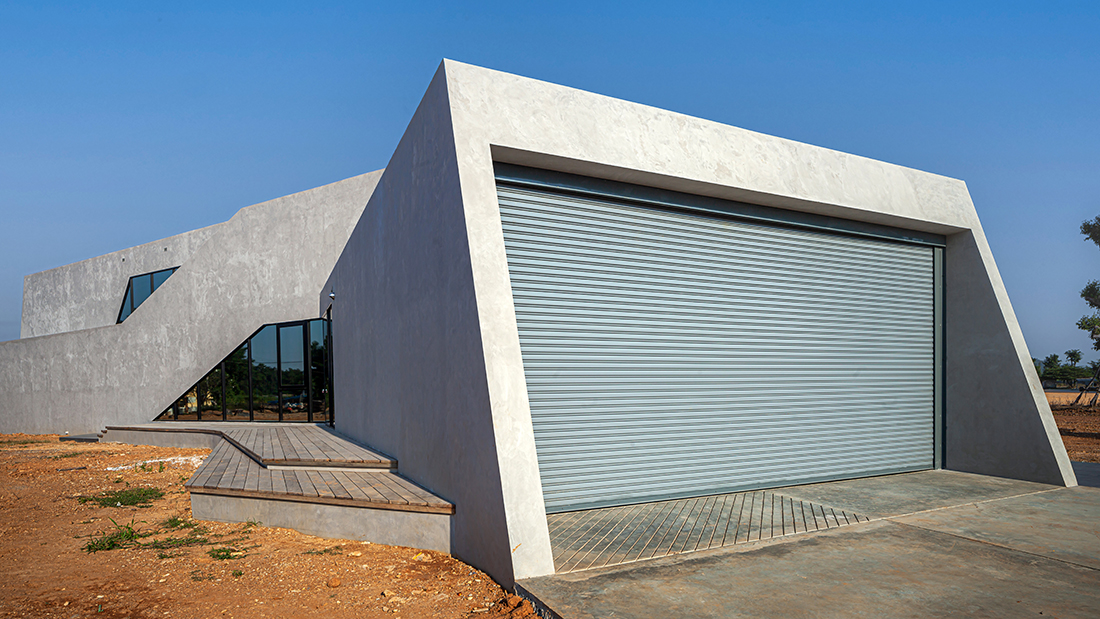
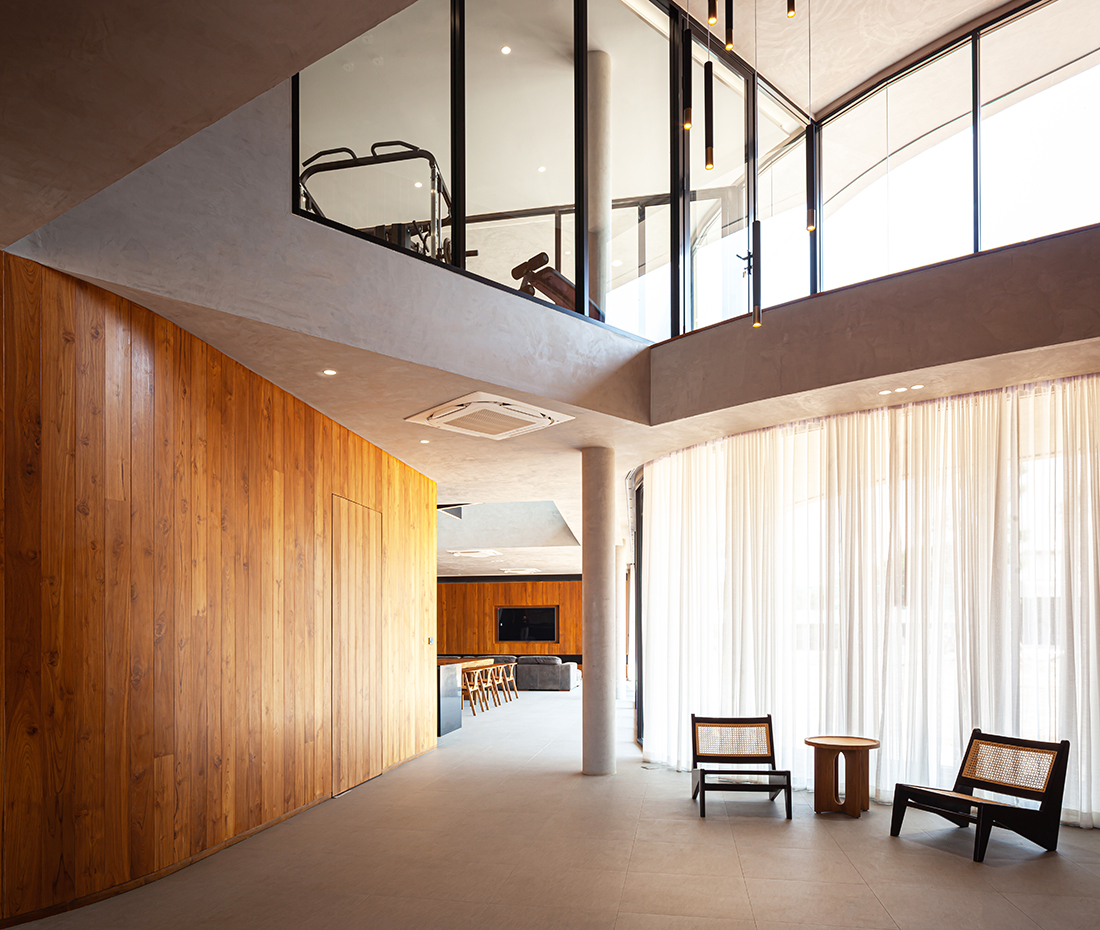
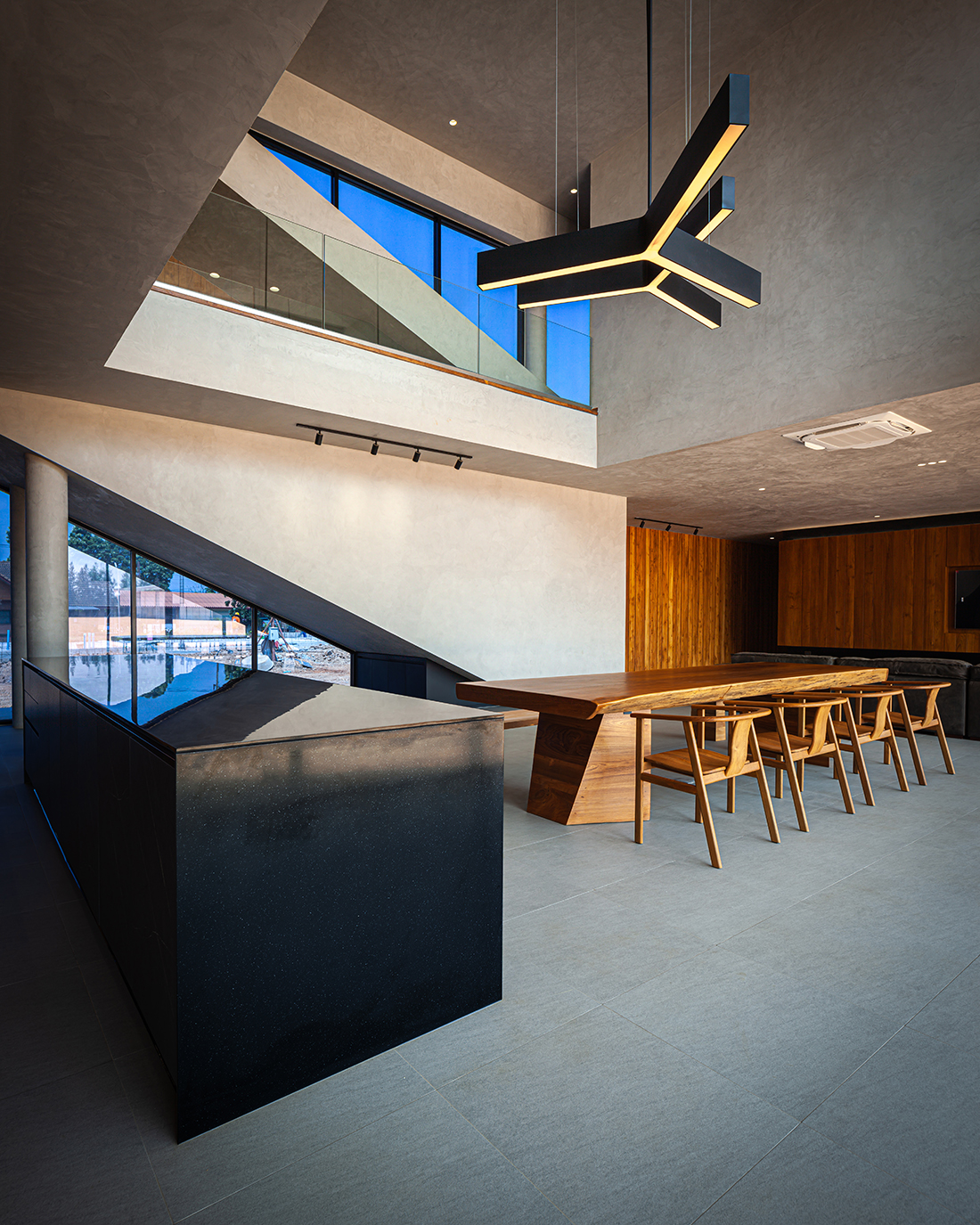
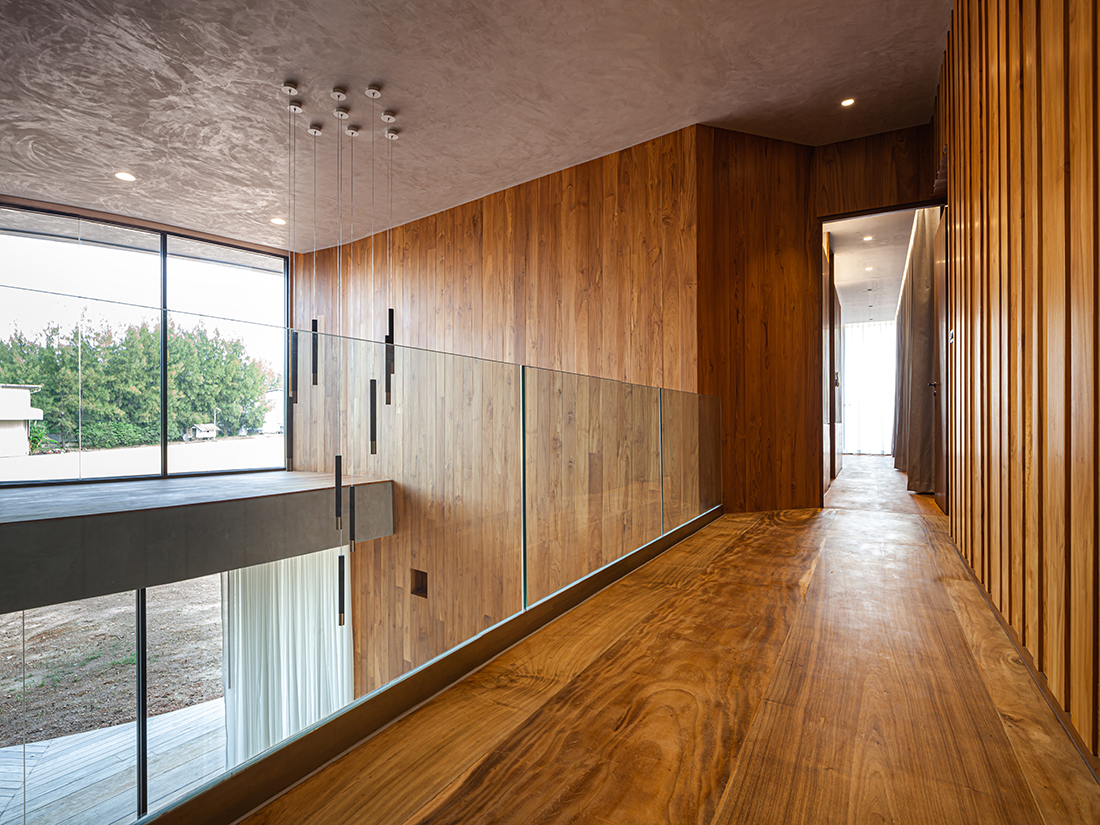
Given the site’s context and the owner’s requirements, the design of the house, with 360-degree access to its surroundings, made perfect sense. The house program is divided into three sections and allocated in a layout divided into three axes: the service area (parking and kitchen), the common area (living, dining, pantry), and the private living quarters, where bedrooms and personal spaces are located. The second floor consists of four bedrooms and a fitness area, all facing the dune-like view of drying bed fields with pine trees and mountains in the background. The flow and lines interweaving the functional spaces connect the three axes together.
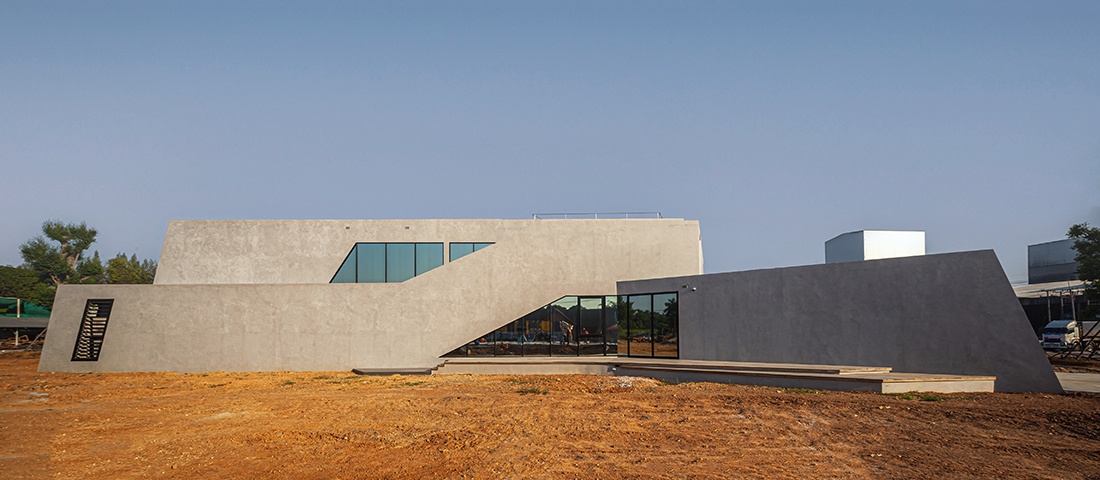
Aside from the continuity of lines and spatial program, the exterior of the house is created as a cohesive concrete mass, merging the residence with its immediate environment in a monochromatic concrete color. Wood is used as a primary component of the interior space, making the overall mood and tone ideal for a living space. The name “House in the Dust” conveys the characteristics of the project and extends beyond the physical appearance of the architecture to the owner’s way of life.

Details
Architecture
Vaslab Architecture; Vasu Virajsilp, Nattapol Panjasakunwong, Yanyong Apagavinkul
Client
Pradit Rungruangsombat
Year of completion
2023
Location
Phetchabun, Thailand
Total area
1.030 m2
Photos
Spaceshift Studio
Partners
Double Click Construction; Piya Sawangmetee
Powered by