


BIG SEE Interviews is a series of intimate, unfiltered conversations between architects, not just about buildings, but about how we think, live, and imagine our future environments.
In this edition, Lutz Kucher speaks with Sebastian Aristotelis, co-founder of SAGA Space Architects, a studio exploring architecture in some of the world’s most extreme environments, from Arctic isolation and underwater habitats to future life on the Moon. The conversation followed Aristotelis’s appearance at the BIG SEE Conference, where he spoke in Lutz Kucher’s module The Great Reduction. It moves from 60 days inside a five-square-metre capsule in Greenland to the role of privacy, endurance, intuition, human craft, and the question at the heart of BIG SEE 2026: What Is Just Enough?
Watch their insightful conversation or dive into the transcript.
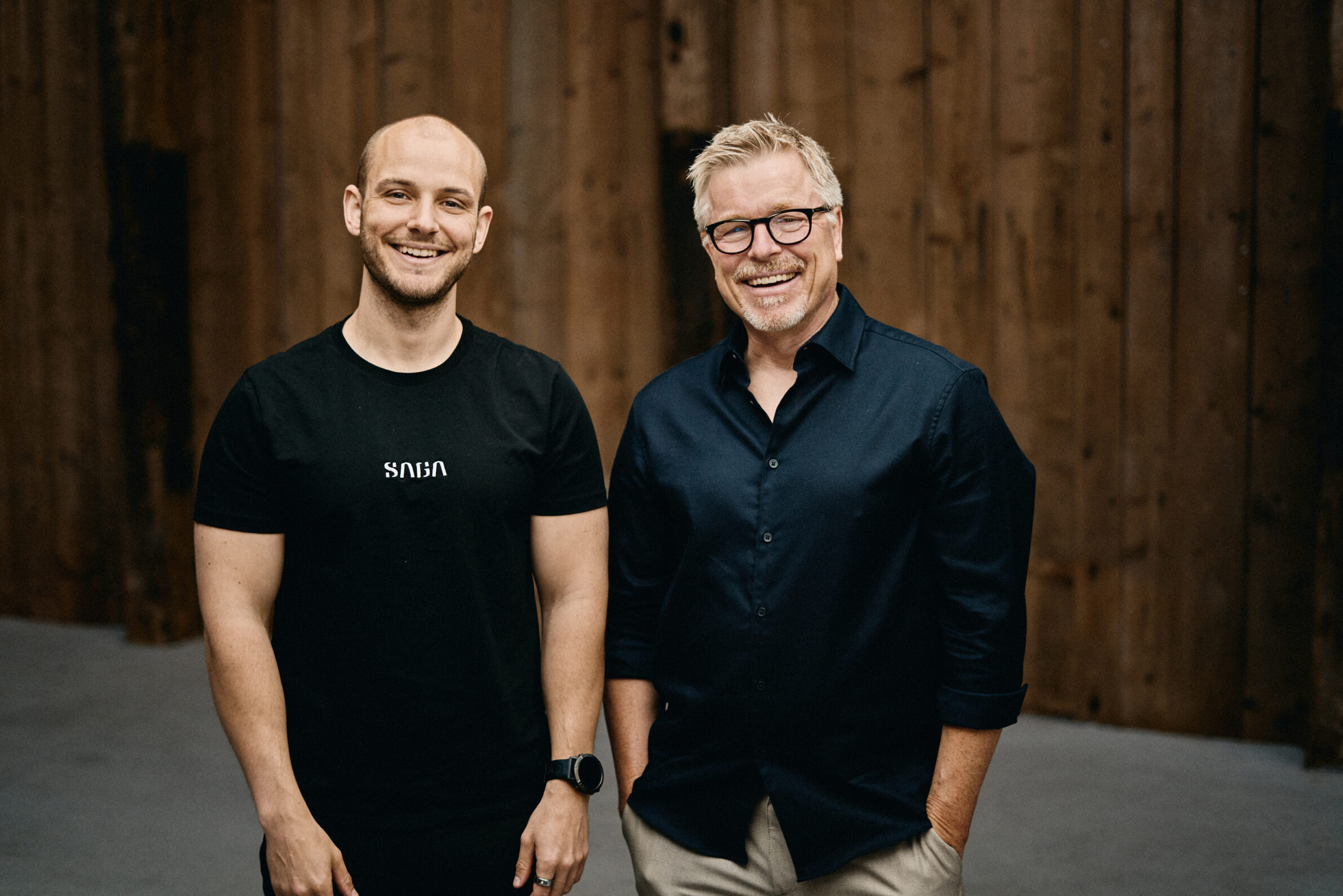
Lutz Kucher: Yesterday, you took us on a fantastic journey to the moon and back, and I would love to zoom in a little more — first on your capsule and your time in Greenland, then on SAGA: why you started it, what your goal is, and finally how all of this connects to the conference theme, How Much Is Enough? Let’s start with the capsule. We often talk about user experience and testing, but testing a space for 60 days is probably one of the most extreme examples imaginable. Take me to day one in the capsule: the first hour after the door closed. What did your body do? What did your mind do?
Sebastian Aristotelis: That was a crazy moment. Maybe I should begin by saying that when we arrived in Greenland, when the habitat was set up and we moved in, that was actually the peak of the mountain in terms of exhaustion. It sounds like the beginning, but we had already spent almost two years preparing for this: designing it, building it, transporting it, fundraising for it, and getting it to Greenland. So when we finally moved in, the first feeling was a huge sense of accomplishment. There was this sense of: now we just need to survive this and stay here. But that was immediately taken over by another feeling: this place is so small and so messy. We had just thrown everything inside, moved in, shut the door and started the mission, because time was running and we needed those 60 days. All the camera equipment was everywhere. There was not enough shelving. It felt so claustrophobic in that first moment, because you could not sit anywhere. We had not even assembled the chairs yet. So you are standing, two people, in a space the size of a tiny bathroom, with equipment everywhere, and you do not even know where to start. That feeling was overwhelming. But then, day by day, you start to understand: I put my toothbrush here, the camera equipment goes there, the powdered food goes over here. You start making systems. After three days, it started to feel like a home.
Lutz Kucher: I did not realise you had two years of preparation behind you. It must have felt like finally there was no to-do list, or at least less of one. Did you do experiments there as well?
Sebastian Aristotelis: People think we just relaxed for 60 days, but it was more than a full-time job. I think we worked 60 or 70 hours a week while we were there. Every day we would go out and get ice for melting water. We would go out with an axe, find glacier ice, cut off a piece, bring it back and melt it for that day’s water. We had to check the generators, add diesel, get jet fuel for the stove inside. All these chores ended up taking maybe half the day. We also tried very hard to keep the place clean, because that feeling of chaos is so overpowering. On top of that, we were filming two documentaries and participating in nine research studies. It really was a full-time thing. The entire expedition was 100 days, and I think there were only two or three days when we said: okay, we are too exhausted, we have to take a day off.
“Five square metres with another person for 60 days. At what point did you start lying to him — even tiny lies — just to preserve the space?”
– Lutz Kucher
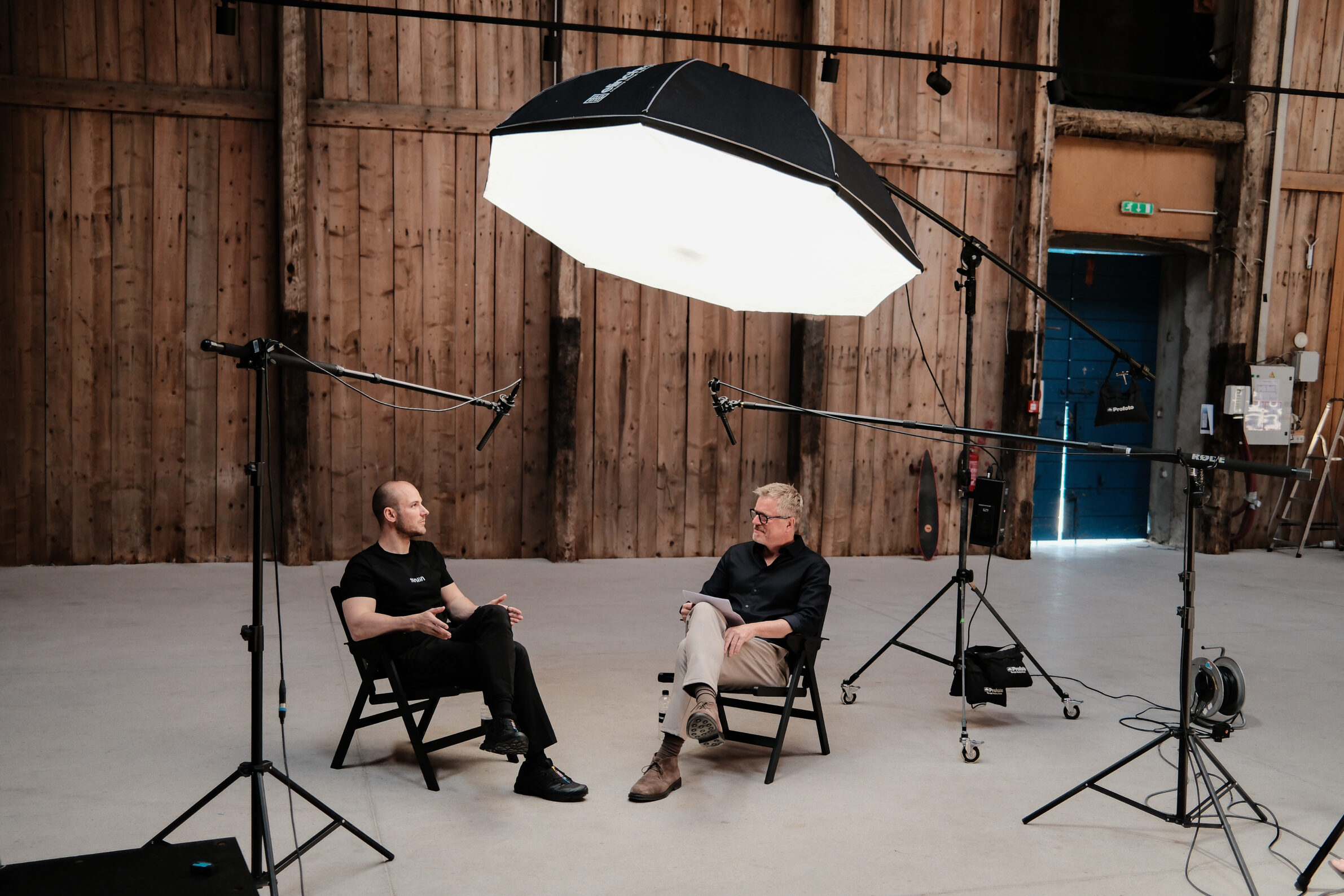
Lutz Kucher: What did you do on the first day off?
Sebastian Aristotelis: I think we slept in. I stayed in bed a little longer, read some extra books, had some extra coffee, watched two movies. It was great. And then back to work.
Lutz Kucher: What is a moment from those 60 days that you have never told anyone — not because it is secret, but because it sounds too small?
Sebastian Aristotelis: There are so many small moments that are interesting to me. For example, after a while we started to develop preferences for the type of ice we would chop. All our drinking water for 100 days was ice. Every day we would go out and chop ice, and we would look for the good ice. And what is good ice? We called it black ice. It is completely transparent. A lot of ice is milky, but this ice, from the glaciers there, is maybe 18,000 years old, from an ice age. It breaks off from the middle of the Greenland ice cap, floats out towards the ocean, gets washed up on land, and then everything freezes. These icebergs are simply frozen into the ground. So we would walk around and look for these crystal-clear chunks of ice. And when we found one, it was like: today I got really good ice.
Lutz Kucher: Like a good wine.
Sebastian Aristotelis: Exactly. The other type of ice is milky white, and the water becomes a little milky. But the black ice tastes different. It is so fresh and crystal clear. When it is all you drink, you start to sense the nuances. And when there is no shampoo, no perfume, nothing artificial around you, your senses become so sharp. This type of ice is also very dangerous when you are sailing, because it is completely transparent. That is why they call it black ice. You do not see it. It may even have been the kind of ice that hit the Titanic.
Lutz Kucher: You mentioned that there are different types of ice, and it reminds me of the idea that in certain cultures there are so many different words for ice and snow. Five square metres with another person for 60 days. At what point did you start lying to him — even tiny lies — just to preserve the space?
Sebastian Aristotelis: I think we did that before the mission started. Karl is one of my very closest friends. We founded the company together eight years ago. After the mission, he left the company and went to the US to study something else. I think he found out that this kind of lifestyle was probably not for him. But to this day we are really good friends, and we still work together. We had already been living together for a long time before that: on couches in different countries, on floors, in deserts, in so many places, often without mattresses. So we were used to those conditions. We are also both very private people. I am quite introverted, and so is he. We both need our alone time. What happened very quickly is that we tried to help each other live within the illusion of privacy. If one person had to get off the chair, walk two steps and open the small door to the toilet — which was actually quite an uncomfortable experience, because you can hear everything — the other person would automatically shift their chair to the side and put on headphones. We did not even have to communicate it. It became like a balance, like a tango of privacy. That was the key to making the expedition successful: having tremendous respect for each other’s needs, even when you might not fully understand them.
“You try to help the other person live within the illusion of privacy.”
– Sebastian Aristotelis
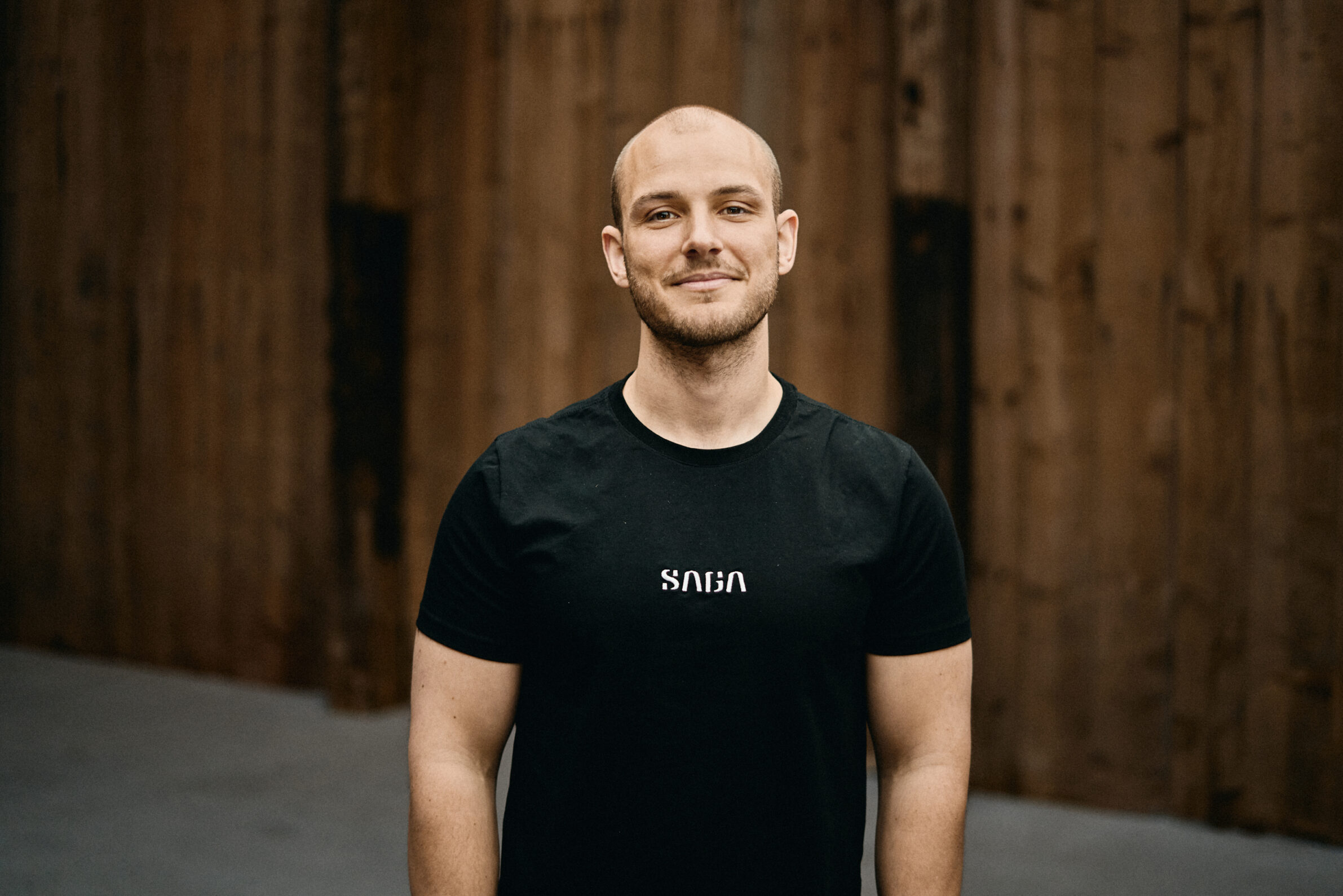
Lutz Kucher: So creating the feeling for the other person that he has privacy was probably one of the most important conditions for succeeding over 60 days.
Sebastian Aristotelis: I would say so, especially from a social point of view. If the social situation is strong, the likelihood of success for the mission is much higher. The astronauts that NASA and the European Space Agency are looking for today are also people with strong social intelligence — people who are comfortable to be with. During the Apollo era, of course this was also important, but the emphasis was much more on the fighter pilot, the military hero, the performance-driven person. Now the missions are much longer. Astronauts stay in space for a very long time, they have a lot of research to do, and they really need to work together.
Lutz Kucher: So this is almost a new category of lying — empathetic, caring lying.
Sebastian Aristotelis: Yes. It is mutual, agreed, survivable lying. You help to create an illusion for the other person to live in. I think that is extremely important.
Lutz Kucher: Let’s close the capsule with one last question. What did you eat there that you now never want to eat again?
Sebastian Aristotelis: Nothing. I loved it. We ate a powdered food called Huel, which is a full meal replacement. It is not protein powder; it is actually a full meal. In the morning we had a vanilla-flavoured cold shake. For lunch and dinner we had tomato soup.
Lutz Kucher: Nothing else for 100 days?
Sebastian Aristotelis: Nothing else. We were sponsored by Huel, so we had something like 250 kilos of it. We continued to be sponsored by them for two years after the mission, so the entire office ate Huel for lunch for two years. At some point they told me they could not do it anymore.
Lutz Kucher: No more tomato soup?
Sebastian Aristotelis: No, after that we had many different flavours. This was in the early days of Huel as a company, so they only had one flavour. To this day, we are still the only people who have lived for 100 days exclusively on their product.
Lutz Kucher: That really surprises me. From what I know about submarines, the cook is one of the most important people, because food helps people stay in some kind of comfort zone through variety. But you survived without that.
Sebastian Aristotelis: I probably do not represent the majority of people here. For many people, including astronauts, food is extremely important. I think I am not one of those people.
Lutz Kucher: That brings me to SAGA. You could have founded a normal design studio. Why this? Why something so extreme?
Sebastian Aristotelis: Any studio you found is going to be very difficult. Any startup you found is probably going to be the hardest thing you have ever done. If I wanted to work with more conventional architecture, I would rather work in a studio. I would not need all the stress and anxiety of founding something myself, with my phone always ringing and only problems coming in — or at least that is how it feels a lot of the time. We did this because there was nowhere else to do it. When we were students, we talked with big architecture studios around the world, in the US space sector and in Denmark, but the kind of thing we wanted to do did not really exist anywhere.
“The key to making the expedition successful was having tremendous respect for each other’s needs, even when you might not fully understand them.”
– Sebastian Aristotelis
Lutz Kucher: Was the idea of space architecture already the driving motivation?
Sebastian Aristotelis: Space architecture became very clear in my head the year before I started architecture school. I always loved space, and I saw how fast the space sector was developing. But I never thought that studying architecture could lead to that. It did not seem like a possible outcome. Then I saw that rocket development was growing very fast, technology was developing, and I thought: maybe there is a chance humans will go to the moon again in my lifetime. Maybe they will go to Mars for the first time. I thought it would be interesting to pursue. And if it did not work out, it would still be an interesting journey, and I would probably learn something I could use somewhere else. But from childhood, I knew I wanted to work with architecture in extreme environments: underwater, on top of a mountain, in a desert. I love that kind of architecture.
Lutz Kucher: Is that also because your private leisure time is very outdoor-oriented or extreme?
Sebastian Aristotelis: There are definitely people who are more outdoor people than I am. Most of the day I sit in front of a computer, which I actually really love. I love sitting and doing 3D modelling and things like that. But I also have that side where I really like expeditions: going to the top of a mountain, being in the jungle or in the desert.
Lutz Kucher: What is a part of running SAGA that nobody warned you about upfront?
Sebastian Aristotelis: I think no one warned me about anything. I do not know that many people who run a studio like this. To be honest, I think it has turned out very much like I anticipated. In terms of lifestyle, I had thought about it and planned for it a lot when I was a student. But I do wish it was not so difficult on my private life. It is really a lifestyle of saying no to a lot of things: family things, social things.
Lutz Kucher: Because your passion requires so much?
Sebastian Aristotelis: It requires me to give it 100 percent. Now that I have a son, those things really bother me. But I am also going to bring my son on expeditions. That is very clear to me. Hopefully he will find joy in that too.
Lutz Kucher: Was there a project you turned down, or a client you said no to, because it did not align with your values or philosophy?
Sebastian Aristotelis: Yes. There is one that stands out. A country approached us about a very weaponised technology project. It was also a country we did not align with. That was a clear no. We do work with the defence industry, because it is closely related to what we do. For example, we worked very closely with the Arctic defence in Greenland during our expedition. But we try very clearly to stay on the defence side of it. There have been opportunities we turned down because they were too aggressive.
Lutz Kucher: Moving from SAGA to you personally: what is something you believed about design at 25 that you now find embarrassing?
Sebastian Aristotelis: Recently, I have started appreciating the art in architecture more. When I was a student, I had big ideas about what architecture could be. I believed that humans were incapable of achieving what architecture really could be, because architecture is influenced by so many factors. A simple example is the direction of the sun. Where is the sun? Where is the view? What is the climate? Who is the client? What local building materials are available? Humans are limited in the amount of information we can hold and design with at one time, whereas a computer could simulate something a thousand, a million, or a billion times with all the parameters that might make a great house. I had this vision of a perfect algorithm that could generate a house better than a human.
Lutz Kucher: So a very rational, functional, performance-driven idea of design.
Sebastian Aristotelis: Yes. But I also believed that when you follow functionality to that extent, it creates beauty, a bit like in nature. The space we are sitting in right now is incredibly beautiful in a very rustic way. And if we look at nature, everyone can agree that nature is beautiful. But nature does not really think about aesthetics. Everything is there for a reason. A tree, its crown, its big leaves — all of that exists because of function, because it needs to reach the sun. So I still think that if you follow the laws of physics, you end up creating something that is naturally beautiful. But I have also learned that this is a very complicated and utopian view of architecture, and also a very sterile way of thinking about it. In the reality I live in now, art is a good approximation of this utopian architecture. You can get very far with intuition.
“I still think that if you follow the laws of physics, you end up creating something that is naturally beautiful. But I have also learned that this is a very complicated and utopian view of architecture, and also a very sterile way of thinking about it. In the reality I live in now, art is a good approximation of this utopian architecture. You can get very far with intuition.”
– Sebastian Aristotelis
Lutz Kucher: It sounds as if art and architecture are not the opposite of your highly rational, technical approach, but something that contributes to it. In what way?
Sebastian Aristotelis: A very practical example is Karl, my co-founder at SAGA. He is one of the most technically gifted architects I have ever worked with. At the same time, he is also one of the best hand-drawers I know. Why do these things go together? You might think you only need the computer, the big graphs, the scripts, to create great architecture. But there is something in hand drawing — inaccuracies that create small moments, that spark your imagination and make you think further in the sketch. There is a place for both in the process of making good architecture. In the next chapter of my architecture career, we will still do all the very technical things: simulation, generation, all of that. But I think we will also celebrate human craft more.
Lutz Kucher: That is good to hear. So we are not going completely digital and virtual yet.
Sebastian Aristotelis: Not yet.
Lutz Kucher: Let’s make that “yet” last a little longer. What does your mother think of what you do?
Sebastian Aristotelis: My mother is very proud, but she hates the expeditions. She does not like them at all. When I went to the Arctic, she did not like it. When I went underwater, the worst part of the whole experience was telling my mother I was going underwater. That phone call was horrible. I hated it. It was heartbreaking. It gives me so much perspective now that I have my own son. If he is similar to me and ends up going on expeditions, I will have to be very supportive. But it will also be very challenging. You stay at home and just hope that in three months there will be a sign of life. It is not a pleasant experience.
Lutz Kucher: Could you imagine going on a Mars or moon mission?
Sebastian Aristotelis: Yes. I could see that as a very likely scenario in my mind. The moon would be a very quick yes. I would do that. I would come back. It would be one of the greatest adventures of the century. Mars is more complicated.
Lutz Kucher: Because you might not come back.
Sebastian Aristotelis: Exactly. If I were to come back — let’s say it is a two- or three-year expedition, you go there, wait for the next ship to arrive, and then return — I would still say yes. If it were more than that, I would have to say I do not know. Ten years is a long time. I do not have that many decades left.
“You have literally tested that question with your own body.”
– Lutz Kucher
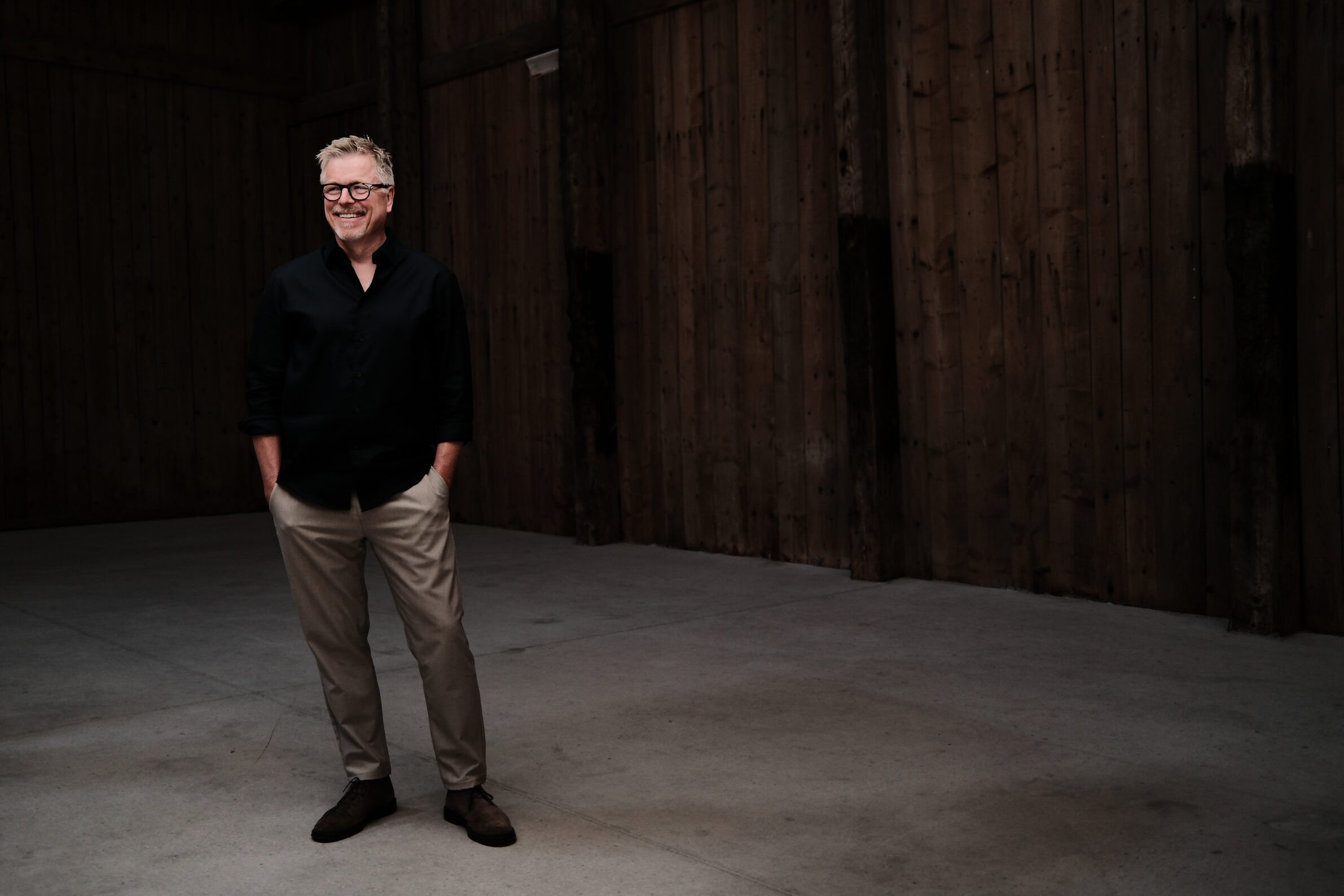
“The human being as a whole adapts much more quickly than I thought.”
– Sebastian Aristotelis
Lutz Kucher: BIG SEE is asking: How Much Is Enough? You have literally tested that question with your own body during 60 days in the capsule. What answer did your body give you that your brain still resists?
Sebastian Aristotelis: I have tested that question throughout my life. When I did my final exam at architecture school, I slept under the desk for 16 days. It has been a recurring thing in my life to test boundaries and see how much I can really push things — and how little I can actually live with. The distinction between body and mind is interesting. In Greenland, we were always walking around with rifles because of polar bears. When I came back to Denmark after more than 100 days, I had become so accustomed to walking outside with a rifle that I was constantly reaching for something that was not there, to check that I had it. It was in my body, not in my mind. My body had been trained to make sure it was there, because it was a comfort thing. I felt comfortable with it, and uncomfortable without it. So the mind and the body adapt at different speeds. But overall, what is interesting is that the human being as a whole adapts much more quickly than I thought. It took a very short amount of time for the habitat to feel like home. I think it would be the same even if we had much less. We still need to be comfortable and healthy, but if we had much less stuff, I think we would adapt extremely quickly. I do not think we need that much stuff. I keep telling myself that, even though over time we always get more.
Lutz Kucher: In the example of sleeping 16 days under the table, it sounds as if your mind was driving the whole show and your body just had to obey.
Sebastian Aristotelis: It used to be like that. I am 32 now, and after I turned 30, I could feel that my body also says no sometimes. That feels like a defeat in a way. But for the first 30 years of my life, it was exactly like that.
Lutz Kucher: Is there a project that even you would say is too extreme?
Sebastian Aristotelis: That point moves. In 2020, when we did the project in Greenland, we were not ready to do an underwater habitat. I knew that. But I also knew that at some point in the future, we would be ready. Right now, we are not ready to build a habitat for the moon entirely in-house. But every year, and with every project, we get closer to that goal. Every project we do is part of building that capability, and that is very intentional. We have never been closer to being able to build a fully compliant, safe habitat on the moon than we are now. At this point, we would comfortably be able to build a safe, very large underwater habitat to sustain humans for many years underwater.
Lutz Kucher: Would SAGA be able to design it, or actually build it as well?
Sebastian Aristotelis: Both. We could build it. We built the small underwater habitat. The next step is the big one.
Lutz Kucher: How deep was the underwater habitat?
Sebastian Aristotelis: It was only seven metres. But that was deep enough to feel the claustrophobia and everything that comes with it.
Lutz Kucher: One closing question. Instead of asking where you see yourself in five or ten years, let’s do it differently. If you could project yourself into one day ten years from now, could you describe that day? What are you doing?
Sebastian Aristotelis: There is this great saying that we overestimate what we can do in a year and underestimate what we can do in a decade. SAGA is eight years old, and I think we have done a lot in eight years. With companies, I believe growth can be exponential, especially as an architecture studio. You build reference by reference, and suddenly you reach a point where you have enough references to move further. In ten years, I think we will have two more offices: one in the US for sure, and one somewhere else. We will have built a large underwater habitat for astronaut training. And we will probably be quite far with an in-orbit space station — and one on the moon.
Lutz Kucher: Beautiful. Sebastian, thank you.
Sebastian Aristotelis: Thank you.
Edited by
Tanja Završki
Video and portraits by
Primož Korošec
BTS portraits by
Gregor Ravnik
Powered by