


BIG SEE Interviews is a series of direct conversations between architects, designers and thinkers—not only about buildings, but about how we live, work and imagine the future.
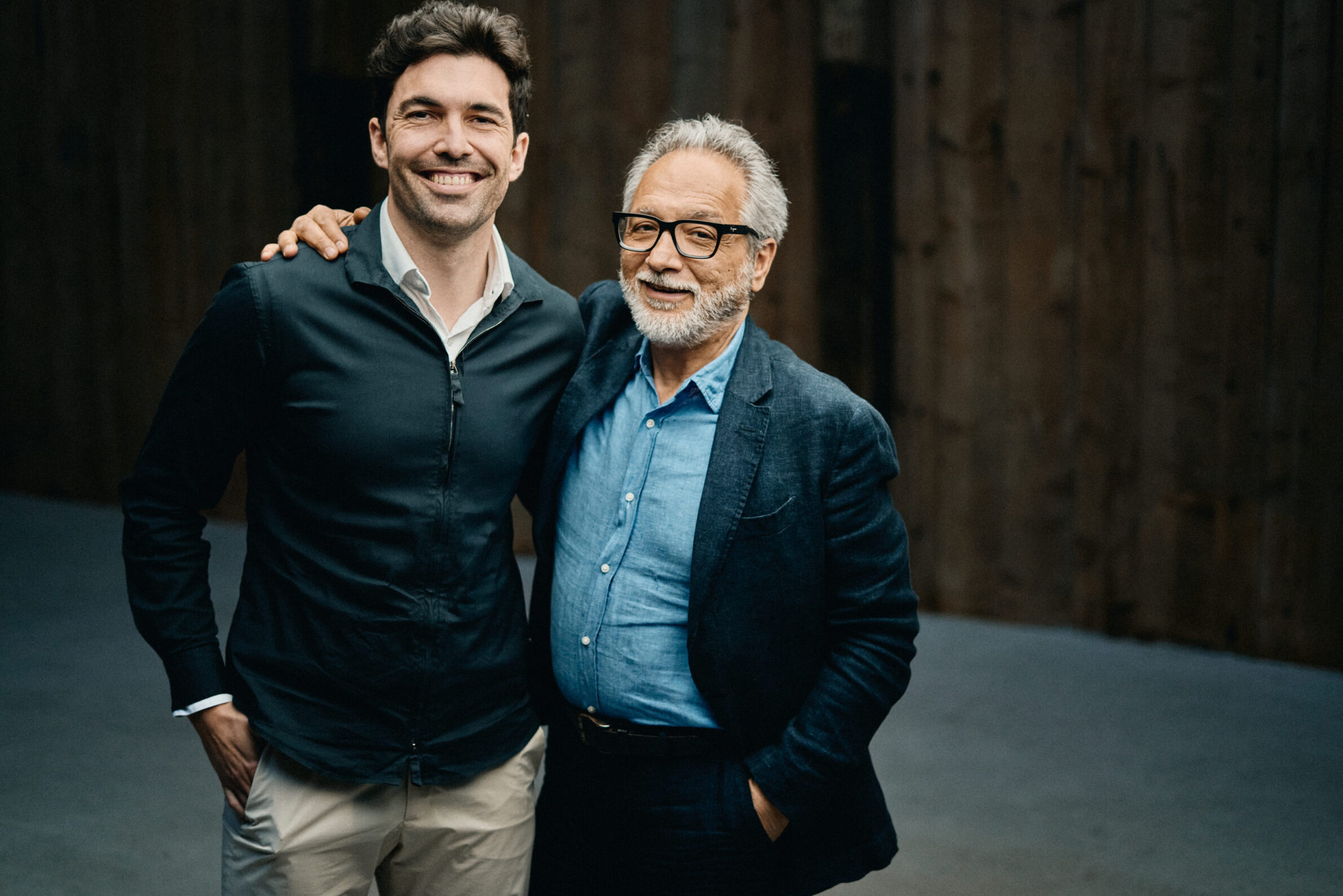
In this edition, architect and curator Selçuk Avcı speaks with Diego Tobalina González, Head of the Innovation and Design Unit at the Norman Foster Foundation. Having joined the team at its beginnings nearly a decade ago, Tobalina González works across architecture, design, technology, education and applied research, helping to develop projects that extend beyond the limits of conventional architectural practice. Their conversation followed Tobalina González’s contribution to Avcı’s Architecture and Relevance module at the BIG SEE Conference 2026.
Watch their insightful conversation or dive into the transcript.
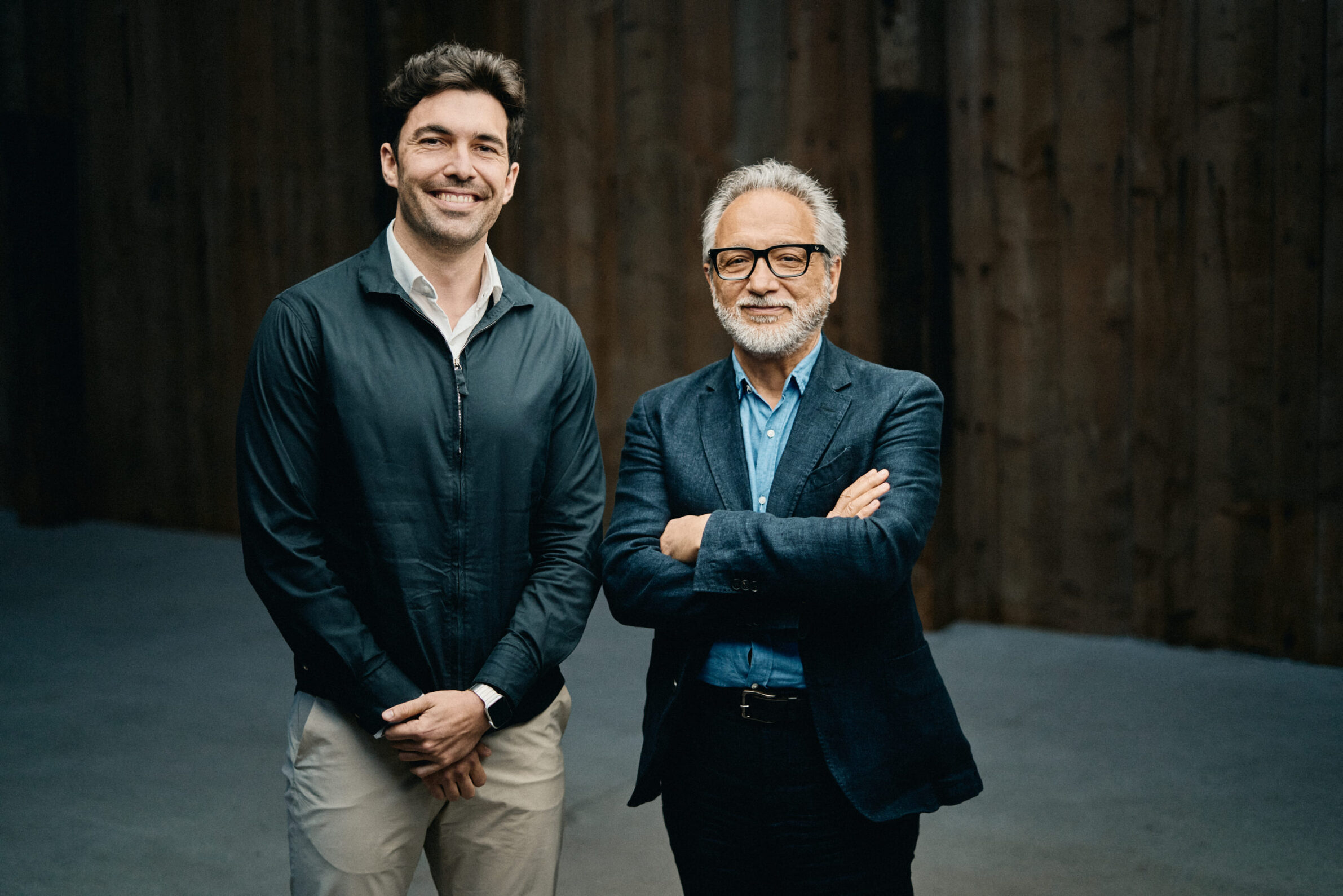
Selçuk Avcı: Diego, thank you for coming all the way here. I am very glad that we were able to meet in person. We had been preparing digitally, but it is always good to finally make physical contact. You have been at the Foundation for nearly a decade, which is practically your entire professional life. You started very young in a role that you still hold today. Did you have to fight for that position, or did the Foundation give you an opportunity from the beginning? How did it happen?
Diego Tobalina González: I would not describe it as a direct fight, but rather as a continuous one—a process of constantly challenging yourself. It began with a stubborn student who was fascinated by Norman Foster and determined to become involved in the worlds of architecture and design. While I was studying, I had the opportunity to undertake an internship. I discovered that Norman had a connection to Madrid through an art gallery founded by his wife, and I saw it as a great opportunity. I joined the gallery as an intern and gradually grew together with the team. As I said, it was not one decisive fight. It was a daily pursuit of excellence and an attempt to do my best. When you genuinely love what you do and have a sense of purpose, you can eventually arrive somewhere you never expected. I am privileged, but I also have to say that it has required enormous dedication. We are fortunate to work in the field we studied, because today it can be very difficult to build a career around your passion, whether in Spain or elsewhere. Architecture and design are demanding professions to devote your life to.
Selçuk Avcı: You are expressing that passion in remarkably diverse ways, which makes me rather jealous. Some of the work is highly conceptual, while other projects are very grounded and deal directly with real and urgent issues. That is a fortunate position to occupy.
Diego Tobalina González: That is why I say I am privileged. I have the opportunity to do things that would be almost impossible within conventional commercial practice. I can work in a kind of laboratory where we experiment with real projects and real problems, but across an extremely wide scope. We move between different scales and different fields. That variety enriches my daily work.
Selçuk Avcı: From a table to a masterplan.
Diego Tobalina González: Exactly.
Selçuk Avcı: What drew you towards architecture in the first place? What was the initial pull?
Diego Tobalina González: I should first clarify that I am not an architect. I trained as an interior designer and designer, and I initially worked at the art gallery mainly in graphic design. When I spoke about a continuous fight, I meant that I was gradually finding my place within the design of the built environment. As a child, I played video games such as The Sims, constantly constructing and designing. I was obsessed with designing houses for my sister in those games. I was always passionate about design, regardless of whether the object was a building, a shoe or something else entirely. The variety of projects at the Foundation gave me the opportunity to move between very different fields and scales. The trust of Norman and Elena Foster has also been extremely important. They have continually challenged me to take on new kinds of projects.
Selçuk Avcı: It sounds as though you landed firmly on your feet when you arrived. We all know Norman Foster, but the Norman Foster Foundation is not Foster + Partners. How would you describe the Foundation and its work in just a few sentences?
Diego Tobalina González: It is a unique space in Madrid, independent from Foster + Partners. It provides Norman and the team with a safe environment in which to explore projects that might not be feasible within regular commercial practice because of their budgets, timeframes or fields of research. It is a laboratory where we can work not only on architecture, but also on the many subjects surrounding architecture that interest Norman. We are a relatively young team, strongly focused on the future, research and investment in younger generations.
“The only constant is change, but everything is also urgent. Today, it is important to act.”
– Diego Tobalina González
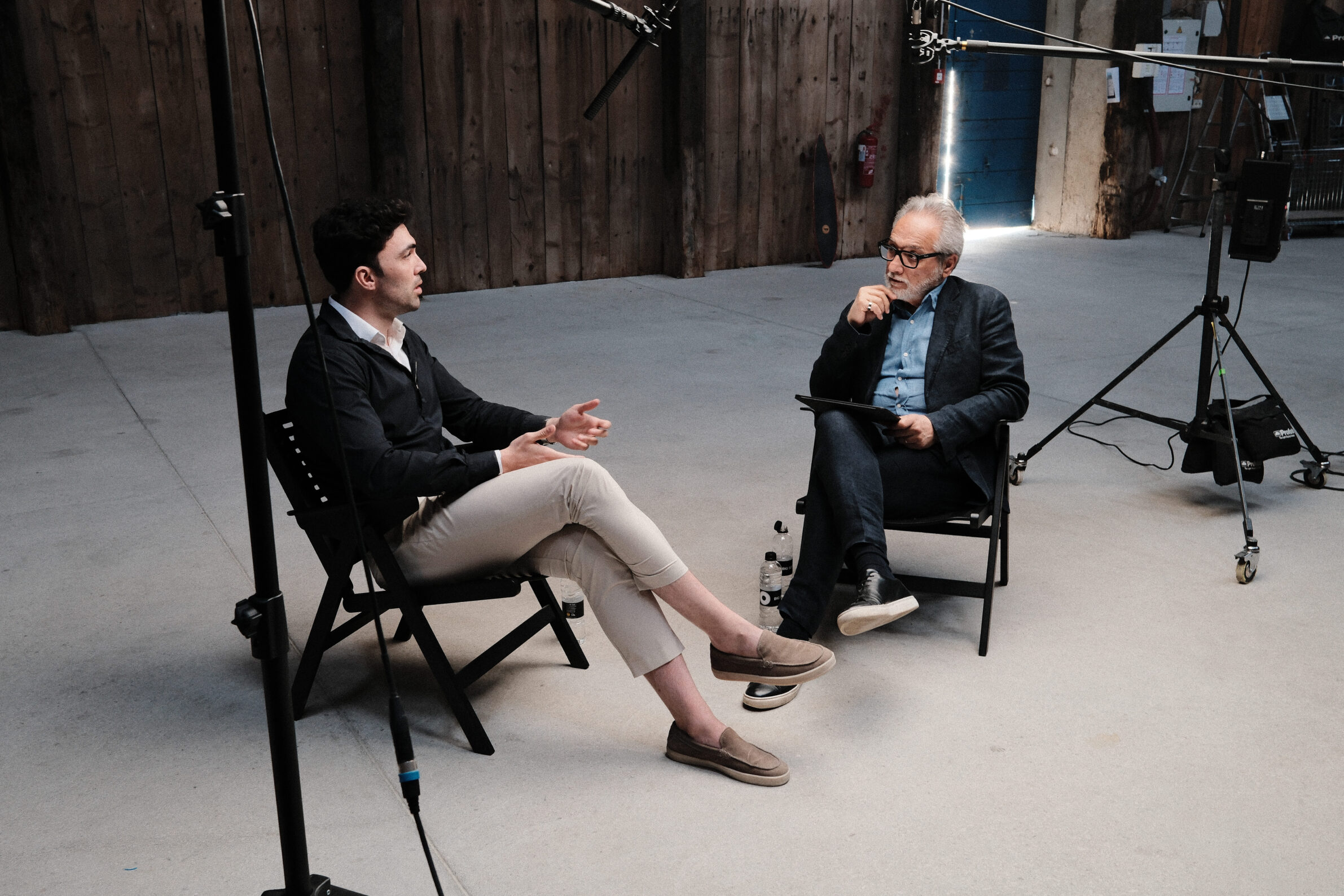
Selçuk Avcı: The Foundation undertakes an extremely diverse range of activities: applied research, exhibitions, publications, educational programmes and building projects. What holds all of that together?
Diego Tobalina González: I would say it is the personal commitment of the Foster family and the interests of Norman and Elena. Norman is more than an architect. He is also an inventor and a designer—someone driven by curiosity. That curiosity is what brings everything together. Whether we are working on a publication, a public event or an educational programme, there is always a desire to explore. It is also about gathering different subjects around architecture. Architecture cannot be separated from cities, communities or our daily lives. The glue connecting all these activities is curiosity and the positive mindset shared by the people working at the Foundation.
Selçuk Avcı: The Foundation also brings together a remarkably diverse group of people, including Alejandro Aravena, Shigeru Ban and Francis Kéré. They are very different figures, and Norman Foster’s legacy is very different from Aravena’s, for example. How do you maintain coherence within that diversity? How do these individuals contribute to the programme? Are they there simply because they are prestigious names?
Diego Tobalina González: Not at all. The richness of the Foundation comes precisely from its ability to provide a safe space in which individuals with different personalities, backgrounds and ideas can meet. Sometimes we deliberately bring together people with opposing viewpoints. The richness lies in the confrontation, the debate and the dialogue. By engaging with different ideas, you begin to understand another perspective and can move a project—or any discussion—to its next stage. It is about examining the same subject from multiple points of view, creating a conversation and developing the ability to listen to different perspectives.
Selçuk Avcı: In the presentation you showed many slides, and either you or Norman Foster appeared in almost all of them. I did not see Francis Kéré, Alejandro Aravena or Shigeru Ban. How are they involved beyond having their names associated with the organisation? Do they participate in projects or initiate them?
Diego Tobalina González: Their strongest involvement is within the educational programme. Many of these individuals are invited to contribute to our one-year master’s programme. They lecture and work with students on the city-based projects we develop each year. We work with three cities, and it is important that the students have the opportunity to listen to people with different perspectives.
Selçuk Avcı: So the Foundation also operates as an academy.
Diego Tobalina González: Exactly.
Selçuk Avcı: And students receive formal recognition after completing a year at the academy?
Diego Tobalina González: Yes. The programme is connected to the Universidad Autónoma de Madrid, alongside academic partnerships with institutions such as RMIT and MIT. It is about creating partnerships across academia, developing a collective awareness and working with other institutions that can enrich the programme.
Selçuk Avcı: The applied research programme works across extremely different regions, from Bilbao and Athens to Cape Town and Freetown. Does relevance mean the same thing in each of these places, or does the methodology have to reinvent itself according to the context?
Diego Tobalina González: Understanding the context is essential. Whenever we work with a city, we organise field trips. We need to understand what relevance means within that particular context and how our work can become integrated into it. We follow a bottom-up approach: first determining what is relevant locally, then understanding how we can operate in a relevant way. There is common ground between many of the cities in our portfolio, but each also has its own particularities. Venice, for example, is unique, yet it is also facing problems shared by many other cities, including the pressures of tourism.
“When you genuinely love what you do and have a sense of purpose, you can eventually arrive somewhere you never expected.”
– Diego Tobalina González
Selçuk Avcı: I was going to ask about Venice. The project was realised in the context of the Biennale. Why was it not developed as a permanent building project within the city itself? The city is disappearing, and it urgently needs to reconsider the transition between water and land.
Diego Tobalina González: The Venice Biennale provided a platform for research and exploration. It offers architects a degree of freedom to test ideas and raise awareness of what is happening today. Gateway to Venice’s Waterway responded to the impact of climate change and reconsidered the way people encounter water. Everyone is afraid of the water, but people do not really interact with it. When you walk around Venice, there may not be a physical boundary, but there is a disconnection. The idea was to create a bridge between these two worlds and help people understand that the tides are not something mysterious. They are a real and recurring condition. Venetians understand and navigate the phenomenon of acqua alta, but a visitor arriving in Venice for the first time may suddenly find themselves standing in water with their luggage, without understanding what is happening. The project was therefore also about making this condition visible and showing how the built environment must adapt to the new realities of climate change.
Selçuk Avcı: I have visited Venice on several occasions when I needed to bring boots rather than shoes. The Foundation has also worked in underserved regions, including Rwanda, where you developed the Droneport project for remote communities. That feels very different from the context of the Biennale. The Biennale is almost at the dreamlike end of the spectrum. How do you reconcile those extremes? Which type of project feels most urgent to you personally?
Diego Tobalina González: It is difficult to answer that in only one way. Urgency means acting, and there are many places where action is urgently needed. The question is how help, aid or professional work should be applied within those areas. We have also worked on projects addressing the urgency of refugee camps and asking how the quality of life of displaced people might be improved when large populations are suddenly forced to move.
Selçuk Avcı: Those were the modular housing systems you presented?
Diego Tobalina González: Yes. Urgency is one of the Foundation’s central concerns. The only constant is change, but everything is also urgent. Today, it is important to act. The situation in refugee camps is one example. People are forced to leave their homes and are placed in tents where they may remain for many years. Projects responding to these conditions need to be implemented as quickly as possible, yet bureaucracy often prevents or delays action.
Selçuk Avcı: What do the next five or ten years look like for the Foundation? Which future projects are particularly interesting to you?
Diego Tobalina González: One of our principal ambitions is to expand the network of students connected to the Foundation. The Foundation’s mission—and my own personal goal—is to reach more young designers, architects, engineers, policymakers and others interested in cities. We also want to work with more cities, create a broader portfolio and develop greater expertise around the problems cities are facing. Ultimately, we hope to build a portfolio of possible solutions—a melting pot of knowledge from which other cities can learn. In terms of projects, I hope we maintain the same curiosity. With artificial intelligence and other new technologies emerging, we need to continue researching new materials and finding new ways of collaborating with other institutions. We need to work together on projects that can solve urgent problems while also helping us anticipate problems that may arise in the future.
Selçuk Avcı: Can you be more specific? Are there geographies you have not yet explored or types of problems you would particularly like to address?
Diego Tobalina González: During the first year of the programme, we concentrated on Europe. In the second year, we focused on Africa. This year, we have tried to create a greater variety of urban morphologies within the cities we selected. Next year, our focus will move more strongly towards Asia. The aim is to cover north and south, east and west, building a varied range of locations, geographies and climates. That diversity is what enriches the programme.
“We need to work on urgent problems while also anticipating those that may arise in the future.”
– Diego Tobalina González
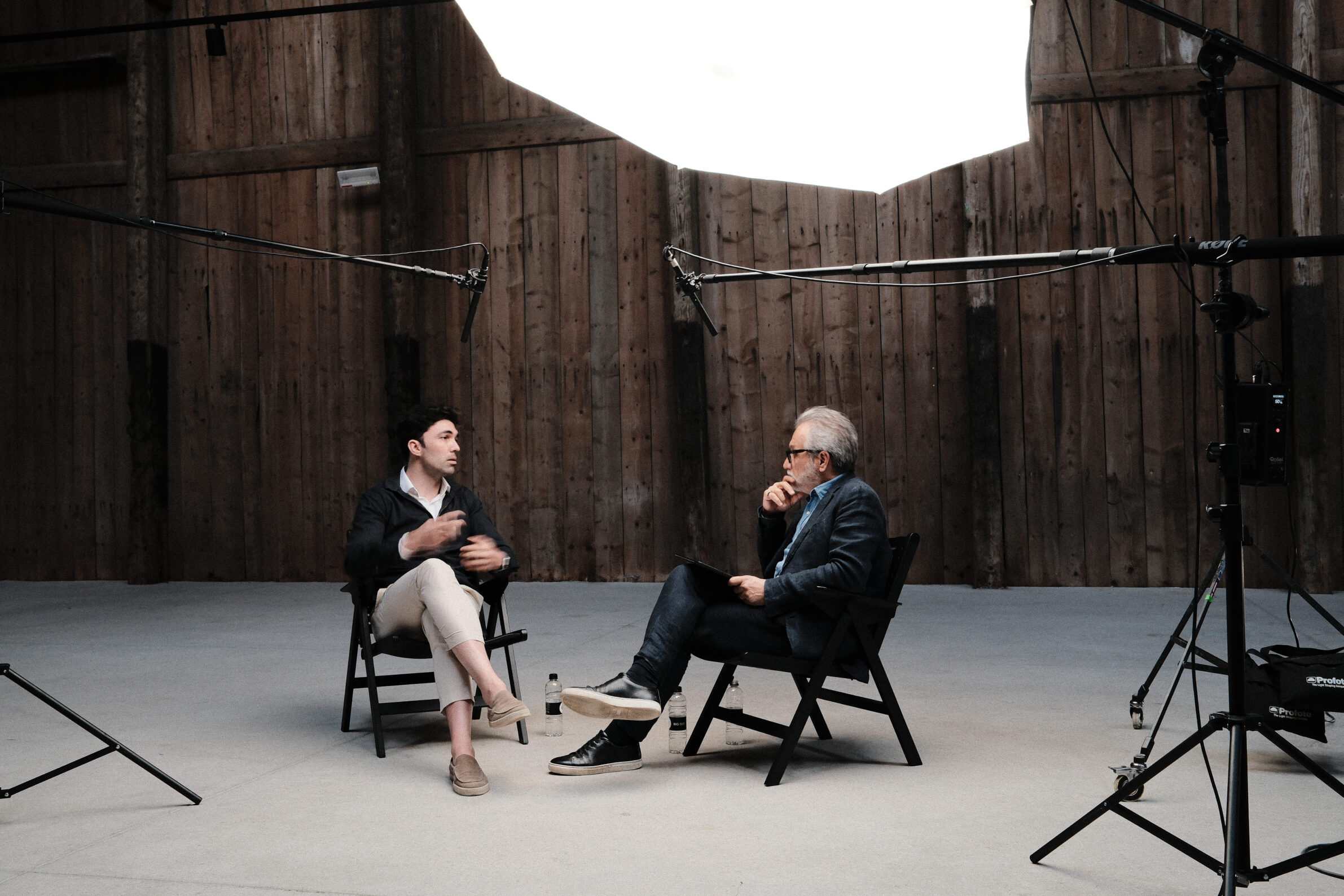
Selçuk Avcı: You are almost systematically scanning the planet.
Diego Tobalina González: It is where we live, and I think operating globally is important. That is part of the Foundation’s mission.
Selçuk Avcı: The Moon is not that far away.
Diego Tobalina González: It is not. Norman has already been thinking about the Moon and Mars.
Selçuk Avcı: I remember the projects. We have also been discussing the possibility of the Foundation becoming involved in Istanbul. Istanbul is an extremely complex city, facing cultural, political and sociological questions. It is a fascinating place undergoing continuous transformation. How could the Foundation engage with a city like Istanbul? What kind of collaboration might that involve?
Diego Tobalina González: It would be a great opportunity for the Foundation. As you said, Istanbul is an extremely complex city, and that complexity also makes it particularly compelling. The Foundation could collaborate by including Istanbul as one of the cities studied by the students, working to understand the needs of its communities and engaging directly with the city administration to identify the challenges it faces. Understanding the local context would be fundamental. There are many possible forms of collaboration, and the Foundation is open to working with any city. We are discussing Istanbul, but Türkiye is not only Istanbul and Ankara. Other cities are also important, and it is necessary to create bridges between cities within the same country. We see a significant opportunity because we already have strong connections with Türkiye. We would be delighted to collaborate with Istanbul or another Turkish city.
Selçuk Avcı: We look forward to that. I hope we can develop something together. You have spent an entire decade in this role, investigating architecture, design and their wider meaning. How has your understanding shifted during those ten years? What has happened to you?
Diego Tobalina González: Today, it is increasingly difficult to remain tied to one specific discipline. When you devote ten years to an evolving path, you do not necessarily stop each year to look back at what you have achieved. The sense of urgency and the pace of activity at the Foundation mean that we are always moving from one project to another. Hearing you describe this as my career makes me realise that it has, in fact, been my entire professional life. When you enjoy what you do, you do not realise that ten years have passed. They simply disappear. I started as an intern in an art gallery, unpacking and arranging models that arrived in Madrid from around the world. Since then, the evolution has been about learning how to approach a project and developing a wider perspective. Over time, you also develop a greater sensitivity towards design. I often credit my first manager with teaching me something important. When you finish studying and enter professional life, you suddenly begin to face real problems. At university, you work on assignments and acquire a toolkit, but theory never applies completely to the real world. The most important part of my career has therefore been learning how to confront and manage problems. Over ten years, I have become more sensitive to my surroundings and better able to articulate decisions in response to the situations we encounter.
“When you genuinely love what you do and have a sense of purpose, you can eventually arrive somewhere you never expected.”
– Diego Tobalina González
Selçuk Avcı: As a closing question, imagine yourself looking back ten years from now. What would make you feel that the next decade had been time well spent?
Diego Tobalina González: If, in ten years, I can continue enjoying my daily work and remain involved in design, I will be satisfied. I hope that when I watch this interview again, I will not regret what I am saying now. I would like to remain passionate about what I do and connected to the world of design. As designers, we are trained to solve problems. I would be happy if, in ten years, I were still exploring—still positive, optimistic and enthusiastic about my work. Everything depends on the perspective from which you approach a problem and whether you try to solve it in a constructive way.
Selçuk Avcı: You are a very fortunate man. Do you realise that?
Diego Tobalina González: I do. It is a privilege, but it is also a responsibility.
Selçuk Avcı: Enjoy it. Sometimes I wish I were in your shoes. It appears to be a wonderful life—and a wonderful place in which to work. The location of the Foundation is beautiful. Was the building originally the gallery, or was it selected specifically for the Foundation?
Diego Tobalina González: It is a dedicated space that was selected for the Foundation.
Selçuk Avcı: It looks like a very special place to work.
Diego Tobalina González: When you come to Madrid, I would be delighted to welcome you to the Foundation and show you the spaces. It is a unique place. Beyond the walls themselves, it reveals what a mind such as Norman Foster’s has achieved across more than seven decades.
Selçuk Avcı: It would be a pleasure. I look forward to it. Thank you.
Diego Tobalina González: I am also looking forward to working together and exploring possible collaborations in Istanbul.
Selçuk Avcı: As am I. Thank you very much.
Edited by
Tanja Završki
Video and portraits by
Primož Korošec
BTS portraits by
Gregor Ravnik
Powered by