


Denny Candotto, Italy, 2026

Nominator: Silvana Annicchiarico
Nominator's statement
Denny Candotto is recognized for his rare ability to transform a project into a tool of knowledge. Born in Palmanova—a city defined by order and proportion—he reinterprets its architectural principles into a personal language that is rigorous and never abstract.
His education at the Politecnico di Milano and his experience working with Michele De Lucchi have solidified a cross-disciplinary approach, where architecture and design converge into a coherent vision. Despite being in an early stage of his career, he has already established a clear and recognizable position.
PLINTO
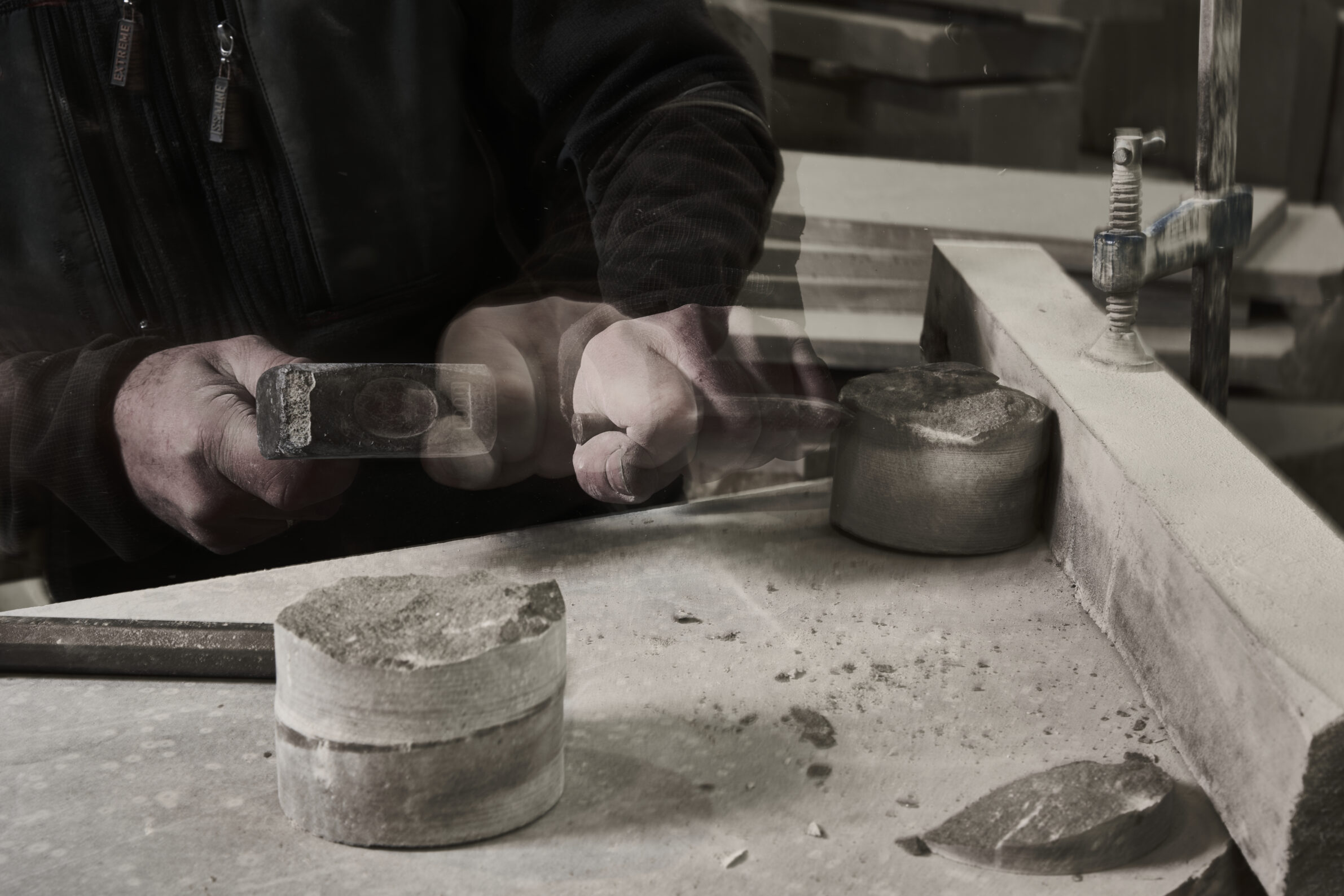
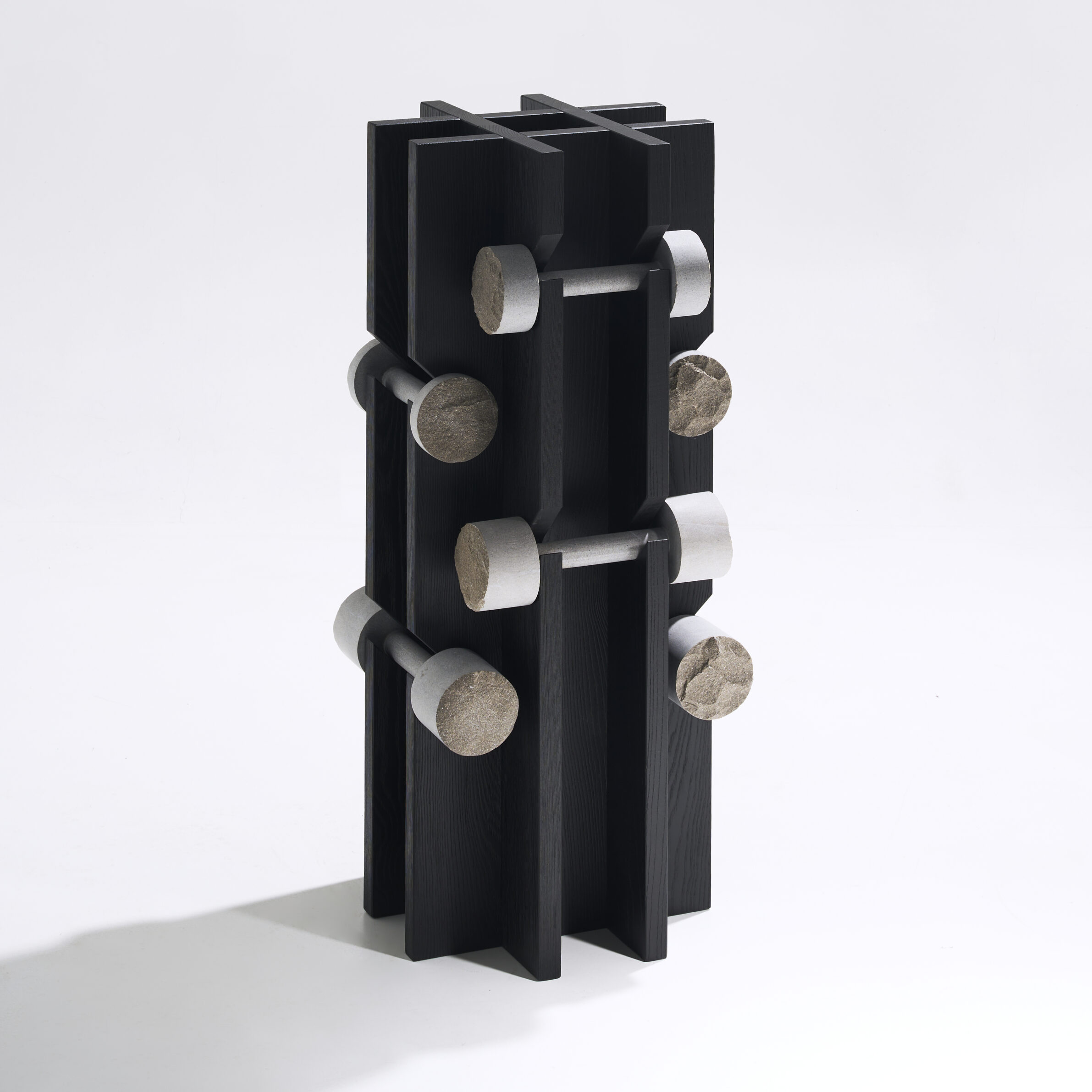
Plinto emerges from a fertile tension between the artisanal gesture and design thinking, where form is not merely drawn but arises as the outcome of a conscious, material-driven process. In this object, the gym apparatus emancipates itself from its purely technical dimension to assume a domestic and symbolic value. The innovation lies precisely in this shift: Plinto transforms a functional device into an element of collectible design, capable of inhabiting a space with the same dignity as a sculpture or a piece of furniture. The form is determined by the hand of the artisan, who interprets and guides the material toward its final expression, making each piece unique. The ash wood structure, finished with an open-pore varnish, enhances the natural texture of the grain, while the Piasentina stone dumbbells confer upon the object the sculptural and singular character described above.

ROSETO
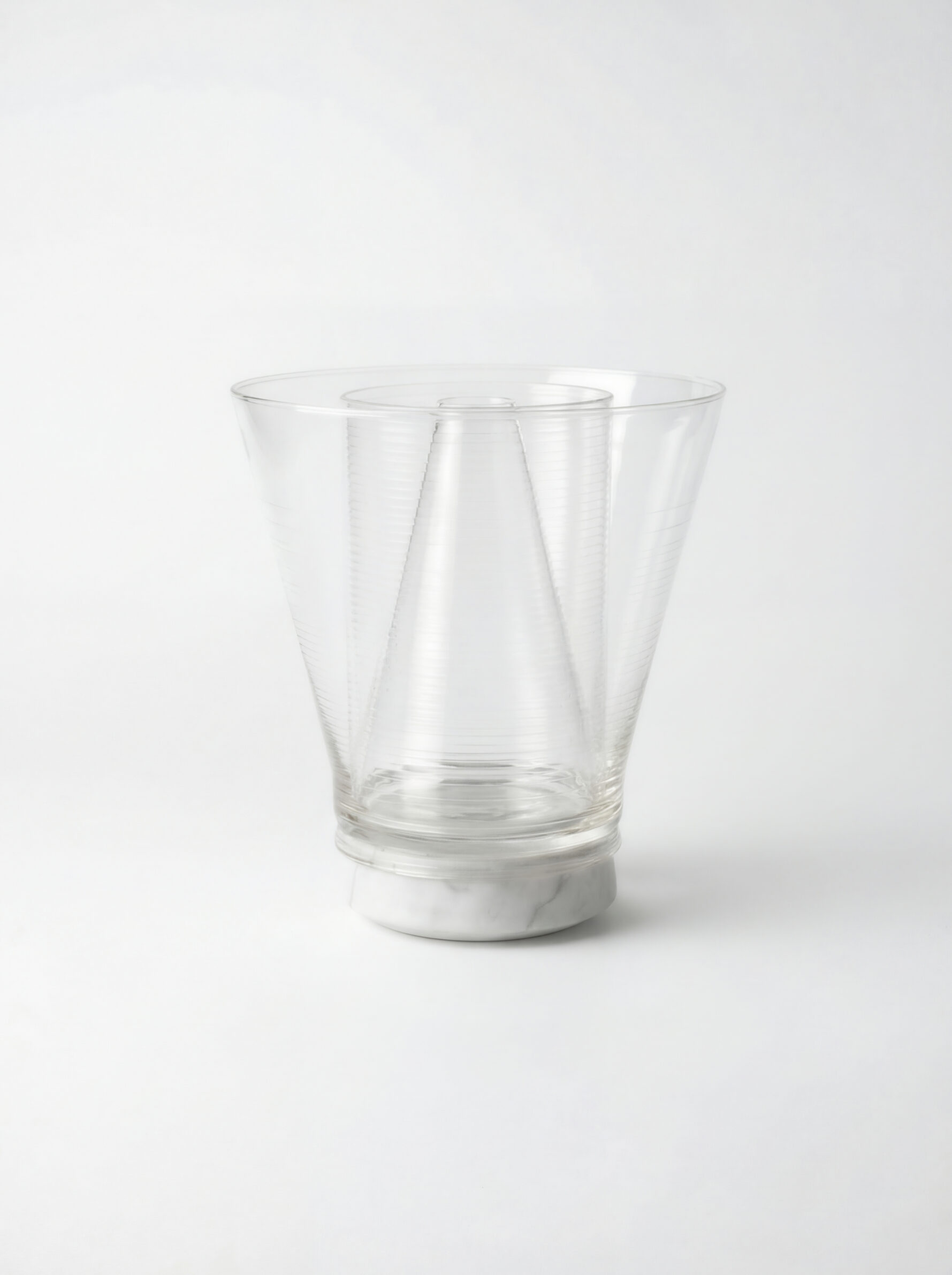
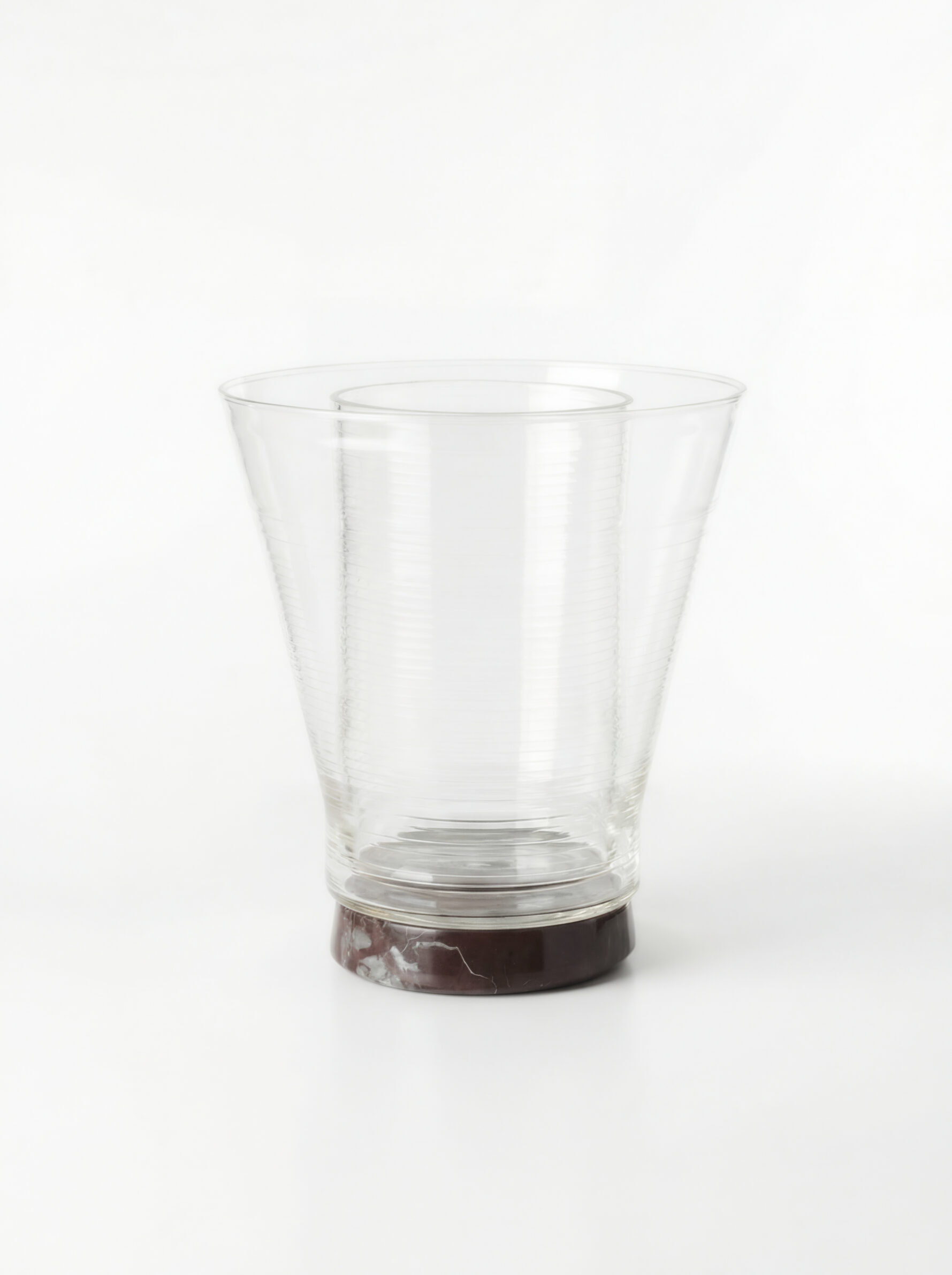
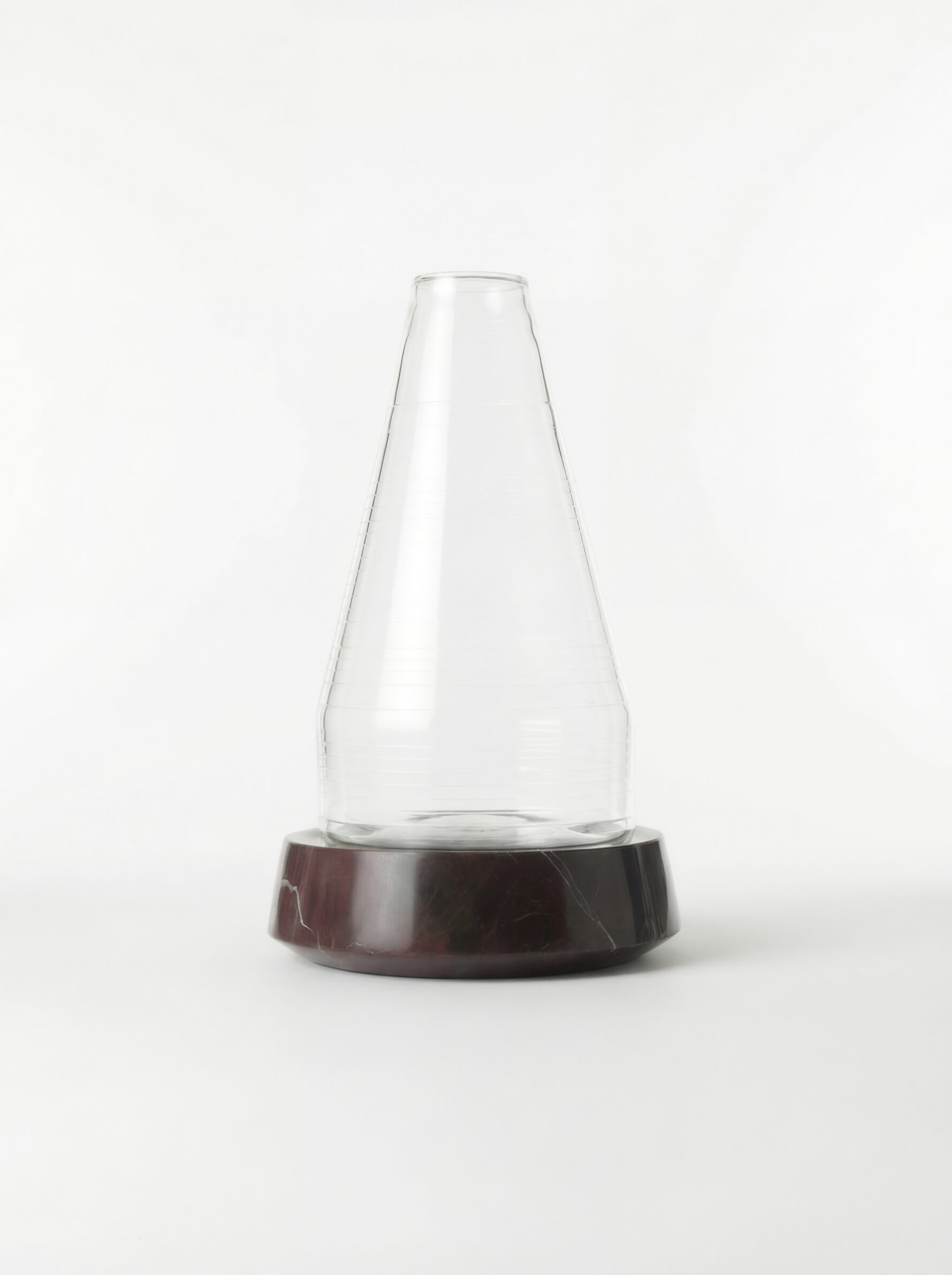
Roseto is a vase that takes shape through the person who uses it, adapting to the number of roses and to the gesture with which they are arranged. A base in marble and three elements made of glass define an essential system that changes each time according to the composition. A single rose finds space in the smallest element, ten in the intermediate one, one hundred in the largest. Each quantity activates a different configuration, designed to respond directly to the presence of the flower. The three elements can be used individually or together and, when combined, even without water, they build a compact and almost sculptural presence. The stone provides stability, the glass receives without interfering. Roseto does not impose a form but lets it emerge from use, from the number of flowers and from the way they are arranged in space. In this minimal balance, the object remains the same and at the same time is never identical to itself.
IN-HABIT-OUT
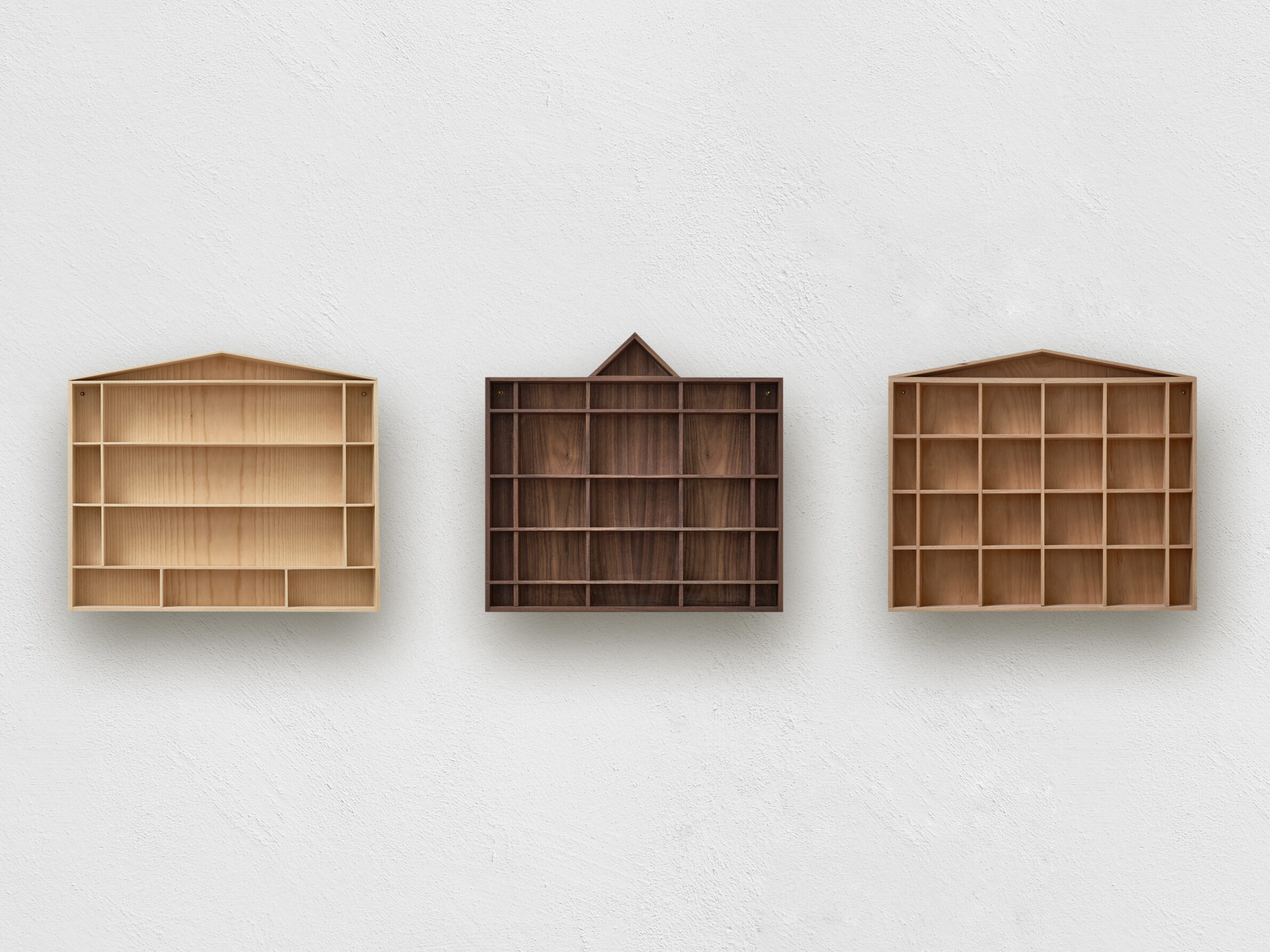
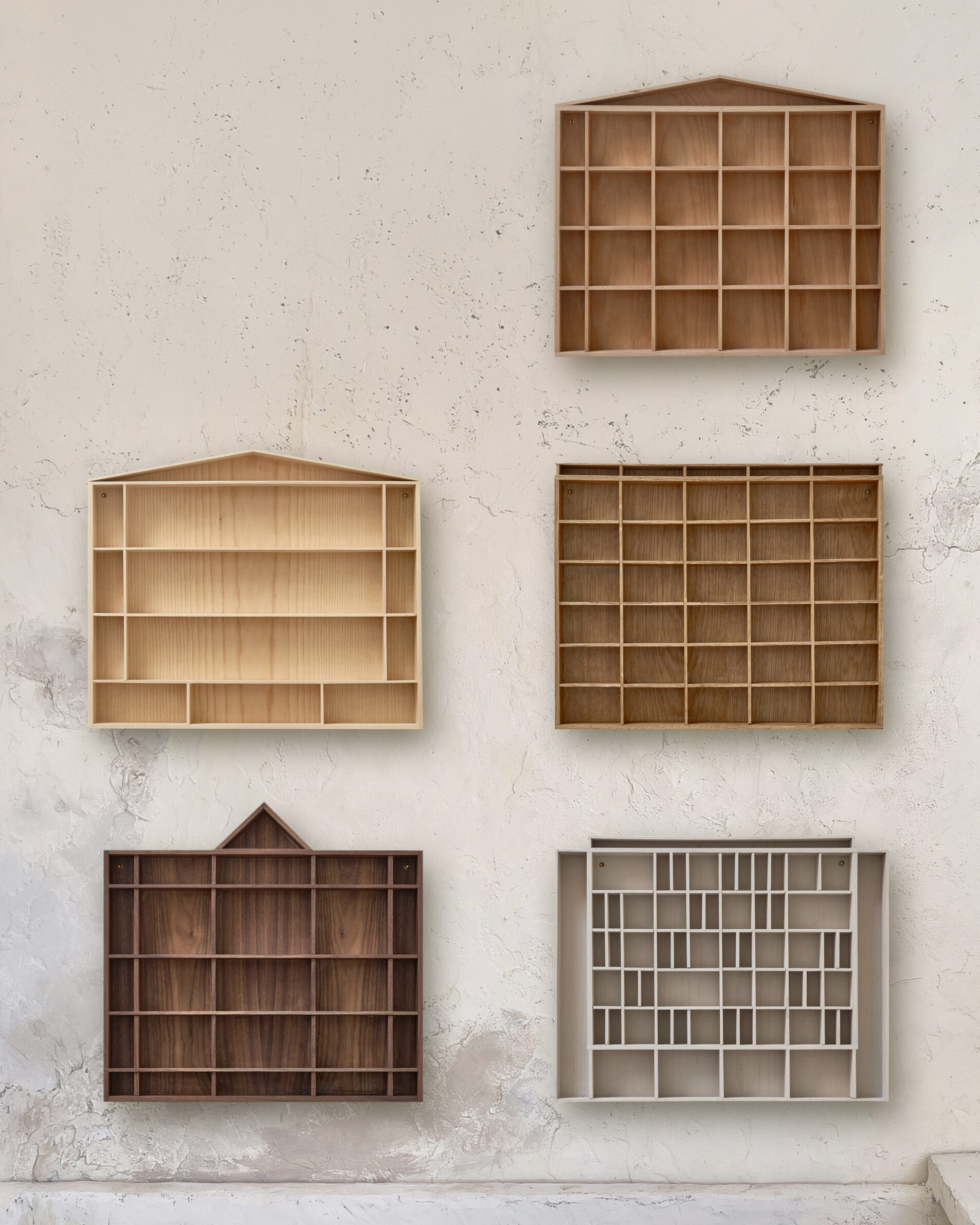
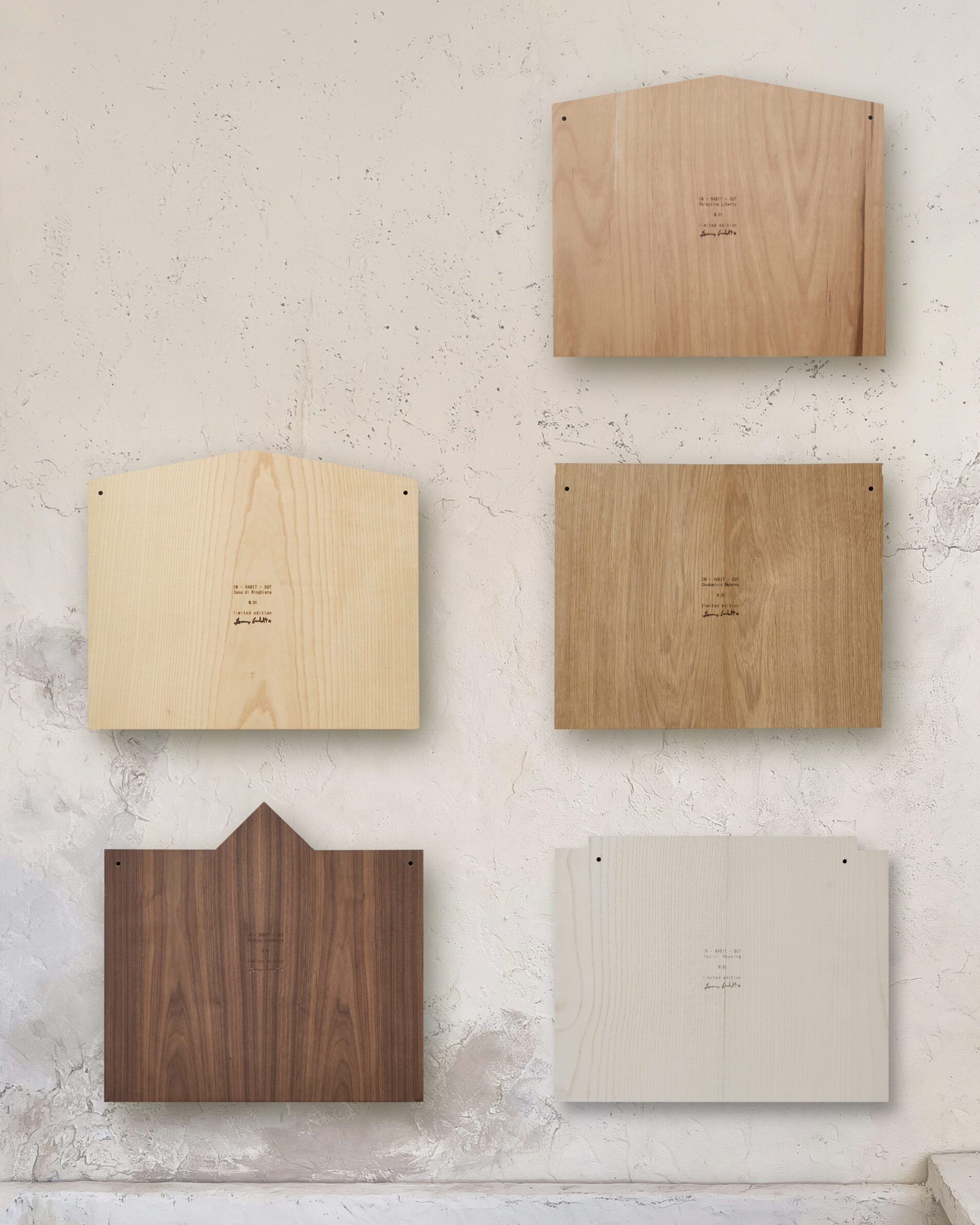
Milan does not reveal itself in tourist guides: it unfolds only to those who wander through its authentic neighborhoods, among courtyards, green railings and quiet residential buildings, where the city reads like a layered architectural palimpsest. From this premise arises IN-HABIT-OUT, a collection of five shadow boxes conceived as small inhabitable architectures. They can hold objects, remain empty, or be observed as miniature fragments of Milan. The title describes a movement from inside to outside: “IN” as intimate space, “IN-HABIT” as the act and condition of inhabiting, and “OUT” as what emerges from private space into the city. Each box interprets a different era of Milanese living, from courtyard houses to contemporary social housing. These are not souvenirs but provocations: between interior and exterior, private and public, object and city, the boundary dissolves, suggesting that inhabiting begins exactly in this overlap.
Denny Candotto
Denny Candotto is an architect and designer based in Milan. His practice spans product design, collectible design, architecture, and interiors, through a cross-disciplinary approach that brings together design research, material exploration, and experimentation. His work unfolds across independent projects and collaborations with companies, galleries, and artisans, including his ongoing collaboration with Michele De Lucchi at AMDL Circle. Each project originates from a theme that precedes form. The project thus becomes the medium through which the author, as the signifier of his own creative gesture, translates an idea into matter; form is never purely functional, but the result of a design process that comes to life through the dialogue between materials, craftsmanship and thought. Within this process, the relationship with artisans is fundamental: they are the hands that carve the stone, smooth the wood and translate thought into matter.
Contact
info@dennycandotto.com
Powered by