



Anastasija Božović, Montenegro, 2026

Nominator: Irena Rajković
Nominator's statement
Anastasija Božović is a young and promising architect whose work demonstrates a strong intellectual foundation, contextual sensitivity and a clear commitment to the key challenges shaping contemporary architecture. Her primary focus lies in the fields of industrial heritage regeneration and energy efficiency, which she recognizes as essential directions for the sustainable transformation of the built environment.
She recently completed her Master’s degree in architecture, with a thesis dedicated to the revitalization of industrial heritage. Through this research, she explored the potential of abandoned and underutilized industrial sites to become drivers of social, cultural, and spatial renewal. Her work reflects a mature and responsible architectural approach - one that seeks to preserve identity while enabling adaptation, and to balance historical continuity with contemporary needs. By addressing both environmental and cultural dimensions, her thesis positions architecture as a tool for long-term, meaningful change.
An important layer of her work is defined by her personal connection to Montenegro - a country where she was born, but in which she did not have the opportunity to live. This duality of belonging and distance has shaped a distinctive perspective, allowing her to engage with the context both emotionally and analytically. She sees Montenegro as a complex and inspiring environment, rich in heritage yet facing significant challenges in terms of development, identity, and sustainability. Through her work, she expresses a strong ambition to contribute to its future, particularly by rethinking the role of industrial and cultural heritage within contemporary society.
Throughout her academic journey, Anastasija Božović has consistently demonstrated initiative, curiosity and dedication. She has taken part in numerous architectural workshops and attended a range of professional conferences, actively seeking opportunities to expand her knowledge and engage with diverse perspectives. This continuous engagement reflects her openness to learning and her commitment to developing a well-informed and critical design approach.
Her interdisciplinary orientation is further reinforced by her linguistic and cultural interests. She speaks four languages fluently, enabling her to navigate and connect across different contexts with ease. Currently, she is continuing her education at the University of Maribor, where she is enrolled in the German Studies program. This decision highlights her broader intellectual ambition - to complement her architectural background with deeper cultural and theoretical insight, and to strengthen her ability to operate within an increasingly interconnected European context.
Looking ahead, Anastasija Božović plans to continue developing her professional practice in Slovenia, recognizing it as a dynamic and supportive environment for emerging architects. At the same time, she intends to pursue doctoral studies, with the aim of further advancing her research in the field of industrial heritage and sustainable spatial transformation. Her long-term vision is to position herself at the intersection of architectural practice and research, contributing not only through design, but also through critical inquiry and knowledge production.
What distinguishes her as an emerging architect is her ability to approach architecture as a complex and socially engaged discipline. She understands space not merely as a physical construct, but as a framework shaped by memory, identity, and collective experience. Her work demonstrates an awareness of the importance of context, as well as a sensitivity to the relationships between past and present, local and global, preservation and innovation.
At an early stage of her career, Anastasija Božović already shows a remarkable level of clarity, maturity, and purpose. Her projects and research reveal a thoughtful and forward-looking mindset, grounded in both critical thinking and creative exploration. She represents a new generation of architects who are capable of responding to contemporary challenges with responsibility, intelligence and vision.
For these reasons, Anastasija Božović stands out as a highly deserving candidate for the BIG SEE Perspectives Award. Her work embodies the values of innovation, sustainability and cultural awareness, while her potential signals a strong contribution to the future development of the architectural landscape in Southeast Europe and beyond.
REGENERATION OF THE INDUSTRIAL HERITAGE OF MONTENEGRO THROUGH THE CASE OF THE MILITARY FACTORY “1ST DECEMBER” IN PLJEVLJA
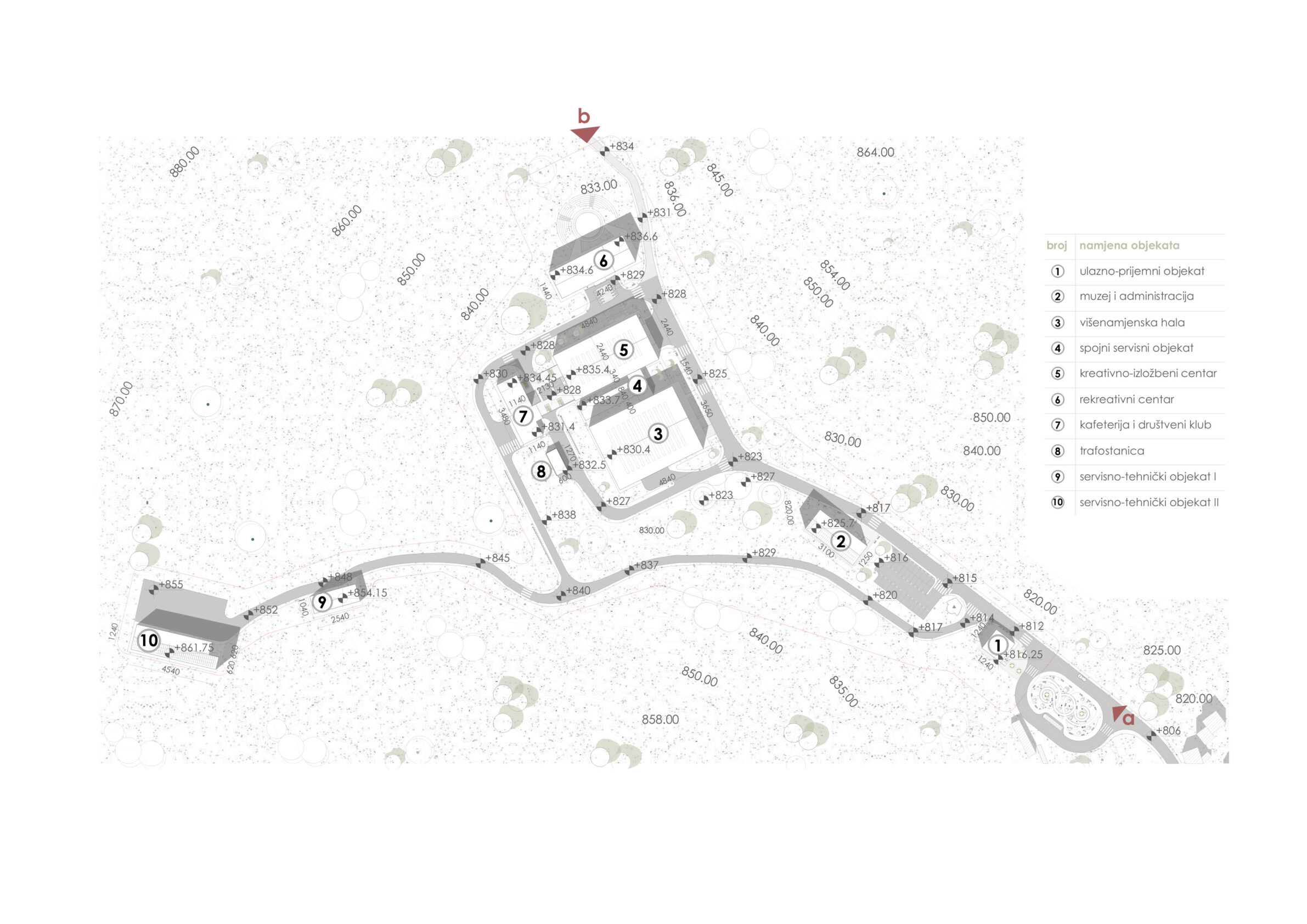
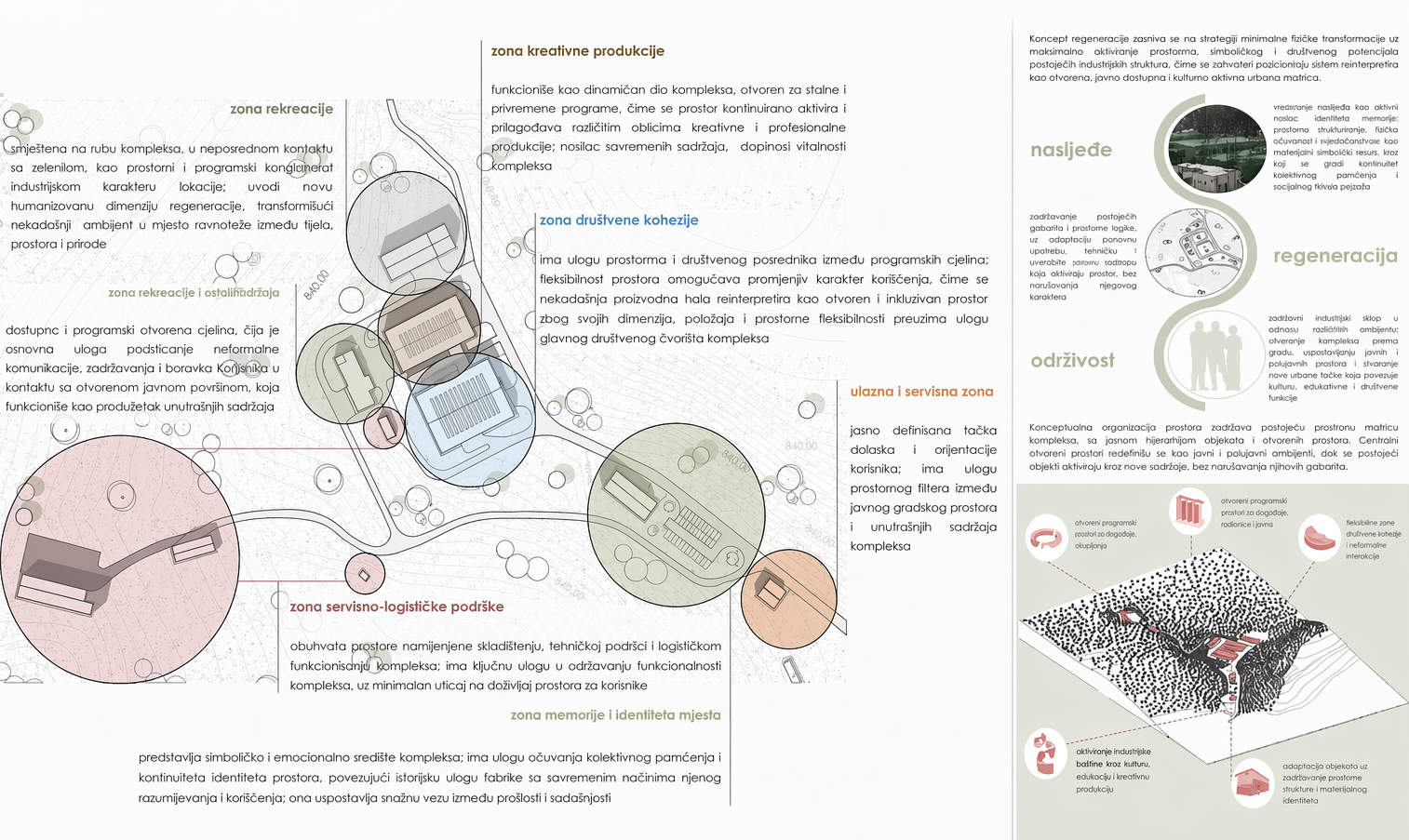
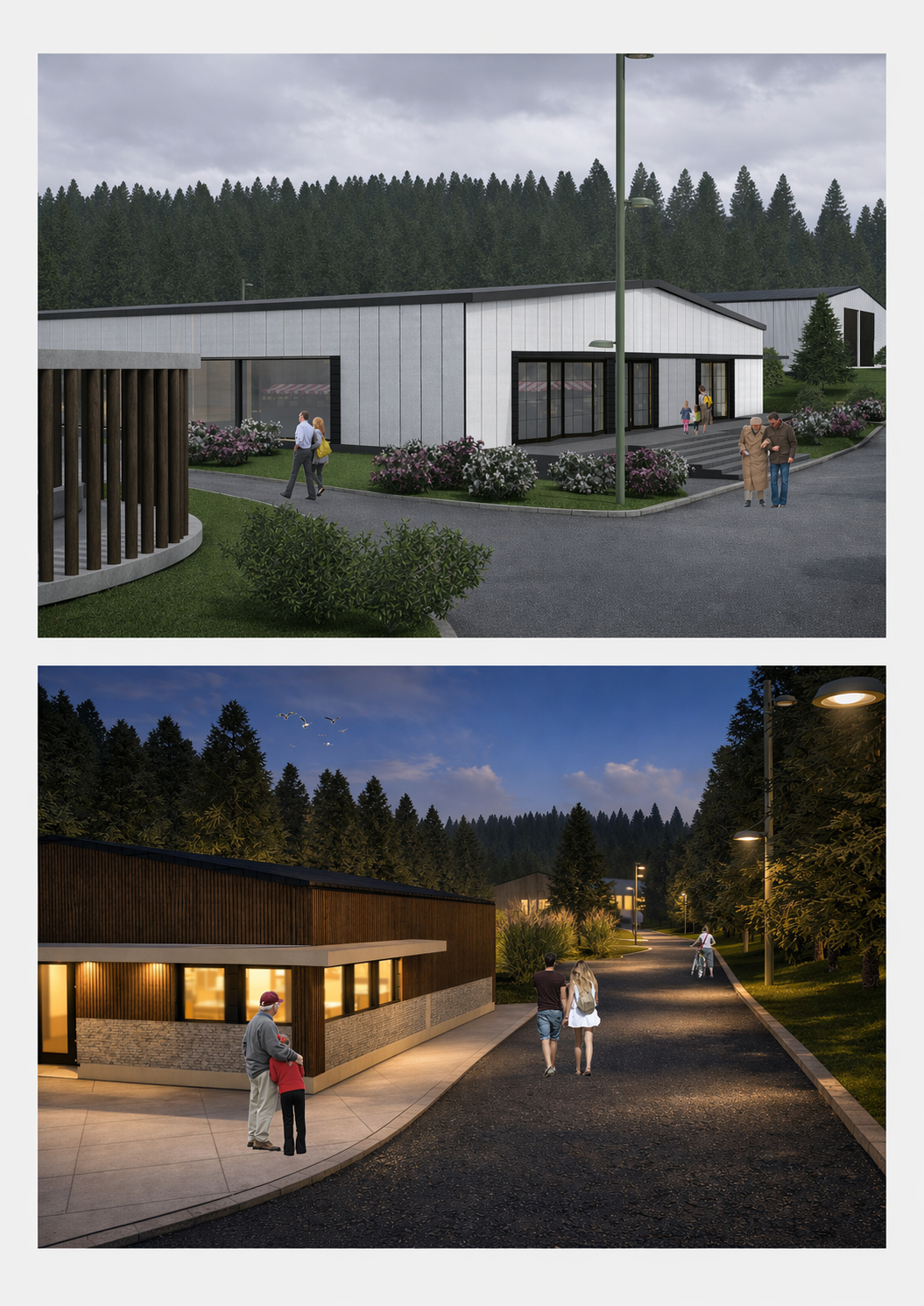
Set within the broader context of Montenegro’s post-industrial transformation, the project examines the regeneration of neglected industrial heritage as a catalyst for sustainable regional development. Focusing on the former military factory “1st December” in Pljevlja, it responds to the spatial, social, and economic consequences of deindustrialisation that have particularly affected the northern part of the country. Rather than treating abandoned industrial sites as obsolete remnants, the project repositions them as resources for new public life, cultural continuity, and urban renewal. Based on the principles of sustainability, adaptive reuse, and contextual transformation, the proposal seeks to preserve the existing spatial identity of the complex while introducing new functions capable of supporting long-term environmental, social, and economic resilience.
NATIONAL RESTAURANT AT HOTEL ONOGOŠT
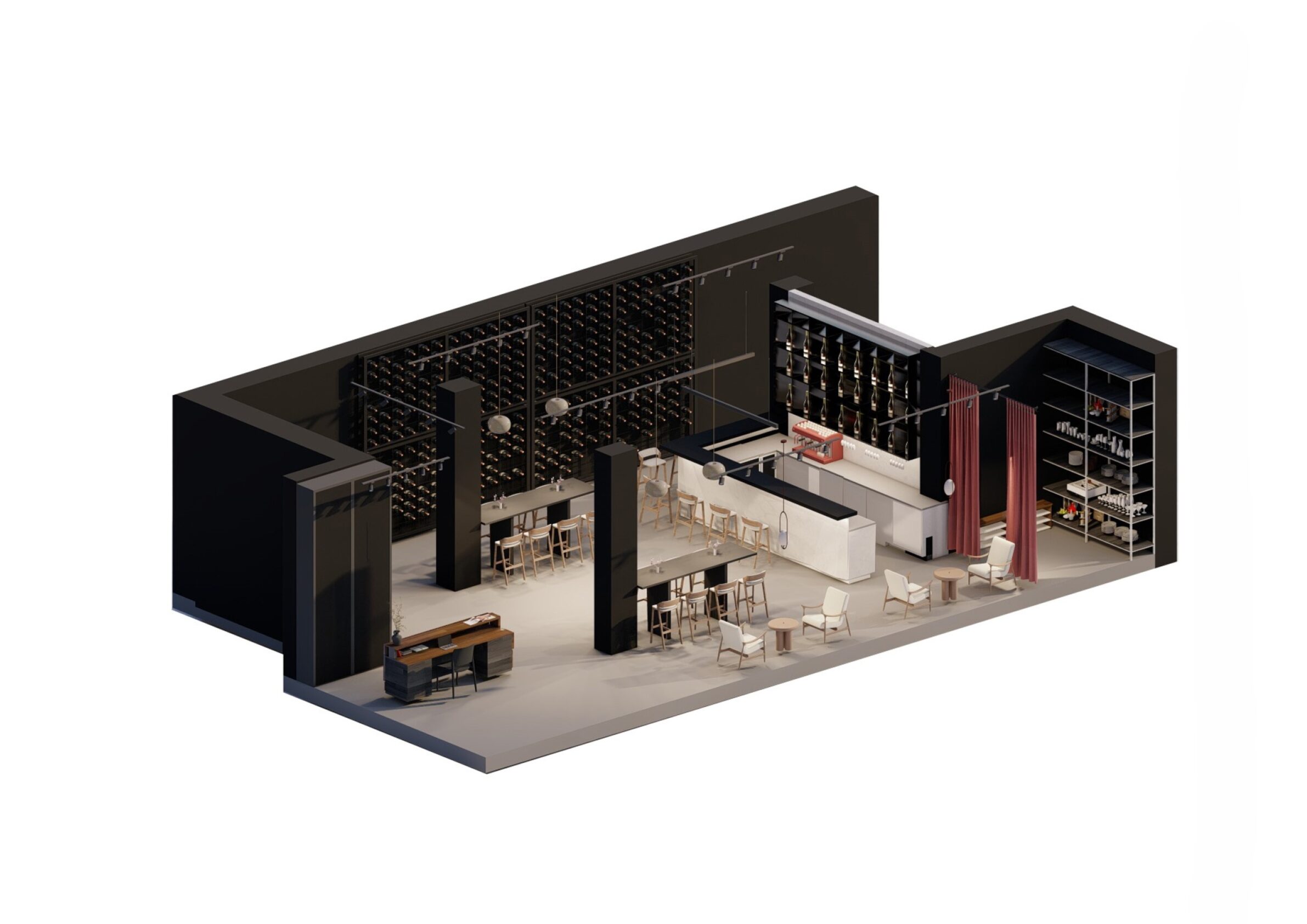
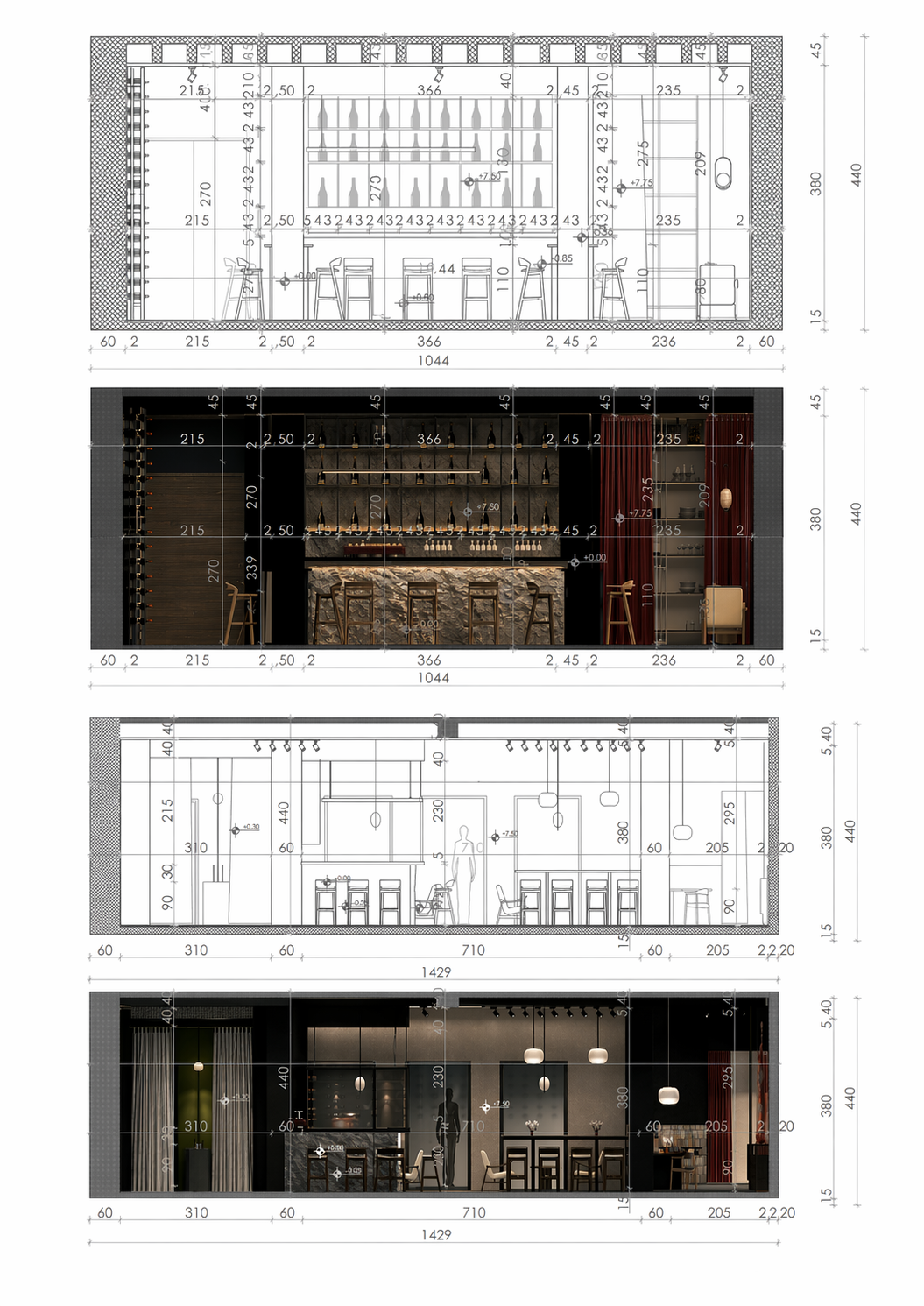
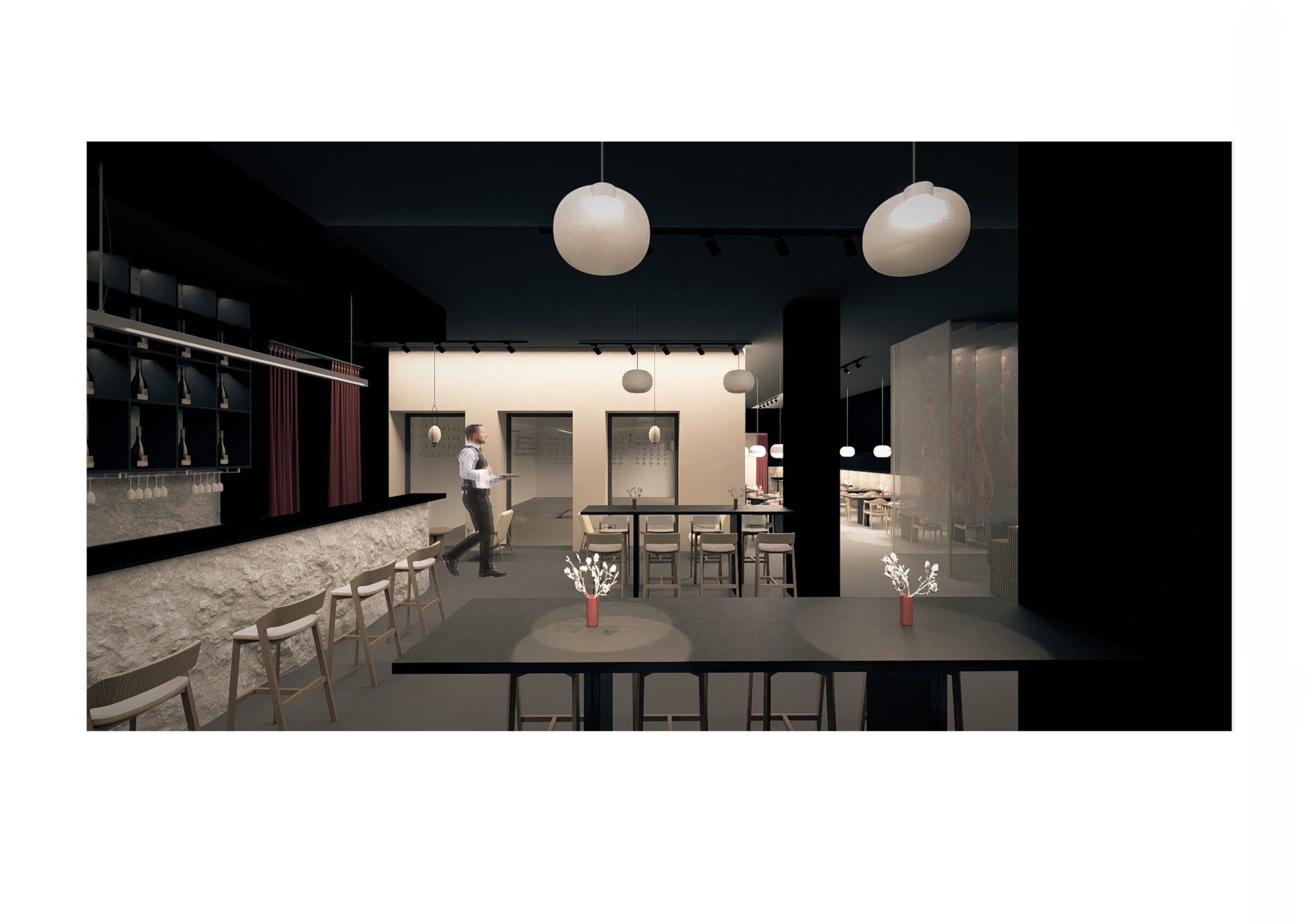
The interior of the national restaurant at Hotel Onogošt is conceived as a contemporary reinterpretation of an existing hospitality space, shaped through the reorganization of its functional structure and the establishment of a more coherent spatial identity. The intervention introduces a clearly defined entrance zone, two dining areas, a central atrium, storage space, and redesigned sanitary facilities, improving spatial legibility and the overall user experience. The project is articulated through a restrained yet expressive material language that combines dark wall surfaces, wood, textured panels, carefully selected furniture, and layered lighting to create a warm, intimate, and distinctive atmosphere. The identity of the national restaurant is shaped through clear spatial organization, emphasized materiality, and a balanced dialogue between traditional values and contemporary interior design, while respecting the context, ambient qualities, and cultural tradition of the space.

Anastasija Božović
Anastasija Božović is a young architect from Montenegro whose work focuses on adaptive reuse, industrial heritage regeneration, and the relationship between architecture, memory, and contemporary community life.
She graduated from the Faculty of Architecture at the University of Montenegro, where her master’s thesis, Regeneration of the Industrial Heritage of Montenegro through the Case of the Military Factory “1st December” in Pljevlja, explored the transformation of a former industrial complex through sustainable, context-sensitive, and socially engaged design. Alongside her academic work, she has also developed an interest in interior design, with a particular focus on atmosphere, material expression, and the experiential qualities of space.
Her practice is defined by a reflective approach, sensitivity to context, and an interest in architecture as a medium for reinterpreting memory, use, and collective space in contemporary ways
Contact
anastasija.bozovic@gmail.com
Powered by

Be There.