


Noémi Kókai, Hungary, 2026

Nominator: Erzsébet Szeréna Zoltán
Nominator's statement
Noémi Kókai is a recent DLA graduate of the Breuer Marcell Doctoral School in Pécs, Hungary, at the beginning of her emerging architectural career. Over the past years, her work has consistently revealed her as a promising young talent. Her design attitude is marked by strong sensitivity toward social and territorial questions, present both in practice and in her doctoral research. She investigates how new lifestyles and functional demands shaped by digitalization can be integrated into rural contexts, exploring how emerging spatial transformations may act as catalysts for rural revitalization. Noémi has participated in numerous conferences, design projects, and successful architectural competitions. She represents a rare combination of design intelligence and research-driven thinking, embodying a new generation of architects bridging theory and practice with forward-looking innovation.
VASARELY REINTERPRETATION – SPATIAL INSTALLATION
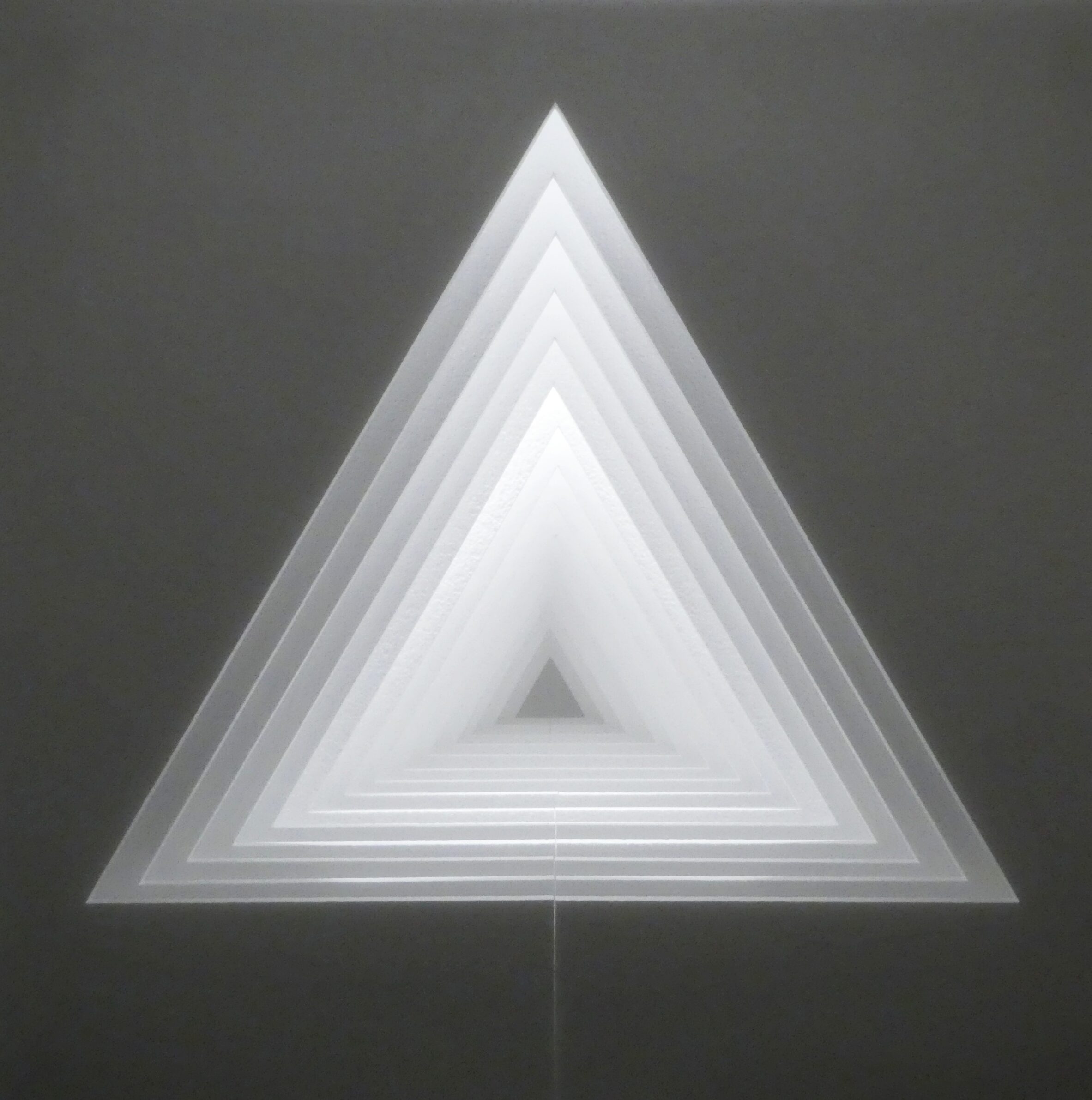
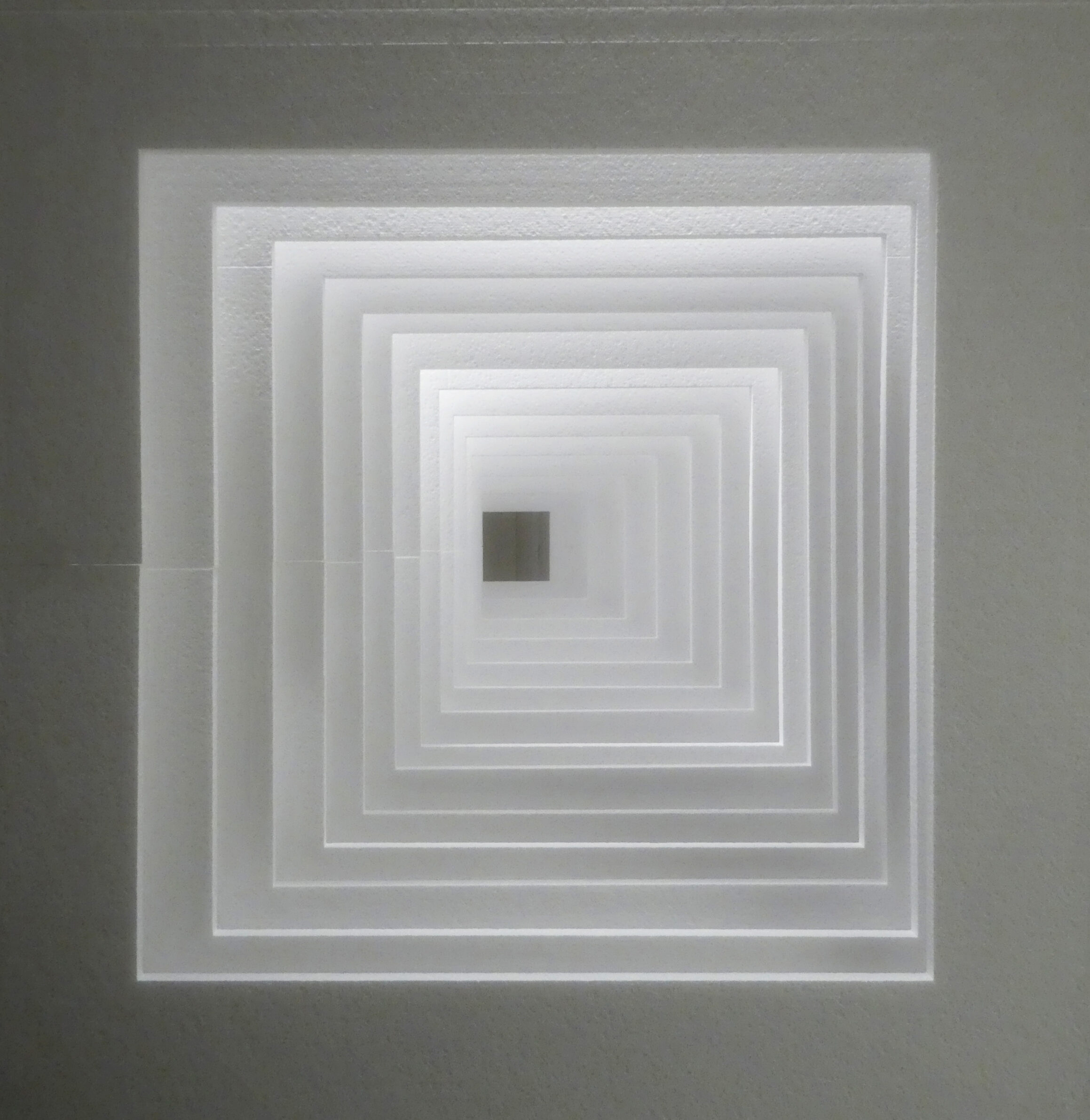
This spatial installation reinterprets the visual language of Victor Vasarely through three-dimensional architectural form. Developed within the OP-ARCHITEKTÚRA exhibition, the project explores the relationship between op-art, perception and spatial structure.
The installation consists of three cubic objects based on fundamental geometric forms -circle, square and triangle - key elements of Vasarely’s visual system. Each sculpture is constructed from layered XPS polystyrene boards that translate two-dimensional optical compositions into spatial sections. Positioned on pedestals within the exhibition space, the objects invite visitors to move around them and experience how optical effects evolve through perspective, light and movement.

CO(SLOW) WORKING – RURAL WORKSPACES IN THE AGE OF THE DIGITAL TRANSFORMATION
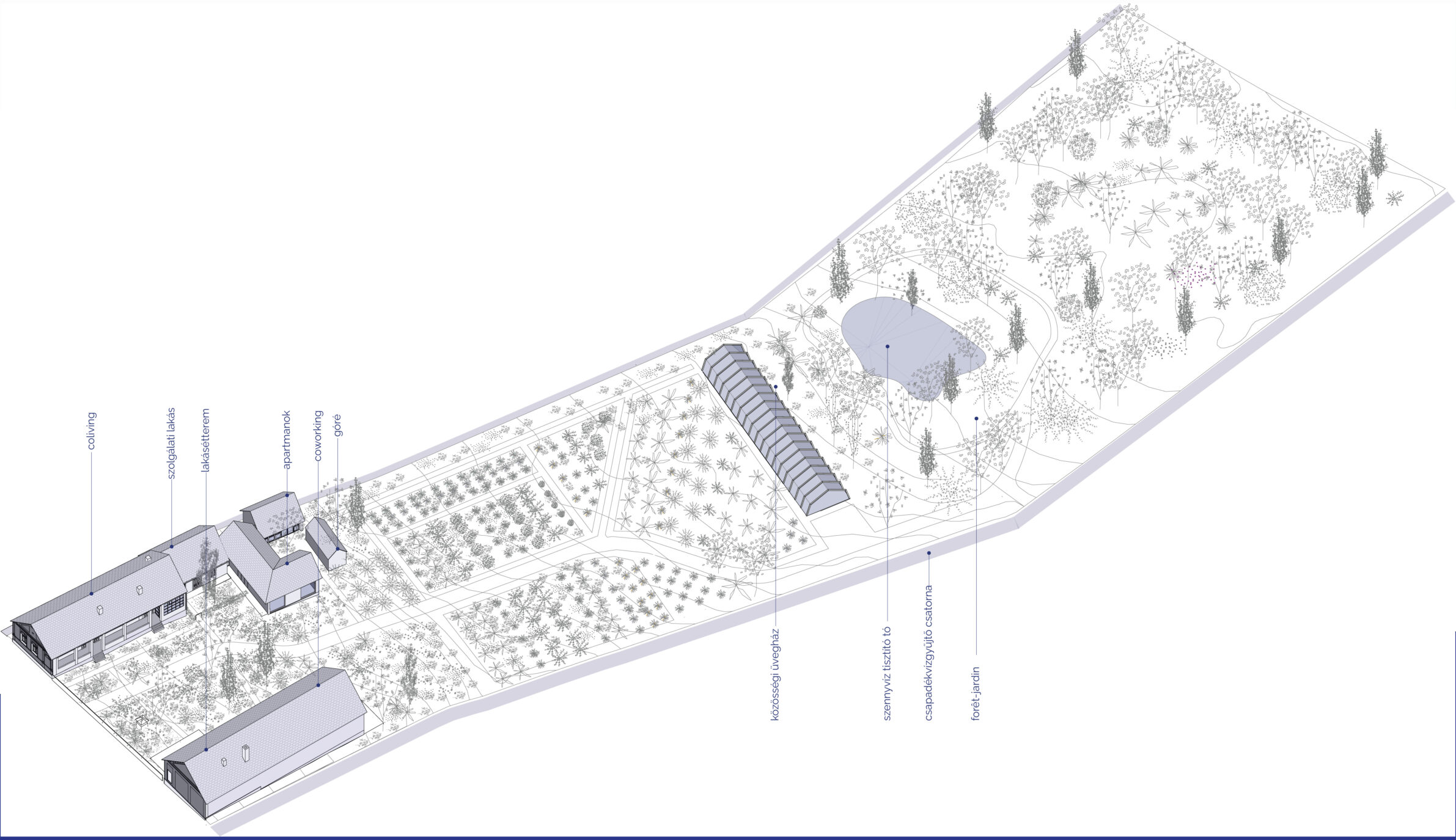
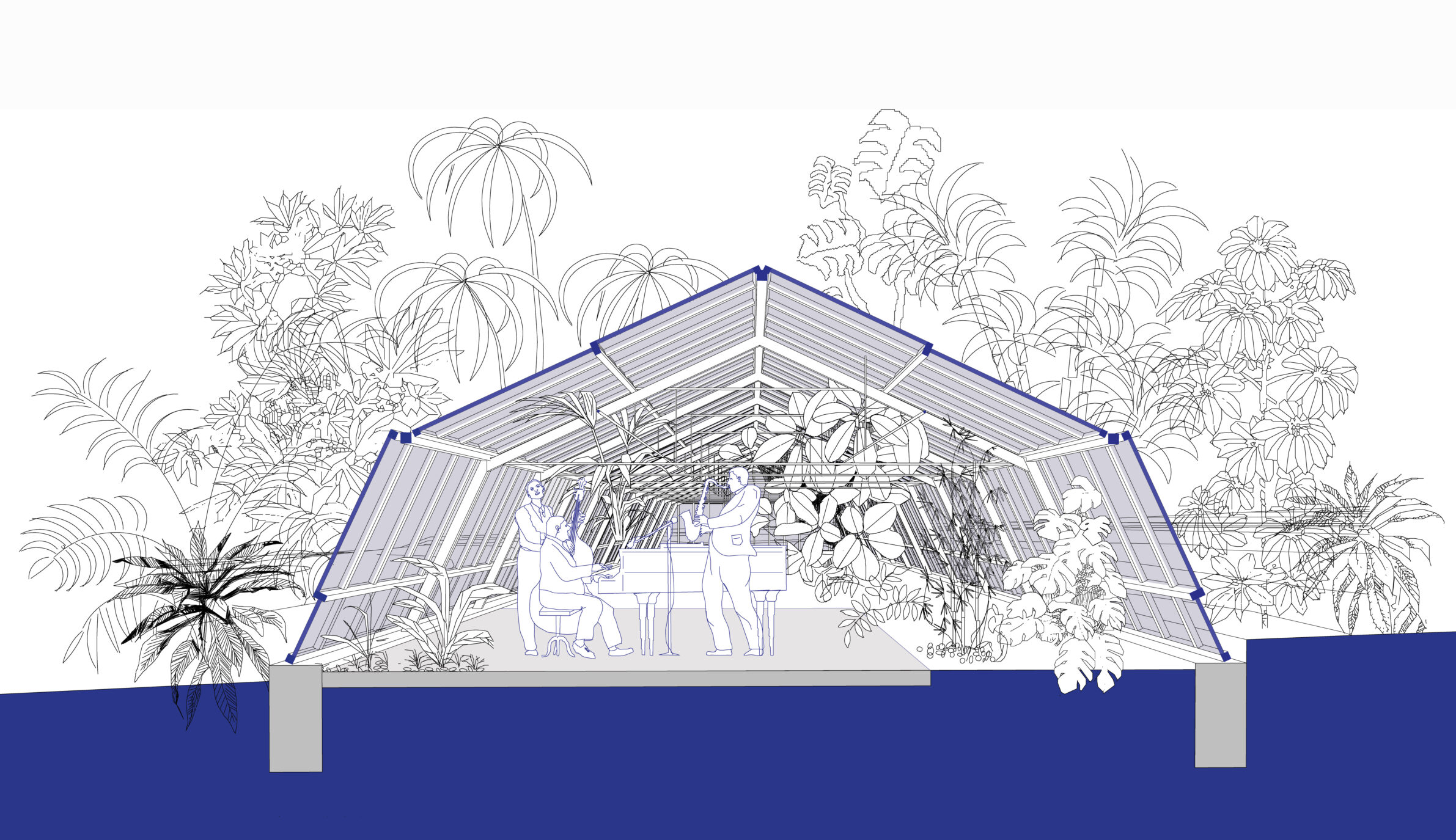
This doctoral research explores how new forms of work - remote work, coworking and digital nomadism -can reshape the future of rural settlements. While many villages in Central and Eastern Europe face depopulation and economic decline, the digital economy opens new opportunities for location-independent work and community-based initiatives.
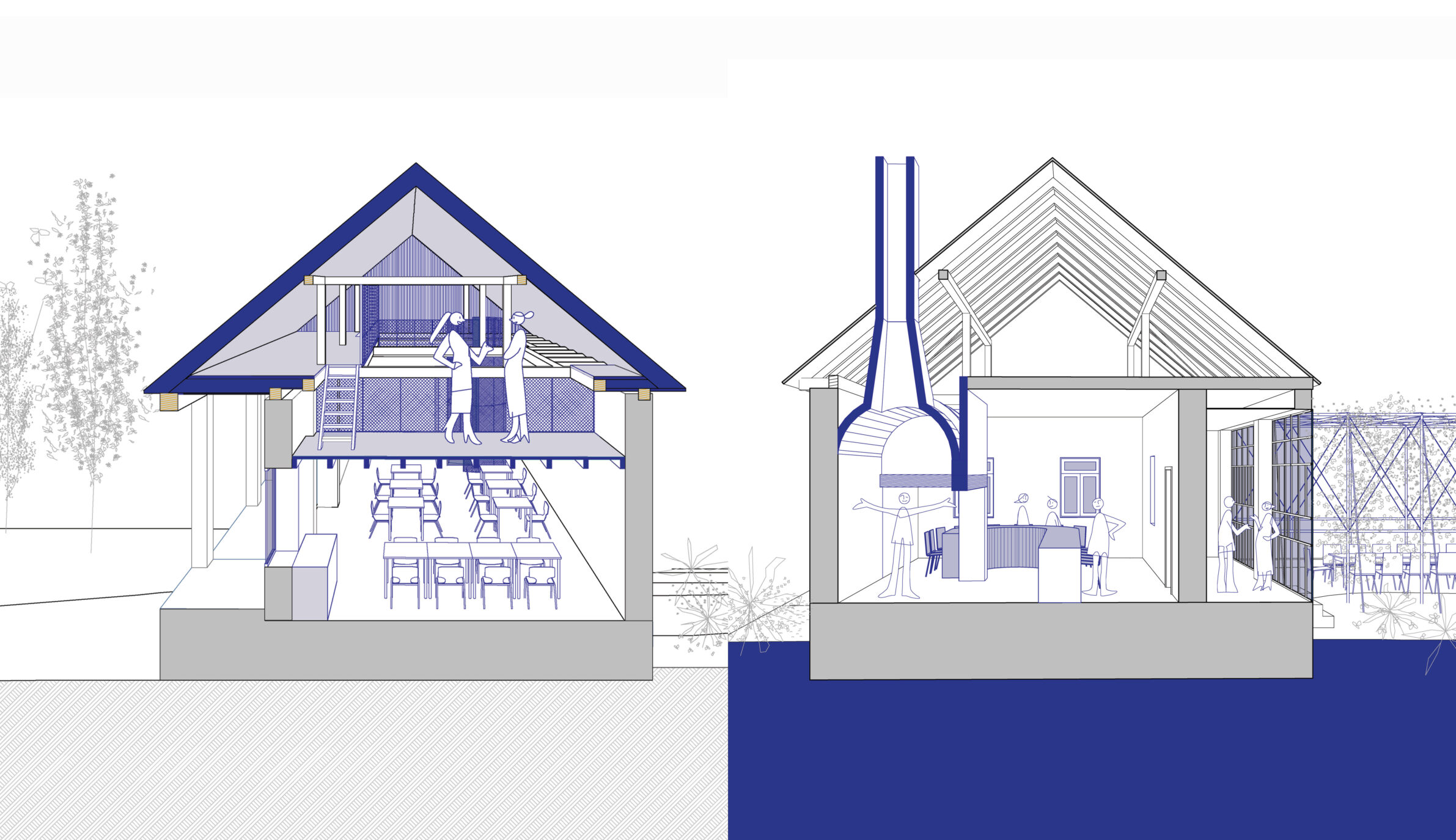
The project explores rural coworking spaces as hybrid environments where digital work and local life intersect. Through the design of a rural coworking centre in a small village in southern Hungary, it proposes an architectural approach based on slow design: a gradual, adaptive process where spaces evolve together with the community. Rather than delivering a finished object, the project frames architecture as a living system - capable of responding to changing needs, social interactions and the rhythms of rural life.
BRICK HOUSE, PÉCS
Lead architect: Margit Pelényi
Architectural collaborator: Noémi Kókai DLA
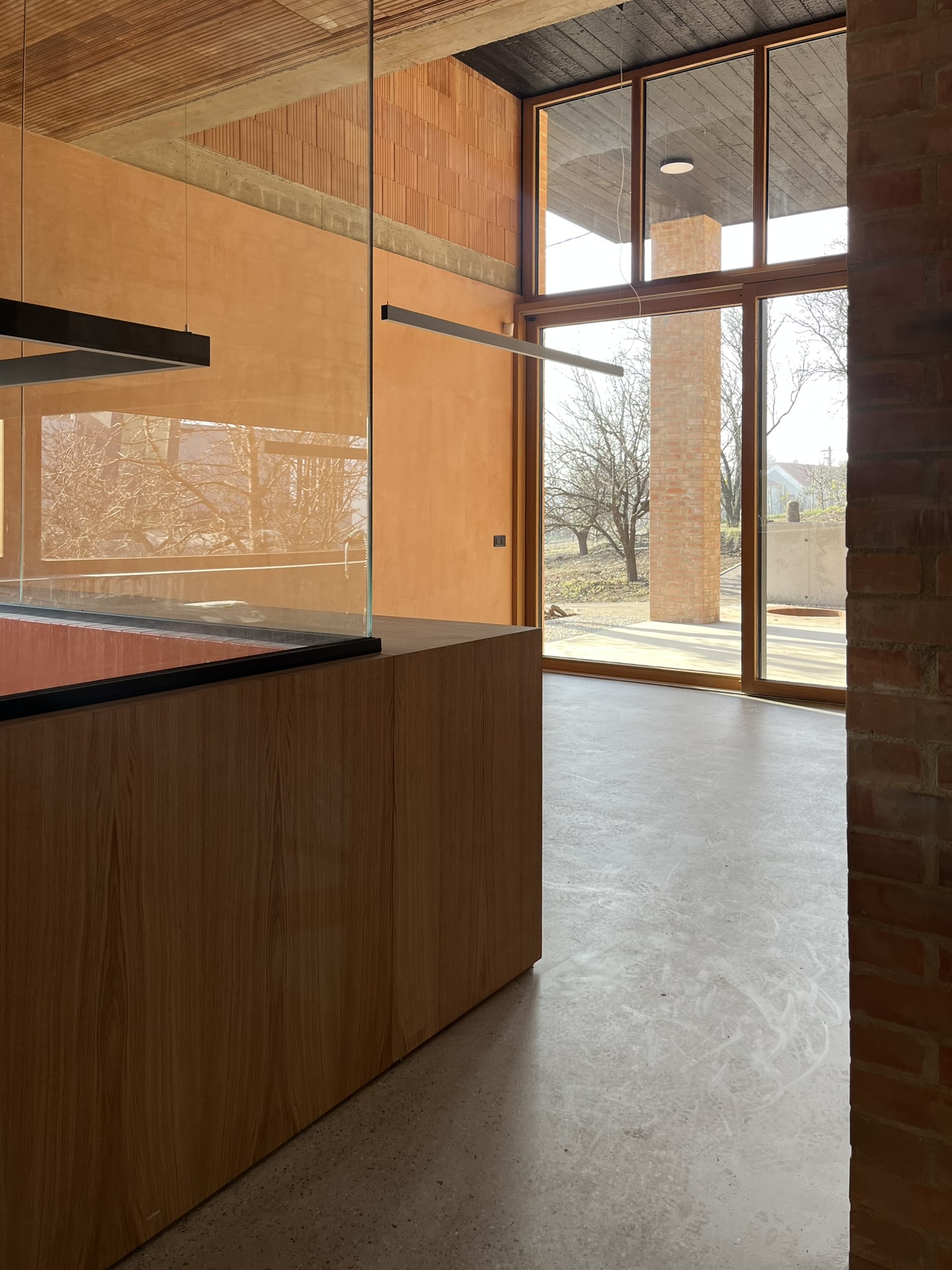
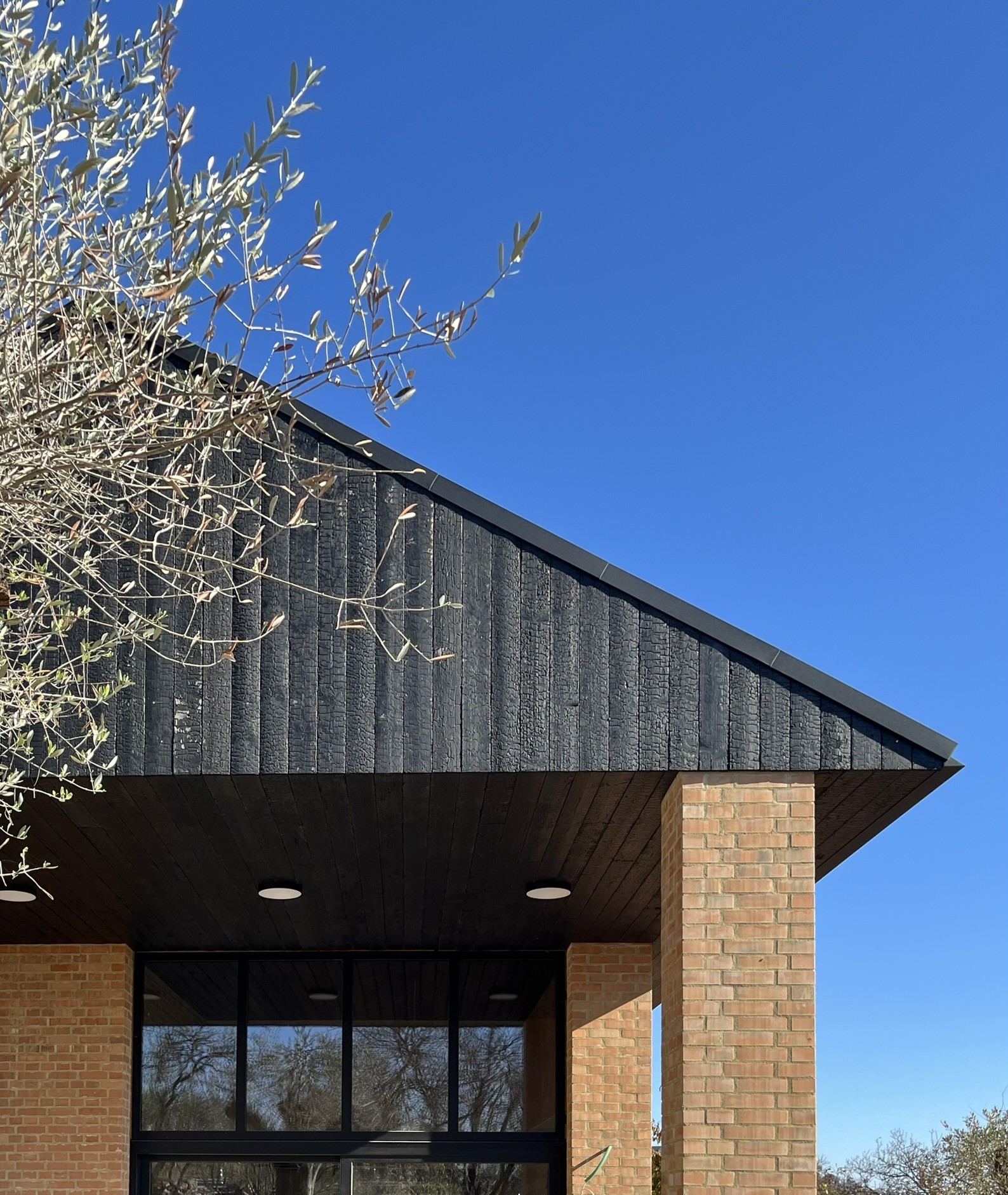 Located on the hillside of Donátus in Pécs, this guesthouse and hunting lodge explores the expressive potential of raw materials and construction techniques. The project was developed as part of the
architectural Studio of Margit Pelényi’s, with Noémi Kókai contributing as architectural collaborator throughout the design process.
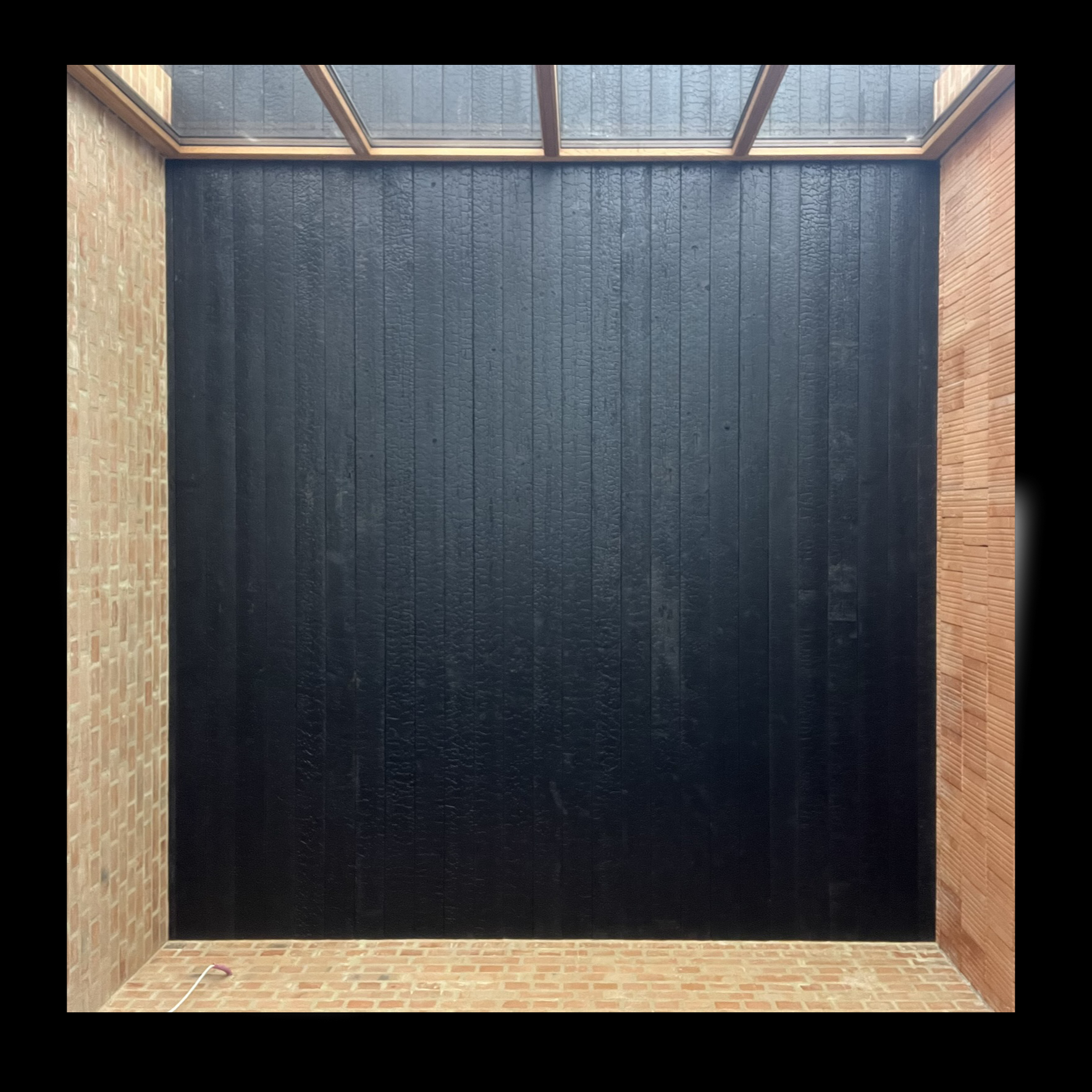
The house experiments with exposed construction both inside and outside: visible brick and block masonry, exposed concrete lintels, polished concrete floors and natural clay plaster surfaces. Oak joinery and built-in furniture introduce warmth to the otherwise robust material palette. A strong identity emerges from the contrast of deep red masonry and black charred timber cladding, used on the facade and continued into the interior, where generous volumes emphasise the raw material atmosphere.
Noémi Kókai
Noémi Kókai, DLA is an architect, researcher and assistant professor at the University of Pécs – Faculty of Engineering and Information Technology, at the Institute of Architecture, Department of Architecture and Urban Planning. She completed her doctoral studies at the Breuer Marcell Doctoral School and, as a recent graduate, now teaches full time at the university, where she has been involved in architectural education since 2021.
Alongside her academic work she has been working as an architectural designer in the Studio of Margit Pelényi’s since completing her master’s degree, contributing to several realised, unrealised and ongoing architectural projects.
Her research and design work focuses on the future of rural territories. She investigates how new lifestyles and functional demands emerging from digitalization can be integrated into rural contexts. Her work approaches the countryside not as a space of deficit, but as a space of opportunity, where new architectural, social and economic models can be tested.
Contact
kokai.noemi@mik.pte.hu
Powered by

Be There.