



Ina Tuti, Albania, 2026

Nominator: Albana Leti
Nominator's statement
Ina Tuti, nominated for this award, contributed to the conceptual fashion collection Shtojzovallet, inspired by Albanian mythology, folklore, and cultural identity. Her work helps create a poetic dialogue between tradition and modernity, bridging cultural roots with contemporary fashion design. She drew inspiration from Albanian heritage, particularly traditional female symbolism and Central Albanian cultural motifs, reinterpreting them through elegant silhouettes, contemporary cuts, and lightweight, flowing materials.
Ina successfully integrated traditional elements such as embroidery, symbolic forms, and natural textiles with modern fashion language, transforming cultural memory into innovative design concepts. Her part of the collection explores identity, femininity, and nature, presenting garments not only as fashion objects but also as expressions of heritage, memory, and artistic storytelling. Through this project, she demonstrates strong conceptual thinking, creativity, and sensitivity to cultural and sustainable fashion practices.
ROSE PRUNING
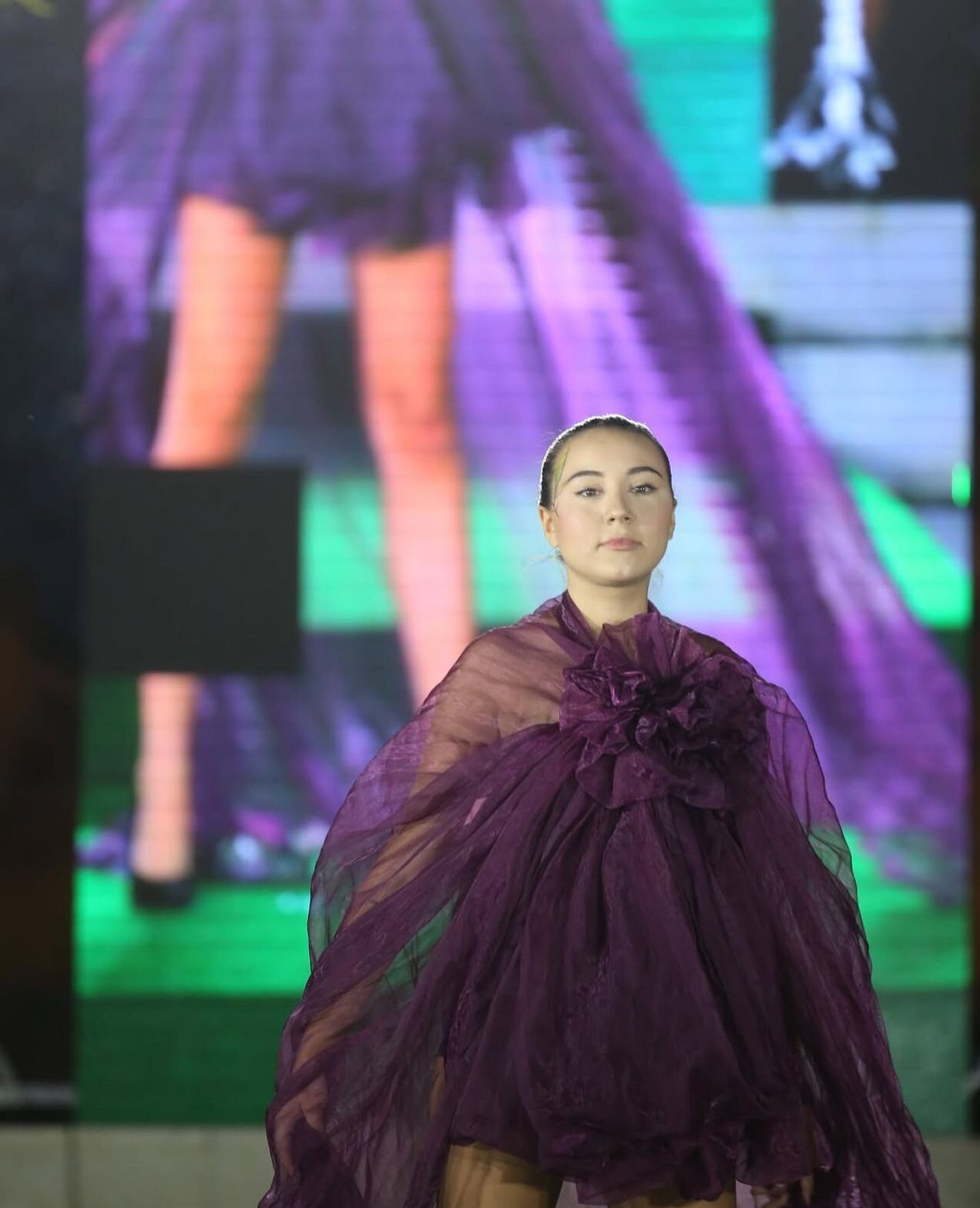
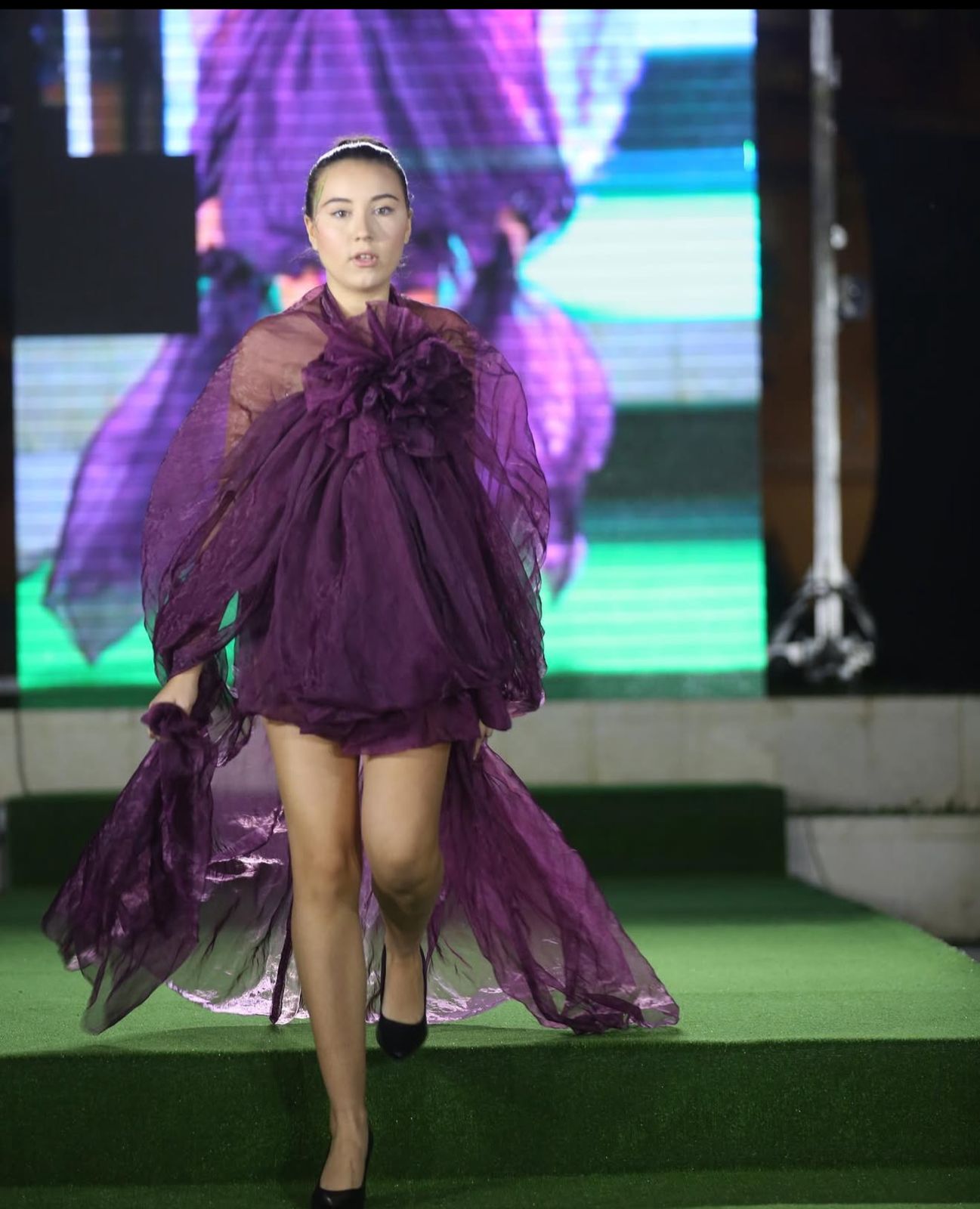
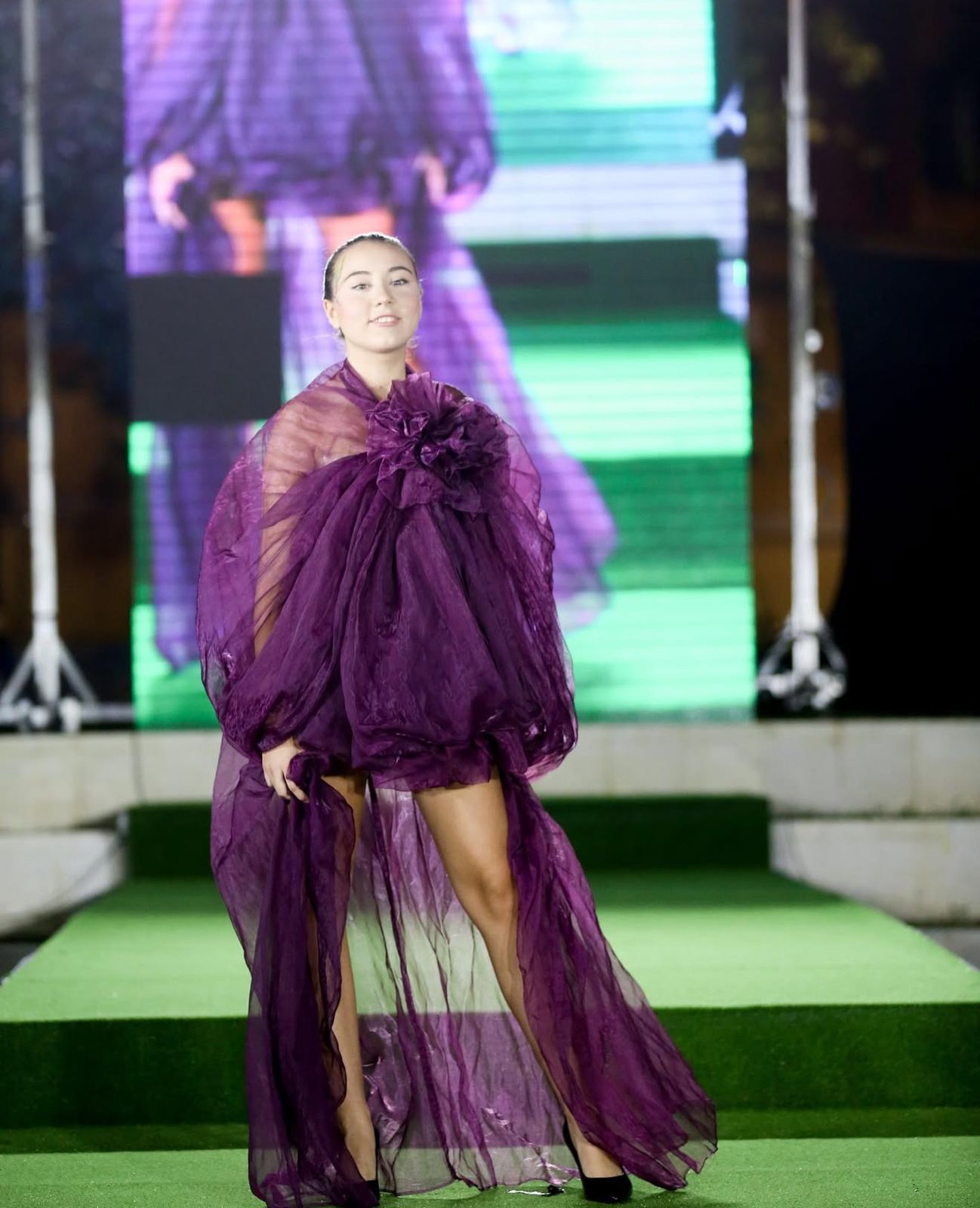
This project presents a delicate dress crafted from sheer, unpressed, and untreated curtain fabric, lending every movement an ethereal lightness. The simple yet elegant design features a tied detail on the chest that forms a subtle rose, while the back flows gently in a soft drape. The fabric’s transparency evokes a dreamlike delicacy, allowing natural textures and folds to create their own quiet magic. Its minimalist construction transforms the dress into a pure expression of simplicity and natural beauty, celebrating organic elegance in every line and contour.
 MODERN TRADITION
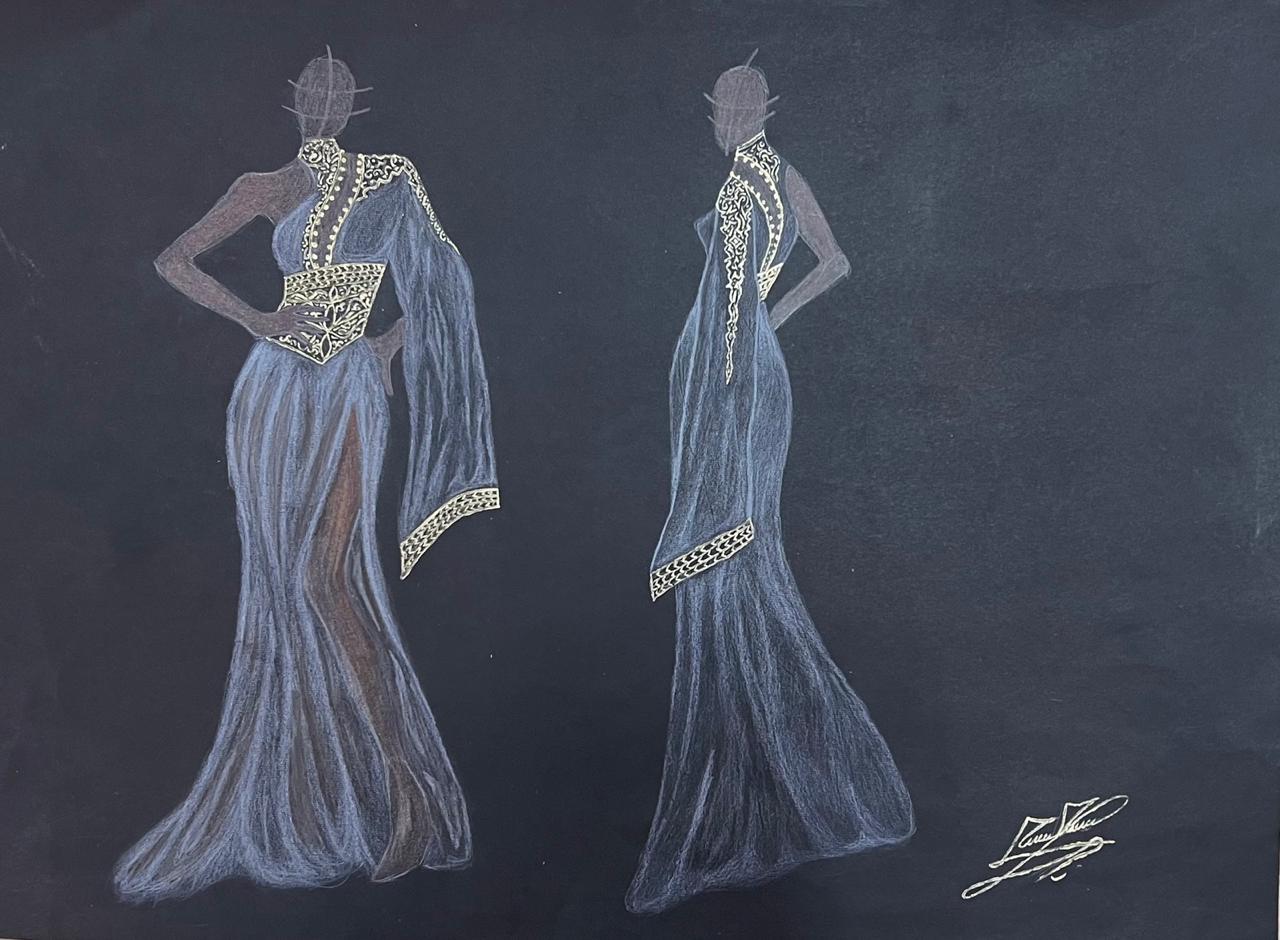
This elegant design embodies the fusion of tradition and modern sophistication. Crafted with delicate wool fibers and adorned with intricate golden threads, the garment captures a harmonious balance between softness and luxury. The flowing silhouette and asymmetric details emphasize grace and strength, while the gold accents pay homage to rich cultural heritage. This creation is not only a dress but a narrative of craftsmanship and artistic vision, where every fiber tells a story of passion, skill, and timeless beauty.
CRAFT THE FUTURE
In a time when sustainability and the mindful use of natural resources are becoming increasingly important, the art of macramé has brought attention back to the ability to transform simple materials into unique works of fashion and design. The use of unwanted or leftover fibers, whether from the textile industry or previous projects, represents an innovative and eco-friendly approach to garment creation. These fibers, which might otherwise be considered waste, can be repurposed into valuable material for crafting macramé dresses, combining artisanal creativity with a strong environmental consciousness.
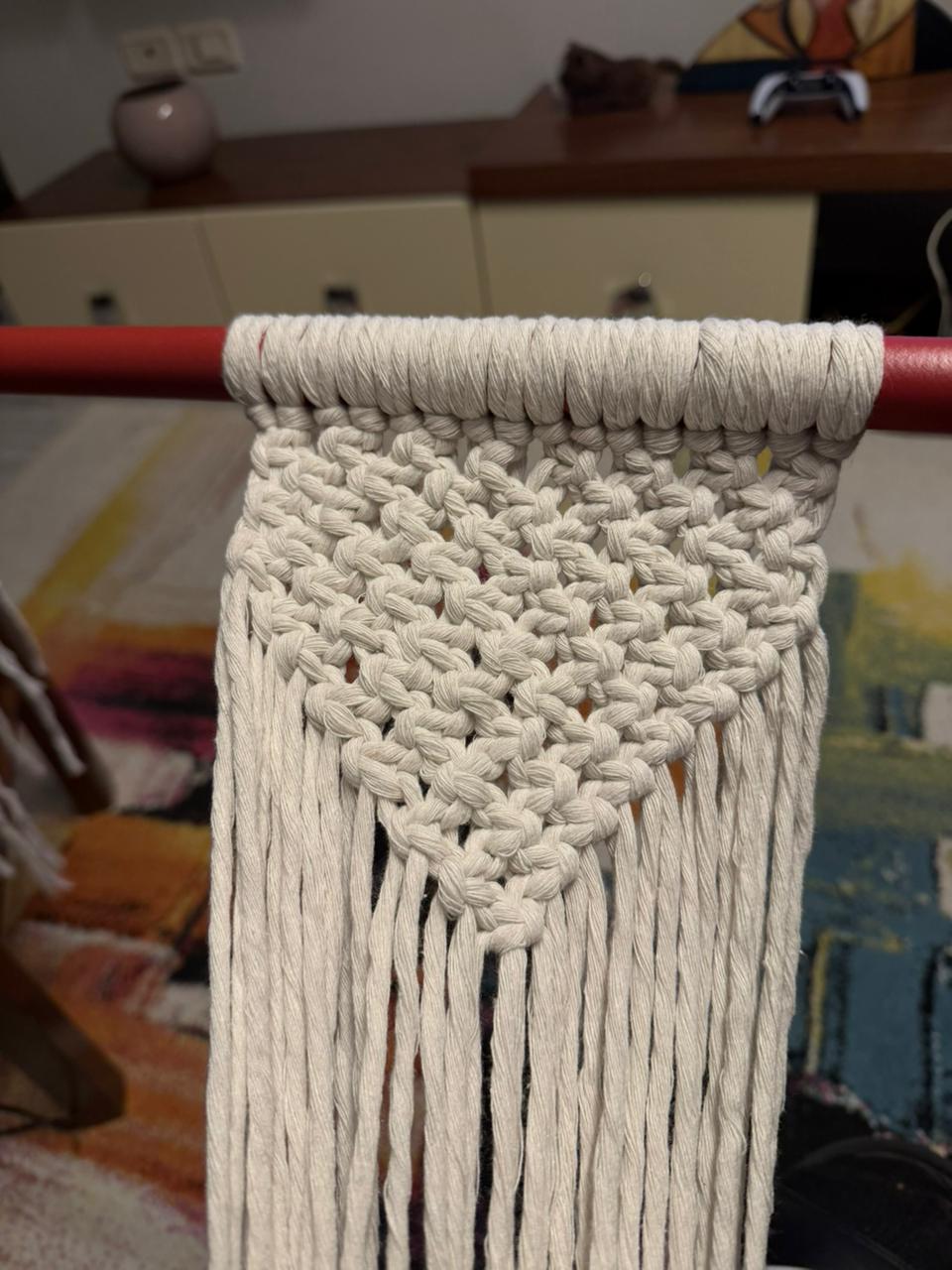
Macramé is a knotting technique that uses various knots to create intricate patterns and stable structures. When unwanted fibers are used, each thread is given a new life, contributing to the formation of a dress that is not only visually striking but also environmentally responsible. This process requires patience and skill, as each knot must be precise and durable to ensure that the dress maintains its shape and structure over time.
Beyond its practical aspect, using leftover fibers for macramé dresses sends a powerful message: every material has the potential to be reimagined, and every creative action can contribute to reducing waste. Such a dress is not merely clothing; it is a testament to innovation, awareness, and human ability to transform something simple into a beautiful and functional work of art.
In addition to aesthetics, these dresses offer a unique tactile and visual experience, as each thread tells its own story and each knot reflects the care of the artisan. The colors, textures, and thickness of the fibers can be combined to create striking visual contrasts and different sensations to the touch, making every dress a unique piece of wearable art.
This approach makes fashion more sustainable and conscious, integrating creativity, recycling, and artisanal art. Using unwanted fibers is not only a way to conserve resources but also a form of expression that reflects sustainability and the personality of someone choosing to wear a dress with meaning and history.
Ultimately, creating macramé dresses from leftover fibers is a powerful form of ethical fashion that combines art, creativity, and environmental responsibility. It teaches us that every material, even those seemingly worthless, can be transformed into something beautiful, functional, and sustainable for the future.

INA TUTI
My name is Ina Tuti, and I hold a Master of Science degree in Textile Engineering and Fashion. My academic and professional path has been guided by a strong commitment to sustainability, innovation, and responsible design within the textile and fashion industry. I am deeply motivated by the transformative potential of fashion—not only as a creative expression, but as a tool for environmental awareness and social impact.
Throughout my studies, I developed a particular interest in sustainable materials, circular design systems, and the lifecycle of textile products. My academic background in textile engineering has provided me with a solid technical foundation, enabling me to understand fabrics not only from an aesthetic perspective but also from a structural, functional, and environmental point of view. This combination of technical knowledge and creative exploration has shaped my approach to fashion as a discipline where innovation and responsibility must coexist.
One of the most significant milestones in my professional journey has been the development of my own fashion collection created entirely from recycled and reusable materials. This project was both a creative and research-driven process. I explored ways to transform discarded textiles into contemporary, functional, and aesthetically refined garments. Rather than viewing textile waste as a limitation, I approached it as a source of inspiration. Each piece in the collection was designed to demonstrate that sustainability does not compromise quality or creativity; on the contrary, it challenges designers to think more critically and inventively. Through this collection, I aimed to communicate a message about conscious consumption and the importance of extending the life cycle of garments.
In addition to my design work, I have been actively involved in raising public awareness about textile recycling and reuse. I organized an awareness campaign in collaboration with Balfin Group at the largest shopping center in Albania. This initiative focused on encouraging individuals to reconsider their relationship with clothing and to understand the environmental impact of fast fashion and textile waste. The campaign served as a platform to engage the community, promote responsible consumer behavior, and introduce practical solutions for recycling and reusing garments. It reinforced my belief that sustainable change requires both industry innovation and public participation.
My professional vision is rooted in the principles of circular economy and sustainable development. I am particularly interested in how different cultural contexts influence design methodologies, material choices, and attitudes toward reuse and recycling. I believe that sustainability is not a one-size-fits-all model; rather, it is shaped by cultural values, traditions, resources, and social behaviors. For this reason, international collaboration is essential. Exposure to diverse perspectives allows for a deeper understanding of how sustainability can be implemented in meaningful and context-sensitive ways.
Participating in this international project represents an important step in my professional growth. It offers the opportunity to exchange knowledge, learn from the experiences of designers and researchers from different backgrounds, and further refine my own approach to sustainable fashion. I am particularly eager to explore how other cultures integrate recycling practices into their creative processes and how they construct sustainable design models within their own socio-economic frameworks.
At the same time, I am committed to contributing my own experience and perspective. Coming from a context where sustainable fashion is still developing, I have learned to work resourcefully, creatively, and with a strong sense of responsibility. I aim to bring this mindset into collaborative environments, contributing not only technical knowledge in textile engineering but also practical experience in awareness-building initiatives and sustainable collection development.
In the long term, my goal is to continue developing innovative projects that combine design, engineering, and environmental responsibility. I aspire to contribute to a fashion industry that prioritizes durability, ethical production, and circular systems. I see myself not only as a designer and textile engineer, but also as an advocate for change—someone who seeks to bridge creativity with sustainability and local action with global dialogue.
Through this project, I hope to deepen my understanding, expand my professional network, and strengthen my ability to design solutions that are both innovative and responsible. I am confident that collaboration across cultures and disciplines is key to building a more sustainable future for fashion, and I am eager to be an active part of that process.
Contact
inatuti2024@gmail.com
Powered by