



Georgios Thalassinos, Greece, 2026

Nominator: Tilemachos Andrianopoulos
Nominator's statement
I had the privilege of meeting Mr. Thalassinos, in 2020. His performance was exceptional, demonstrating the potential of a highly promising student. In 2023, Mr. Thalassinos completed his research project titled "The State of Monad", a highly original and insightful study on the notion of the unit across theories of the modernist city.
Following this, his diploma thesis titled "Brave New Axis, Perpendicular to Athinas Street" addressed the complex themes of urban, landscape, and architectural design through a project that sought to regenerate a central part of Athens, within its neoclassical triangle. The approach reflects an expanded perception of urban design and its social role, as well as a commitment to substantive and bold experimentation in the field of public space.
His project received the 2025 Young Talent Award of the Mies van der Rohe Foundation, recognising his exceptional qualities. Mr. Thalassinos is enthusiastic yet discreet and meticulous, with strong analytical thinking and a high level of compositional skill. He possesses a broad aesthetic and theoretical perspective, while maintaining a spirit of autonomy and intellectual rigor.
BRAVE NEW AXIS: PERPENDICULAR TO ATHINAS STREET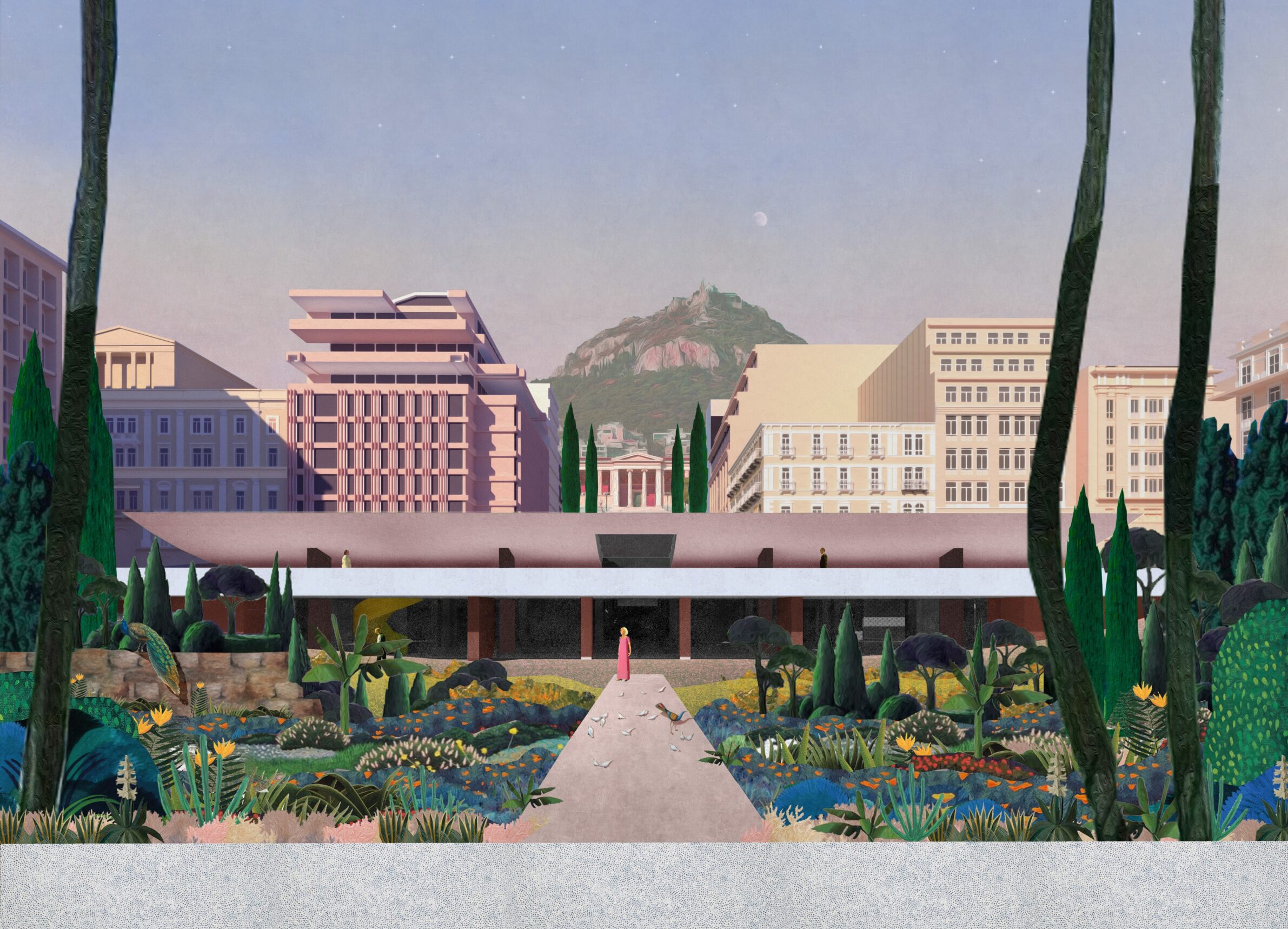
Axis, an imaginary line that connects, divides, shaping space and movement. Its points hold unseen multiplicities—if they change, does the whole transform? With this begins an enquiry, a project redefining a strict 19th-century line, that comes to delineate the anarchic ancient form of Athens.
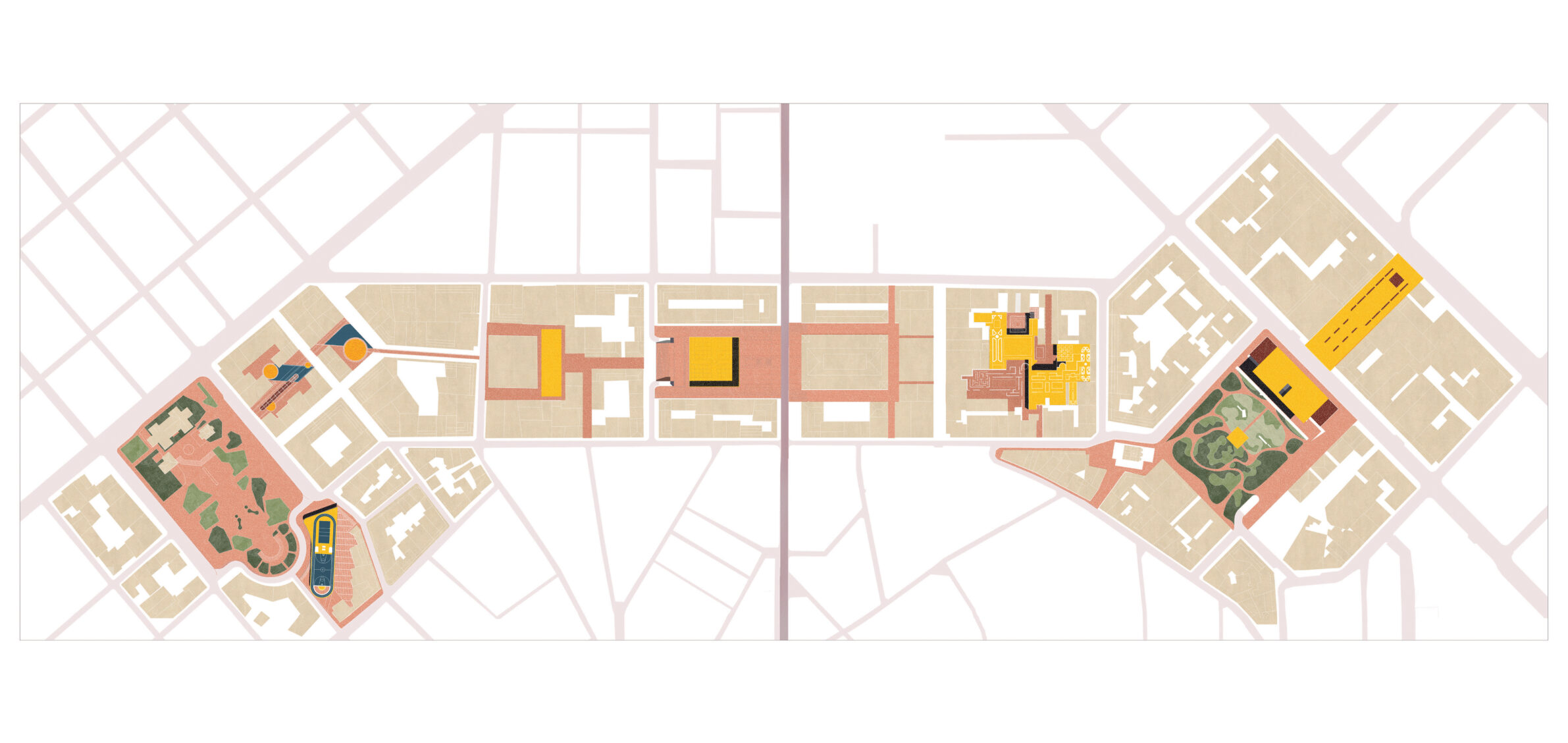
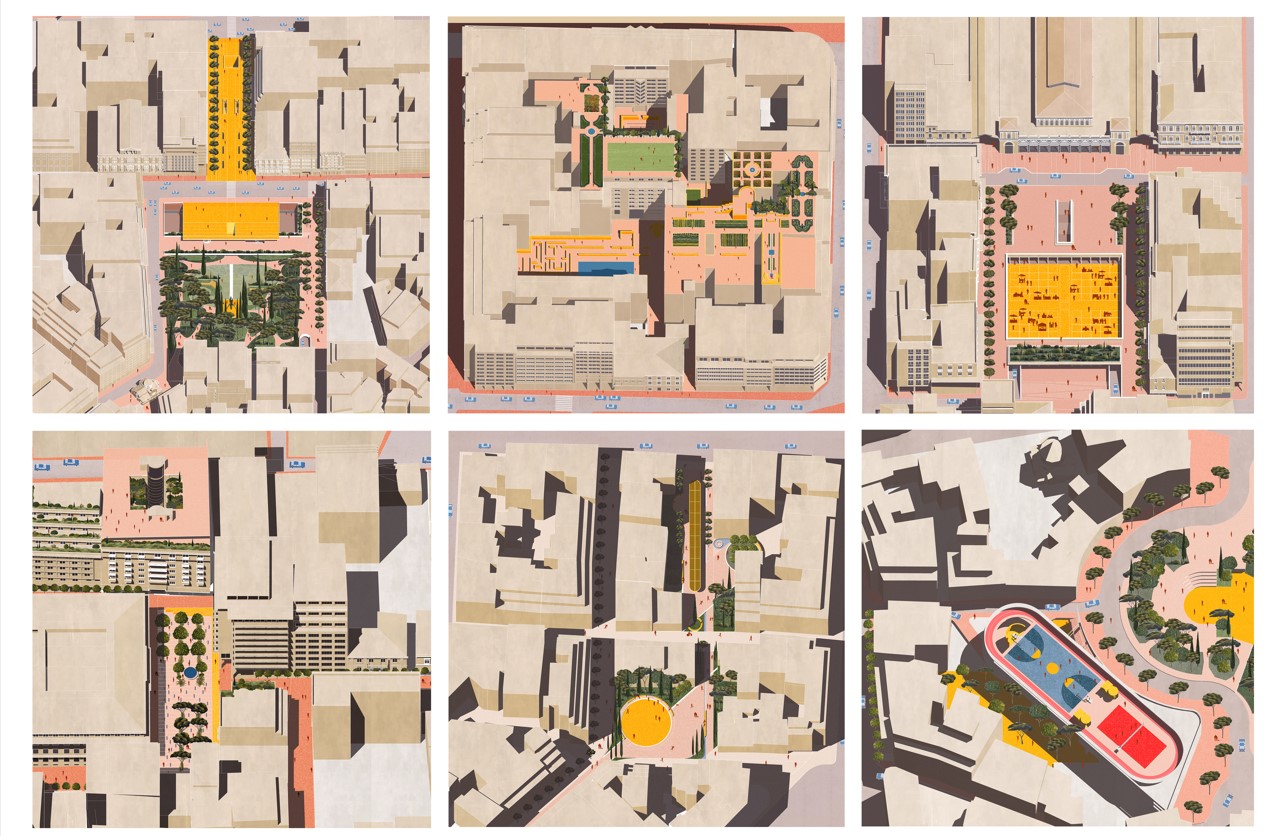
Athens' 1833 plan imposed neoclassical order on its medieval fabric. A monumental axis running east to west, accommodating civic and private uses, gradually dissolved into a linear urban zone. A pivotal zone that links four urban mosaics, a sequence of urban voids-points concealing a lost linear path. Yet, the city itself has rejected the classical notion of the axis. A new approach is needed—one that redefines this path, not as a rigid line, but as a series of dynamic points - fields one encounters along the journey. A free garden of curved nerves, a labyrinth in the negative urban space, a Forum as a geometric centre, a Phalanstery reviving housing in the city core, and two ex-parking spaces redefined as public zones—each forms an autonomous element within a broader linear entity that connects them.
A ROOM OF ONE'S OWN, A HOUSE FOR ALL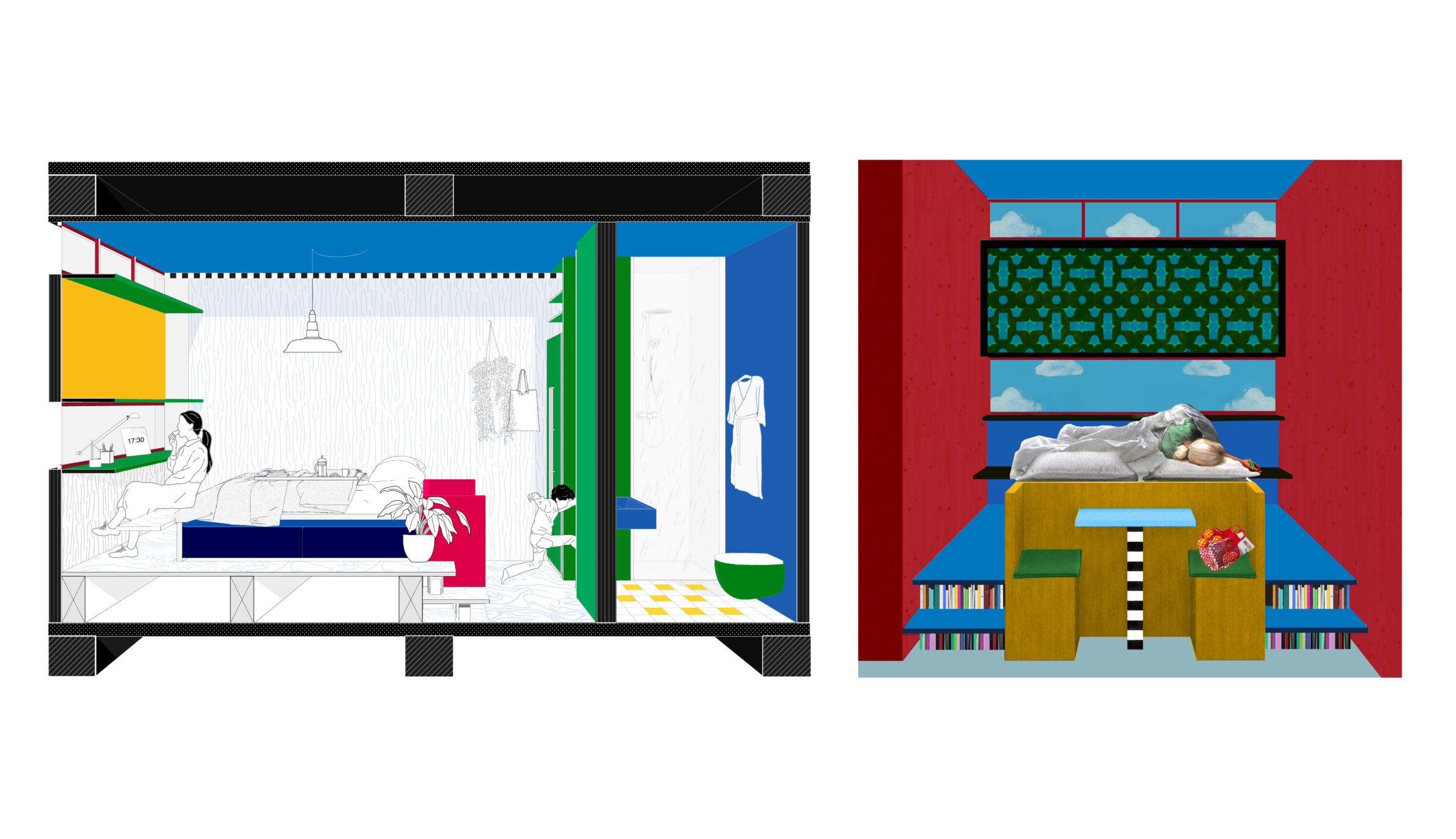
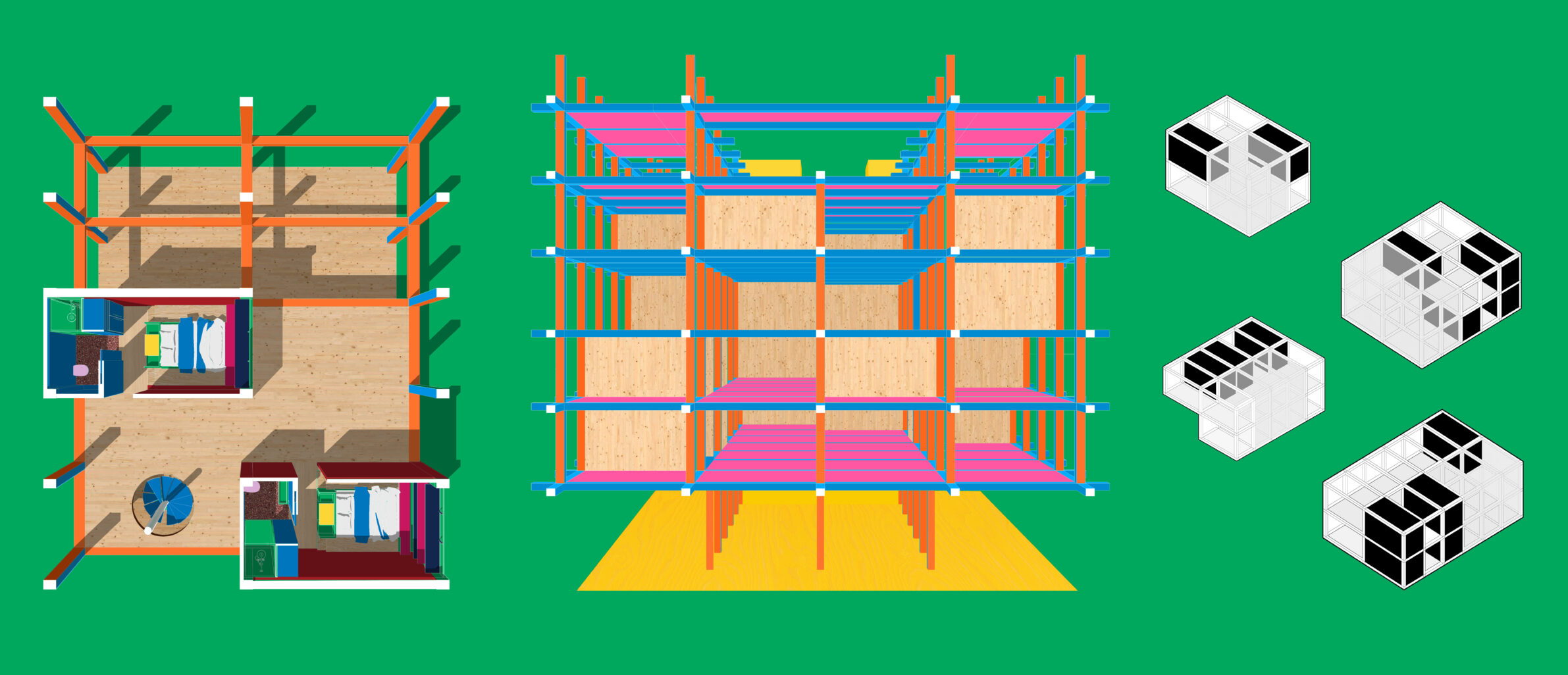
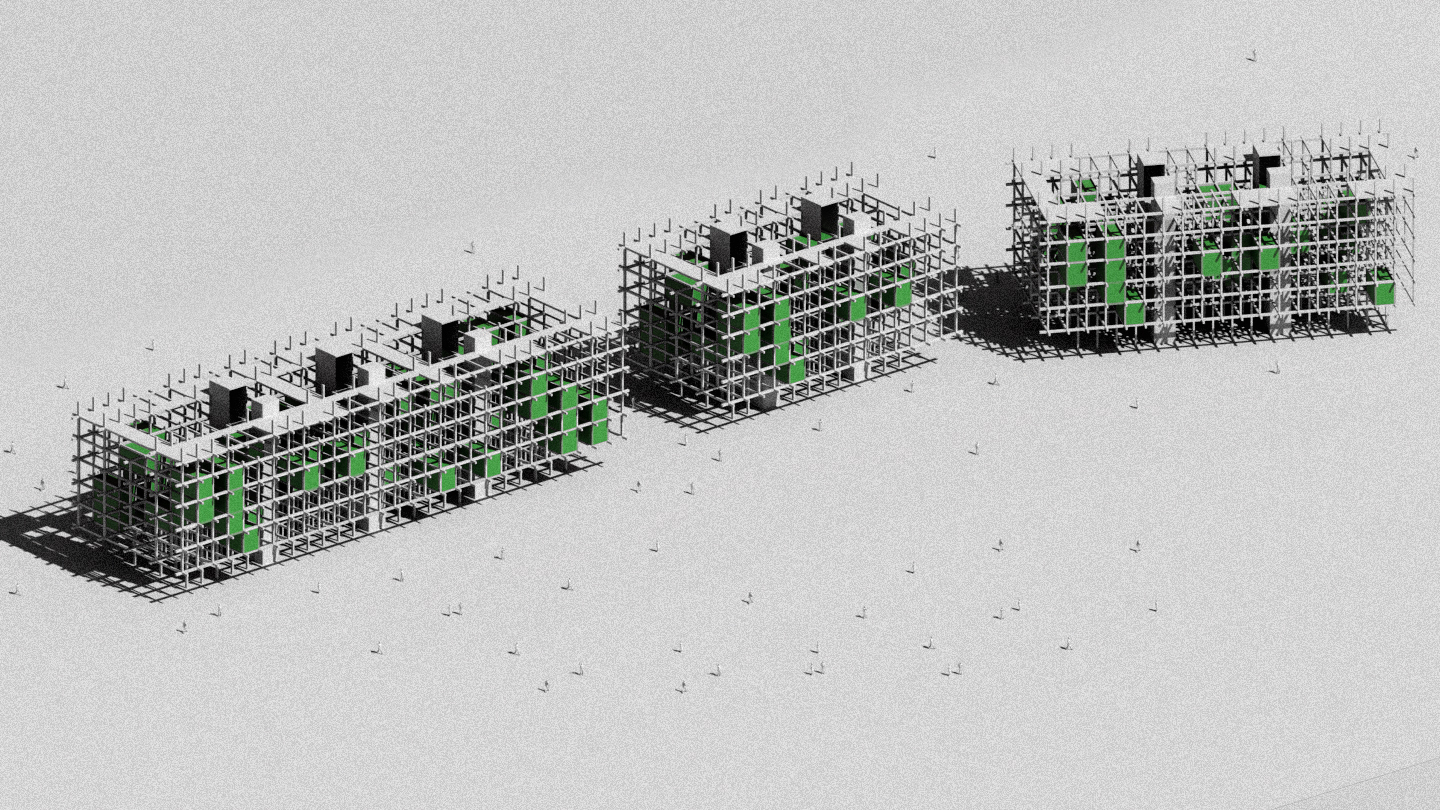
A Room of One’s Own, A House for All investigates the architecture of the room as the primary unit in the composition of collective structures. It addresses the tension between individuality and cohabitation, proposing that living together presupposes the continuous possibility of being alone. The project positions the room not simply as a functional enclosure, but as a spatial and conceptual device through which subjectivity is formed, negotiated, and maintained within shared environments. In this sense, the project engages with collective housing through the lived experiences of residents, examining how spatial systems enable forms of self-organization grounded in the autonomy of the individual.
The proposal follows a compositional progression: from the autonomous room, to typological assemblies, to a 'Τetris' organization, and finally to multi-level clusters. Scaled up to the urban condition, the project suggests that the city itself can be understood as an expanded network of rooms. Ultimately, the work advances a political reading of architecture, proposing that collective living can be rethought as a system that enables the coexistence and friction of distinct individual worlds, continuously negotiating their boundaries.
HIDE AND SEEK, CHILDREN’S HOUSE
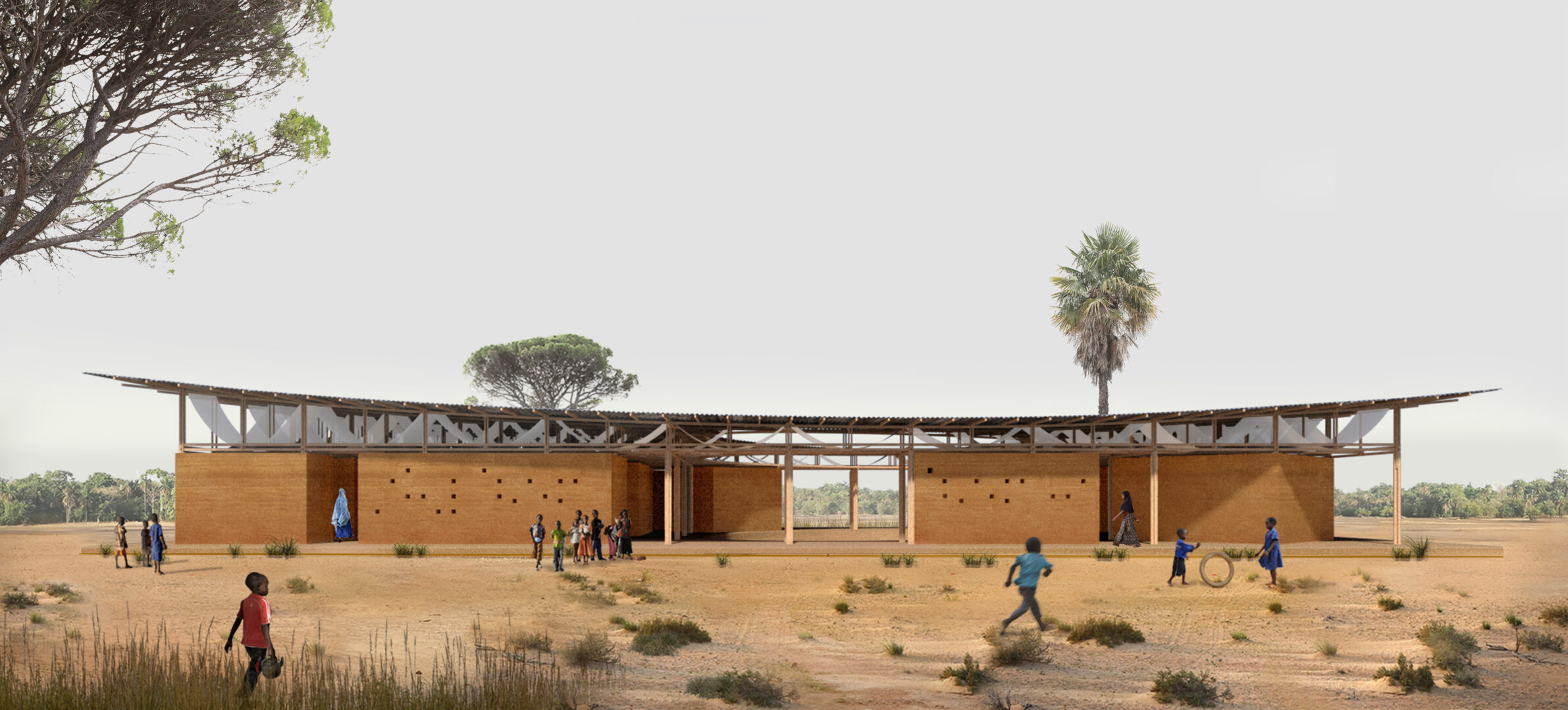
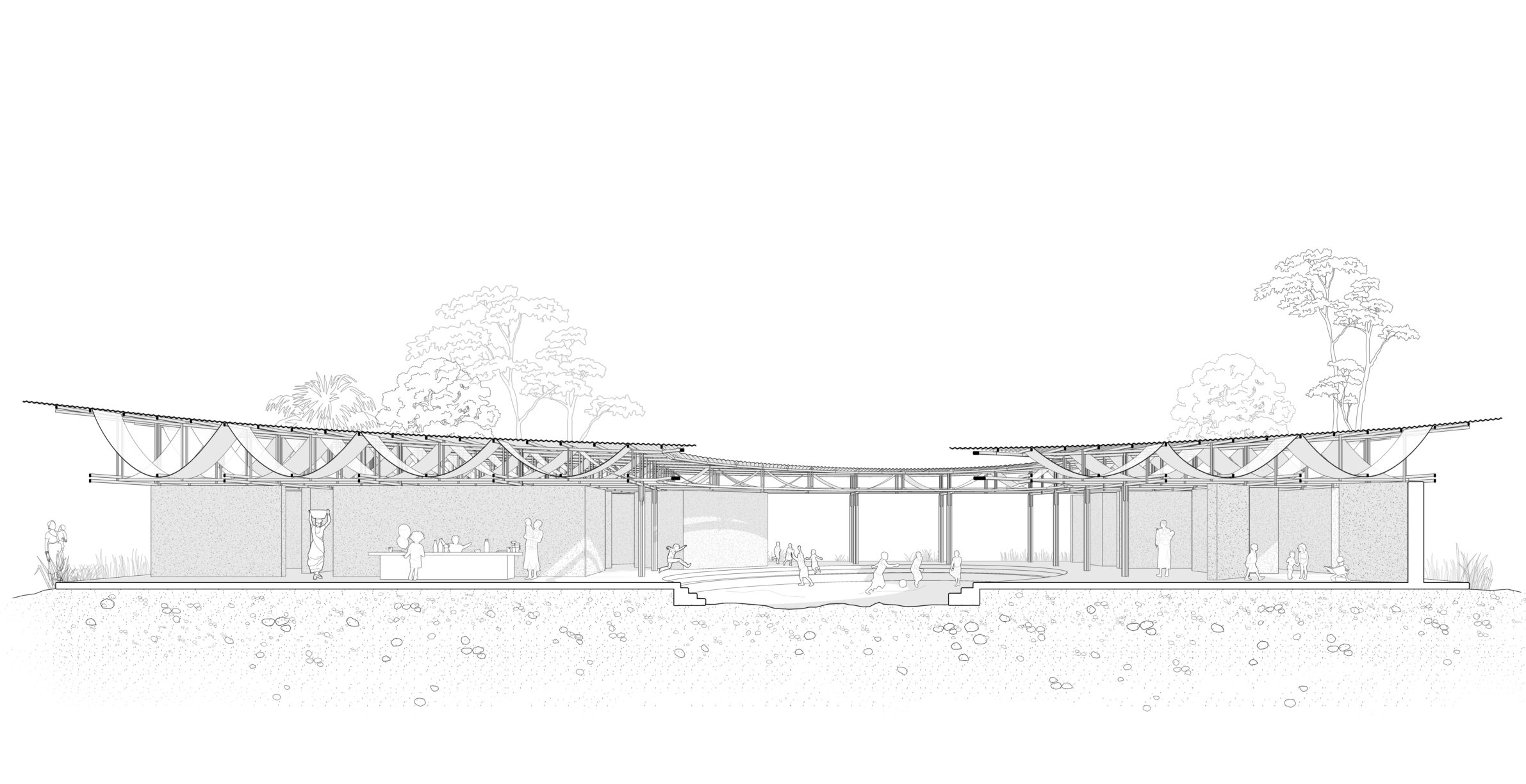
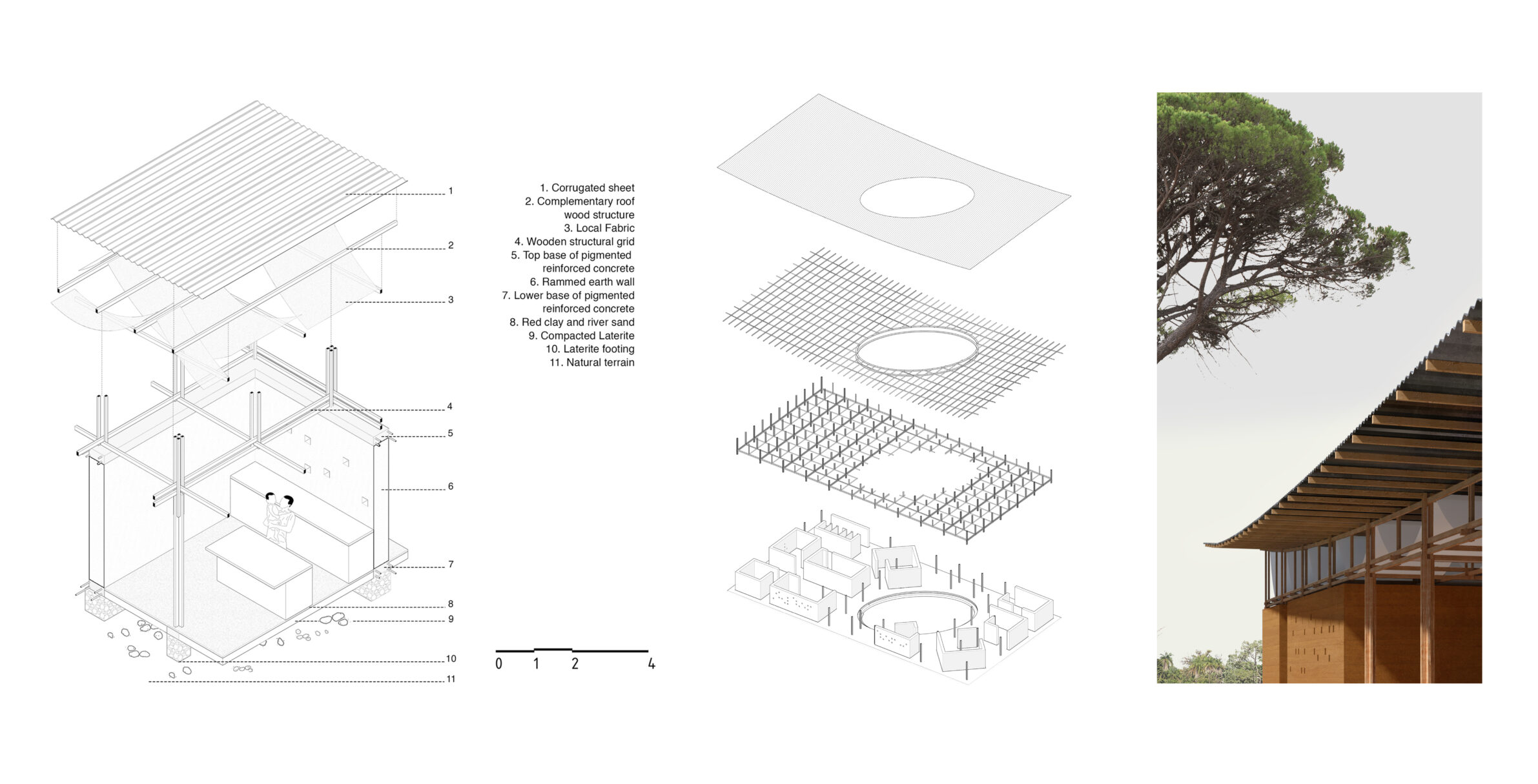
Located in the village of Baghere in Senegal, this project explores the role of architecture as a mediator between a challenging reality and the fundamental right to a nurtured childhood. Conceived as a response to the systemic crisis of child malnutrition, the proposal seeks to create a sanctuary of security and belonging. The intervention is grounded in the belief that physical recovery is inseparable from emotional well-being; therefore, the environment is designed to support the collective spirit and the vital necessity of play.
By engaging with the region’s earthen materiality, the project establishes a sense of permanence, creating a protective yet fluid shelter that operates on the scale of the child. It is an exploration of a "village-scale" infrastructure where the built form does not merely provide cover but acts as a vessel for resilience and communal life. Ultimately, the project advocates for a sensitive spatial practice that prioritizes human dignity, fostering social stability through a culturally resonant space that promotes communal togetherness.

Georgios Thalassinos
Giorgos is an architect and researcher based in Greece, holding an MEng from the School of Architecture at the National Technical University of Athens (2017-2023), with academic experience at ENSA Paris-Malaquais as an exchange student (2021-2022).
His work operates at the intersection of architectural practice, theory, and speculative urbanism, through design and research projects that explore urban form, mass-housing, utopia, and the politics of spatial organization. In 2025, he was selected as a Fellow of the LINA Community, a prominent European network supporting emerging practitioners who engage with architecture, culture, and critical spatial practice. For his diploma thesis, "Brave New Axis", he and his collaborators were named among the three winners of the EUmies Awards Young Talent (2025). The project was further recognized through its exhibition as a collateral event at the Venice Architecture Biennale. In 2024, he received an Award for Excellence in Diploma Theses from the Technical Chamber of Greece, and in 2026, he was named a State’s Scholarships Foundation (IKY) scholar, honoring his engagement with international competitions.
Contact
gio.thalassin@gmail.com
Powered by