


Fjorela Qevani; Anita Mena ; Fjoralba Pelivani; Anula Cama ; Enrimela Muçi, Albania, 2026

Nominator: Ilda Kazani
Nominator's statement
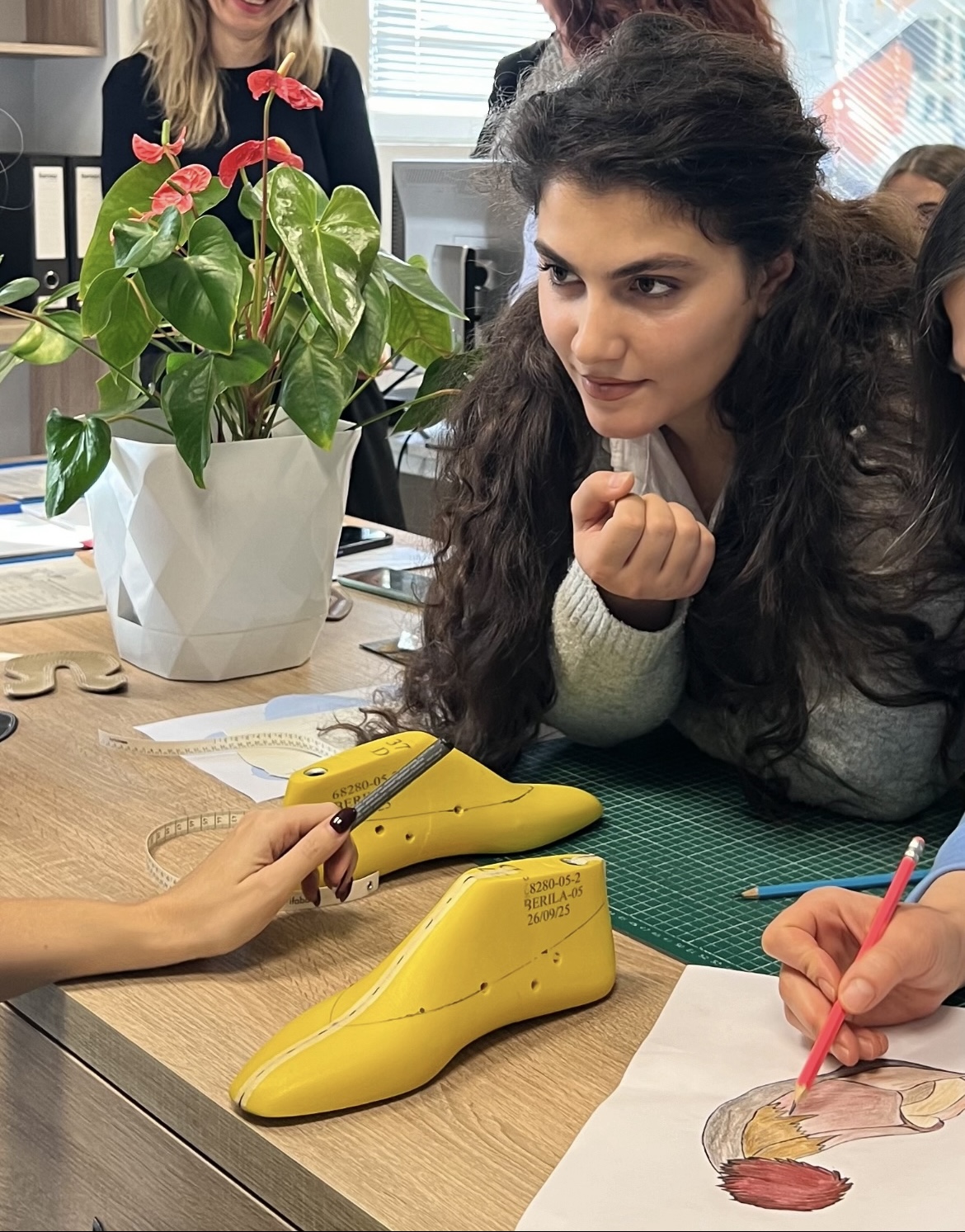
This group of the students nominated by me has previously participated in the activity of EU4Innovation – Harvesting Innovation with EIT Manufacturing – transforming Albania’s Manufacturing Landscape, financed by the EU. An interactive co-creation bootcamp that was organize to engage all the students that participated in this activity, which collaboratively develop production-oriented solutions, with the most compelling pitches and this group was elected to see both of their products proposed as a recognition award. The team comprises five students: Fjorela Qevani (second-year Master), Anita Mena (first-year Master), and Anula Cama, Enrimela Muçi, and Fjoralba Pelivani (third-year Bachelor)—who had not previously worked together.
Despite this, they successfully collaborated to generate new ideas, creative designs, and sustainable products, resulting in two exceptional projects:
Opinga / This project explores the convergence of material sustainability and Albanian cultural heritage, presenting the opinga as an artifact in which function, tradition, and identity are inseparable. The starting point of the project is leather waste from the footwear industry, which is recovered and transformed into a new product with both functional and symbolic value. The opinga, as one of the most representative elements of traditional Albanian dress, embodies history, ways of life, and a strong connection to land and community. In this project, it is re-created while preserving its form, structure, and traditional construction methods, with respect for the cultural identity it represents. The use of different leather pieces is not only a sustainable solution but also a reflection of the way the opinga was historically made: from available materials, hand-assembled with care and functionality. This approach makes the product a natural continuation of tradition, reinterpreted within the context of contemporary design. Thus, the opinga becomes both a symbol of Albanian cultural identity and an example of a sustainable product, where recycling and tradition do not stand in opposition but rather reinforce one another. The project seeks to demonstrate that cultural heritage can serve as an active source for contemporary design, creating objects that preserve collective memory while responding to present-day needs.
Bag “Muzë” / This project is a unique accessory designed to integrate tradition, creativity, and sustainability. It draws inspiration from traditional Albanian motifs, while its realization employs a modern and practical approach: mosaic composition. Each piece used in the bag comes from leather and textile remnants, carefully combined to create diverse colors, textures, and shapes, resulting in a product that is simultaneously functional, visually striking, and one-of-a-kind. The mosaic structure symbolizes the unification of diverse fragments into a harmonious whole, reflecting a philosophy of recycling and the maximal use of materials. This approach positions the bag as a clear example of sustainable design, demonstrating how waste can be transformed into something beautiful and useful without harming the environment. The name Muzë evokes inspiration and creativity. Every element of the bag communicates that even discarded materials can give rise to a product that preserves cultural heritage, expresses personal style, and encourages users to value recycling and material reuse. The bag Muzë is more than an accessory; it is a statement of sustainability, creativity, and respect for materials—a fusion of traditional beauty with a modern, responsible approach to textiles & leather industry.
OPINGA
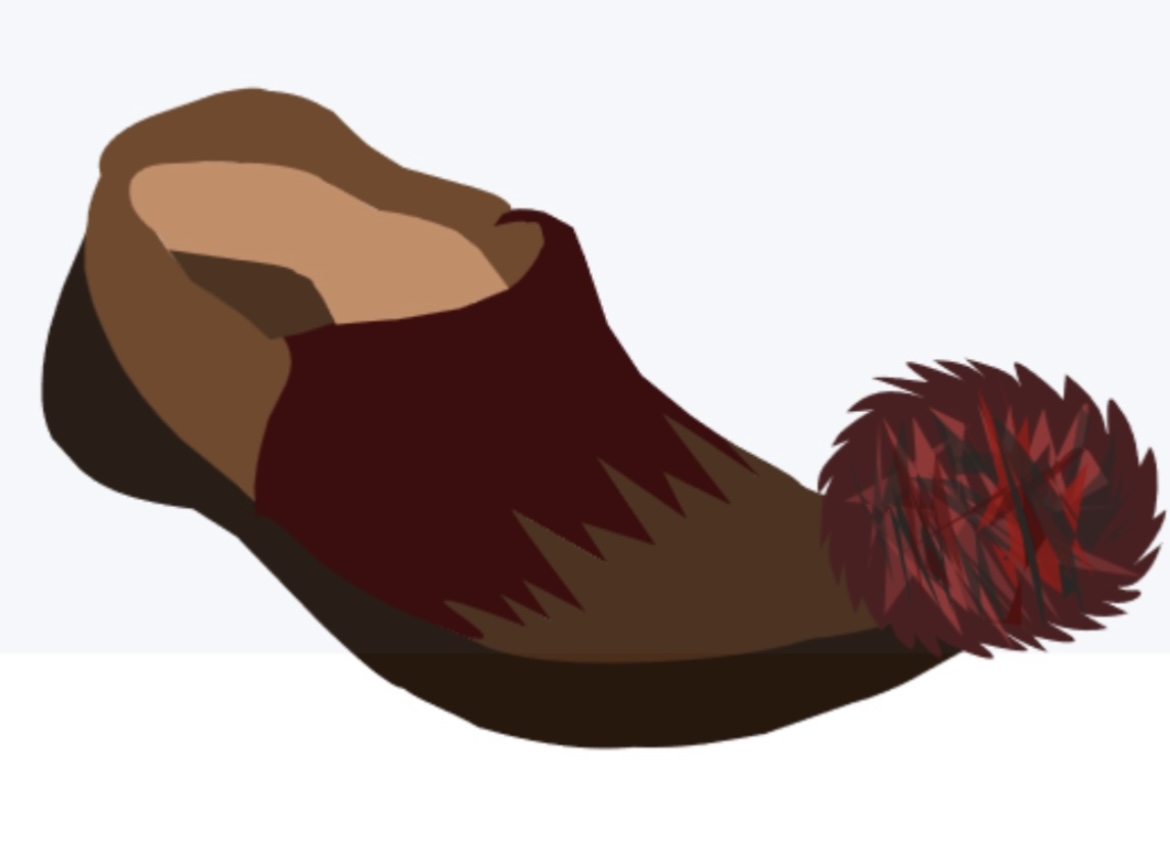
This project explores the convergence of material sustainability and Albanian cultural heritage, presenting the opinga as an artifact in which function, tradition, and identity are inseparable. The starting point of the project is leather waste from the footwear industry, which is recovered and transformed into a new product with both functional and symbolic value.
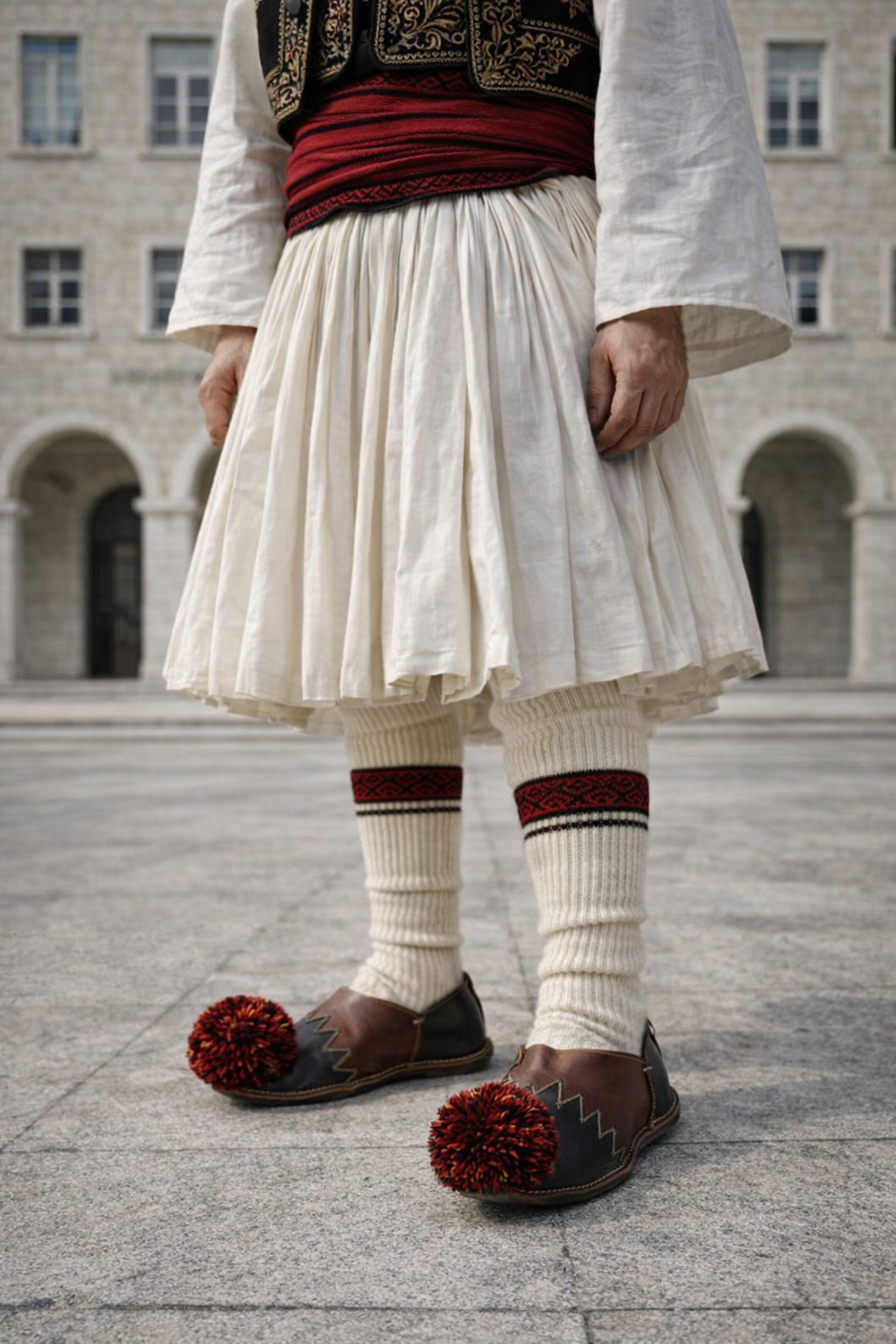
The opinga, as one of the most representative elements of traditional Albanian dress, embodies history, ways of life, and a strong connection to land and community. In this project, it is re-created while preserving its form, structure, and traditional construction methods, with deep respect for the cultural identity it represents.
The use of different leather pieces is not only a sustainable solution but also a reflection of the way the opinga was historically made: from available materials, carefully hand-assembled with functionality in mind. This approach positions the product as a natural continuation of tradition, reinterpreted within the context of contemporary design.
Thus, the opinga becomes both a symbol of Albanian cultural identity and an example of a sustainable product, where recycling and tradition do not stand in opposition but instead reinforce one another. The project seeks to demonstrate that cultural heritage can serve as an active source for contemporary design, creating objects that preserve collective memory while responding to present-day needs.
MUZA
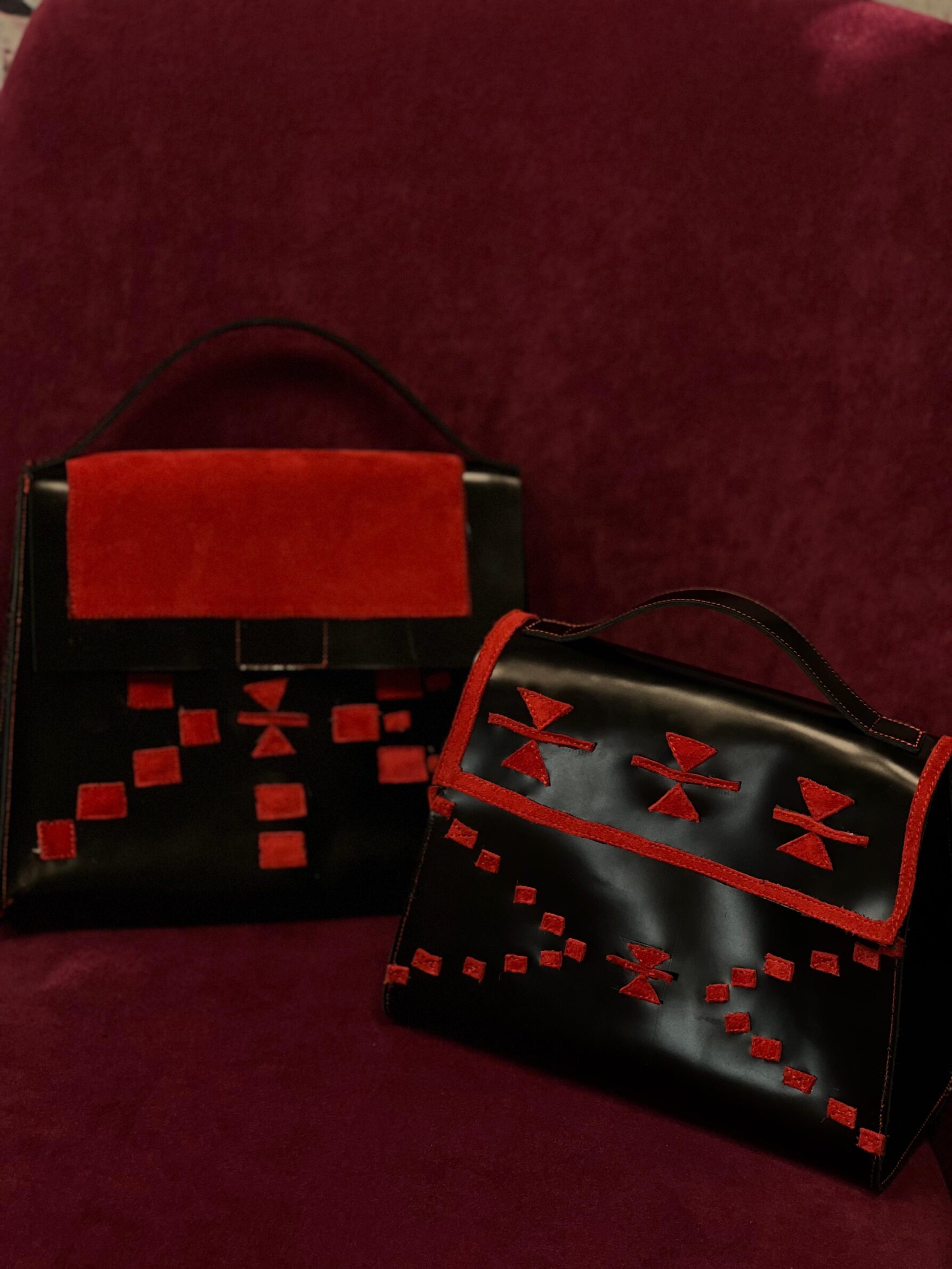
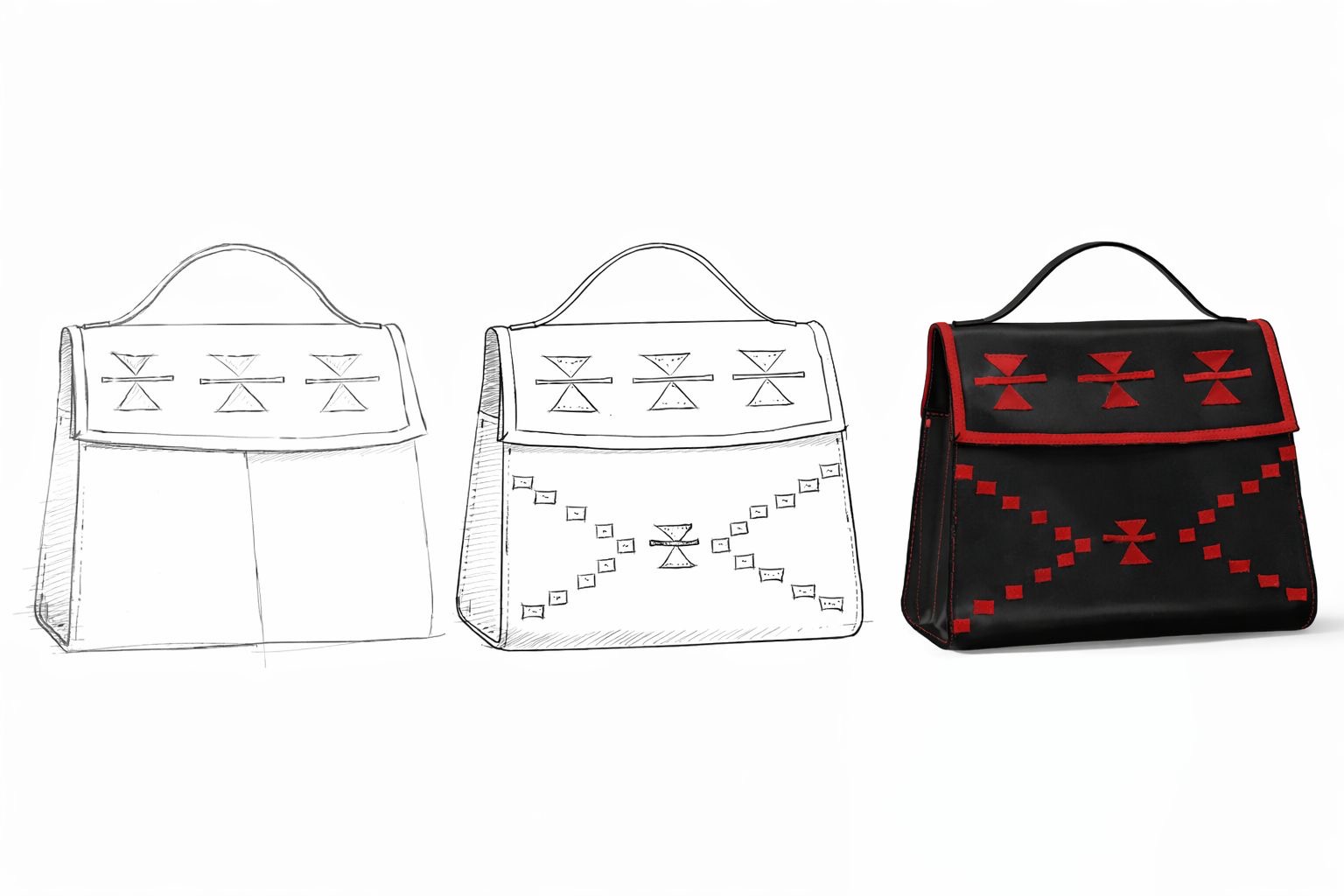
“Muzë” is a unique accessory that combines traditional Albanian motifs with contemporary design and sustainability. The bag is entirely made from leather leftovers and constructed using a mosaic technique, creating varied combinations of colors, textures, and shapes adapted to the irregular fragments of the material. This approach maximizes the use of leather waste, resulting in a functional and visually distinctive product.
The bag does not have a fixed shape, yet it remains fully functional for everyday use, providing enough space for essential items. The design is inspired by Albanian tradition: a black leather base is combined with red details representing the national flag, along with other traditional motifs incorporated in a mosaic to optimize the use of leather leftovers.
The main goal of “Muzë” is environmental sustainability: materials that would otherwise be discarded are transformed into a valuable and practical product. The project slogan, “Art returns to its origin”, reflects the use of traditional Albanian elements in contemporary design while preserving cultural identity. The name “Muzë” symbolizes inspiration and creativity, connecting tradition with innovation and sustainability.

Fjorela Qevani; Anita Mena ; Fjoralba Pelivani; Anula Cama ; Enrimela Muçi
We are Fjorela Qevani, Anita Mena, Fjoralba Pelivani, Anula Cama, and Enrimela Muçi, a team of Textile and Fashion Engineering students and graduates from the Polytechnic University of Tirana. United by our passion for design, innovation, sustainability, and technology, we bring together diverse experiences in textile engineering, fashion design, material exploration, digitalization, creative projects, and product development. Through our academic studies, professional training, and collaborative work, we have developed strong technical, creative, and problem-solving skills, allowing us to create functional, aesthetically meaningful, and environmentally conscious solutions. Our goal is to contribute to the advancement of the textile and fashion industry by combining engineering knowledge, creativity, and modern technologies to develop innovative and sustainable products.
Contact
qevanifiorela@gmail.com, anitamena2004@gmail.com, fjoralbapelivani@icloud.com, enrimelamuci@gmail.com, anula.cama1@gmail.com
Powered by