


Code compliance is most useful when it enters the design process while the design can still change.
Kestrel Labs brings building code checks directly into the BIM workflow, connecting a compliance finding to the model element that triggered it. Instead of reviewing a separate report and then searching for the corresponding wall, door or stair, an architect can inspect the issue within the project model and trace it back to the relevant code provision.
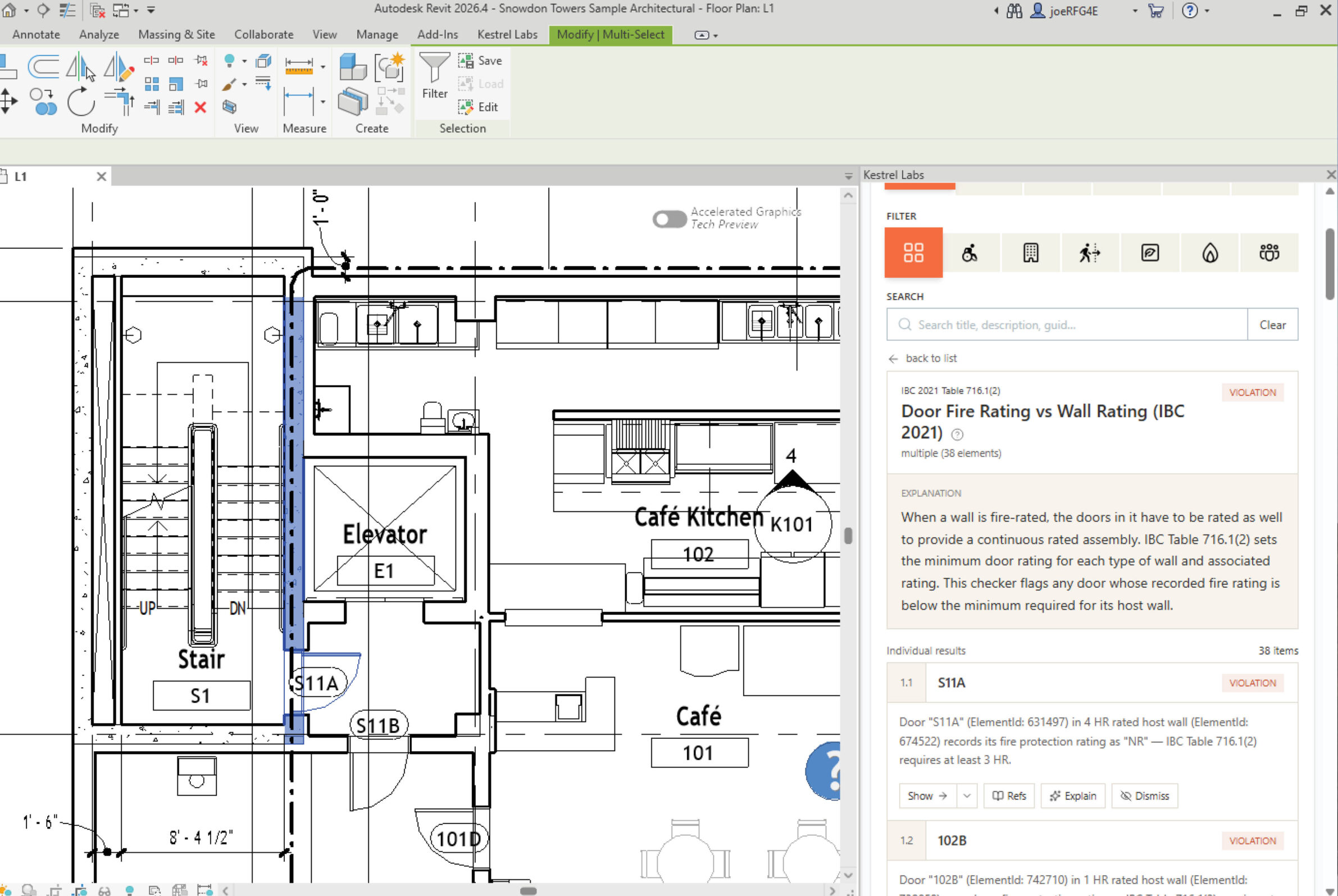
Launched at AIA26 in June 2026, the Kestrel Platform runs compliance checks inside Autodesk Revit. The company states that a check takes about 30 seconds, with results mapped to individual model elements and cited to the applicable code section. The practical value is visible in simple conditions: a door that is too narrow for an egress route, a stair that does not provide the required clear width, or a fire-rated wall whose door does not meet the corresponding rating.
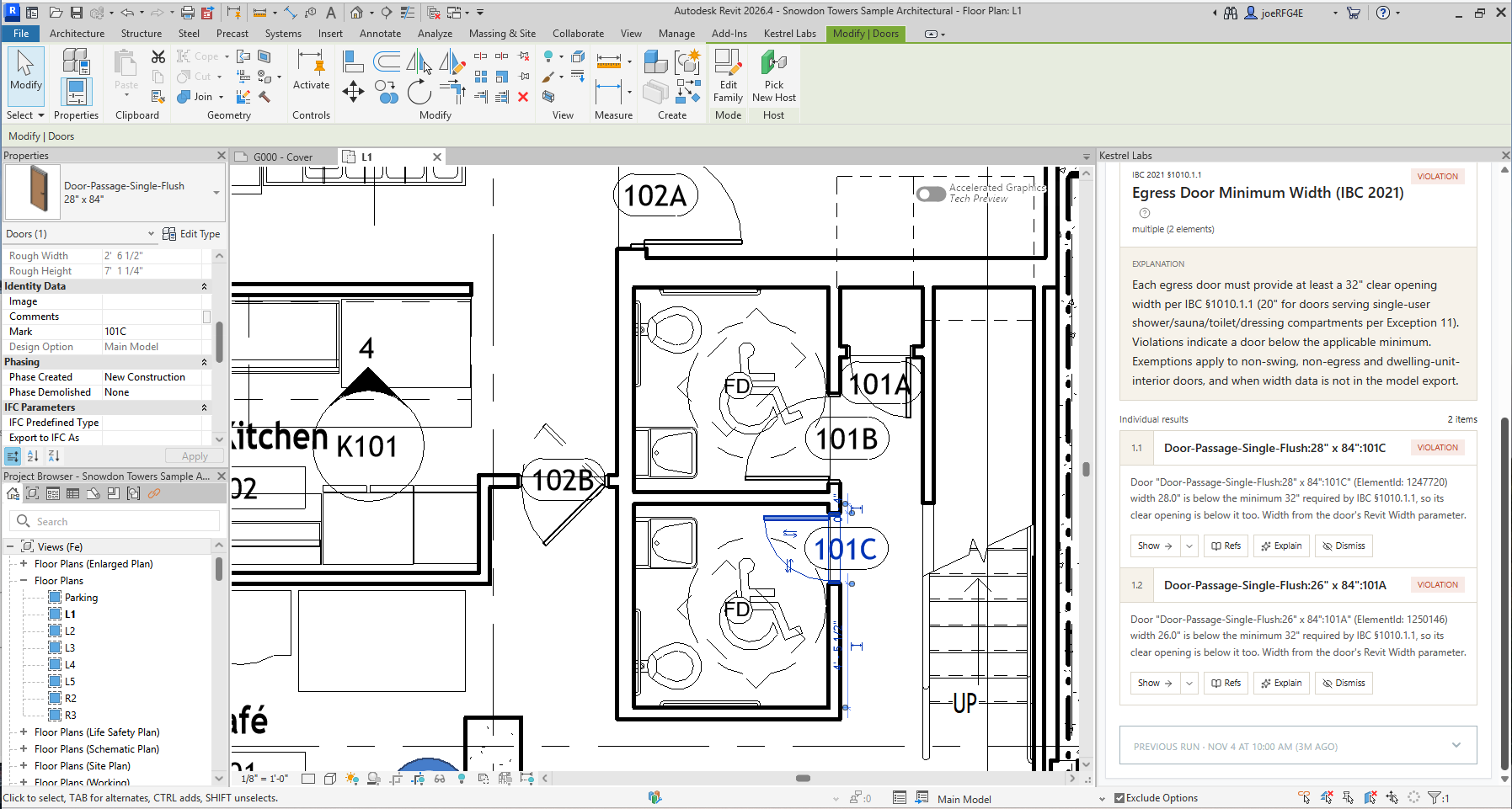
An egress door width check identifies individual doors below the required clear opening and locates each result directly in the Revit model. © Kestrel Labs
Not every unresolved condition is treated in the same way. Kestrel separates violations from passed checks, exemptions and cases where the model does not contain enough information to evaluate a requirement. That distinction matters in BIM, where an element may appear complete graphically while still lacking the data required for a reliable compliance check.
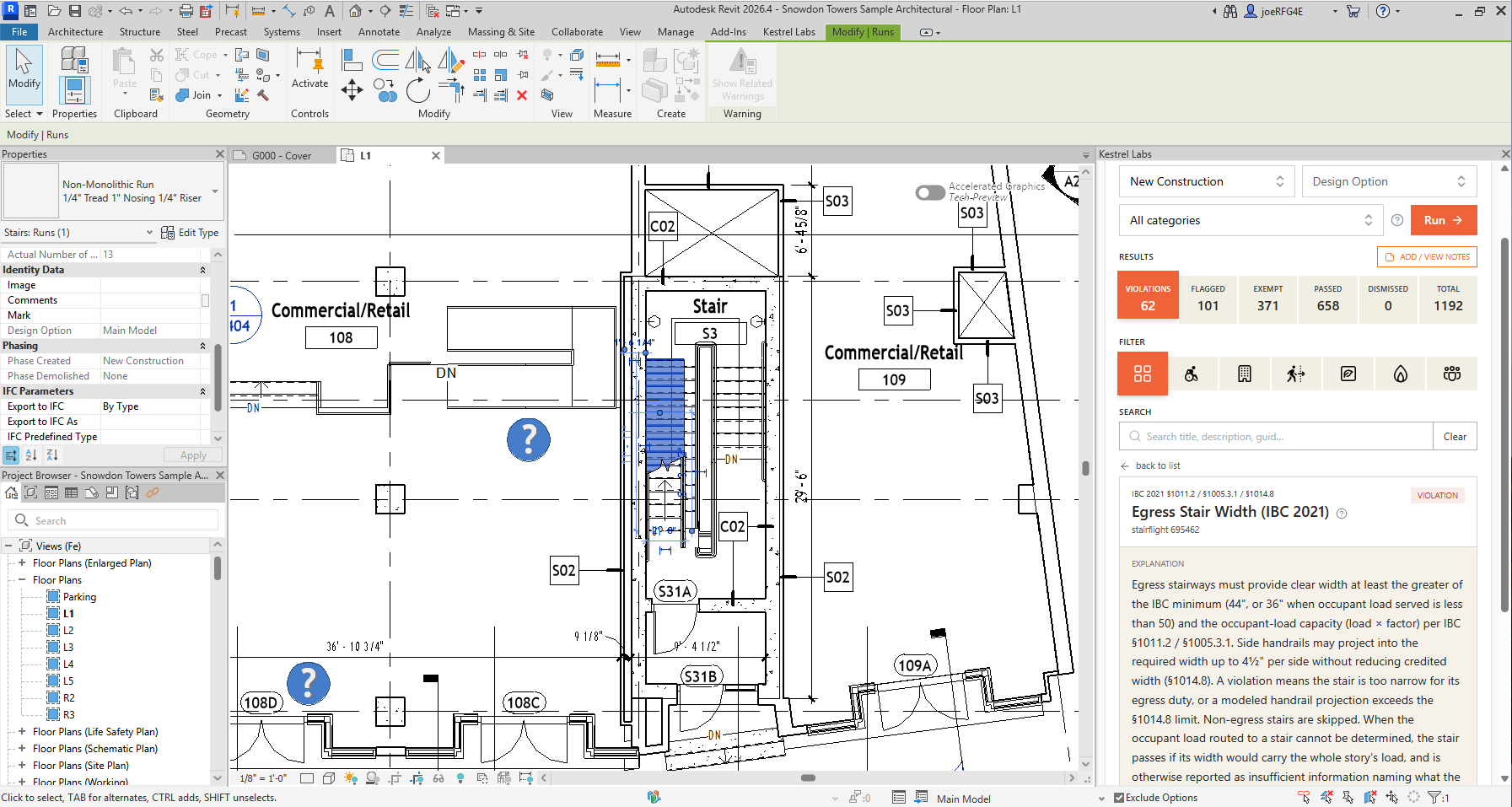
Compliance results distinguish violations from flagged, exempt, passed and other conditions, helping the design team separate actionable issues from cases requiring further review. © Kestrel Labs
The connection to the underlying rule is equally important. A flagged element can be accompanied by an explanation and the relevant code reference, allowing the architect to examine why the condition has been identified rather than receiving a simple pass or fail. The software is therefore positioned as a first-pass compliance tool, not as an automated approval authority. Interpretation, project-specific circumstances and the responsibility of the architect remain part of the process.
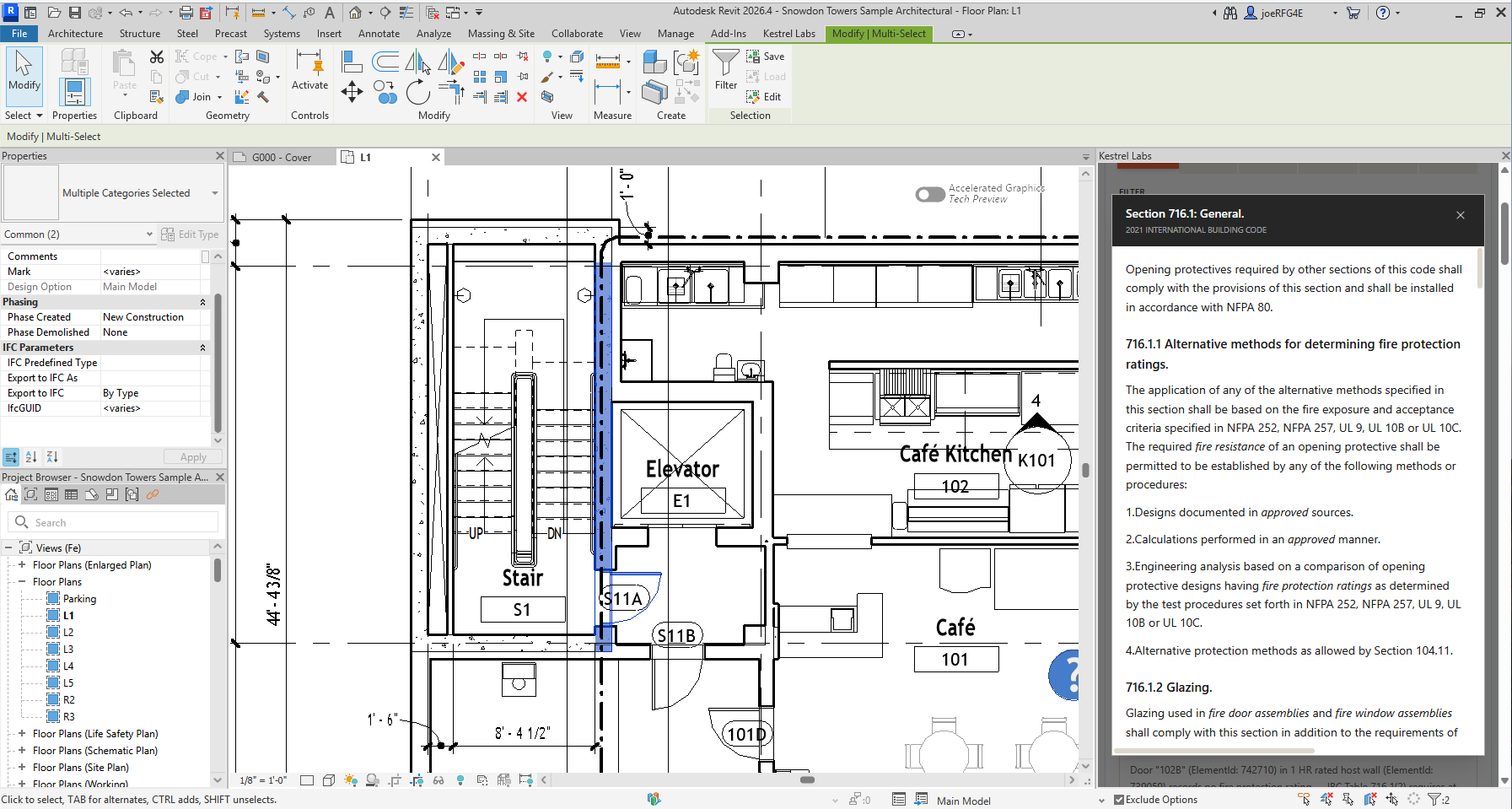
A compliance finding can be traced to its cited building code provision, allowing the architect to review the requirement behind the flagged model condition. © Kestrel Labs
The workflow is also expanding beyond Revit. Kestrel’s browser-based Portal allows project teams to review compliance results outside the authoring environment, while cloud-based checks through Autodesk Forma are currently rolling out to selected early customers. These workflows are intended to give project managers, QA teams and other reviewers access to findings without requiring them to work directly inside Revit.
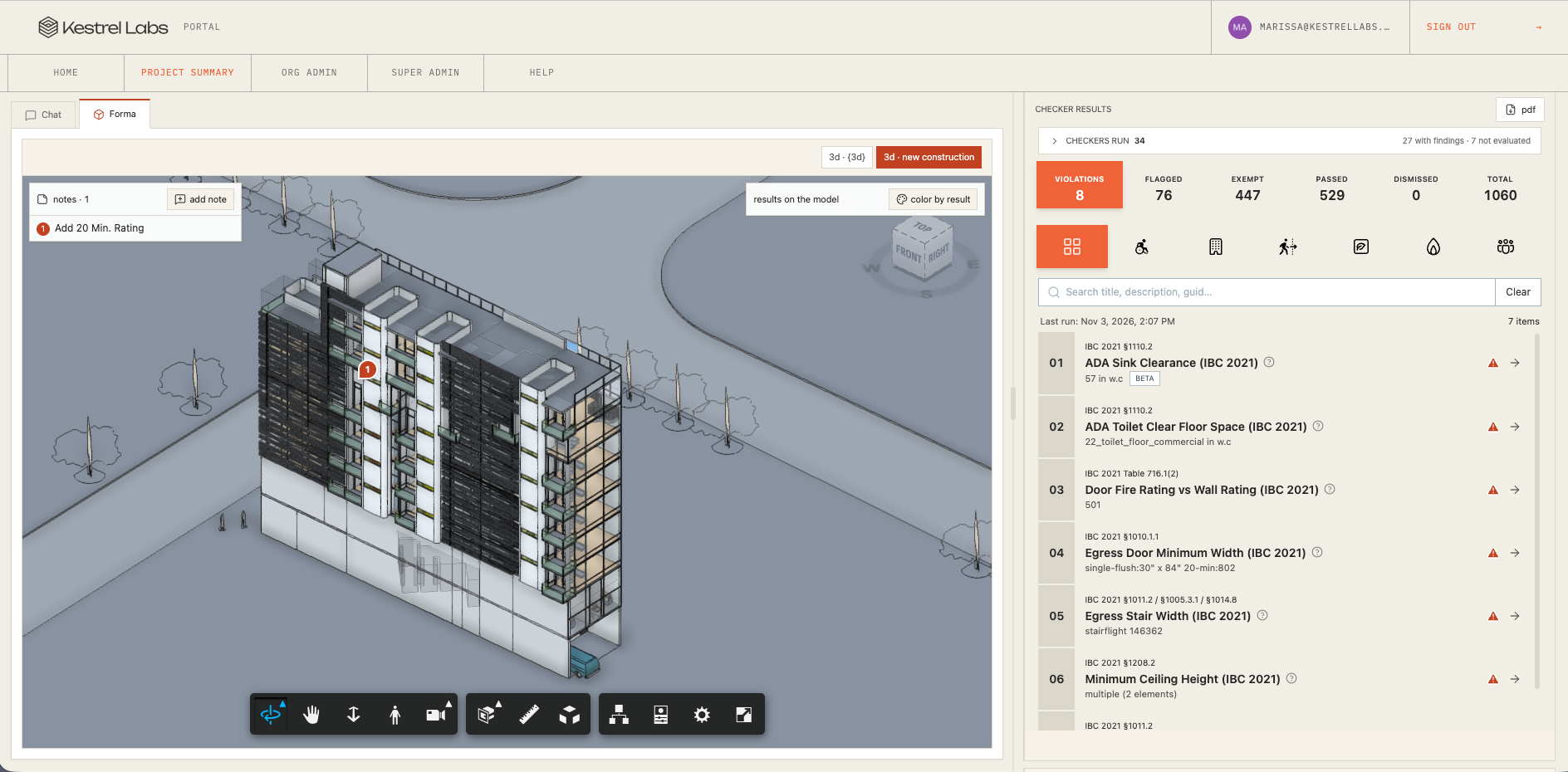
Kestrel Portal brings compliance results into a browser-based 3D review environment, allowing project teams to examine flagged conditions without opening the Revit model. © Kestrel Labs
Kestrel’s compliance data is based on official International Code Council material, with checks applied according to project type and jurisdiction. Coverage is expanding, so practices working outside the United States should verify the exact codes, editions and jurisdictions supported before incorporating the platform into their own compliance process.
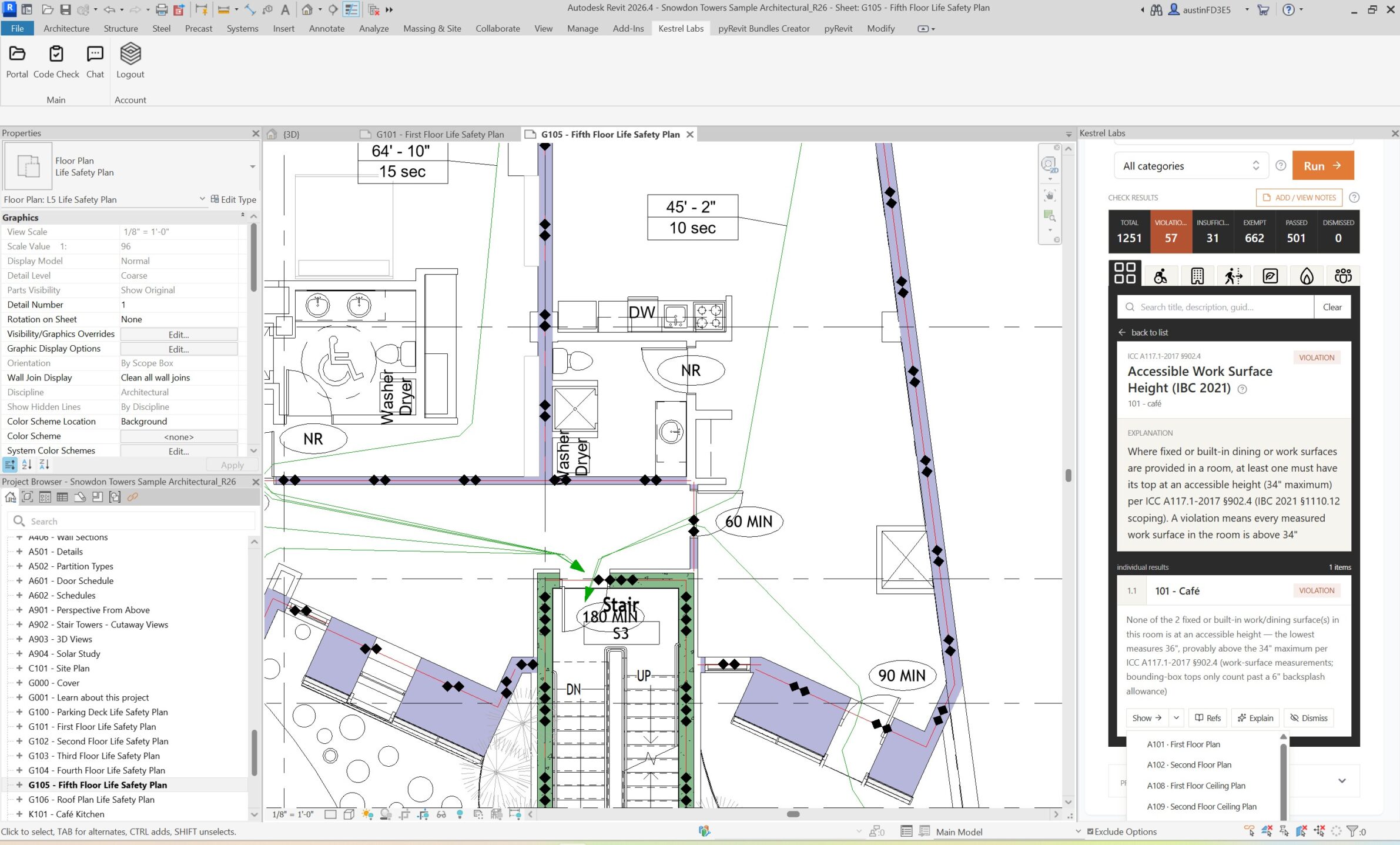
An accessibility check flags a café where the modelled work surfaces do not meet the required accessible height, extending the compliance workflow beyond egress and fire-safety checks. © Kestrel Labs
The more interesting shift is therefore not automation for its own sake. It is the timing and location of the information. A stair width, door rating or accessibility requirement becomes visible beside the design decision it affects, at a stage when the model can still be changed. For architects, that makes compliance less of a final checkpoint and more of an active part of designing.
Kestrel Labs is a Denver-based software company developing BIM-native building-code compliance tools for architects and design teams. Its platform checks building models against jurisdiction-specific requirements, links findings directly to model elements and relevant code provisions, and supports compliance review in Revit, Autodesk Forma and the browser. Kestrel works with officially licensed code content from the International Code Council.
Innovation
Kestrel Platform
Developer:
Kestrel Labs
Edited by:
Tanja Završki
Be There.





Powered by

Innovation
Kestrel Platform
Developer:
Kestrel Labs
Kestrel Labs is a Denver-based software company developing BIM-native building-code compliance tools for architects and design teams. Its platform checks building models against jurisdiction-specific requirements, links findings directly to model elements and relevant code provisions, and supports compliance review in Revit, Autodesk Forma and the browser. Kestrel works with officially licensed code content from the International Code Council.
Edited by:
Tanja Završki
Be There.
Powered by